
Add fireplace warmth to your Cynthiana home without touching a chimney.
With winter lows averaging 23°F and about 4,827 heating degree days a year, Harrison County doesn't need extreme cold-weather gear—it needs reliable zone heat. Electric fireplaces deliver that with no venting, no gas line, and often no permit. Find the right unit and connect with a trusted local dealer.
Every Project Starts From One of These Five Situations
Simple, safe supplemental heat for Bluegrass region homes.
Harrison County sits in the Bluegrass region of north-central Kentucky, with Cynthiana as the county seat and a total county population around 6,500. Climate zone 4A and a winter low average of 23°F make for a real but moderate heating season—colder than the Deep South, milder than the mountains further east. Plenty of Harrison County households still burn oak, hickory, maple, and cherry cut under Daniel Boone National Forest permits (May through October, $20 per cord), or run gas and propane as their main heat. Electric fireplaces have carved out a growing role alongside those options—not as a home's primary furnace replacement, but as an easy way to add real fireplace ambiance and supplemental warmth to a bonus room, bedroom, basement, or a rental where venting a wood or gas unit isn't practical.
The appeal is how little an electric fireplace asks of your home. There's no chimney to build, no gas line to run, and no burn permit to think about—a real plus in a county with no air quality restrictions but also no reason to complicate a simple heating upgrade. Most freestanding and mantel units plug into a standard 120-volt outlet; larger built-in inserts sometimes call for a dedicated 20-amp circuit, which means a licensed electrician and, in most cases, a permit through the Harrison County building department. Either way, installation is measured in hours, not weeks, and the electricity comes from the same Fleming-Mason Energy Cooperative service that already powers the rest of the house.
Three steps. No salesperson until you're ready.
Tell us about your project
Your zip code, your situation, and the fuel you're leaning toward—or let the answers point you to one.
See what's actually available
The brands dealers within 100 miles genuinely carry—real options, never a catalog mirage.
Get your dealer & Project Guide
A trusted local dealer, plus the free Project Guide & Parts List that names every component of the job.
Frequently Asked Questions
How much does it cost to install an electric fireplace in Harrison County?
Plug-in electric fireplaces and mantel packages typically run $400 to $1,500 installed, since most just need a standard outlet already in the wall. Built-in wall inserts or larger units that require a dedicated 20-amp circuit run closer to $1,200 to $2,500 once electrician labor is included. Homeowners retrofitting an old masonry fireplace with an electric insert usually land in the middle of that range—no venting work needed, just fitting the unit and running power to the firebox. A local dealer can give you a firm number based on your specific model and whatever wiring is already in place.
Do I need a permit for an electric fireplace in Harrison County?
In most cases, no—a plug-in unit that uses an existing outlet doesn't trigger a permit. Where a permit does come into play is new electrical work: if your unit needs a dedicated circuit, a new outlet, or panel upgrades to handle the load, that electrical work typically requires a permit through the Harrison County building department and should be pulled by a licensed electrician. It's a much lighter lift than the building and gas-line permits that come with wood or gas installs, but it's still worth confirming before work starts, especially in older Cynthiana homes with aging panels.
Electric vs. wood—which is right for my Harrison County home?
Wood remains a strong choice here—oak, hickory, and cherry are all locally available, and Daniel Boone National Forest cutting permits run just $20 per cord from May through October, making self-cut firewood affordable. Wood also keeps working during a power outage, which matters in a rural county where storms can knock out Fleming-Mason Energy service for a stretch. Electric can't do that—it's fully dependent on grid power. What electric offers instead is convenience and flexibility: no chimney, no ash, no wood storage, and the ability to add heat and ambiance to rooms where venting a wood stove or gas fireplace just isn't practical, like a finished basement or an upstairs bedroom.
Can an electric fireplace heat my whole house?
No—electric fireplaces are built for zone heating, not whole-home heating. Most units are rated to comfortably heat a single room in the 400 to 1,000 square foot range, which makes them a good fit for a living room, den, or bedroom addition, but not a replacement for a furnace or heat pump in a county averaging 4,827 heating degree days a year. Think of it as taking the edge off a specific space and cutting your reliance on central heat in that room, rather than carrying the whole heating load.
What's the difference between an electric insert, an electric stove, and a mantel package?
An electric insert is built to slide into an existing masonry fireplace opening, turning an old wood-burning firebox into a clean, flip-a-switch heat source without touching the chimney. An electric stove is a freestanding unit styled like a wood stove that sits anywhere near an outlet—popular in Harrison County farmhouses that want the wood-stove look without the wood handling. A mantel package pairs a wall-mounted or built-in electric firebox with a surrounding mantel and is the most common choice for new construction or remodels in Cynthiana and around the county where there's no existing fireplace at all.
How much does it cost to run an electric fireplace day to day?
Most electric fireplaces draw around 1,500 watts on the heat setting, which works out to roughly 10 to 15 cents per hour at typical Fleming-Mason Energy Cooperative rates—cheaper to run in a single room than heating that same space with central HVAC. Since Harrison County's heating season stretches from fall through spring given the area's 4,827 heating degree days, running an electric fireplace a few hours a night in a bedroom or den is a reasonable way to turn down the thermostat elsewhere in the house without much added cost.
Will my electric fireplace still work if the power goes out?
No—because electric fireplaces run entirely on grid power, they shut off the moment the power does, unlike a wood stove or a battery-backed gas unit. In rural stretches of Harrison County where storm-related outages can take a while to resolve, that's worth factoring in if you're relying on the fireplace for anything beyond ambiance and supplemental comfort. Many households pair an electric fireplace in a main living space with a wood stove or fireplace insert elsewhere in the house specifically to cover outages.
What size electric fireplace do I need for my room?
Sizing an electric fireplace is mostly about the room it's heating rather than the whole house. A compact insert or stove (750-1,500 watts) suits a bedroom or small den, while a larger wall unit or mantel package (1,500 watts, the common max for a standard 120V circuit) can take the edge off a larger living room in the 300 to 600 square foot range. Ceiling height, window count, and how well-insulated the room is all shift that estimate—a local dealer can walk your specific space and recommend a model rather than relying on square footage alone.
Are electric fireplaces safe to install in older Cynthiana homes?
Generally yes, and often safer than adding a vented appliance to an older structure, since there's no chimney or gas line to inspect for age-related wear. The one thing worth checking first is the home's electrical panel and existing circuits—some older Harrison County homes have panels that are already near capacity, and a licensed electrician should confirm the home can handle a new dedicated circuit if your chosen unit requires one. That inspection is a quick step compared to what a wood or gas retrofit would demand in the same house.
Do electric fireplaces actually produce heat?
Yes—most put out around 4,800–5,000 BTUs from a standard outlet, which comfortably warms a bedroom, office, or den as a comfort-zone heater. What they won't do is carry a whole house the way wood, gas, or pellet can. Think of electric as ambiance-first with honest supplemental heat: flames on with no heat in July, flames plus warmth in January.
Can I put a TV above my fireplace?
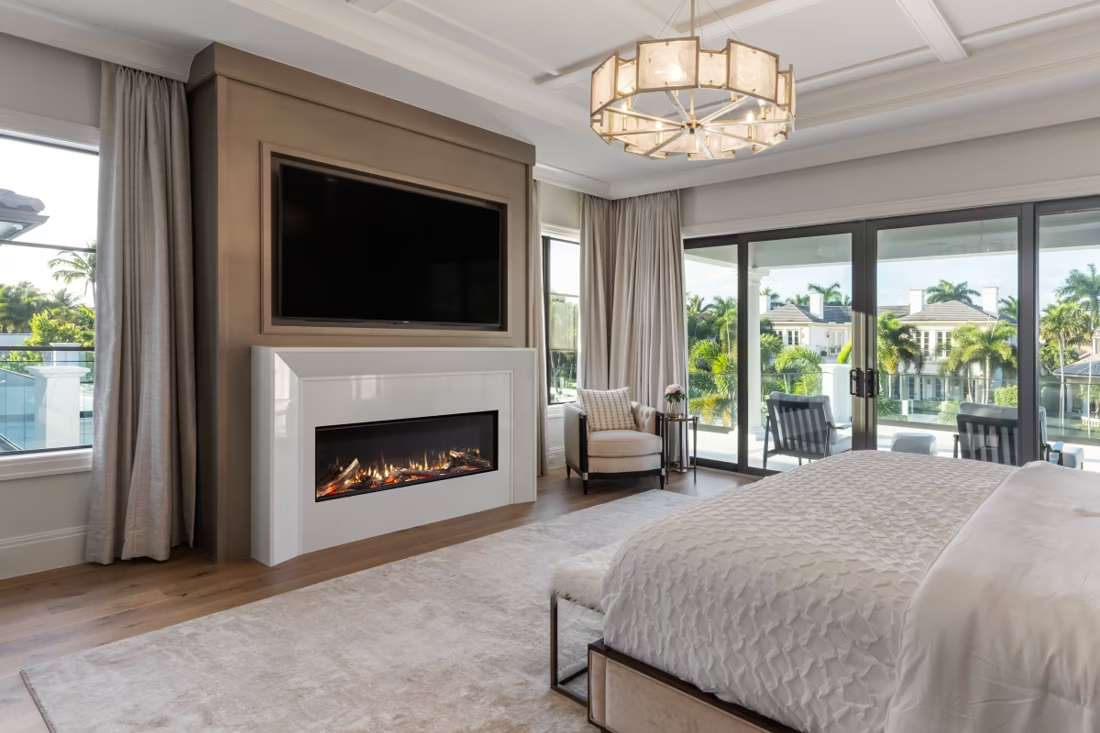
Yes—with an asterisk. Fireplaces are hot and TVs don't like heat. Either put a mantel between them to deflect rising warmth, or choose a fireplace with heat-management technology that creates a cool zone on the wall above—the wall stays around 125 degrees, barely warm, while the room still gets full heat. If you like clean lines and don't want a mantel, heat management is the answer.
Does a fireplace add value to my home?
On average, a fireplace adds back to the home about the same amount you spent installing it. Add the monthly savings from heating the rooms you actually use instead of the whole house—often hundreds of dollars a year—and the value case is strong before you even count what a fire does for how your family uses the room.
Can a fireplace actually lower my heating bill?
Yes—by creating a comfort zone. A furnace heats every square foot of the house just to warm the one room you're in; a gas fireplace on low burns roughly a sixth of the gas a typical furnace does. Set the furnace around 55–60 degrees as a baseline, then heat the rooms your family actually uses. Families who heat this way commonly save $20–$60 a month.
Find your electric fireplace in Harrison County.
Tell us a bit about your home and we'll match you with the right electric fireplace, insert, or stove—plus a free Project Guide & Parts List and a trusted local dealer to install it.
Find Your Fireplace →