
Reliable heat for Harlan County's long mountain winters.
With a winter heating load that's real, if milder than what you'd find in a place like Burlington, VT—but it runs long enough through these Cumberland Mountain hollows that a fireplace has to deliver actual heat, not just ambiance. I'll match you with a trusted local dealer who knows whether your home is on the natural gas line or propane, and what that means for your install.
Every Project Starts From One of These Five Situations
Reliable heat where propane, not natural gas, does most of the work.
Harlan County sits in the far southeastern corner of Kentucky, tucked into the Cumberland Mountains along the Virginia border, with elevations climbing from valley floors near 1,000 feet up to Black Mountain, Kentucky's highest point at over 4,100 feet. With a population around 10,773 spread across steep hollows and former coal camp communities, homes here are often older wood-frame or block construction tucked tight against ridgelines that block winter sun for weeks at a stretch. Climate zone 4A and a winter low average of 24°F don't sound extreme on paper, but the terrain traps cold air in the hollows, and heating season here runs from October well into April.
Natural gas mains reach the City of Harlan and a handful of nearby incorporated towns like Cumberland and Loyall, but most of the county's rural hollow communities run on propane delivered by regional bulk suppliers, with a tank set on the property. Either fuel works fine in a modern direct-vent gas fireplace or insert. And because Harlan County has no listed air quality non-attainment concerns, vent-free gas units—which burn directly into the room—are a legal and commonly used option here too, particularly in the manufactured and single-wide homes common in old coal camp housing stock that were never built with a chimney to begin with.
Three steps. No salesperson until you're ready.
Tell us about your project
Your zip code, your situation, and the fuel you're leaning toward—or let the answers point you to one.
See what's actually available
The brands dealers within 100 miles genuinely carry—real options, never a catalog mirage.
Get your dealer & Project Guide
A trusted local dealer, plus the free Project Guide & Parts List that names every component of the job.
Frequently Asked Questions
How much does a gas fireplace installation cost in Harlan County?
Most gas fireplace installs in Harlan County run somewhere between $3,500 and $9,500. A gas insert dropped into an existing masonry firebox—common in older homes around Harlan, Baxter, and Evarts—tends to land on the lower end, especially if the home already has a propane tank or a gas line run to the room. A new direct-vent fireplace built into a wall, or a fresh propane tank set for a home that's never had gas service, pushes toward the higher end. Homes tucked deep in remote hollows off the main highways may also see a modest travel charge added by installers based out of Harlan or Cumberland.
Can I convert my existing wood fireplace to gas?
Yes, and it's a common upgrade in Harlan County's older coal camp-era homes that still have their original masonry fireboxes. A gas insert seats into the existing opening and vents through a liner run up your current chimney, so you keep the look of the fireplace but get real, controllable heat with the flip of a switch instead of splitting oak or hickory. Whether you run it on propane from a tank out back or, if you're inside Harlan city limits, on the natural gas main, the conversion itself is usually a one-day job for a local hearth dealer.
Do I need natural gas, or should I plan on propane?
It depends on where in the county you are. Natural gas mains serve the City of Harlan and a few of the incorporated towns nearby, so if you're already on gas for your water heater or furnace there, adding a fireplace is straightforward. Outside those town limits—which covers most of the county's hollows and ridge communities—there's no gas main, and propane from a regional bulk supplier, off either an existing tank or a new one set for the project, is the standard fuel. Nearly every gas fireplace model on the market can be configured for either fuel with the right orifice, so it's less about which unit you pick and more about which supply line reaches your house.
Will my gas fireplace still work if the power goes out?
Most will, with the right ignition system. Units with intermittent pilot ignition (IPI) run on a battery backup that kicks in automatically when the power drops, so the fireplace still lights on demand. Some models, like Valor, go further and generate their own electricity off the pilot assembly, so there's no battery to maintain at all. That distinction matters in Harlan County, where winter ice storms on the ridges and downed lines along mountain roads can knock out power for a day or more at a time—a battery-backed or self-powered gas fireplace keeps at least one room warm regardless.
What's the difference between vented and vent-free gas fireplaces, and can I use either here?
Vented, or direct-vent, units draw combustion air from outside and exhaust it back outside through a sealed pipe. Vent-free units burn directly into the room and don't require any chimney or venting at all, which makes them a practical fit for the county's older single-wide and manufactured homes that were never built with a flue. Because Harlan County has no listed air quality non-attainment concerns, vent-free units are a legal, commonly installed option here—though they do come with room-size minimums and require an oxygen depletion sensor, so a local dealer should confirm the room qualifies before you buy.
Do I need a permit to install a gas fireplace in Harlan County?
If you're inside the City of Harlan, Cumberland, Loyall, or another incorporated town, you'll typically need a building permit and a gas line permit through that town's code enforcement office, and the gas work itself has to be done by a licensed gas-fitter. In unincorporated parts of the county—which is most of its land area—permitting requirements are lighter, but propane tank placement still has to meet clearance and setback rules from your propane supplier and the fire code. A full-service local hearth dealer will know which rules apply to your specific address and can pull whatever's required.
How often does a gas fireplace need to be serviced?
Plan on an annual check, ideally before cold weather sets in around October. A technician inspects the burner, pilot assembly, and gas connections, and cleans the glass—a much faster visit than a wood chimney sweep, generally in the $150 to $250 range from a local gas technician. This matters more than it might seem in Harlan County's hollow communities, where a unit that runs daily through a long, shaded heating season sees more hours of use than the same fireplace might in a sunnier, flatter part of the state.
What's the difference between a gas fireplace, insert, and stove?
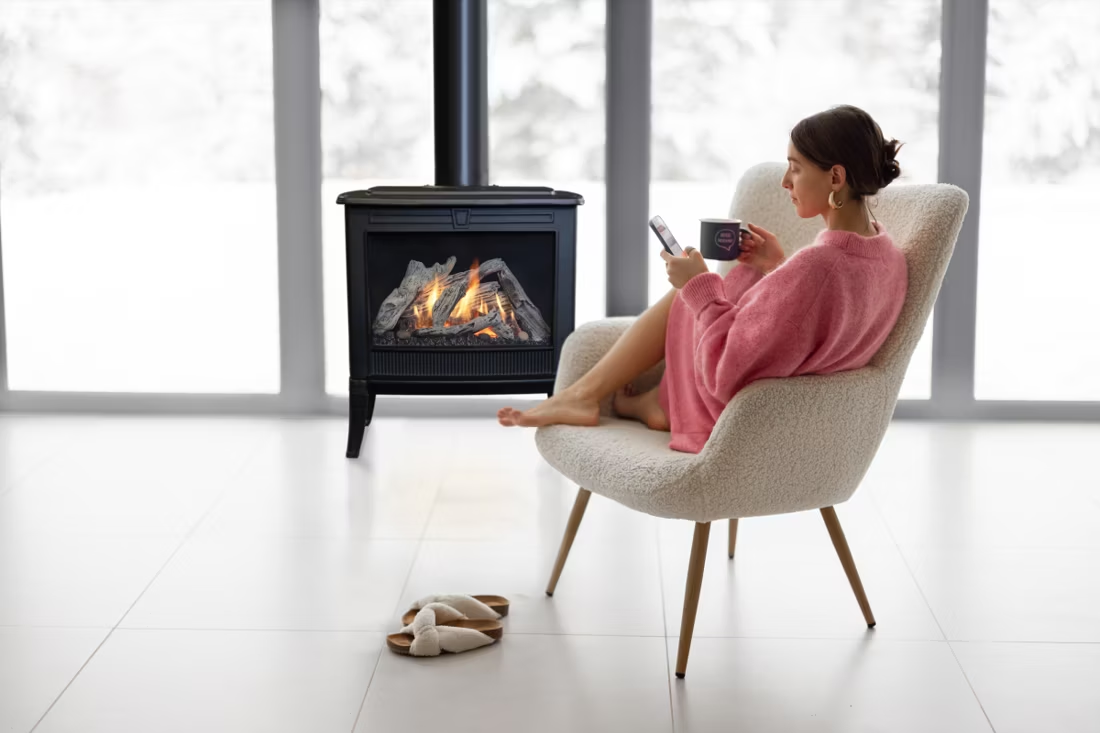
A gas fireplace is a built-in unit framed into a wall, the right call for new construction or a full remodel. A gas insert slides into an existing masonry firebox and uses your current chimney as the vent path—a common fit for Harlan County's older homes with an existing fireplace. A gas stove is a freestanding, cabinet-style unit that sits on the floor like a wood stove but runs on gas, which works well in manufactured or single-wide homes that have no chimney and no built-in fireplace opening to begin with. A local dealer can tell you which configuration actually fits your room.
Gas vs. wood—which makes more sense for a home in Harlan County?
Wood has deep roots here—oak, hickory, maple, and cherry are all abundant on the surrounding Cumberland Mountain forest land, and plenty of Harlan County households still heat primarily with a wood stove because the fuel cost is low and it works with no electricity at all, which matters during a ridge-country ice storm outage. Gas trades that self-sufficiency for convenience: instant, thermostat-controlled heat with no splitting, stacking, or ash to manage. Many homes here run both—wood as the workhorse in a den or basement, gas in the main living area for daily ease. If your household wants low-maintenance daily heat without tending a fire, gas on propane or, if you're in town, the natural gas main, is usually the simpler starting point.
Can I put a TV above my fireplace?
Yes—with an asterisk. Fireplaces are hot and TVs don't like heat. Either put a mantel between them to deflect rising warmth, or choose a fireplace with heat-management technology that creates a cool zone on the wall above—the wall stays around 125 degrees, barely warm, while the room still gets full heat. If you like clean lines and don't want a mantel, heat management is the answer.
Why is a fireplace insert so efficient?
An insert does two things: it seals the chimney completely, so you stop losing air you already paid to heat, and it radiates warmth into the room through the firebox and glass. Most add a heat-exchange fan that pulls cool room air underneath, wraps it around the hot firebox, and pushes it back out warm. Your home is more efficient before you've even lit the first fire.
How much should I budget for a fireplace?
For an average home—covering the fireplace, the vent pipe, and basic installation—a budget between $3,900 and $5,500 gives you a lot of options across wood, gas, and pellet. By the time you add finish work, gas line, and electrical, the average complete installation lands between $5,000 and $12,000 all-in. In a remodel or new build, a good rule is to put about 2.5% of the total project cost toward the fireplace.
Can I install a fireplace myself?
If you're putting a fire in your house on purpose, it's best to work with an expert. Unless you're genuinely experienced in framing, gas line, vent pipe, and the national code on clearances to combustibles, have a professional do it—and ideally the same company that sells you the fireplace, so warranty, service, and liability all live under one roof.
Get your free Project Guide & Parts List for a gas fireplace in Harlan County.
Tell me about your home, whether you're on the natural gas line in town or running propane out in the hollow, and I'll match you with a trusted local dealer and send over a free Project Guide & Parts List—the exact equipment, vent kit, and recommended installer for your gas project, no big-box guesswork.
Find Your Fireplace →