
Steady, low-maintenance heat for Graves County winters.
From Mayfield to Fancy Farm, Sedalia, and Wingo, gas fireplaces give Graves County homeowners instant heat without hauling wood or tending a fire. Find the right unit and connect with a trusted local dealer.
Every Project Starts From One of These Five Situations
Reliable warmth without the chore of a woodpile.
Graves County sits in Kentucky's Jackson Purchase region, climate zone 4A, with a winter heating load comparable to other 4,262-degree-day areas and average winter lows around 23°F. That's a real heating season—cold enough for consistent evening fires from November through March—but not the kind of brutal cold that demands the largest catalytic wood stoves. It's exactly the range where a gas fireplace or insert makes sense as either a primary heat source in a smaller home or a daily-use zone heater alongside central HVAC in a larger one.
Natural gas service reaches the city of Mayfield and its immediate surroundings, while most of the rest of the county—Fancy Farm, Sedalia, Wingo, Water Valley, Lynnville, and the farmland between—relies on propane delivered by regional suppliers. Either fuel works in the same fireplace, insert, or stove; your dealer will set up the correct orifice and regulator for whichever you have. Graves County has no wood-smoke air quality restrictions, so the appeal of gas here is less about regulation and more about convenience: flip a switch, get heat, skip the ash and chimney upkeep that come with the oak and hickory many local homes still burn.
Three steps. No salesperson until you're ready.
Tell us about your project
Your zip code, your situation, and the fuel you're leaning toward—or let the answers point you to one.
See what's actually available
The brands dealers within 100 miles genuinely carry—real options, never a catalog mirage.
Get your dealer & Project Guide
A trusted local dealer, plus the free Project Guide & Parts List that names every component of the job.
Frequently Asked Questions
How much does a gas fireplace installation cost in Graves County?
Most gas fireplace and insert installations in Graves County land between roughly $3,500 and $9,000, depending on the unit, the venting path, and whether a new gas line or propane tank hookup is needed. A direct-vent insert going into an existing masonry fireplace with gas already run to the house sits at the lower end. A new built-in gas fireplace for a remodel or new construction—with framing, venting, and a fresh gas or propane line—runs toward the higher end. Homes outside Mayfield city limits on propane sometimes add tank installation or a delivery agreement into the total; a local dealer will spell that out during the in-home estimate.
Can I convert my existing wood fireplace to gas?
Yes, and it's one of the more common projects Graves County dealers handle, especially in older farmhouses with a masonry fireplace that's rarely used. A gas insert slides into the existing firebox and vents through the chimney with a stainless liner, so you keep the look of the fireplace but gain push-button heat. Cost depends mainly on whether the home already has gas or propane plumbed nearby—homes near Mayfield with existing gas service are usually cheaper to convert than rural properties that need a new propane tank or longer line run.
Do I need natural gas, or can I use propane?
Either works fine in a gas fireplace or insert. Within and around the city of Mayfield, natural gas service is available and is the simpler option if your home already has a gas water heater or furnace. Outside Mayfield—Fancy Farm, Sedalia, Wingo, Water Valley, Lynnville, and the surrounding farmland—propane is the standard fuel, supplied by regional propane companies with either a leased or owned tank. Most fireplace models can be ordered or converted for either fuel, so the choice usually comes down to what's already reaching your address rather than which unit you pick.
Will my gas fireplace still work if the power goes out?
Most modern gas fireplaces will, as long as they use an IPI (intermittent pilot ignition) system with battery backup—typically a few AA batteries inside the unit that take over automatically when power drops. That matters in Graves County, where ice storms and severe spring weather can knock out power for stretches at a time in the more rural parts of the county. Valor fireplaces handle this differently: their pilot generates its own electricity through a thermocouple, so there are no batteries to remember or replace. Ask your dealer which ignition system a given model uses before you buy.
What's the difference between a gas fireplace, gas insert, and gas stove?
A gas fireplace is a fully built-in unit framed into a wall, typically chosen for new construction or a remodel. A gas insert is sized to slide into an existing masonry fireplace opening, turning a drafty old hearth into a sealed, efficient heat source using the existing chimney as the vent path. A gas stove is a freestanding cabinet-style unit that sits on the floor, similar in footprint to a wood stove but running on gas or propane. For the many older homes around Mayfield and the county with an existing wood fireplace they no longer want to tend, an insert is usually the right fit; new rooms or additions without an existing chimney are better suited to a built-in fireplace or freestanding stove.
Do I need a permit to install a gas fireplace in Graves County?
Generally yes—a building permit is required for new gas fireplace or insert installations, and any gas line work needs to be done by a licensed gas-fitter. Work inside Mayfield city limits typically runs through the city's permitting process, while installations elsewhere in the county go through the Graves County Building Department. Most established local dealers coordinate the permit, the gas line, and the venting inspection together as part of the install, so homeowners rarely have to manage separate trades or paperwork themselves.
What's the difference between vented and vent-free gas fireplaces?
Vented (direct-vent) gas fireplaces pull combustion air from outside and exhaust the byproducts back outside through a sealed vent pipe—they're the cleanest and most universally code-compliant option. Vent-free gas fireplaces burn fuel directly into the room without external venting; they're legal in Kentucky but come with strict room-size and ventilation requirements, since they release some moisture and combustion byproducts indoors. For Graves County homes, direct-vent units are the more common recommendation from local dealers, particularly in smaller or tightly sealed rooms where a vent-free unit's sizing rules get restrictive.
How often should a gas fireplace be serviced?
Plan on an annual inspection, ideally in late summer or early fall before the first cold snap. A technician will check the burner, pilot assembly, gas connections, and venting, and clean the glass and interior. It's a much lighter job than a wood chimney sweep, but skipping it is how homeowners end up with a fireplace that won't light reliably on the first cold night of the season—local gas appliance technicians in and around Mayfield typically charge in the $150–$250 range for this service.
Gas or wood—which makes more sense for a Graves County home?
Graves County's oak, hickory, maple, and cherry woodlots make self-cut or locally sourced firewood genuinely cheap and plentiful, which is why wood heat still has a strong following on rural properties here. Wood also keeps working during a power outage, which matters when an ice storm takes down lines in the county's more spread-out areas. Gas trades that for convenience: no splitting or hauling, no ash, and heat at the flip of a switch or the tap of a remote. With winter lows averaging in the low 20s rather than deep sub-zero cold, a gas unit can comfortably serve as the primary heat source in a smaller home or a daily-use zone heater in a larger one. Plenty of local households run both—wood for backup and ambiance, gas for everyday use.
Is my gas fireplace wasting gas?
If it was installed more than 15 years ago, probably. Older gas fireplaces keep a standing pilot light burning all the time, and that little flame can cost a couple hundred dollars a year. Newer models use pilot-on-demand ignition—the pilot lights only when you use the fireplace and goes out when you turn it off.
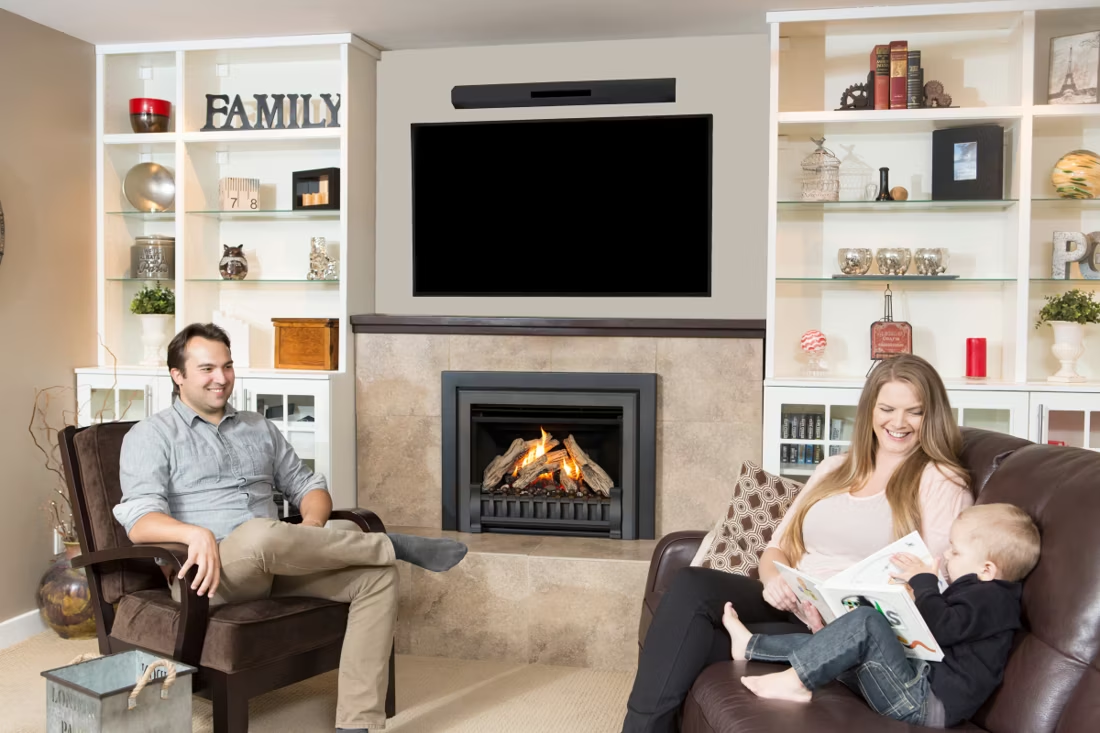
Can I put a TV above my fireplace?
Yes—with an asterisk. Fireplaces are hot and TVs don't like heat. Either put a mantel between them to deflect rising warmth, or choose a fireplace with heat-management technology that creates a cool zone on the wall above—the wall stays around 125 degrees, barely warm, while the room still gets full heat. If you like clean lines and don't want a mantel, heat management is the answer.
What is an in-home preview and do I need one?
It's a visit where a hearth professional measures your space, confirms the model you picked actually works in your home, and walks the specs—framing, gas line, venting, finish work—before anything is ordered. Some details you just can't know until you see the house. Never make a down payment without one; it's the single most-skipped step that burns buyers.
Can I install a fireplace myself?
If you're putting a fire in your house on purpose, it's best to work with an expert. Unless you're genuinely experienced in framing, gas line, vent pipe, and the national code on clearances to combustibles, have a professional do it—and ideally the same company that sells you the fireplace, so warranty, service, and liability all live under one roof.
Get your Graves County gas fireplace Project Guide & Parts List.
Tell us about your home and your gas or propane setup, and we'll match you with a trusted local dealer serving Graves County—plus a free Project Guide & Parts List with the exact parts, vent kit, and recommended dealer for your fireplace, insert, or stove.
Find Your Fireplace →