
Warm up your Garrard County home in minutes, not hours.
No chimney, no gas line, no permit wait—just plug-in or hardwired warmth for homes across Garrard County, from Lancaster to the rural stretches near Herrington Lake. Find the right unit and connect with a trusted local dealer.
Every Project Starts From One of These Five Situations
Reliable heat without the venting, permits, or chimney work.
Garrard County is small—under 4,000 people spread across a mostly rural stretch of the Bluegrass region, centered on Lancaster and running out toward Herrington Lake. Winters here aren't brutal by national standards (average lows around 23°F, with a heating season on par with much of the Ohio Valley), but they're long enough that most homes run a real heating strategy from November through March. A lot of that strategy still involves wood—oak, hickory, maple, and cherry are common locally, and plenty of households hold a Daniel Boone National Forest cutting permit ($20 a cord, May through October) and keep a stove or fireplace burning through the cold months.
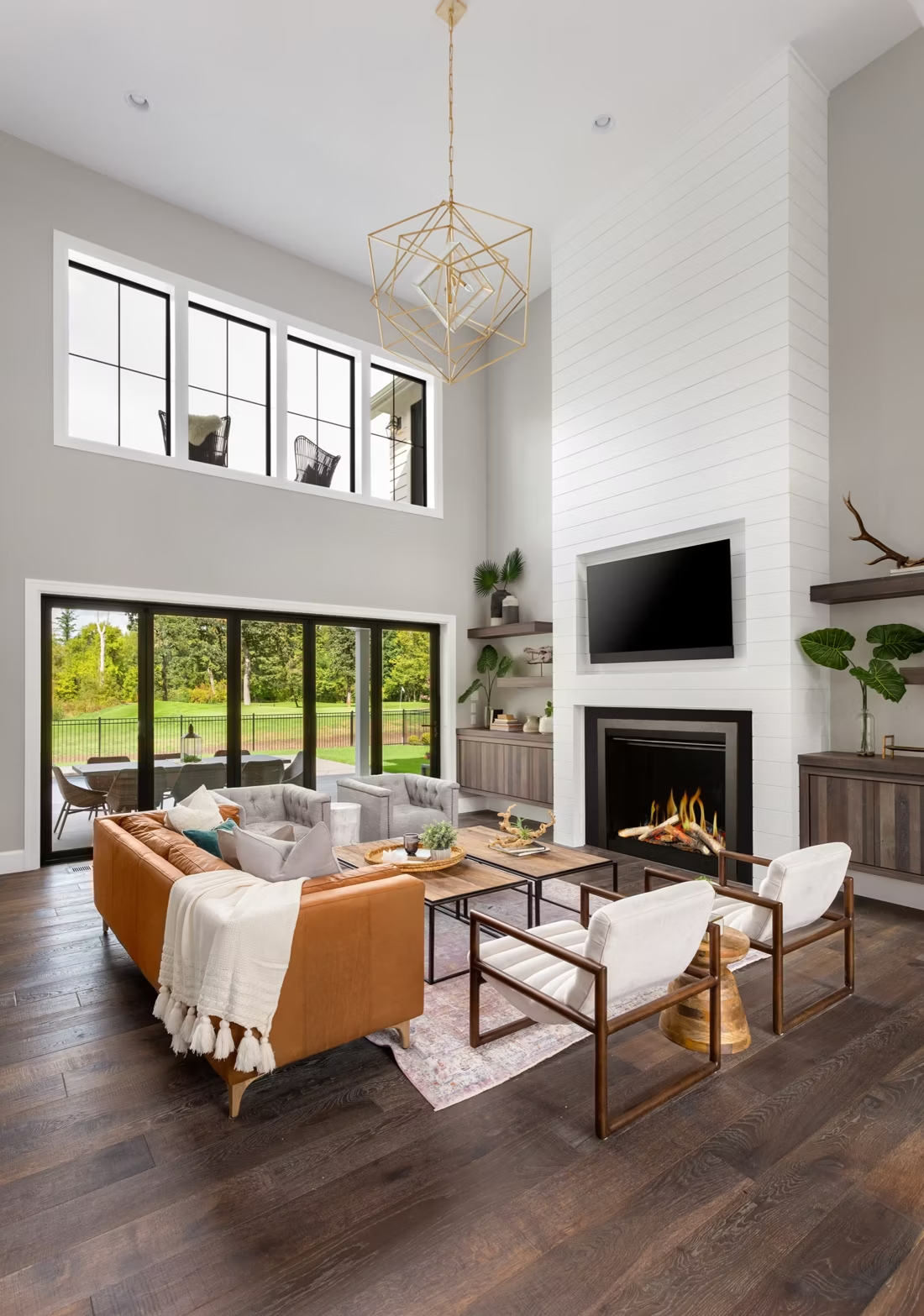
Electric fireplaces fit into that picture as the easy add-on, not the replacement. They show up in bedrooms, sunrooms, additions, and mobile or manufactured homes where running a masonry chimney or a new gas line isn't worth the cost or the hassle. A basic plug-in insert needs nothing more than a standard outlet; a larger built-in wall unit may call for a dedicated circuit, which a licensed electrician can run in an afternoon. For older Garrard County farmhouses with plaster walls and no existing flue, that's often the difference between a fireplace project that happens this month and one that gets put off for years.
Three steps. No salesperson until you're ready.
Tell us about your project
Your zip code, your situation, and the fuel you're leaning toward—or let the answers point you to one.
See what's actually available
The brands dealers within 100 miles genuinely carry—real options, never a catalog mirage.
Get your dealer & Project Guide
A trusted local dealer, plus the free Project Guide & Parts List that names every component of the job.
Frequently Asked Questions
How much does an electric fireplace installation cost in Garrard County?
Electric fireplaces are the least expensive fireplace category to install, and that holds true in Garrard County. A simple plug-in insert or mantel unit can go in for the cost of the unit itself plus an hour of an electrician's time if a new outlet is needed. Larger built-in wall units or linear fireplaces that require a dedicated 240V circuit run higher, mostly driven by the electrical work rather than the fireplace itself. There's no chimney, no venting, and—for most units—no building permit involved, which is a big part of why electric comes in well under wood or gas installs for comparable square footage of heat coverage.
What size electric fireplace do I need for my home?
Most electric fireplaces are built to supplement a room, not heat a whole house—a typical unit puts out somewhere in the 5,000 to 10,000 BTU range, enough to noticeably warm a bedroom, sunroom, or living room addition but not a whole farmhouse on a 23°F night. In Garrard County, that usually means sizing the fireplace to the specific room it's going in rather than the home's total square footage, and treating it as backup or zone heat alongside whatever primary system—heat pump, propane furnace, or wood stove—already keeps the house warm.
Where can I find a certified electric fireplace installer near Garrard County?
Because Garrard County is small and rural, a lot of homeowners end up matched with a hearth dealer or licensed electrician based out of nearby Lexington, Danville, or Richmond who services the county as part of their route. That's normal, and it doesn't mean lower quality work—it just means booking a little ahead and expecting a short travel charge on larger installs that require new wiring. For a basic plug-in unit, any licensed electrician can handle the outlet work; for a built-in wall unit or fireplace-style insert, a dealer familiar with the specific brand's mounting and clearance requirements is worth the extra step.
Is an electric fireplace a good fit for a Garrard County home that already burns wood?
Yes, and it's actually a common pairing here. A lot of Garrard County households keep a wood stove or fireplace going as their real winter workhorse—burning local oak and hickory, some cutting their own from a Daniel Boone National Forest permit—and add an electric unit in a second living space, bedroom, or addition where running a second flue isn't practical. The electric unit doesn't compete with the wood heat; it covers the rooms the wood stove doesn't reach, and it turns on and off instantly for the ambiance-only moments where you don't want to build and tend a fire.
Do I need a permit to install an electric fireplace in Garrard County?
Most plug-in electric fireplaces need no permit at all—they're treated like any other appliance you plug into a wall outlet. If your installation requires a new dedicated circuit or panel work for a larger built-in unit, that electrical work typically does need to be permitted and inspected, which is standard practice for any new circuit in a home regardless of what it's powering. A licensed electrician working in Garrard County will know the local inspection process and can pull that permit as part of the job.
What's the best electric fireplace for a Garrard County home?
Unlike wood stoves, electric fireplaces don't need to be climate-rated for a specific region—a unit built for heat output performs the same in Lancaster as it does anywhere else. The bigger decision is style and placement: a recessed linear unit for a modern remodel, a stove-style freestanding unit for an older farmhouse look, or a mantel package for a room that needs a focal point without construction. Brands like Dimplex, Napoleon, and Amantii are common choices for realistic flame effect and real heat output rather than pure ambiance-only units. A local dealer can walk through which style fits your specific room and wall setup.
Will my electric fireplace still work during a power outage?
No—and this is worth planning around in a rural county like Garrard, where storm-related outages can stretch longer than they do closer to Lexington. An electric fireplace, by design, needs power to run its heater and flame effect, so it goes dark right when a wood stove would matter most. For homes relying on electric as a secondary heat source, it's smart to keep a functioning wood stove, fireplace, or propane heater as the backup that still works when the grid doesn't.
How much does it cost to run an electric fireplace in Garrard County?
Running costs depend on your electric rate and how many hours a day the heater function is on, but electric fireplaces are generally inexpensive to operate compared to running a whole-house furnace longer to cover the same room. Many Garrard County homes are served by a rural electric cooperative rather than a large investor-owned utility, so actual per-kWh rates vary by provider—your local dealer or electrician can help estimate real running costs for the specific unit you're considering based on your current rate.
Electric vs. pellet stove—which makes more sense for my Garrard County home?
Pellet stoves burn bagged fuel—brands like Lignetics, Hamer Pellet Fuel, and Greenway Renewable Energy are all sold in this part of Kentucky—and put out real, substantial heat, but they need venting, a hopper to load, and electricity to run the auger and blower. Electric fireplaces skip the venting and the fuel handling entirely, plugging in or hardwiring with essentially no maintenance, but they produce less total heat and won't run without power just like a pellet stove won't. For a Garrard County homeowner who wants genuine supplemental heat with some maintenance, pellet is worth a look; for someone who wants the simplest possible install for ambiance or light zone heat, electric is usually the better fit.
Can I put a TV above my fireplace?
Yes—with an asterisk. Fireplaces are hot and TVs don't like heat. Either put a mantel between them to deflect rising warmth, or choose a fireplace with heat-management technology that creates a cool zone on the wall above—the wall stays around 125 degrees, barely warm, while the room still gets full heat. If you like clean lines and don't want a mantel, heat management is the answer.
Do electric fireplaces actually produce heat?
Yes—most put out around 4,800–5,000 BTUs from a standard outlet, which comfortably warms a bedroom, office, or den as a comfort-zone heater. What they won't do is carry a whole house the way wood, gas, or pellet can. Think of electric as ambiance-first with honest supplemental heat: flames on with no heat in July, flames plus warmth in January.
Does a fireplace add value to my home?
On average, a fireplace adds back to the home about the same amount you spent installing it. Add the monthly savings from heating the rooms you actually use instead of the whole house—often hundreds of dollars a year—and the value case is strong before you even count what a fire does for how your family uses the room.
What is an in-home preview and do I need one?
It's a visit where a hearth professional measures your space, confirms the model you picked actually works in your home, and walks the specs—framing, gas line, venting, finish work—before anything is ordered. Some details you just can't know until you see the house. Never make a down payment without one; it's the single most-skipped step that burns buyers.
Find your electric fireplace in Garrard County.
Tell us a bit about your home and we'll put together a free Project Guide & Parts List—the right electric fireplace or insert for your space, matched with a trusted local dealer who can install it.
Find Your Fireplace →