
Warm Up Fort Wright Without the Wood Pile.
Direct, efficient heat for Fort Wright's Cincinnati-area winters. Find the right gas fireplace or insert, and get matched with a trusted local dealer.
Every Project Starts From One of These Five Situations
Convenient heat for a Cincinnati-area suburb.
Fort Wright sits just across the Ohio River from Cincinnati, in Kenton County, at under 800 feet in elevation. Winters here are moderate compared to the upper Midwest—average lows around 23°F and a heating season that adds up to less than half the total winter heating load of a city like Duluth, MN—but cold snaps and ice storms still roll through the Ohio Valley most years. In this tightly built, close-lot suburb of just under 6,000 residents, wood burning has largely fallen out of use; gas is the default choice for homeowners who want real flame and real heat without stacking cordwood in a small backyard.
Duke Energy Kentucky supplies both electric and natural gas service to most of Fort Wright, which makes a direct-vent gas insert or fireplace a relatively simple addition for any home already running gas to a furnace or water heater. Many houses here were built mid-century with an open masonry fireplace, and those original fireboxes are excellent candidates for a gas insert conversion—keeping the existing chimney and mantle while swapping in efficient, on-demand heat. With no local air-quality restrictions on gas appliances and Kenton County's straightforward permitting process, most projects move from consultation to installed unit in a matter of weeks.
Three steps. No salesperson until you're ready.
Tell us about your project
Your zip code, your situation, and the fuel you're leaning toward—or let the answers point you to one.
See what's actually available
The brands dealers within 100 miles genuinely carry—real options, never a catalog mirage.
Get your dealer & Project Guide
A trusted local dealer, plus the free Project Guide & Parts List that names every component of the job.
Frequently Asked Questions
How much does a gas fireplace installation cost in Fort Wright?
In Fort Wright and the surrounding Kenton County area, a gas fireplace or insert installation typically runs $4,000 to $9,500 depending on whether you're converting an existing masonry fireplace or starting from scratch. A direct-vent insert dropped into an existing chimney with a gas line already run to the fireplace tends to land on the lower end. New construction, gas line extensions from the meter, or a full masonry-to-drywall conversion push toward the higher end. Because Fort Wright is a built-out, older Cincinnati-area suburb, most projects here are insert conversions into fireboxes original to homes from the 1950s and 60s.
Can I convert my existing wood-burning fireplace to gas?
Yes, and it's the most common gas project in Fort Wright's older housing stock. Many homes in Kenton County were built with open masonry fireplaces intended for wood, but wood burning is now uncommon in this dense, close-lot suburb—most homeowners who still have that original firebox convert it to a direct-vent or vented gas insert rather than deal with firewood storage and chimney upkeep in a small yard. The existing chimney is typically lined and reused as the vent path, so you keep the mantle and hearth look while swapping the fuel.
Do I need natural gas service, or can I use propane?
Duke Energy Kentucky supplies both electric and natural gas service to most of Fort Wright, so if your home already has a gas furnace or water heater, running a line to a new fireplace is usually a straightforward tie-in for your installer. For homes just outside the natural gas footprint in outlying parts of Kenton County, propane is the standard substitute—most fireplace models can be ordered or converted for either fuel with a change to the orifice and regulator.
Will a gas fireplace still work if the power goes out?
Most direct-vent gas fireplaces use IPI (intermittent pilot ignition) with a battery backup, so they'll light and run normally during an outage as long as the batteries are fresh—worth checking each fall before the first cold snap moves through the Ohio Valley. Valor fireplaces skip batteries altogether: their pilot assembly generates its own electricity through a thermocouple, so the unit keeps working indefinitely. For Fort Wright homeowners who've lost power during an ice storm, that's a real advantage worth asking a local dealer about.
What's the difference between a gas fireplace, insert, and stove?
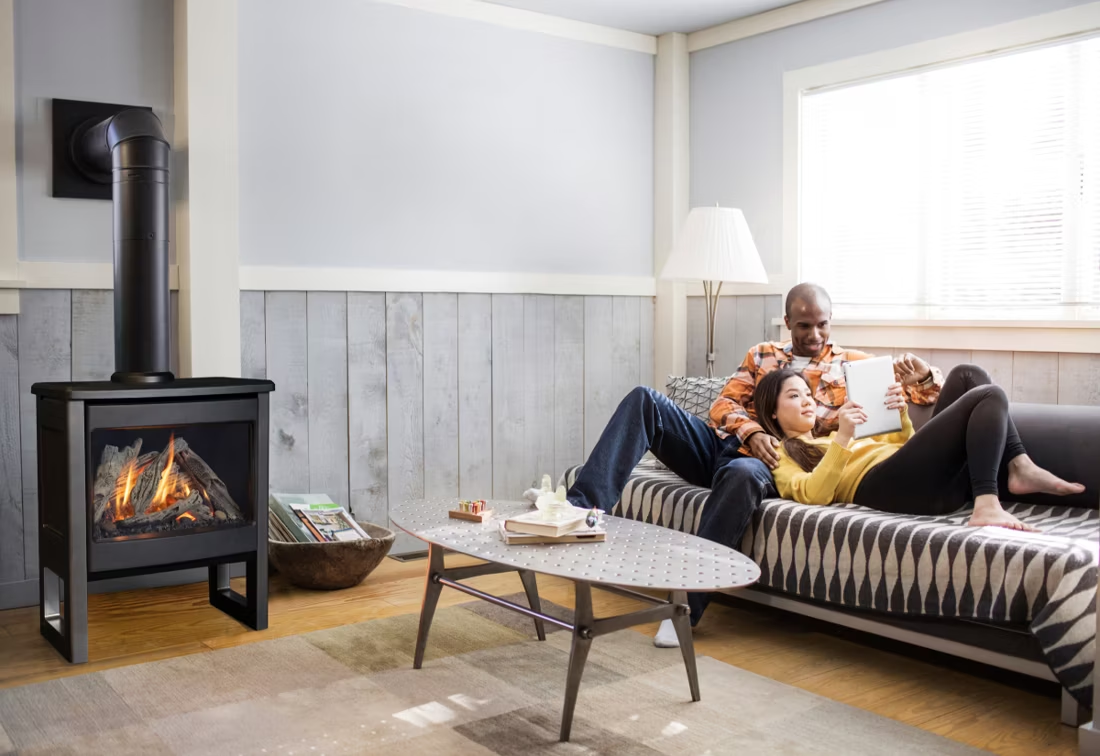
A gas fireplace is a fully built-in unit framed into a wall—the right call for new construction or a remodel without an existing firebox. A gas insert slides into an existing masonry opening and uses the chimney as its vent path, which is why it's the most common choice in Fort Wright's older homes with original fireplaces. A gas stove is freestanding, sitting on a hearth pad like a wood stove but running on gas—a good option when there's no masonry opening to work with and floor space allows for a standalone unit.
Do I need a permit to install a gas fireplace in Fort Wright?
Yes. Gas fireplace installations fall under Kenton County's building permit process, and any new gas line work has to be done by a licensed gas fitter and inspected before it's covered over. Most established hearth dealers serving Fort Wright coordinate the permit, the gas line, and the final inspection as part of the installation, so it's rarely something a homeowner has to manage separately.
Are vent-free gas fireplaces allowed in Fort Wright?
Kentucky permits vent-free (unvented) gas fireplaces, but they come with room-size minimums and require an oxygen depletion sensor, since they release combustion byproducts directly into the living space. Vented direct-vent units, which draw combustion air from outside and exhaust it back outside, are the more common recommendation for Fort Wright installations—they don't carry the same indoor air-quality tradeoffs and work in any room size. Ask a local dealer to walk through both options against your specific room before deciding.
How often does a gas fireplace need service?
Plan on an annual inspection, ideally in early fall before regular use picks up through the Northern Kentucky winter. A technician checks the burner, pilot assembly, venting, and gas connections, and cleans the glass and interior. This is a quick visit compared to wood chimney sweeping—most local service providers charge in the $125 to $200 range for a standard annual check.
Gas vs. electric fireplace—which makes more sense in Fort Wright?
Gas delivers real, radiant heat output—enough to meaningfully supplement central heating on the coldest nights when Fort Wright's overnight lows drop into the low 20s—and it keeps running independent of the grid thanks to battery-backup pilot ignition. Electric fireplaces plug into any outlet, cost far less to install (often under $1,000), and produce a realistic flame effect, but heat output is modest and depends entirely on Duke Energy Kentucky's power staying on. For a primary supplemental heat source, gas is the stronger choice; for ambiance in a spot where running a gas line isn't practical—a basement rec room or bedroom, for instance—electric is a simple, lower-cost option.
Can I put a TV above my fireplace?
Yes—with an asterisk. Fireplaces are hot and TVs don't like heat. Either put a mantel between them to deflect rising warmth, or choose a fireplace with heat-management technology that creates a cool zone on the wall above—the wall stays around 125 degrees, barely warm, while the room still gets full heat. If you like clean lines and don't want a mantel, heat management is the answer.
What does it take to replace an existing fireplace?
Fireplaces are like icebergs—bigger behind the wall than in front of it. Replacement means removing the surrounding tile or stone (the finish material laps onto the fireplace face), pulling the old unit, setting the new one in the same enclosure, and re-finishing the wall. A hearth professional can determine what's behind your wall without demolition during an in-home preview.
Can I install a fireplace myself?
If you're putting a fire in your house on purpose, it's best to work with an expert. Unless you're genuinely experienced in framing, gas line, vent pipe, and the national code on clearances to combustibles, have a professional do it—and ideally the same company that sells you the fireplace, so warranty, service, and liability all live under one roof.
What is an in-home preview and do I need one?
It's a visit where a hearth professional measures your space, confirms the model you picked actually works in your home, and walks the specs—framing, gas line, venting, finish work—before anything is ordered. Some details you just can't know until you see the house. Never make a down payment without one; it's the single most-skipped step that burns buyers.
Nearby Dealers
Hearth shops serving Fort Wright and the surrounding area. Every listing shows whether it is a WhyFire partner, a dealer we have verified as authorized for the brands we recommend, or a local business carrying hearth products. No manufacturer pays for placement. How we verify dealers →
Best Cincinnati Chimney
Chimney Top Masonry
Bona Decorative Hardware
Charlie's Chimney Sweeps & Masonry
Watson's Of Cincinnati
Top Quality Building Products
Chimney Care Fireplace & Stove
Reading Rock's Fireside Hearth & Home
Brick Tec Inc.
Bethel Feed & Supply Inc.
Find your gas fireplace in Fort Wright.
Tell us a bit about your home and we'll match you with a trusted local Fort Wright dealer and send over a free Project Guide & Parts List—the exact parts, vent kit, and recommended installer for your gas fireplace project.
Find Your Fireplace →