
Find electric heat that fits any room in Floyd County—no chimney required.
From coal-camp houses in Wayland and Wheelwright to newer builds around Prestonsburg and Allen, electric fireplaces bring instant, plug-in heat to rooms where running a flue just isn't practical. Find the right unit and connect with a trusted local dealer.
Every Project Starts From One of These Five Situations
The simplest heat source in the hollow.
Floyd County sits in the eastern Kentucky coalfields, where narrow hollows and steep ridgelines shape everything from house design to heating choices. Winters here average lows around 23°F with roughly 4,700 heating degree days a season—notably milder than the deep interior cold of places like Duluth, MN or Fargo, ND, but still cold enough that supplemental heat matters from November through March. Plenty of local homes still lean on wood—oak, hickory, maple, and cherry are the common species split and burned throughout the county—alongside electric baseboard, heat pumps, or propane for whole-house heat.
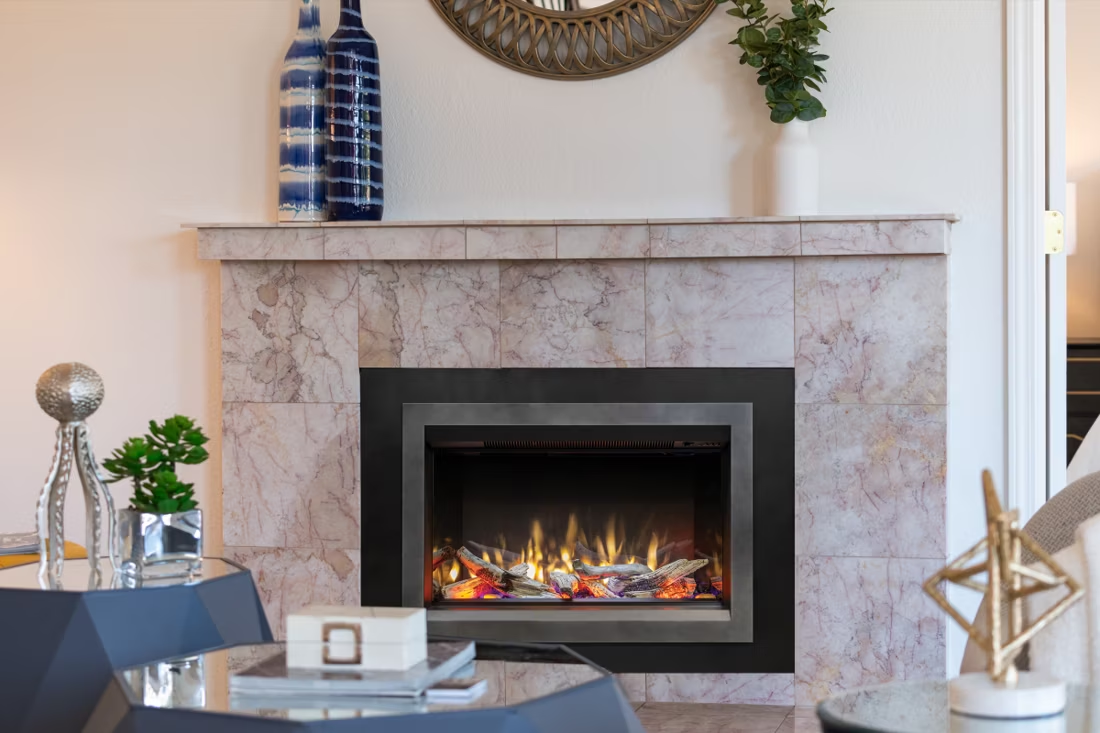
Where an electric fireplace earns its place is in the rooms wood and gas can't easily reach: a finished basement rec room in a coal-camp house with no existing flue, an upstairs bedroom in a newer build near Allen, a rental unit in Prestonsburg where the landlord won't approve venting work. Electric units run on standard household power from Kentucky Power, need no chimney, no gas line, and in most plug-in cases no permit at all. That makes them the fastest, least invasive way to add real warmth and ambiance to almost any room in the county—even if it's not the home's primary heat source.
Three steps. No salesperson until you're ready.
Tell us about your project
Your zip code, your situation, and the fuel you're leaning toward—or let the answers point you to one.
See what's actually available
The brands dealers within 100 miles genuinely carry—real options, never a catalog mirage.
Get your dealer & Project Guide
A trusted local dealer, plus the free Project Guide & Parts List that names every component of the job.
Frequently Asked Questions
How much does an electric fireplace installation cost in Floyd County?
Costs vary widely by unit type. A plug-in freestanding or mantel-package electric fireplace typically runs $400 to $1,500 including the unit and setup—no electrician needed since it uses a standard outlet. A built-in wall unit or a linear electric insert that requires a dedicated 20-amp circuit and some framing or drywall work usually lands between $1,200 and $3,500, depending on wall prep and whether an electrician needs to run new wiring. Because there's no venting, chimney, or gas line involved, electric installs in Floyd County are consistently the least expensive fireplace option local dealers quote.
Will an electric fireplace actually heat a room in Floyd County's winters?
Most residential electric fireplaces top out around 1,500 watts, or roughly 5,000 BTU—enough to comfortably heat a single room in the 300 to 400 square foot range, especially as supplemental zone heat. That works well for a den, bedroom, or finished basement, but it won't carry a whole house through a January cold snap with lows in the low 20s. In practice, most Floyd County homeowners pair an electric fireplace with existing baseboard, a heat pump, or a wood stove for primary heat, and use the electric unit for the room they spend the most time in.
Do I need a permit to install an electric fireplace in Floyd County?
A plug-in electric fireplace that draws from an existing outlet generally doesn't require any permit—it's treated like any other appliance. If you're installing a built-in or wall-mounted unit that needs a new dedicated circuit, most jurisdictions in Floyd County will require an electrical permit for that circuit work, pulled by a licensed electrician. Local dealers who handle built-in installs typically coordinate this as part of the job, so it's worth asking upfront whether your chosen unit needs new wiring or just an outlet.
Will my electric fireplace work during a power outage?
No—electric fireplaces require grid power to run, and ice storms and downed lines aren't uncommon in the hollows and ridgetop routes across Floyd County during winter. If backup heat during outages matters to your household, an electric fireplace should be viewed as a comfort and ambiance feature, not an emergency heat source. Many local homeowners pair an electric unit in the main living space with a wood stove or fireplace elsewhere in the house—cordwood from local oak, hickory, or maple keeps working when the power doesn't.
What's the difference between a plug-in electric fireplace, a built-in unit, and an electric insert?
A plug-in freestanding or mantel-package electric fireplace is the simplest option—it arrives largely assembled, plugs into a standard outlet, and can be moved if you relocate. A built-in wall unit is recessed into the wall for a cleaner, more permanent look and usually needs a dedicated circuit. An electric insert is sized to slide into an existing masonry fireplace opening, which is a common choice for older Floyd County homes—including some of the coal-camp houses around Wayland and Wheelwright—that have an unused wood fireplace and want a low-maintenance replacement without touching the chimney.
What's the best electric fireplace for a Floyd County home?
Because electric units generate heat through resistance coils rather than combustion, outdoor temperature doesn't affect their output the way it does with wood or gas—a 1,500-watt unit performs the same whether it's 40°F or 10°F outside. What matters more locally is room layout: for drafty older homes common in the county's hollow construction, a unit with a strong built-in fan-forced heater will feel more effective than a purely decorative model with a small heat element. Local dealers can match wattage and heater style to the specific room you're trying to warm.
How much maintenance does an electric fireplace need?
Very little—this is one of the biggest advantages over wood or gas in Floyd County. There's no chimney to sweep, no ash to clean, and no annual gas line inspection. Maintenance is limited to occasional dusting of the vents, replacing the LED flame bulbs every several years (most last 20,000+ hours), and keeping the unit's air intake clear of dust buildup. There's no seasonal service call required the way there is for a wood stove or gas insert.
How much does it cost to run an electric fireplace in Floyd County?
Running cost depends on Kentucky Power's residential electric rate and how many hours a day you run the unit. A 1,500-watt fireplace run on high for several hours a day during winter evenings typically adds a modest amount to a monthly bill—noticeably less than heating an equivalent space with electric baseboard for the same hours, since most electric fireplaces let you run the flame effect without the heater engaged. Ask your local dealer for the specific wattage draw on any unit you're considering so you can estimate against your own rate.
Electric vs. wood or pellet—which fits my Floyd County home better?
Wood offers real heat output from local hardwoods like oak and hickory and keeps working when the power is out, which matters during winter storms in the county. Pellet stoves—using regional brands like Lignetics, Hamer Pellet Fuel, or Greenway Renewable Energy—burn cleaner and are easier to load than cordwood, but still need electricity to run the auger and blower, so they share electric's outage vulnerability. A plug-in or built-in electric fireplace beats both on installation simplicity and upfront cost, with no venting, no fuel storage, and no permit hassle for basic units. For a primary heat source in a home with wood-burning heritage, wood or pellet usually wins; for a low-maintenance ambiance and supplemental-heat option in a room without an existing chimney, electric is hard to beat.
Can I put a TV above my fireplace?
Yes—with an asterisk. Fireplaces are hot and TVs don't like heat. Either put a mantel between them to deflect rising warmth, or choose a fireplace with heat-management technology that creates a cool zone on the wall above—the wall stays around 125 degrees, barely warm, while the room still gets full heat. If you like clean lines and don't want a mantel, heat management is the answer.
Does an electric fireplace need a vent or chimney?
No—that's its superpower. An electric fireplace needs a wall and an outlet, period. No vent pipe, no gas line, no clearances to design around, which is why it works in bedrooms, offices, apartments, and walls where venting a gas or wood unit would be impractical or impossible. Installation is typically the simplest and least expensive of any fireplace type.
What is an in-home preview and do I need one?
It's a visit where a hearth professional measures your space, confirms the model you picked actually works in your home, and walks the specs—framing, gas line, venting, finish work—before anything is ordered. Some details you just can't know until you see the house. Never make a down payment without one; it's the single most-skipped step that burns buyers.
Does a fireplace add value to my home?
On average, a fireplace adds back to the home about the same amount you spent installing it. Add the monthly savings from heating the rooms you actually use instead of the whole house—often hundreds of dollars a year—and the value case is strong before you even count what a fire does for how your family uses the room.
Find your electric fireplace in Floyd County.
Tell us a bit about your home and room, and we'll put together a free Project Guide & Parts List for your electric fireplace project—matched with a trusted local dealer in Floyd County.
Find Your Fireplace →