
Reliable gas heat for Clay County's mountain winters.
With winter lows averaging 22°F and no natural gas utility reaching most of the county, propane fireplaces and inserts give Clay County homes clean, instant heat without another cord to split. Find the right unit and get matched with a trusted local dealer.
Every Project Starts From One of These Five Situations
Propane-powered comfort in the Appalachian foothills.
Clay County is a small, rural county of roughly 2,464 people tucked into the foothills bordering the Daniel Boone National Forest in southeastern Kentucky. Climate zone 4A here means real winters—a solid winter heating season with average lows around 22°F—but not the brutal cold of the upper Midwest. Plenty of households still burn oak, hickory, maple, and cherry cut from the surrounding hollows and ridges, but a growing number of homeowners in town and out in the county are turning to gas fireplaces and inserts for the rooms where they want heat on demand without tending a fire.
Clay County doesn't have natural gas utility service reaching most properties, so propane is the practical choice here—delivered and stored in a tank on the property by regional suppliers rather than piped in. That makes almost any gas fireplace, insert, or stove installable countywide, whether you're converting an old masonry fireplace on a ridge outside Manchester or adding a zone-heat unit to a new build. The tradeoff for propane's flexibility is planning: tank sizing, delivery access, and fuel budgeting matter more here than they would in a natural-gas neighborhood.
Three steps. No salesperson until you're ready.
Tell us about your project
Your zip code, your situation, and the fuel you're leaning toward—or let the answers point you to one.
See what's actually available
The brands dealers within 100 miles genuinely carry—real options, never a catalog mirage.
Get your dealer & Project Guide
A trusted local dealer, plus the free Project Guide & Parts List that names every component of the job.
Frequently Asked Questions
How much does a gas fireplace installation cost in Clay County?
A typical propane fireplace or insert installation in Clay County runs roughly $3,800 to $9,500, depending on the unit, whether you already have a propane tank and regulator in place, and how much venting or gas line work is involved. Converting an existing masonry fireplace to a propane insert with a stainless liner tends to land on the lower end if a tank is already on site. New installations that require a fresh propane tank, tank pad, and buried line run higher. Given the winding roads and rural access in much of the county, expect installers to factor in some travel time when quoting jobs outside Manchester.
Can I convert my existing wood fireplace to gas?
Yes, and it's a common project for older homes in Clay County that were originally built around a masonry wood fireplace burning local oak or hickory. A propane insert slides into the existing firebox, and a stainless liner runs up the chimney as the vent path—no need to tear out the original masonry. The conversion typically preserves the look of the fireplace while eliminating the wood handling and ash cleanup, and it works whether the fireplace has been in regular use or sat unused for years.
Do I need natural gas to install a gas fireplace, or can I use propane?
In Clay County, propane is the standard answer since natural gas utility lines don't reach most of the county. A propane tank—either a small unit near the house or a larger buried or above-ground tank depending on your usage—supplies the fireplace instead of a gas main. Most gas fireplace models sold today can be configured for propane with the correct orifice and regulator, so fuel type rarely limits your choice of unit. Your local dealer will size the tank and delivery schedule based on how much you plan to run the fireplace.
Will my gas fireplace work during a power outage?
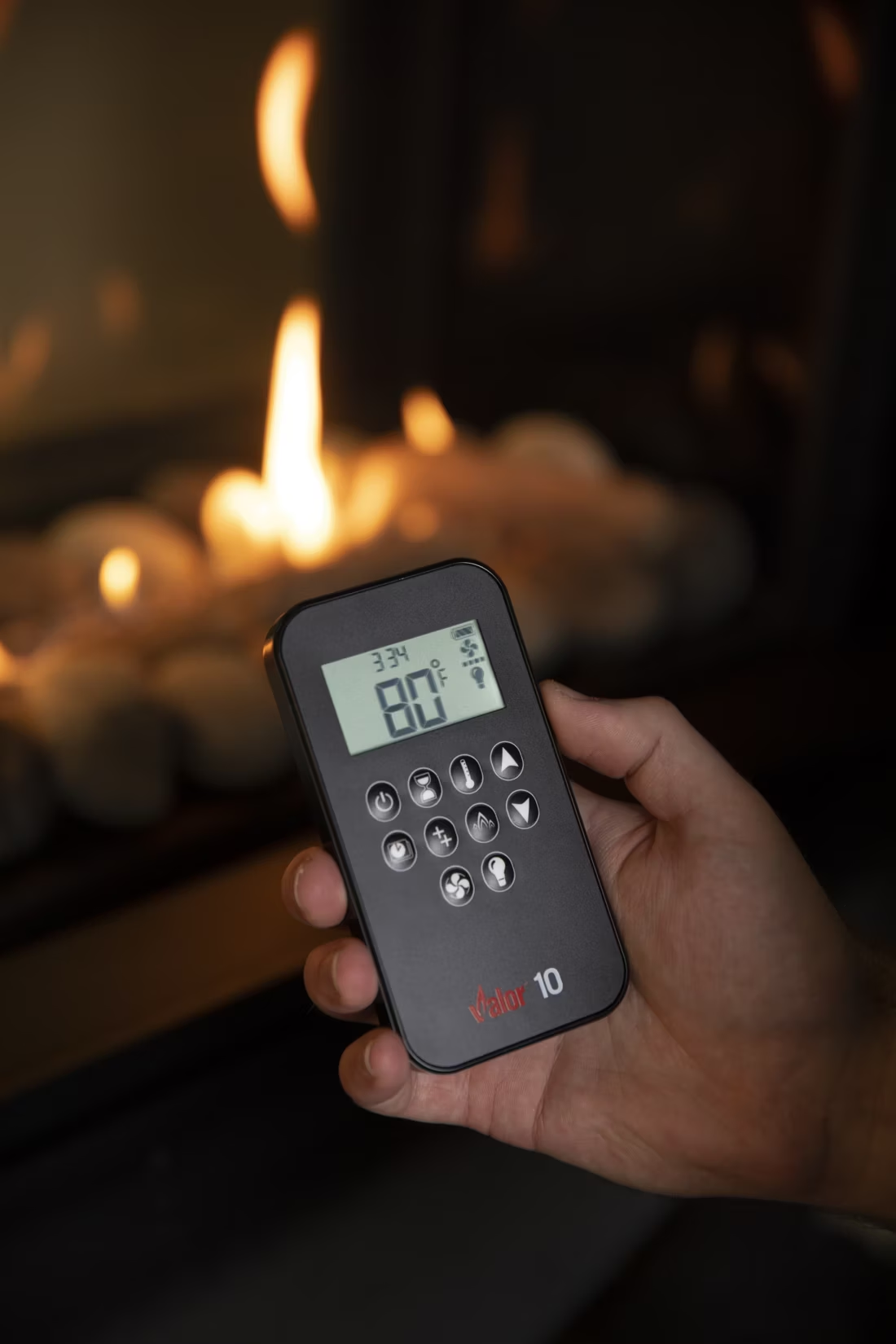
Most propane fireplaces with intermittent pilot ignition (IPI) run on battery backup, so they'll light and operate normally even when the power is out—which matters in Clay County, where ice storms and downed lines in the hollows can knock out electricity for days at a time. Keep fresh batteries in the unit year-round, since that's the detail people forget until they actually need it. Some manufacturers, like Valor, generate their own power off the pilot's thermocouple and don't need batteries at all—worth asking your local dealer about if outage reliability is a priority for your home.
What's the difference between a gas fireplace, gas insert, and gas stove?
A gas fireplace is a built-in unit framed into a wall, typically chosen for new construction or a remodel. A gas insert is sized to slide into an existing masonry firebox, converting an old wood fireplace into a sealed, efficient heat source using the existing chimney as a vent chase. A gas stove is a freestanding unit that sits on a hearth pad like a wood stove but burns propane. For the many older homes in Clay County with an existing masonry fireplace, an insert is usually the simplest and most cost-effective upgrade.
Do I need a permit to install a gas fireplace in Clay County?
Yes—a building permit is generally required for a new gas fireplace or insert installation, and propane tank placement is subject to Kentucky State Fire Marshal setback and installation rules that your propane supplier and installer will already know. Most local dealers coordinate the permitting and the tank setup as part of the job, so you're not stuck managing multiple contractors yourself. If you're only replacing a like-for-like unit with no venting changes, requirements are lighter—ask your installer to confirm before work starts.
What's the difference between vented and vent-free gas fireplaces?
Vented (direct-vent) fireplaces draw combustion air from outside and exhaust the byproducts back outside through sealed venting—they're the cleanest option and produce real, sustained heat. Vent-free units burn propane directly into the room with no external venting, which makes them easier to install in a room without existing venting but means some combustion byproducts stay indoors. Vent-free units are legal in Kentucky but come with strict room-size and ventilation requirements. For most Clay County homes, direct-vent units are the more common recommendation, especially for a primary living space where the fireplace runs for hours at a time.
How often should my gas fireplace be serviced?
Plan on an annual inspection, ideally before the coldest stretch of winter sets in. A technician will check the burner, pilot assembly, venting, and gas connections, and clean the glass and interior components. This is a quicker, less involved job than wood chimney sweeping, but it matters just as much for safety—propane systems in particular should have connections and the tank regulator checked as part of the visit.
Gas vs. wood—which is right for my home in Clay County?
Wood remains a strong option here—oak, hickory, maple, and cherry are all abundant locally, and Daniel Boone National Forest cutting permits run about $20 per cord during the May-to-October season, making self-cut firewood an affordable heat source that also works without electricity. Propane offers instant, thermostat-controlled heat with no splitting, stacking, or ash cleanup, and modern units with battery-backup ignition still function in an outage. Many households in the county run both: propane for daily convenience in the main living space, wood as backup heat and for the rooms where a real fire matters more.
Is my gas fireplace wasting gas?
If it was installed more than 15 years ago, probably. Older gas fireplaces keep a standing pilot light burning all the time, and that little flame can cost a couple hundred dollars a year. Newer models use pilot-on-demand ignition—the pilot lights only when you use the fireplace and goes out when you turn it off.
Can I put a TV above my fireplace?
Yes—with an asterisk. Fireplaces are hot and TVs don't like heat. Either put a mantel between them to deflect rising warmth, or choose a fireplace with heat-management technology that creates a cool zone on the wall above—the wall stays around 125 degrees, barely warm, while the room still gets full heat. If you like clean lines and don't want a mantel, heat management is the answer.
How much should I budget for a fireplace?
For an average home—covering the fireplace, the vent pipe, and basic installation—a budget between $3,900 and $5,500 gives you a lot of options across wood, gas, and pellet. By the time you add finish work, gas line, and electrical, the average complete installation lands between $5,000 and $12,000 all-in. In a remodel or new build, a good rule is to put about 2.5% of the total project cost toward the fireplace.
Can I install a fireplace myself?
If you're putting a fire in your house on purpose, it's best to work with an expert. Unless you're genuinely experienced in framing, gas line, vent pipe, and the national code on clearances to combustibles, have a professional do it—and ideally the same company that sells you the fireplace, so warranty, service, and liability all live under one roof.
Find your gas fireplace in Clay County.
Tell us a bit about your home and we'll match you with a trusted local dealer serving Clay County, plus a free Project Guide & Parts List—the exact parts your propane or gas fireplace project needs, including the vent kit, and the installer we recommend for your home.
Find Your Fireplace →