
Clean, plug-in heat for Caldwell County homes.
From Princeton to the rural stretches of the Pennyrile, electric fireplaces give Caldwell County homeowners instant heat and real flame-look ambiance without a chimney, gas line, or wood pile. Find the right unit and connect with a trusted local dealer.
Every Project Starts From One of These Five Situations
Electric fireplaces fit Caldwell County's mild winters and older housing stock.
Caldwell County sits in Kentucky's climate zone 4A with a moderate winter heating season and an average winter low near 27 degrees—noticeably milder than the long, harsh winters of places like Duluth or Bozeman. That's a climate where a single electric unit can genuinely carry a room through most of the season, rather than serving as pure backup. With a population under 7,000 spread across Princeton and the surrounding farmland, a lot of the county's housing stock is older frame farmhouses, brick ranches, and manufactured homes—exactly the kind of building where running new gas line or masonry chimney work is expensive or impractical, and a 120V or 240V electric fireplace is the simplest upgrade available.
Electric service throughout most of Caldwell County runs through Pennyrile Rural Electric Cooperative, and for homes already on that grid, adding an electric fireplace is usually a matter of an existing outlet or a straightforward circuit addition—not a new utility hookup. That makes electric a practical fit for rental properties in Princeton, mobile and manufactured homes out in the county, and any room where a family wants supplemental warmth and the look of fire without cutting into a wall for venting. It won't replace a woodstove for whole-home heat during an ice storm outage, but for daily zone heat and ambiance, it's hard to beat for cost and simplicity.
Three steps. No salesperson until you're ready.
Tell us about your project
Your zip code, your situation, and the fuel you're leaning toward—or let the answers point you to one.
See what's actually available
The brands dealers within 100 miles genuinely carry—real options, never a catalog mirage.
Get your dealer & Project Guide
A trusted local dealer, plus the free Project Guide & Parts List that names every component of the job.
Frequently Asked Questions
How much does an electric fireplace installation cost in Caldwell County?
A plug-in electric insert or freestanding unit that uses an existing standard outlet typically runs $400 to $900 including the unit and basic setup—no electrician required in most cases. A built-in wall-mount or a larger unit that needs a dedicated 240V circuit runs higher, generally $1,000 to $2,500, once a licensed electrician runs new wiring and a local installer handles the surround or mantel work. Homes in older parts of Princeton with dated panels sometimes need panel capacity checked before adding a dedicated circuit, which can add to the cost.
Do I need a permit or an electrician to install an electric fireplace in Caldwell County?
A simple plug-in unit on an existing outlet doesn't require a permit. If your project involves a new dedicated circuit, a built-in wall unit, or any rewiring, that work should go through a licensed electrician, and an electrical permit is typically required through the county building office before the work is inspected. Most local dealers either employ a licensed electrician or coordinate directly with one as part of the installation, so you're not left managing that piece yourself.
Will an electric fireplace work during a power outage?
No—electric fireplaces require power to run the heater, blower, and flame effect, so they go dark the moment the grid does. That matters in Caldwell County, where ice storms have knocked out power across the Pennyrile region for days at a time in past winters. If backup heat during outages is a priority, many local homeowners pair an electric fireplace for daily convenience with a wood stove or propane heater as a true off-grid backup, since a lot of the county still has access to oak, hickory, and other hardwoods for burning.
Electric vs. wood—which is right for my Caldwell County home?
Wood heat runs deep in this part of western Kentucky, with oak, hickory, maple, and cherry all common and burnable locally—it delivers real radiant heat and keeps working when the power goes out, which matters given the region's history of ice storm outages. Electric offers none of that off-grid resilience, but it wins on convenience: no wood handling, no ash, no chimney to maintain, and it installs in almost any room including mobile and manufactured homes where a wood stove isn't practical. For a primary residence with wood heat already in place, electric often ends up as the ambiance option in a bedroom or den. For rentals, additions, or homes without a chimney, it's frequently the primary choice.
What's the difference between an electric insert, a mantel package, and a wall-mount unit?
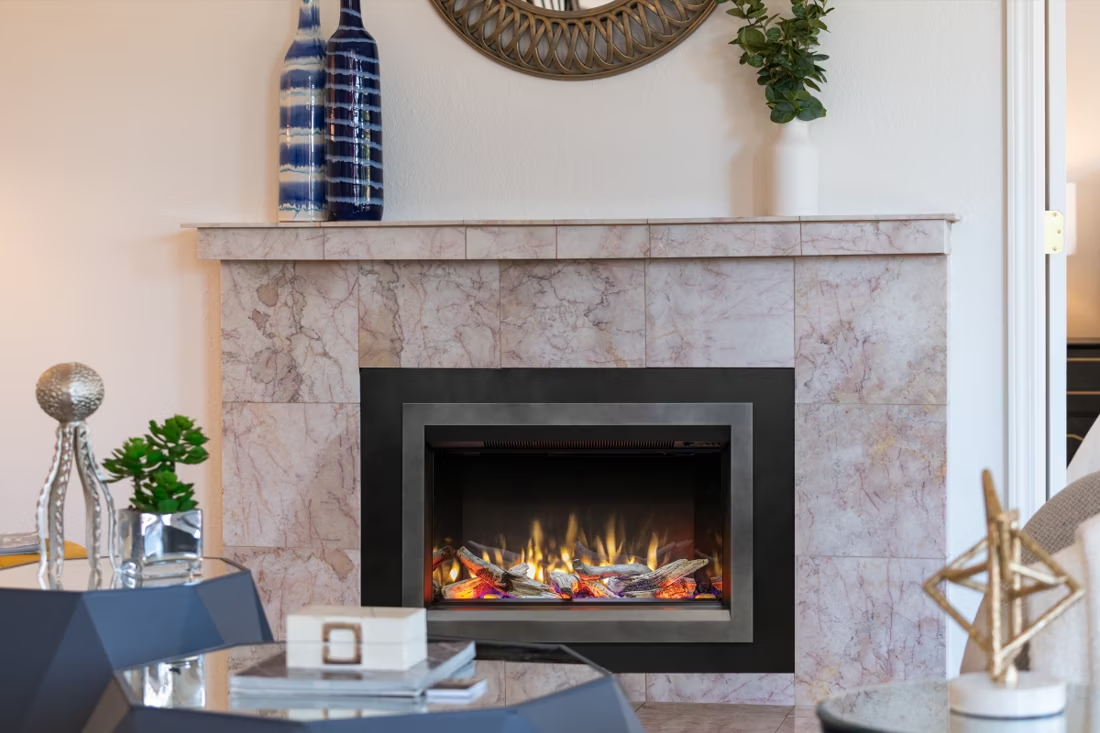
An electric insert is built to slide into an existing masonry fireplace opening, converting an old wood-burning firebox into a heat source without touching the chimney. A mantel package pairs an electric firebox with a surrounding cabinet or mantel and works anywhere there's an outlet, no existing fireplace needed. A wall-mount unit recesses into or hangs on a wall, often used in newer construction or remodels where a low-profile, linear look is wanted. For the many Caldwell County homes with an existing but unused masonry fireplace, an insert is usually the simplest and most cost-effective option.
Can an electric fireplace be installed in a mobile or manufactured home?
Yes, and it's a common project in Caldwell County's rural housing stock. A plug-in freestanding or mantel-style unit works in almost any manufactured home with a standard outlet and no structural modification. If you want a recessed or built-in look, your installer will need to confirm the wall cavity and framing can safely support the unit, since manufactured home wall construction differs from stick-built homes. Local dealers who've worked in the county's mobile home communities can flag this quickly during a walkthrough.
How much does an electric fireplace cost to run on my Pennyrile RECC bill?
Most electric fireplaces draw around 1,500 watts on the heater setting, which costs roughly 15 to 20 cents per hour to run at typical Pennyrile Rural Electric Cooperative rates—a few dollars for an evening of use. Because they're zone heaters, running one in the room you're actually using while setting back a central thermostat can lower your overall bill compared to heating the whole house, even though the fireplace itself uses power. The flame-only setting with the heater off uses only a few watts, so ambiance without heat costs next to nothing.
What size electric fireplace do I need for my room?
Electric fireplace heaters are rated to comfortably heat around 400 to 1,000 square feet under typical conditions, though older, less-insulated Caldwell County farmhouses may see a smaller effective range. For a single living room or den, most standard 1,500-watt units are sufficient. If you're trying to heat an open floor plan or a larger addition, talk to a local dealer about running two smaller units in different zones rather than relying on one large unit to cover the whole space—that tends to perform better than sizing up.
Electric vs. gas—which fits my Caldwell County home better?
Gas fireplaces deliver more heat output and a more authentic flame, but they depend on either a natural gas line—limited mostly to Princeton and immediate surroundings—or a propane tank, and installation involves venting and gas line work. Electric fireplaces skip all of that: no fuel line, no venting, and a much lower install cost, though the flame is a projected visual effect rather than real combustion and the heat output is capped around 1,500 watts. For homes outside Princeton's gas service area, or anyone who wants a fast, lower-cost project, electric is usually the more practical starting point.
Can I put a TV above my fireplace?
Yes—with an asterisk. Fireplaces are hot and TVs don't like heat. Either put a mantel between them to deflect rising warmth, or choose a fireplace with heat-management technology that creates a cool zone on the wall above—the wall stays around 125 degrees, barely warm, while the room still gets full heat. If you like clean lines and don't want a mantel, heat management is the answer.
Do electric fireplaces actually produce heat?
Yes—most put out around 4,800–5,000 BTUs from a standard outlet, which comfortably warms a bedroom, office, or den as a comfort-zone heater. What they won't do is carry a whole house the way wood, gas, or pellet can. Think of electric as ambiance-first with honest supplemental heat: flames on with no heat in July, flames plus warmth in January.
Can a fireplace actually lower my heating bill?
Yes—by creating a comfort zone. A furnace heats every square foot of the house just to warm the one room you're in; a gas fireplace on low burns roughly a sixth of the gas a typical furnace does. Set the furnace around 55–60 degrees as a baseline, then heat the rooms your family actually uses. Families who heat this way commonly save $20–$60 a month.
Should the dealer who sells my fireplace also install it?
Ideally, yes. A fireplace project involves vent pipe, gas line, electrical, and often tile or stone. Hire three or four separate trades and you own the liability and the game of telephone between them. One company selling and installing means one accountable party, start to finish—ask about factory training, on-time completion records, and what happens if an inspection fails.
Find your electric fireplace in Caldwell County.
Tell us a bit about your home and we'll match you with the right electric fireplace or insert, plus a free Project Guide & Parts List with the exact parts and your recommended local Caldwell County dealer.
Find Your Fireplace →