
Instant heat, zero mess, for Breathitt County living rooms.
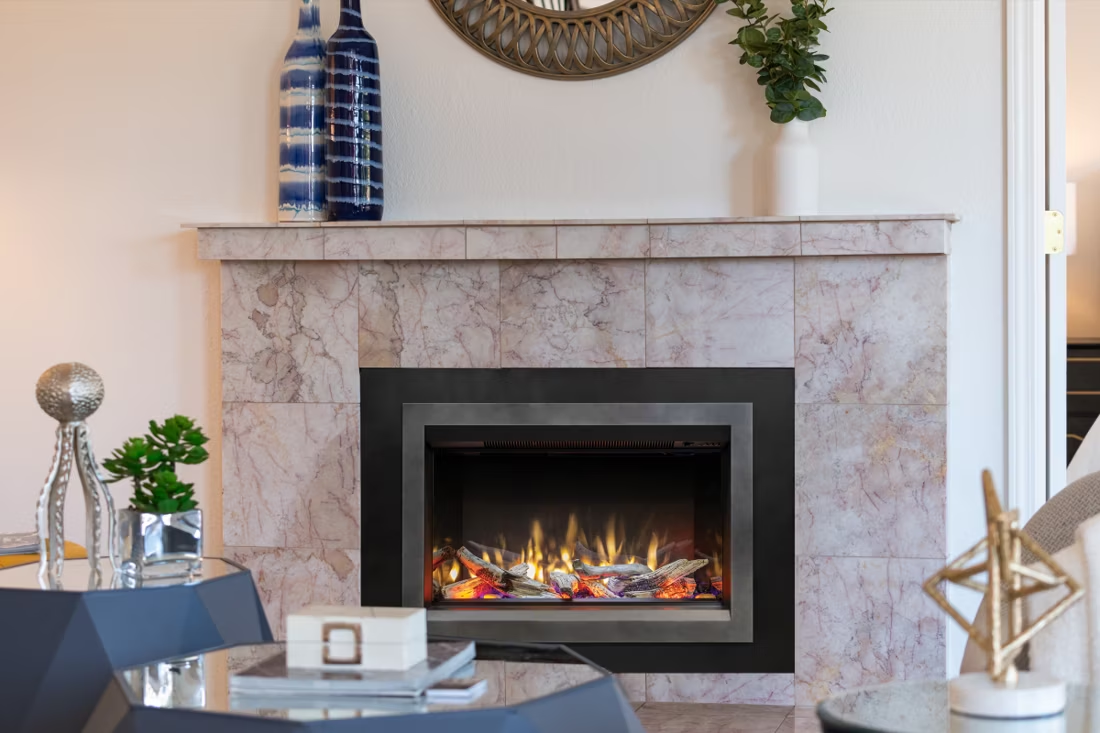
No venting, no wood, no gas line—just plug in or wire in and go. Find the right electric fireplace or insert for your Breathitt County home, and connect with a trusted local dealer.
Every Project Starts From One of These Five Situations
Simple heat that fits into any Appalachian home.
Breathitt County sits in the eastern Kentucky coalfields, its hollows and ridgelines cut by the North Fork Kentucky River near Jackson, the county seat. With just under 2,300 residents spread across steep, rural terrain, winters here run moderate by Appalachian standards—average lows near 23°F and about 4,752 heating degree days, placing the county in climate zone 4A. Wood heat runs deep here: oak, hickory, maple, and cherry come off Daniel Boone National Forest land through $20-per-cord cutting permits available May through October, and plenty of homes still burn wood as primary heat. But not every room, rental, or mobile home in the county is set up for a wood stove or chimney, and that's where electric fireplaces fill a real gap.
An electric fireplace or insert needs no chimney, no gas line, and in many cases no permit at all—just an outlet or, for a built-in unit, a dedicated circuit run by a licensed electrician. That makes electric a practical fit for additions, dens, basements, and the older manufactured homes common throughout the county's rural sections, where venting a wood or gas appliance can be complicated or expensive. The tradeoff worth understanding up front: electric fireplaces run on the grid served by the local rural electric cooperative, so during the ice storms and downed-line outages that hit these hollows most winters, an electric unit goes dark along with everything else. Most Breathitt County households treat electric as the easy, everyday supplemental heat and keep wood as the true backup.
Three steps. No salesperson until you're ready.
Tell us about your project
Your zip code, your situation, and the fuel you're leaning toward—or let the answers point you to one.
See what's actually available
The brands dealers within 100 miles genuinely carry—real options, never a catalog mirage.
Get your dealer & Project Guide
A trusted local dealer, plus the free Project Guide & Parts List that names every component of the job.
Frequently Asked Questions
How much does an electric fireplace installation cost in Breathitt County?
A plug-in electric insert or freestanding unit typically runs $400 to $1,200 installed, and in many cases there's no installation labor at all beyond setting the unit in place and plugging it into an existing outlet. Built-in wall units that require a dedicated 20-amp circuit run toward the higher end of that range once a licensed electrician is involved. Compare that to the $4,500-plus range for a wood stove with new chimney work, and it's clear why electric is often the choice for a second room, a rental unit, or a quick upgrade to an unused fireplace opening.
Do I need a permit to install an electric fireplace in Breathitt County?
In most cases, no—a plug-in electric fireplace or insert that uses a standard household outlet doesn't require a permit. Breathitt County doesn't maintain its own building or electrical permitting office; electrical work in the county falls under the Kentucky Department of Housing, Buildings and Construction, and that's only relevant if you're having a dedicated circuit or new wiring installed for a built-in unit. If your project involves running new wire, a licensed electrician will pull the appropriate electrical permit as part of the job—ask any local dealer whether your specific unit needs one before installation.
Will an electric fireplace work during a power outage?
No—this is the one honest limitation worth knowing before you buy. Electric fireplaces run entirely off household power, and in a rural county like Breathitt, ice storms and downed lines can knock out electric co-op service for a day or more at a time. If you're relying on heat during outages, a wood stove or a battery-backed gas unit is a better primary choice, with an electric fireplace serving as everyday supplemental warmth rather than your emergency heat plan. Plenty of homes in the county run both—wood for backup, electric for the room where hauling firewood and cleaning ash doesn't make sense.
Plug-in electric fireplace or built-in unit—which should I get?
A plug-in electric insert or freestanding stove is the simplest option: it fits into an existing fireplace opening or sits against a wall, uses a standard outlet, and can usually be installed without an electrician. A built-in wall unit is framed into a wall like a window, requires a dedicated circuit, and gives a more architectural, flush look—but it's a bigger project involving carpentry and wiring. For most Breathitt County homes adding supplemental heat to a den, bonus room, or older fireplace opening, the plug-in route is faster and cheaper. Built-ins make more sense for new construction or a full remodel.
How much does it cost to run an electric fireplace in Breathitt County?
Most electric fireplaces draw around 1,500 watts on the heat setting, which works out to roughly 15 to 20 cents per hour of heater use depending on current residential electric rates through the local rural electric cooperative that serves most of the county. Running one for a few hours a night in a single room during the coldest months typically adds $20 to $40 a month to a power bill—modest compared to heating a whole home with electric resistance heat, since these units are built for zone heating one room at a time, not whole-house warmth.
What size electric fireplace do I need for my room?
Electric fireplaces are sized by BTU output and room square footage rather than whole-home heating capacity—most units top out around 4,500 to 5,000 BTUs, enough to comfortably heat a 400 to 1,000 square foot space depending on ceiling height and insulation. For a den or living room in a typical Breathitt County home, a mid-size insert or freestanding unit is usually sufficient as supplemental heat alongside central heating or a wood stove elsewhere in the house. A local dealer can walk through your specific room dimensions during a consultation.
Is an electric fireplace a good fit for a mobile or manufactured home?
Often, yes—and it's one of the more common uses for electric units in Breathitt County's rural sections, where manufactured and older mobile homes make up a meaningful share of housing. Wood stoves and gas fireplaces both require careful clearance and venting work that can be complicated or restricted in manufactured housing, while a plug-in electric fireplace needs neither a chimney nor combustion venting—just a standard outlet and reasonable clearance from furniture and walls. Check your specific home's manufacturer guidelines, but electric is generally the simplest heat-and-ambiance upgrade available for this kind of housing.
Electric vs. wood heat—which makes more sense for my home?
Wood heat has deep roots in Breathitt County—oak, hickory, maple, and cherry are cut locally, cutting permits through Daniel Boone National Forest run about $20 per cord from May through October, and a wood stove keeps working through the ice-storm outages that hit the co-op grid most winters. Electric offers none of that self-sufficiency, but it wins on convenience: no hauling wood, no ash, no chimney maintenance, and a fraction of the install cost. Many households in the county run wood as their primary or backup heat source and add an electric fireplace in a second room purely for easy, no-mess warmth and ambiance where a wood stove isn't practical.
Electric vs. propane fireplace—which is better for a room without natural gas?
Since natural gas lines don't reach most of rural Breathitt County, propane is the common alternative fuel for gas-style fireplaces here—but propane requires either an existing tank or a new tank installation, plus venting work for most units. Electric skips both of those steps entirely: no tank, no gas line, no venting, just a plug or a dedicated circuit. For a straightforward heat-and-ambiance upgrade to a den, rental, or spare room, electric is usually the faster and less expensive path; propane makes more sense where you want a higher heat output that can double as a more substantial secondary heat source.
Do electric fireplaces actually produce heat?
Yes—most put out around 4,800–5,000 BTUs from a standard outlet, which comfortably warms a bedroom, office, or den as a comfort-zone heater. What they won't do is carry a whole house the way wood, gas, or pellet can. Think of electric as ambiance-first with honest supplemental heat: flames on with no heat in July, flames plus warmth in January.
Does an electric fireplace need a vent or chimney?
No—that's its superpower. An electric fireplace needs a wall and an outlet, period. No vent pipe, no gas line, no clearances to design around, which is why it works in bedrooms, offices, apartments, and walls where venting a gas or wood unit would be impractical or impossible. Installation is typically the simplest and least expensive of any fireplace type.
Can a fireplace actually lower my heating bill?
Yes—by creating a comfort zone. A furnace heats every square foot of the house just to warm the one room you're in; a gas fireplace on low burns roughly a sixth of the gas a typical furnace does. Set the furnace around 55–60 degrees as a baseline, then heat the rooms your family actually uses. Families who heat this way commonly save $20–$60 a month.
Can I install a fireplace myself?
If you're putting a fire in your house on purpose, it's best to work with an expert. Unless you're genuinely experienced in framing, gas line, vent pipe, and the national code on clearances to combustibles, have a professional do it—and ideally the same company that sells you the fireplace, so warranty, service, and liability all live under one roof.
Find your electric fireplace in Breathitt County.
Tell us a bit about your home and we'll match you with the right electric fireplace or insert, plus a free Project Guide & Parts List with the exact parts and a recommended local dealer near Jackson.
Find Your Fireplace →