
Ambiance and heat without the chimney work.
From the historic homes of Ashland to newer construction in Catlettsburg, electric fireplaces give Boyd County homeowners real-looking flame and supplemental warmth with no gas line, no venting, and no masonry work required. Find the right unit and get matched with a trusted local dealer.
Every Project Starts From One of These Five Situations
The easiest heat upgrade in Ashland and beyond.
Boyd County sits along the Ohio River in Kentucky's climate zone 4A, with a heating season that runs on par with much of the lower Midwest and an average winter low near 22 degrees—real winter, but nothing like the sustained sub-zero stretches of Duluth or Fargo. That moderate cold, combined with Ashland's older housing stock, is exactly why electric fireplaces have found a real foothold here. Many homes in Ashland's older neighborhoods have original masonry fireplaces that were capped or blocked decades ago, and a growing number of homeowners are reopening them not for wood, but for a clean electric insert that requires no chimney liner and no flue at all.
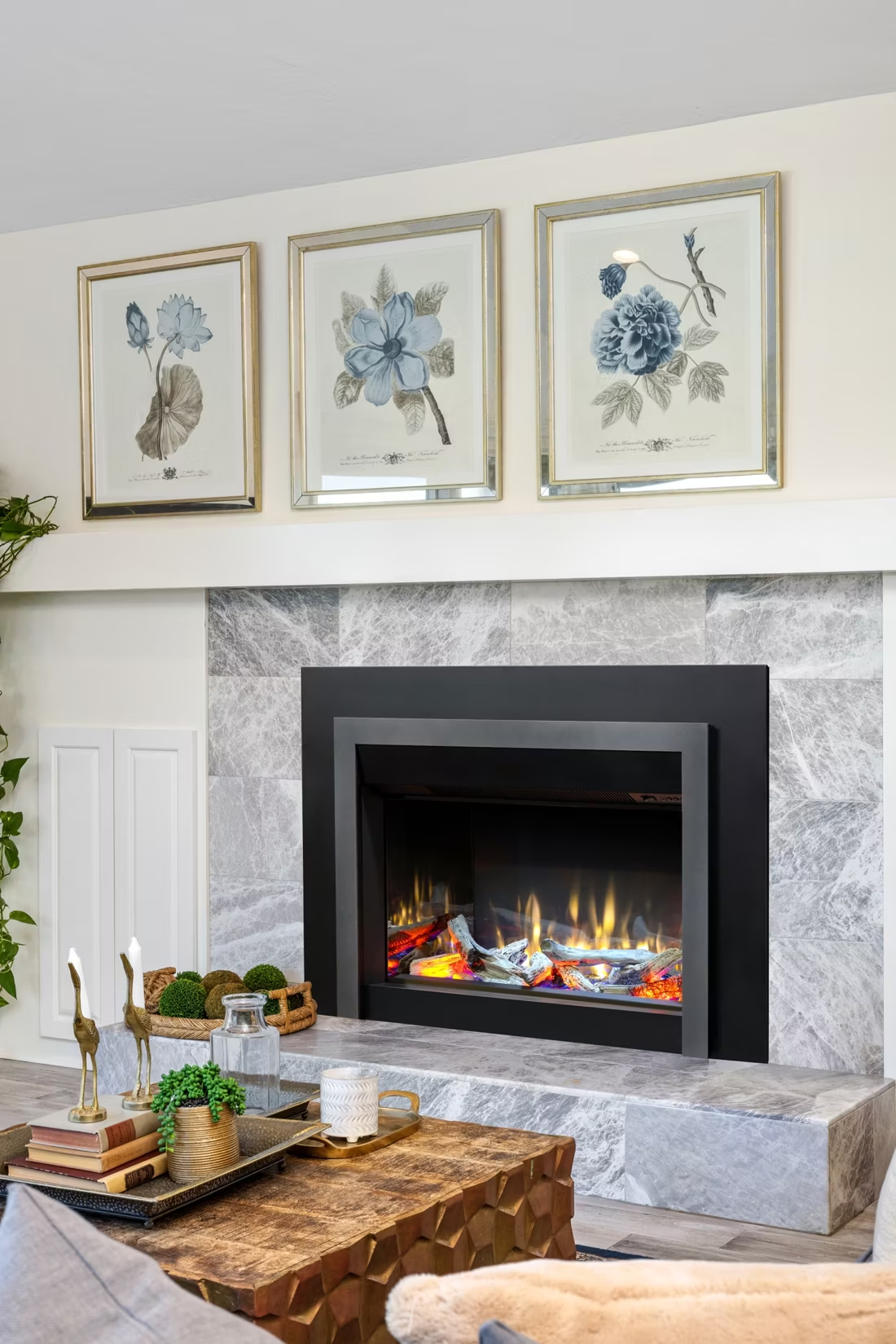
Electric units run on a standard household circuit, which means they work equally well in a 1920s Ashland bungalow with a dormant chimney, a newer build in Catlettsburg, or a rental apartment where a landlord won't allow venting of any kind. There's no gas line to run and no combustion byproducts to manage, so the appliance itself is about the only cost—installation is usually a matter of setting the insert or wall unit and plugging it in. For homeowners weighing electric against the oak, hickory, and maple firewood tradition that still runs strong in this part of Kentucky, electric offers the visual warmth of a fire with none of the wood-splitting, ash-hauling, or chimney upkeep.
Three steps. No salesperson until you're ready.
Tell us about your project
Your zip code, your situation, and the fuel you're leaning toward—or let the answers point you to one.
See what's actually available
The brands dealers within 100 miles genuinely carry—real options, never a catalog mirage.
Get your dealer & Project Guide
A trusted local dealer, plus the free Project Guide & Parts List that names every component of the job.
Frequently Asked Questions
How much does an electric fireplace installation cost in Boyd County?
Because electric units need no venting or gas line, most of the cost is the appliance itself plus minor carpentry. A plug-in insert that slides into an existing masonry fireplace opening—common in older Ashland homes with a capped or unused chimney—typically runs $300 to $800 including basic trim work. A built-in wall unit with a custom mantel surround, more common in newer Catlettsburg construction, runs $1,500 to $4,000 depending on the cabinetry involved. Either way, installation labor is a fraction of what a wood or gas project costs since there's no flue liner, no gas fitter, and no combustion venting to size.
What size electric fireplace do I need for my room?
Electric fireplaces are sized by wattage rather than chimney draw, and most standard units draw around 1,500 watts—enough supplemental heat for a single room in the 300 to 400 square foot range. Boyd County's winters, with an average low near 22 degrees, are cold enough that a good electric unit noticeably takes the edge off a living room or bedroom, but it's rarely meant to be the sole heat source for a whole house the way a wood stove or gas furnace is. If you're trying to heat an open-concept great room or a drafty older Ashland home with high ceilings, talk to a local dealer about a higher-output insert or a supplemental zone-heating layout rather than relying on wattage alone.
Can I convert my existing wood fireplace to electric?
Yes, and it's one of the more common projects local dealers see in Ashland's older housing stock, where many original oak-mantel fireplaces have sat unused for years with a capped or deteriorating flue. An electric insert slides into the existing masonry opening and doesn't touch the chimney at all—there's no liner to install and no need to address old flue damage, since combustion venting isn't part of the equation. It's often the fastest way to bring a dormant, decades-old fireplace back into daily use without the cost of relining a chimney for wood or gas.
Do I need a permit to install an electric fireplace in Boyd County?
In most cases, no. Because a standard electric insert or freestanding unit plugs into an existing outlet and requires no gas line or venting, it typically falls outside the permitting that applies to wood and gas installs. The exception is a built-in wall unit that involves new framing or electrical work beyond a standard outlet—in that case it's worth a quick check with Boyd County's building office or the City of Ashland's code office if you're inside city limits, mainly to confirm the electrical work meets code. Either way, it's a far simpler process than the permitting required for a chimney or gas line.
Will an electric fireplace actually heat my house in a Boyd County winter?
An electric fireplace will meaningfully warm the room it's in, but it's not designed to replace your furnace on the coldest nights. Most units put out heat equivalent to a space heater—enough to make a family room comfortable without running central heat as hard, especially during the shoulder months of fall and spring when Boyd County's temperatures hover in the 30s and 40s rather than the deep cold. For the coldest stretches, when overnight lows drop well below the 22-degree average, plan on electric as a supplement to your existing heating system rather than a standalone solution.
Electric vs. gas vs. wood—which is right for my Boyd County home?
Wood offers real heat output, works during power outages, and fits the oak, hickory, and cherry firewood tradition still common in this part of eastern Kentucky—but it requires a chimney, annual sweeping, and County permitting. Gas delivers instant, consistent heat but needs either a natural gas line or a propane tank and dedicated venting. Electric needs neither: no chimney, no gas fitter, no combustion byproducts—just an outlet. For a rental unit, an older Ashland home with a blocked flue, or anyone who wants the look and ambiance of a fire without the maintenance, electric is usually the simplest fit. For a primary heat source or a home where power outages are a real concern, wood or gas still has the edge.
How much does it cost to run an electric fireplace in Boyd County?
Most electric fireplaces draw around 1,500 watts on their heat setting. At Kentucky Power's typical residential rate, running one for a few hours an evening costs somewhere in the range of 15 to 20 cents per hour of active heater use—a fraction of what most homeowners expect once they realize the flame effect itself uses very little electricity and can run independently of the heater. That makes electric a low-commitment way to add ambiance to a room even if you rarely turn the heat function on.
Are electric fireplaces a good option for apartments and rentals in Ashland?
Yes—electric is often the only realistic fireplace option for renters. Since there's no venting, no gas line, and no permanent alteration to the building, most landlords in Ashland's older multi-family buildings and newer apartment developments alike will allow a freestanding or wall-mounted electric unit where a wood stove or gas insert would be a nonstarter. Tenants can bring the unit with them when they move, which isn't true of a masonry fireplace conversion.
How much maintenance does an electric fireplace need?
Very little compared to wood or gas. There's no chimney to sweep, no gas lines to inspect, and no combustion byproducts to manage—maintenance is mostly dusting the unit and occasionally replacing an LED module, which on most modern units is rated for 20,000-plus hours before it needs attention. That low-maintenance profile is part of why electric has become a popular choice in Boyd County's older homes, where a chimney sweep or gas technician visit isn't always convenient to schedule.
Can I put a TV above my fireplace?
Yes—with an asterisk. Fireplaces are hot and TVs don't like heat. Either put a mantel between them to deflect rising warmth, or choose a fireplace with heat-management technology that creates a cool zone on the wall above—the wall stays around 125 degrees, barely warm, while the room still gets full heat. If you like clean lines and don't want a mantel, heat management is the answer.
Does an electric fireplace need a vent or chimney?
No—that's its superpower. An electric fireplace needs a wall and an outlet, period. No vent pipe, no gas line, no clearances to design around, which is why it works in bedrooms, offices, apartments, and walls where venting a gas or wood unit would be impractical or impossible. Installation is typically the simplest and least expensive of any fireplace type.
How much should I budget for a fireplace?
For an average home—covering the fireplace, the vent pipe, and basic installation—a budget between $3,900 and $5,500 gives you a lot of options across wood, gas, and pellet. By the time you add finish work, gas line, and electrical, the average complete installation lands between $5,000 and $12,000 all-in. In a remodel or new build, a good rule is to put about 2.5% of the total project cost toward the fireplace.
Can I install a fireplace myself?
If you're putting a fire in your house on purpose, it's best to work with an expert. Unless you're genuinely experienced in framing, gas line, vent pipe, and the national code on clearances to combustibles, have a professional do it—and ideally the same company that sells you the fireplace, so warranty, service, and liability all live under one roof.
Stove and Fireplace Dealers in Boyd County
Find your electric fireplace in Boyd County.
Tell us a bit about your home and we'll put together a free Project Guide & Parts List for your electric fireplace project—the right unit, the parts you'll need, and a trusted local dealer to install it.
Find Your Fireplace →