
Add real warmth to your Bourbon County home—no chimney required.
From the Federal-style homes lining Paris's historic district to the farmhouses scattered across Bourbon County's horse country, electric fireplaces bring instant heat and real ambiance without venting, gas lines, or chimney work. Find the right unit and connect with a trusted local dealer.
Every Project Starts From One of These Five Situations
Bluegrass heritage homes meet modern convenience.
Bourbon County sits in the heart of Kentucky's bluegrass region, home to about 11,700 residents, the thoroughbred farms surrounding Paris, and the distilling heritage that gave bourbon whiskey its name. Winters here are moderate by national standards—Climate Zone 4A, a moderate-length heating season, and an average winter low around 23°F—nowhere near the extremes of a place like Duluth or Fargo, but cold enough that heating a drafty 1800s farmhouse or a converted tobacco barn takes real planning. Many of the county's older homes, particularly the Federal and Greek Revival houses in Paris's National Register district, have masonry fireplaces that haven't drawn a proper fire in decades.
That's where electric fireplaces earn their place. An electric insert can drop into an existing, unused fireplace opening and provide supplemental heat and the look of a fire without touching the flue or running new gas line—a common ask in Bourbon County's historic housing stock. Out on the farms, electric units also show up in guest cottages, tack rooms, and outbuildings where there's no chimney at all and running gas simply isn't practical. Kentucky Utilities serves much of Paris proper, with Blue Grass Energy Cooperative covering large stretches of rural Bourbon County—and Kentucky's electricity rates are among the lowest in the country, which makes running an electric unit for zone heating in a favorite room a genuinely affordable option.
Three steps. No salesperson until you're ready.
Tell us about your project
Your zip code, your situation, and the fuel you're leaning toward—or let the answers point you to one.
See what's actually available
The brands dealers within 100 miles genuinely carry—real options, never a catalog mirage.
Get your dealer & Project Guide
A trusted local dealer, plus the free Project Guide & Parts List that names every component of the job.
Frequently Asked Questions
How much does an electric fireplace installation cost in Bourbon County?
Plug-in electric fireplaces and freestanding stoves are the least expensive option—most units run $150 to $600 and need nothing more than a standard household outlet, so there's effectively no installation cost beyond placing the unit. Built-in wall units and inserts that require a dedicated 120V or 240V circuit typically run $1,500 to $4,000 installed, once you factor in the unit, any surround or mantel carpentry, and an electrician to run a new circuit. Homes in Paris's older housing stock sometimes need panel upgrades if the existing electrical service is limited, which can add to the cost—a local dealer will flag that during an in-home look.
What's the difference between a plug-in electric fireplace and a built-in electric insert?
A plug-in electric fireplace or stove is a self-contained unit—set it against a wall, plug it into an existing outlet, and it's running. A built-in electric insert is designed to slide into an existing masonry fireplace opening or a custom-framed wall, often wired to a dedicated circuit for full heater output, and finished flush with trim or a mantel surround. For Bourbon County homes with an existing but unused fireplace, an insert is usually the cleaner-looking choice since it fills that opening and hides the wiring. For a bonus room, farm office, or guest cottage with no fireplace at all, a plug-in stove or wall-mount unit gets you heat and ambiance with far less work.
Do electric fireplaces actually put out heat, or is it just for looks?
Most electric fireplaces include a real resistance heater—typically rated around 1,500 watts, which works out to roughly 5,000 BTU—enough to comfortably heat a single room in the 300–400 square foot range. That's genuinely useful supplemental heat for a Bourbon County living room or den on a 23°F night, letting you turn down the central thermostat and heat only the room you're in. What electric fireplaces don't do is replace whole-home heating in a county with a fairly demanding winter heating load—think of them as zone heat and ambiance, not a furnace replacement. Some models let you run the flame effect with the heater off, which is popular for warm-weather use during Bourbon County's humid summers.
Can I install an electric insert in my historic home's existing fireplace?
Yes—this is one of the most common projects for Bourbon County's older Paris homes with existing masonry fireplaces that no longer see regular wood fires. An electric insert sits inside the existing firebox opening, often with a surround kit to fill any gap, and includes a realistic log or ember-bed display along with the heater. Because there's no venting involved, you don't have to touch the chimney, flue, or masonry—which matters in historic homes where altering the original structure can be a sensitive subject. If the fireplace opening is an unusual size, a local dealer can measure and recommend inserts that fit, or a custom surround to make a standard unit work.
Do I need a permit or an electrician to install an electric fireplace?
A plug-in unit that runs off a standard household outlet generally needs no permit or electrical work at all—it's no different than plugging in a space heater. A built-in insert or wall unit wired to a dedicated circuit is a different story: that's electrical work, and most Kentucky jurisdictions, including Bourbon County, require a permit for a new dedicated circuit. A licensed electrician will pull that permit as part of the job. Skipping this step on a hardwired unit isn't worth the risk—undersized wiring on a heater circuit is a real fire hazard, and it can also complicate a home sale down the road.
What's the best electric fireplace for a Kentucky bluegrass-region home?
For most Bourbon County homes, a 1,500-watt insert or built-in unit with a thermostat and multi-speed fan gives you the most flexibility—you can run it on low for ambiance during a mild fall evening or crank it for real supplemental heat when temperatures drop toward that 23°F average winter low. In older, draftier farmhouses, look for units with a stronger, more directional heater output rather than purely decorative models. For guest cottages or outbuildings without existing electrical capacity for a hardwired unit, a quality plug-in stove is often the more practical choice. A local dealer can walk through your specific room size and existing wiring to steer you toward the right wattage and features.
How much does it cost to run an electric fireplace in Bourbon County?
Kentucky has some of the lowest residential electricity rates in the country, whether you're served by Kentucky Utilities in Paris or Blue Grass Energy Cooperative in the surrounding rural county. A typical 1,500-watt electric fireplace running on high costs roughly 15 to 25 cents per hour to operate at current Kentucky rates—meaningfully cheaper than propane for the same room-heating job, and with none of the fuel delivery or storage that comes with wood or propane. Running the flame effect alone, with the heater off, costs only a few cents an hour since it draws minimal power.
Electric vs. wood—which is right for my Bourbon County home?
Bourbon County has no air quality restrictions on wood burning, and with oak, hickory, maple, and cherry all common locally—plus Daniel Boone National Forest cutting permits running about $20 per cord during the May-to-October season—wood remains a practical, low-cost heat source for many rural properties. But wood means chimney maintenance, ash cleanup, and fire risk in older wood-frame homes, which is exactly why many owners of Paris's historic houses choose an electric insert instead: same visual warmth in an existing fireplace opening, none of the flue concerns. For a working farm with outbuildings and no interest in hauling firewood to a guest cottage, electric is usually the simpler call. For a primary residence where self-sufficient heat during outages matters, wood still has the edge since electric units won't run without power.
Electric vs. gas—which is right for my home?
Gas fireplaces generally put out more heat and can be sized to handle a larger room or even serve as backup heat during an outage, but they require either a natural gas line or a propane tank, plus venting for most models. Electric fireplaces skip all of that—no gas line, no venting, and a much simpler install, which matters for rural Bourbon County properties or outbuildings that were never plumbed for gas. If your home already has gas service and you want stronger, more consistent heat output, gas is worth a look. If you want a straightforward retrofit into an existing fireplace opening, a room with no gas access, or a lower-cost project overall, electric is usually the more practical fit.
Can I put a TV above my fireplace?
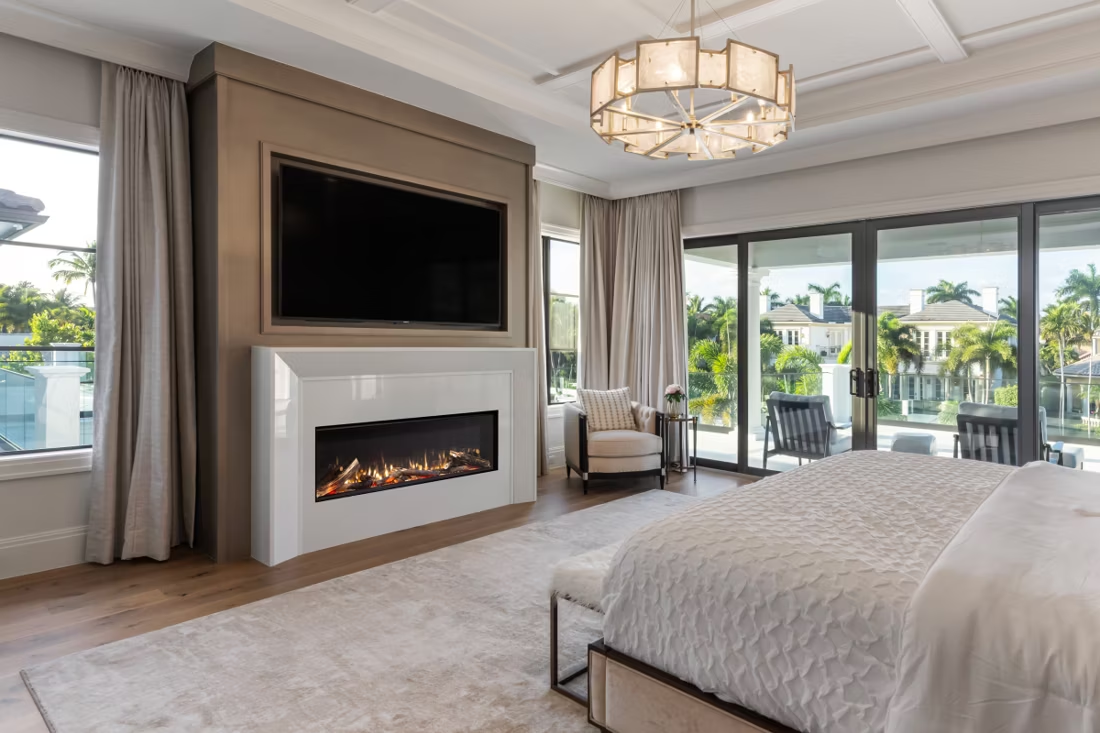
Yes—with an asterisk. Fireplaces are hot and TVs don't like heat. Either put a mantel between them to deflect rising warmth, or choose a fireplace with heat-management technology that creates a cool zone on the wall above—the wall stays around 125 degrees, barely warm, while the room still gets full heat. If you like clean lines and don't want a mantel, heat management is the answer.
Does an electric fireplace need a vent or chimney?
No—that's its superpower. An electric fireplace needs a wall and an outlet, period. No vent pipe, no gas line, no clearances to design around, which is why it works in bedrooms, offices, apartments, and walls where venting a gas or wood unit would be impractical or impossible. Installation is typically the simplest and least expensive of any fireplace type.
What is an in-home preview and do I need one?
It's a visit where a hearth professional measures your space, confirms the model you picked actually works in your home, and walks the specs—framing, gas line, venting, finish work—before anything is ordered. Some details you just can't know until you see the house. Never make a down payment without one; it's the single most-skipped step that burns buyers.
Does a fireplace add value to my home?
On average, a fireplace adds back to the home about the same amount you spent installing it. Add the monthly savings from heating the rooms you actually use instead of the whole house—often hundreds of dollars a year—and the value case is strong before you even count what a fire does for how your family uses the room.
Find your electric fireplace in Bourbon County.
Tell us about your home—whether it's a historic Paris residence, a working horse farm, or a guest cottage without gas service—and we'll match you with a trusted local dealer and a free Project Guide & Parts List for your electric fireplace project.
Find Your Fireplace →