
Find the right electric fireplace for your Adair County home.
No gas line, no chimney, no venting—just plug-in or hardwired warmth for Columbia, Knifley, and the rolling farmland and lake homes around Adair County. Find the right unit and connect with a trusted local dealer.
Every Project Starts From One of These Five Situations
Instant heat with zero venting for south-central Kentucky homes.
Adair County sits in climate zone 4A with a winter heating load roughly on par with places like Louisville or Nashville and average winter lows near 26°F—cold enough for consistent overnight heating, but nowhere near the deep-freeze territory of a place like Bismarck or Duluth. Around Columbia and out toward Knifley, Gradyville, and Cane Valley, a lot of homes rely on a heat pump or propane furnace as the main system, with wood heat as a hardy backup—oak, hickory, maple, and cherry are the local go-to species for anyone splitting their own firewood. Electric fireplaces have found a real niche here as the third option: a way to add focused, no-fuss heat to a den, bedroom, or finished basement without touching the chimney or running new gas.
Adair County is served primarily by rural electric cooperatives, and that co-op structure matters for electric fireplace owners—most units draw modest current (a standard 1,500-watt heater on a 15-amp circuit), so they rarely require any electrical upgrade beyond what a typical farmhouse or manufactured home already has. That's a meaningful advantage in a county where a good share of the housing stock is manufactured or mobile homes: electric fireplaces install without a chimney, without combustion air requirements, and without the clearance issues that come with wood or gas units, making them one of the few hearth options that drop into a mobile home safely and legally.
Three steps. No salesperson until you're ready.
Tell us about your project
Your zip code, your situation, and the fuel you're leaning toward—or let the answers point you to one.
See what's actually available
The brands dealers within 100 miles genuinely carry—real options, never a catalog mirage.
Get your dealer & Project Guide
A trusted local dealer, plus the free Project Guide & Parts List that names every component of the job.
Frequently Asked Questions
How much does it cost to install an electric fireplace in Adair County?
Plug-in electric inserts and freestanding stoves that use a standard outlet typically run $300 to $1,200 installed, since there's no electrical or venting work involved beyond setting the unit in place. Built-in wall units or larger inserts that need a dedicated 20-amp circuit run higher, generally $1,200 to $3,000, once an electrician is brought in to run wiring—common in older Adair County farmhouses where the nearest outlet isn't close to where you want the fireplace. Because there's no chimney, gas line, or venting to size, electric installs are usually the fastest and least disruptive hearth project a local dealer handles.
Is an electric fireplace enough heat for an Adair County winter, or is it just for looks?
Most electric fireplaces put out around 5,000 BTUs—enough to comfortably heat a single room (roughly 400 square feet) even on a morning near the county's 26°F average winter low. They're not designed to replace a central heat pump or propane furnace for the whole house, but they're genuinely effective as zone heat: many Adair County homeowners run one in the room they use most and turn the thermostat down elsewhere, which can meaningfully offset a propane or electric heating bill during the coldest stretches of the season.
Do I need a permit to install an electric fireplace in Adair County?
Plug-in units generally don't require a permit since no wiring, gas line, or venting work is involved. If you're adding a built-in electric fireplace that requires a new dedicated circuit, the electrical work itself typically needs to meet code and may require a permit through the local building department, depending on the scope of the job. Most licensed electricians handling the circuit work will tell you upfront whether your specific installation needs a permit—it's a much lighter process than what a wood or gas installation requires.
Will an electric fireplace work in a mobile or manufactured home?
Yes—and this is one of the strongest use cases for electric heat in Adair County, where manufactured and mobile homes make up a real share of the housing stock. Electric fireplaces don't require chimney clearances, combustion air intake, or the structural modifications that wood stoves and gas units need, so they're one of the few hearth appliances that can be added to a manufactured home without triggering HUD code conflicts. A qualified local dealer can confirm the specific model works with your home's electrical panel and floor construction.
What's the difference between an electric insert, a wall-mounted unit, and an electric stove?
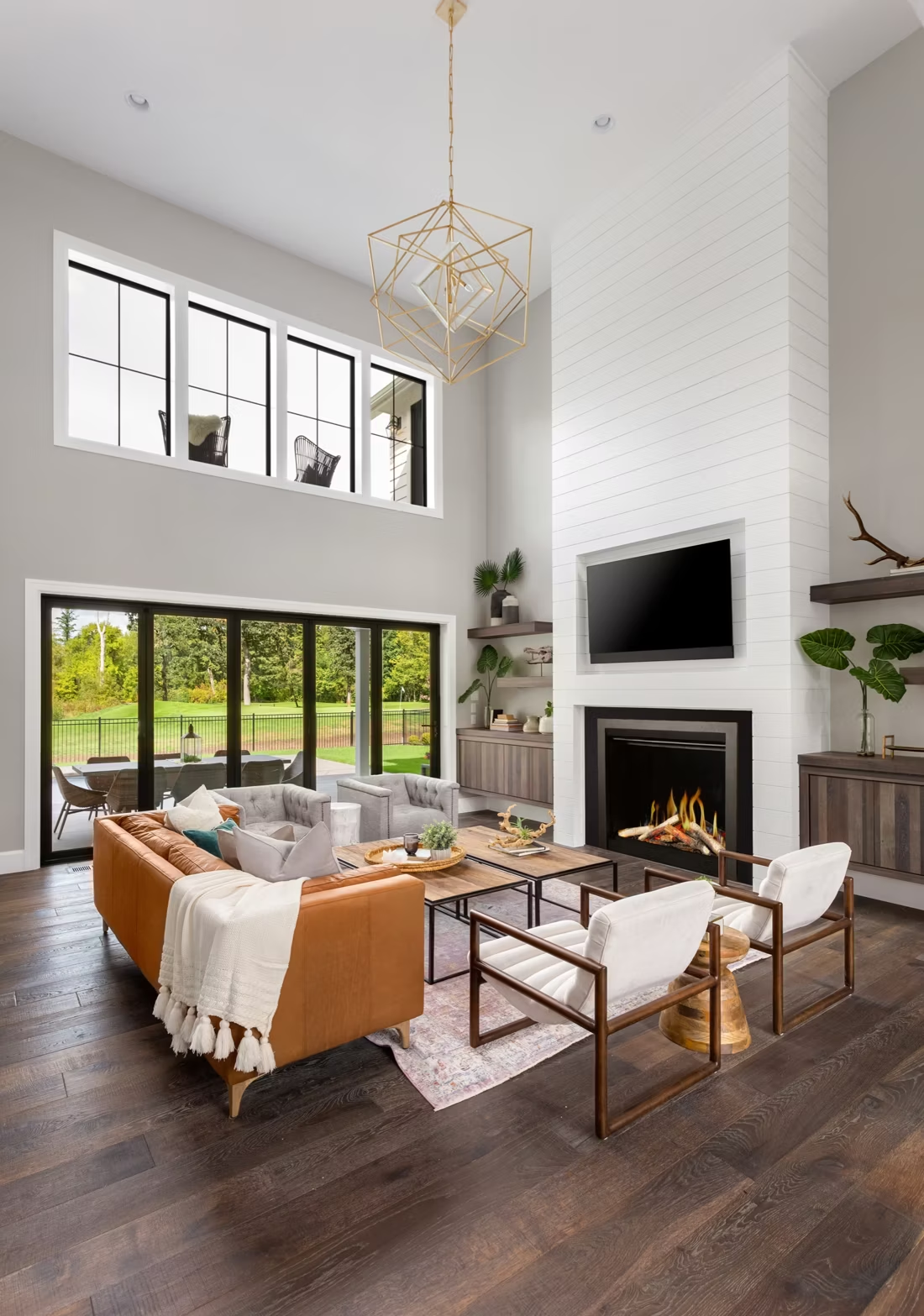
An electric insert is built to slide into an existing masonry or wood-fireplace opening, giving an old fireplace a heat source and glowing-ember look without touching the chimney. A wall-mounted or built-in electric fireplace is designed for new construction or a remodel—it's framed into a wall like a TV mount, often flush or recessed. An electric stove is a freestanding unit styled like a wood stove that you can set on any flat, non-combustible-rated surface and simply plug in. For Adair County homes converting an old wood-burning fireplace that's no longer in regular use, the insert is usually the simplest and most popular upgrade.
How much does an electric fireplace add to my electric bill?
A typical 1,500-watt electric fireplace running on high costs roughly 15 to 20 cents per hour to operate, depending on your rural electric cooperative's rate—running it for four hours a night through a cold stretch adds up to a modest, predictable monthly cost. Most units let you run the flame effect alone without the heater engaged, which uses only a few watts, so you can keep the ambiance going without any real cost impact even when you don't need the extra heat.
What happens to my electric fireplace during a power outage?
It won't run—electric fireplaces need grid power for both the heater and the flame effect, so they offer no backup heat during an outage. In a rural county like Adair, where ice storms and downed lines can knock out power for a day or more, that's worth factoring into your plan: homeowners who want heat that survives an outage typically pair an electric fireplace for everyday convenience with a wood stove or propane heater for true emergency backup. It's a real tradeoff, not a knock against electric—just something to plan around.
Electric vs. wood—which is right for my Adair County home?
Wood heat, using local oak, hickory, or maple, delivers serious BTU output, keeps working when the power's out, and fits the self-sufficient, rural character of a lot of Adair County properties—but it means chimney maintenance, ash cleanup, and sourcing or splitting firewood. Electric fireplaces install in an afternoon, need zero maintenance, and work in homes—including manufactured housing—where a wood stove isn't practical or allowed, but they add no heat when the grid goes down and can't match a wood stove's raw output on the coldest nights. Many local homeowners end up with both: wood as the serious backup heat source, electric for the room they actually live in day to day.
Can I put an electric fireplace anywhere in my house?
Pretty much, which is the main appeal. Since there's no venting, no combustion air, and no clearance-to-combustibles requirement like a wood or gas unit, an electric fireplace can go on an interior wall, in a bedroom, in a finished basement, or into an old fireplace opening—anywhere you have access to a standard outlet or can run a dedicated circuit. That flexibility is a big reason electric has become a common secondary heat source in Adair County additions and renovated farmhouses where retrofitting a chimney or gas line isn't realistic.
Does an electric fireplace need a vent or chimney?
No—that's its superpower. An electric fireplace needs a wall and an outlet, period. No vent pipe, no gas line, no clearances to design around, which is why it works in bedrooms, offices, apartments, and walls where venting a gas or wood unit would be impractical or impossible. Installation is typically the simplest and least expensive of any fireplace type.
Do electric fireplaces actually produce heat?
Yes—most put out around 4,800–5,000 BTUs from a standard outlet, which comfortably warms a bedroom, office, or den as a comfort-zone heater. What they won't do is carry a whole house the way wood, gas, or pellet can. Think of electric as ambiance-first with honest supplemental heat: flames on with no heat in July, flames plus warmth in January.
How much should I budget for a fireplace?
For an average home—covering the fireplace, the vent pipe, and basic installation—a budget between $3,900 and $5,500 gives you a lot of options across wood, gas, and pellet. By the time you add finish work, gas line, and electrical, the average complete installation lands between $5,000 and $12,000 all-in. In a remodel or new build, a good rule is to put about 2.5% of the total project cost toward the fireplace.
Can I install a fireplace myself?
If you're putting a fire in your house on purpose, it's best to work with an expert. Unless you're genuinely experienced in framing, gas line, vent pipe, and the national code on clearances to combustibles, have a professional do it—and ideally the same company that sells you the fireplace, so warranty, service, and liability all live under one roof.
Find your electric fireplace in Adair County.
Tell us a bit about your home and we'll put together a free Project Guide & Parts List—the right electric fireplace or insert for your space, matched with a trusted local Adair County dealer who can install it.
Find Your Fireplace →