
Real heat, zero venting, for Wilson County homes.
From the brick storefronts around the Fredonia courthouse square to farmhouses out past Buffalo and New Albany, electric fireplaces give Wilson County homeowners real zone heat without a chimney, a gas line, or a permit fight. Find the right unit and connect with a trusted local dealer.
Every Project Starts From One of These Five Situations
The simplest heat upgrade for southeast Kansas.
Wilson County is small—about 5,200 people spread across Fredonia, Neodesha, Altoona, Buffalo, and the farmland around Fall River Lake. Climate zone 4A puts winters here in a middle ground: an average low around 22°F and a moderate-length heating season, meaning real cold snaps and ice storms, but nothing like the extended sub-zero stretches you'd see in Bismarck or International Falls. Plenty of the county's housing stock is older—Neodesha's turn-of-the-century homes near the old Standard Oil refinery site, farmhouses scattered through the townships—and a lot of it was never built with a working masonry chimney, or has one that hasn't been inspected in decades.
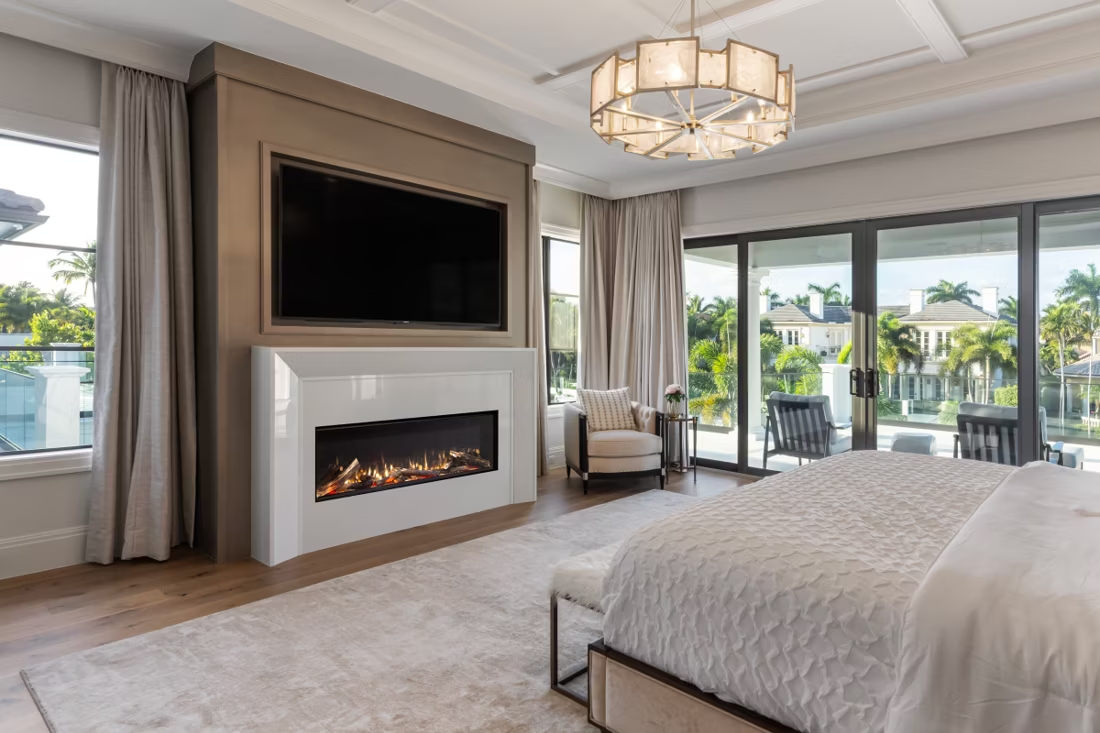
That's exactly where electric fireplaces earn their keep. There's no flue to size, no gas line to run, and no cutting permit to track down for oak or hickory—you plug in a smaller unit or have an electrician hardwire a built-in, and you have supplemental heat and a real fire look the same afternoon. In a county where propane and electric baseboard carry a lot of the rural heating load, an electric insert or mantel unit is a low-friction way to add zone heat to a bedroom, sunroom, or lake cabin around Fall River without touching your existing heating system.
Three steps. No salesperson until you're ready.
Tell us about your project
Your zip code, your situation, and the fuel you're leaning toward—or let the answers point you to one.
See what's actually available
The brands dealers within 100 miles genuinely carry—real options, never a catalog mirage.
Get your dealer & Project Guide
A trusted local dealer, plus the free Project Guide & Parts List that names every component of the job.
Frequently Asked Questions
How much does an electric fireplace installation cost in Wilson County?
Plug-in electric fireplace inserts and freestanding stoves typically run $300 to $900 installed—many just need a standard 120V outlet and a few minutes of setup. Built-in linear units or mantel packages that require an electrician to run a dedicated circuit or hardwire the unit run higher, generally $1,200 to $2,500 depending on the wall construction and whether new framing or trim work is involved. Older Wilson County homes with dated panel boxes or knob-and-tube wiring sometimes need panel or circuit upgrades first, which a local electrician can quote alongside the install.
Do I need a permit to install an electric fireplace in Wilson County?
A plug-in electric fireplace that draws from an existing outlet doesn't require a permit—it's treated like any other appliance. If you're having a unit hardwired into a new dedicated circuit, that electrical work typically needs a permit through the county, and your electrician will usually pull it as part of the job. There's no building or gas permit involved since there's no combustion and nothing to vent, which is one of the reasons electric units are popular for quick upgrades in Fredonia's older housing stock.
Will an electric fireplace actually heat a room, or is it just for looks?
Most electric fireplaces put out a real 4,600–5,200 BTU of heat, enough to comfortably warm a single room of 400–500 square feet, which makes them well suited as supplemental heat rather than a whole-home solution. In an older Wilson County farmhouse with single-pane windows and thin insulation, an electric unit in a bedroom or sunroom can take the edge off a cold morning and let you turn the thermostat down on the rest of the house. For a larger open room, look at wider linear models or ask your local dealer about running two smaller units rather than one oversized one.
Electric vs. wood—which makes more sense for my Wilson County home?
Wood is deeply practical here—oak, hickory, and osage orange are all common on local timber ground, and a wood stove keeps burning through an ice storm that knocks the power out, which happens most winters somewhere in the county. Electric can't do that; it goes dark the moment the grid does. Where electric wins is convenience and reach: a bedroom, den, or lake cabin near Fall River without an existing chimney can have real heat and flame-look ambiance the same day, with no wood to split, haul, or store. Many rural households here end up with both—a wood stove for backup heat during outages, and an electric unit for everyday supplemental warmth in a room the wood stove doesn't reach.
What's the difference between an electric insert, a wall-mount, and a mantel package?
An electric insert is built to drop into an existing masonry fireplace opening, which is a common fit for Neodesha and Fredonia homes with an old wood-burning fireplace that's no longer safe to use for an open fire. A wall-mount unit hangs flush like a flat-screen TV and works well in newer construction or a remodeled room with no fireplace at all. A mantel package pairs a smaller electric firebox with a surrounding cabinet or mantel shelf, giving you a furniture-style piece that doesn't require any wall modification—a popular choice for renters and manufactured homes in the county's rural townships.
Can I put an electric unit in my old farmhouse's existing fireplace?
Yes, and it's one of the more common projects local dealers see in Wilson County. If your farmhouse has a masonry fireplace that hasn't been inspected in years, or the flue liner is cracked and a full rebuild isn't in the budget, an electric insert lets you keep the look of the original hearth while retiring the chimney from active use. There's no venting to worry about, no liner to replace, and no risk from a compromised flue—the insert simply sits in the opening and plugs in or gets wired to a nearby outlet.
How much will an electric fireplace add to my power bill?
Running an electric fireplace at full heat output (around 1,500 watts) costs roughly 15 to 20 cents per hour at typical Kansas electric rates through Evergy in town or the rural electric cooperatives serving the county's unincorporated areas, depending on your specific rate plan. Most homeowners run the unit a few hours in the evening in one room rather than all day, and many find it cheaper than raising the central thermostat across the whole house—especially in a poorly insulated older home where heat escapes fast from the rooms you're not actively using.
What happens to my electric fireplace during a power outage?
It simply won't run—electric fireplaces have no battery backup and no way to operate off-grid, which matters in a county where ice storms take out rural power lines for a day or more some winters. If backup heat during outages is a priority, pair the electric unit with a wood stove or a propane space heater rated for indoor use. A lot of Wilson County households run this exact combination: wood for outages and cold snaps, electric for everyday convenience in rooms the wood stove doesn't reach.
Where can I actually buy and install an electric fireplace near Fredonia or Neodesha?
Wilson County is small enough that most homeowners end up sourcing an electric fireplace through a hearth or appliance dealer based in a nearby larger market and having it installed locally, or working with a Fredonia-area electrician for the hardwiring portion of a built-in unit. That's exactly the gap Find My Fireplace fills—we match you with a trusted local dealer who knows what's actually installable in your home, rather than leaving you to guess from a big-box display model.
Can I put a TV above my fireplace?
Yes—with an asterisk. Fireplaces are hot and TVs don't like heat. Either put a mantel between them to deflect rising warmth, or choose a fireplace with heat-management technology that creates a cool zone on the wall above—the wall stays around 125 degrees, barely warm, while the room still gets full heat. If you like clean lines and don't want a mantel, heat management is the answer.
Does an electric fireplace need a vent or chimney?
No—that's its superpower. An electric fireplace needs a wall and an outlet, period. No vent pipe, no gas line, no clearances to design around, which is why it works in bedrooms, offices, apartments, and walls where venting a gas or wood unit would be impractical or impossible. Installation is typically the simplest and least expensive of any fireplace type.
How much should I budget for a fireplace?
For an average home—covering the fireplace, the vent pipe, and basic installation—a budget between $3,900 and $5,500 gives you a lot of options across wood, gas, and pellet. By the time you add finish work, gas line, and electrical, the average complete installation lands between $5,000 and $12,000 all-in. In a remodel or new build, a good rule is to put about 2.5% of the total project cost toward the fireplace.
What is an in-home preview and do I need one?
It's a visit where a hearth professional measures your space, confirms the model you picked actually works in your home, and walks the specs—framing, gas line, venting, finish work—before anything is ordered. Some details you just can't know until you see the house. Never make a down payment without one; it's the single most-skipped step that burns buyers.
Stove and Fireplace Dealers in Wilson County
Find your electric fireplace in Wilson County.
Tell us about your home and we'll match you with a trusted local dealer and send a free Project Guide & Parts List—the right unit, the wiring plan, and what it takes to get it installed correctly.
Find Your Fireplace →