
Pellet Stoves in Wichita: A Niche Fit, Not the Norm.
Wichita is natural-gas country, and pellet stoves are a specialty choice here—but for the right home, they still make sense. Here's where they fit and who can install one.
Every Project Starts From One of These Five Situations
Wichita runs on natural gas—pellet stoves fill a narrow gap.
Wichita sits in climate zone 4A with a moderate winter climate and an average winter low near 22°F—a real but moderate winter, nothing like the much longer, colder winters of Minneapolis or Duluth. With natural gas widely available and cheap across Sedgwick County, most homes here default to a gas furnace or gas fireplace for primary and supplemental heat rather than investing in a pellet appliance and its ongoing fuel deliveries. That's the honest starting point: pellet stoves are not a mainstream Wichita product, and you won't find them stocked at every hearth shop in town the way you would in the upper Midwest or Northeast.
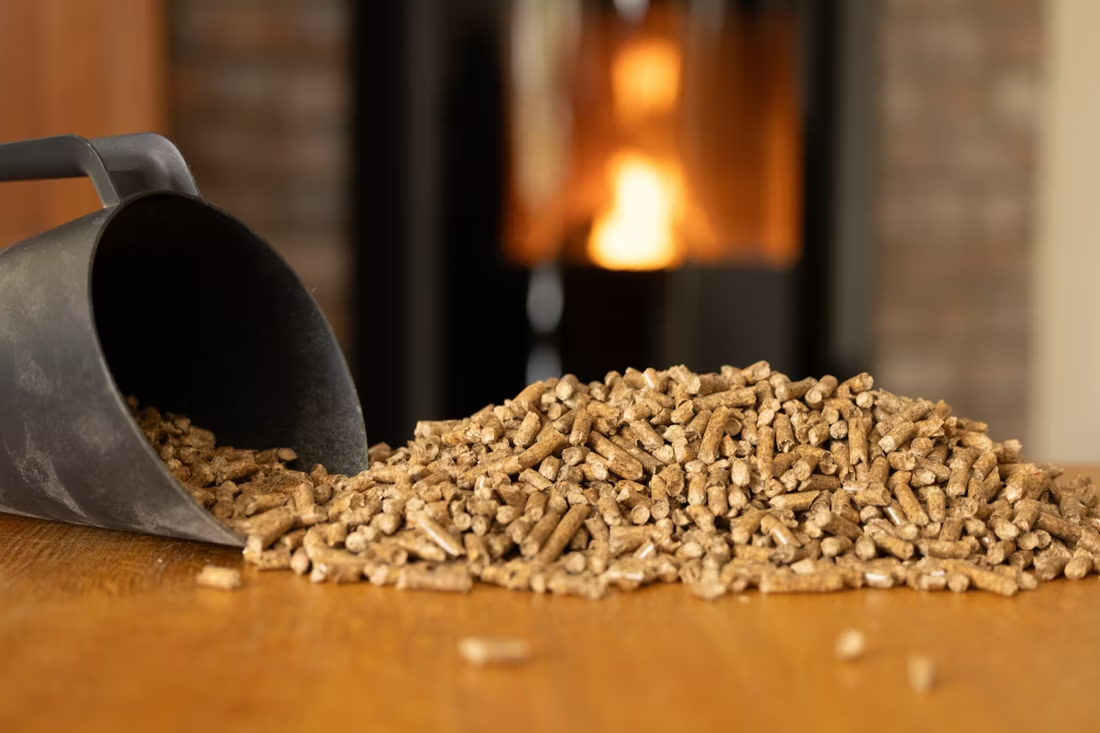
That said, pellet stoves still show up in specific Wichita situations—rural Sedgwick County properties without a gas line, detached shops or garages that need standalone heat, or homeowners who like the hands-off convenience of a hopper-fed fire without cutting or hauling cordwood (oak, hickory, and osage orange are the common local firewood species, but splitting and stacking isn't for everyone). Regional pellet brands like Lignetics and Indeck Energy Services do supply the wider Kansas market, so fuel is obtainable even if it's not sold on every corner. Because so few dealers here specialize in pellet appliances, finding one who actually knows venting, hopper capacity, and local code is the harder part of the project—which is exactly where a trusted local match matters more than usual.
Three steps. No salesperson until you're ready.
Tell us about your project
Your zip code, your situation, and the fuel you're leaning toward—or let the answers point you to one.
See what's actually available
The brands dealers within 100 miles genuinely carry—real options, never a catalog mirage.
Get your dealer & Project Guide
A trusted local dealer, plus the free Project Guide & Parts List that names every component of the job.
Frequently Asked Questions
Are pellet stoves actually common in Wichita?
Not really, and it's worth being upfront about that. Wichita's winters are moderate compared to true cold-climate markets, and natural gas service covers most of Sedgwick County at a low cost per BTU, so the majority of local homeowners heat with a gas furnace or gas fireplace instead. Pellet stoves are installed here, but usually for a specific reason—a detached workshop, a rural property off the gas main, or someone who simply prefers the ambiance and hopper convenience over cordwood. If that's not your situation, a gas insert is probably the more practical local fit, but pellet remains a legitimate option for the right home.
How much does a pellet stove installation cost in Wichita?
Nationally, a pellet stove or insert installation typically runs $3,500 to $6,500 depending on the unit, venting length, and whether an existing chimney or masonry fireplace is being converted. In Wichita specifically, expect the estimate to lean toward the higher end of that range in some cases simply because fewer local dealers specialize in pellet venting and hopper systems, so there's less price competition than you'd find for gas or HVAC work. Get quotes from at least two installers before committing, and confirm the quote includes the vent kit and any wall or through-roof penetration work.
Where can I buy pellet fuel in Wichita?
Pellet fuel isn't sold on every corner in Wichita the way it is in colder states, but it is available. Regional producers like Lignetics and Indeck Energy Services supply the broader Kansas market, and farm-and-feed retailers along with some hardware and home improvement stores carry bagged pellets seasonally, especially heading into fall. Because demand is lower here than in the upper Midwest, it's worth calling ahead in late summer to confirm stock or arrange a pallet order rather than assuming a store will have bags on the shelf in January.
Will a pellet stove keep my house warm during a power outage?
Not without a backup power source. Pellet stoves rely on an electric auger to feed fuel and a blower to circulate heat, so they shut down when the power does—unlike a wood stove, which burns without electricity. Sedgwick County does see occasional winter ice storms that knock out power for hours or days, so if outage resilience is your main goal, either pair a pellet stove with a small battery backup or generator, or consider that a wood-burning appliance or a gas unit with a standing pilot may serve that specific need better.
Why isn't wood heat common in Wichita either, and how does that compare to pellet?
Wood heat sees the same low demand here as pellet, for similar reasons—Wichita's winters are moderate by cold-climate standards, natural gas is the default fuel, and there isn't the wood-heat culture you'd find in a place surrounded by national forest land. Where wood and pellet differ is fuel handling: wood means cutting, splitting, and stacking oak, hickory, or osage orange, while pellet means loading a hopper with bagged fuel and setting a thermostat. If you want convenience without giving up a real hearth appliance, pellet is generally the easier of the two niche options in this market.
Do I need a permit to install a pellet stove in Wichita?
Yes. New solid-fuel appliance installations, including pellet stoves and inserts, typically require a building permit through the Wichita-Sedgwick County Metropolitan Area Building and Construction Department (MABCD), which covers permitting for the city and surrounding county. Most installers handle the permit application and inspection scheduling as part of the job, but confirm this is included in your quote before work begins—it isn't something to skip given how few installers locally specialize in this appliance type.
What size pellet stove do I need for a Wichita home?
Because Wichita winters rarely demand a whole-home primary heat source, most local pellet installations are sized for supplemental or zone heating rather than a full-house load. A small to mid-size unit (rated for roughly 1,000 to 1,800 square feet) is usually enough to heat a main living area, workshop, or addition. Whole-home sizing only makes sense in specific cases—an off-grid rural property or a home with no gas service—and that calculation should be done in person by an installer who can account for your insulation and layout rather than by square footage alone.
Pellet stove or gas insert—which makes more sense for my Wichita home?
For most homes inside Wichita city limits with natural gas already run to the house, a gas insert is usually the simpler and more cost-effective choice—no fuel deliveries, no hopper to refill, and instant on-demand heat. A pellet stove tends to make more sense for a property without gas service, a detached structure, or a homeowner who specifically wants the visual and tactile experience of a real flame with hands-off fuel handling. If you're unsure, a local dealer can walk through both options against your actual gas access and layout.
Where can I find a pellet stove dealer near Wichita?
This is honestly the trickiest part of a pellet project here—general hearth and fireplace retailers in Wichita tend to stock gas and, to a lesser extent, wood appliances, with pellet stoves as a smaller line if carried at all. Some homeowners end up sourcing a dealer from a wider radius, including the Kansas City or Tulsa metro areas, for pellet-specific expertise. Rather than guessing which local shop actually knows pellet venting and hopper sizing, it's worth getting matched with a dealer who's confirmed to carry and install these units correctly in your area.
Why is a fireplace insert so efficient?
An insert does two things: it seals the chimney completely, so you stop losing air you already paid to heat, and it radiates warmth into the room through the firebox and glass. Most add a heat-exchange fan that pulls cool room air underneath, wraps it around the hot firebox, and pushes it back out warm. Your home is more efficient before you've even lit the first fire.
What does it take to replace an existing fireplace?
Fireplaces are like icebergs—bigger behind the wall than in front of it. Replacement means removing the surrounding tile or stone (the finish material laps onto the fireplace face), pulling the old unit, setting the new one in the same enclosure, and re-finishing the wall. A hearth professional can determine what's behind your wall without demolition during an in-home preview.
How much should I budget for a fireplace?
For an average home—covering the fireplace, the vent pipe, and basic installation—a budget between $3,900 and $5,500 gives you a lot of options across wood, gas, and pellet. By the time you add finish work, gas line, and electrical, the average complete installation lands between $5,000 and $12,000 all-in. In a remodel or new build, a good rule is to put about 2.5% of the total project cost toward the fireplace.
Can a fireplace actually lower my heating bill?
Yes—by creating a comfort zone. A furnace heats every square foot of the house just to warm the one room you're in; a gas fireplace on low burns roughly a sixth of the gas a typical furnace does. Set the furnace around 55–60 degrees as a baseline, then heat the rooms your family actually uses. Families who heat this way commonly save $20–$60 a month.
Preferred Dealers in Wichita
Marked Preferred because they run on WhyFire's software—so they can show you real pricing and book your appointment right here. No manufacturer pays for placement. How we verify dealers →
Pellet Brands Stocked Around Wichita
Manufacturers will point you to the nearest stocking dealer.
Get your Wichita pellet project guide.
Tell us about your home and we'll match you with a trusted local dealer who actually installs pellet appliances in the Wichita area, plus send a free Project Guide & Parts List with the exact vent kit and equipment your install needs.
Find Your Fireplace →