
Instant heat for Wichita County homes, no chimney required.
Out on the flat, wind-swept plains around Leoti and Marienthal, winters average 16°F lows and bring a long, demanding heating season each year. An electric fireplace adds real zone heat and the look of a fire without a flue, a gas line, or a woodpile—I'll help you find the right unit and a local pro to install it.
Every Project Starts From One of These Five Situations
Electric fireplaces are built for a wind-swept, treeless county.
Wichita County sits in the far western High Plains of Kansas, roughly 719 square miles of tabletop-flat farmland with only about 1,579 residents spread between Leoti, Marienthal, and the scattered farmsteads between them. Winters here run cold and dry—a 16°F average low and a long, harsh heating season put the county in the same range as Bismarck, ND, not the milder parts of the state. Oak, hickory, and osage orange do grow along creek bottoms and old hedgerows planted decades ago as windbreaks, but there's no real woodlot economy out here—not enough standing timber, and no practical way to source cords of firewood across miles of open cropland. That's why wood heat never became a category in this county the way it has in forested parts of the country.
Wheatland Electric Cooperative, based out of Scott City, serves most of rural Wichita County, and the grid out here is unusually well-supported by the wind resource that also powers the turbines you see driving past on K-96—western Kansas is one of the windiest corners of the country. That reliability is part of why electric fireplaces have found a real niche: a plug-in unit or a built-in insert on a dedicated 20-amp circuit needs no venting, no gas line, and no masonry work, which matters in a county where the nearest hearth specialty retailers with in-stock inventory are typically in Garden City or Scott City, not Leoti itself. For farmhouses and ranch homes running on propane or a gas furnace for primary heat, an electric fireplace in the living room or den adds supplemental warmth and ambiance without touching the existing heating system.
Three steps. No salesperson until you're ready.
Tell us about your project
Your zip code, your situation, and the fuel you're leaning toward—or let the answers point you to one.
See what's actually available
The brands dealers within 100 miles genuinely carry—real options, never a catalog mirage.
Get your dealer & Project Guide
A trusted local dealer, plus the free Project Guide & Parts List that names every component of the job.
Frequently Asked Questions
How much does an electric fireplace installation cost in Wichita County?
A basic plug-in electric fireplace or insert that runs off an existing standard outlet typically costs $300 to $900 installed, since there's no new wiring involved beyond mounting. A built-in wall unit or larger insert that needs a dedicated 20-amp circuit runs closer to $900 to $1,800 once an electrician's time is factored in—and because Wichita County is sparsely populated, expect a trip charge if your installer is coming from Scott City or Garden City rather than someone local. Framing or trim carpentry for a mantel surround adds to that range.
Can an electric fireplace actually heat a room in a Wichita County winter?
Most electric fireplaces top out around 1,500 watts, which translates to roughly 5,100 BTUs—enough to comfortably warm a single room (say 300-400 square feet) but not enough to serve as your only heat source when overnight lows are averaging 16°F across the county. Think of it as zone heat: it can let you turn down the thermostat on your propane or gas furnace while you're in that room, and it adds real warmth to a den, basement, or sunroom that runs cold. For whole-home heating in this climate, you'll still want a furnace or boiler doing the primary work.
Do I need a permit to install an electric fireplace in Wichita County?
A simple plug-in unit that uses an existing outlet doesn't require a permit. If your installation calls for a new dedicated circuit or a panel upgrade, that electrical work should be pulled through Wichita County's building permitting process out of the courthouse in Leoti, and it needs to be done by a licensed electrician regardless of whether you technically need a permit—Wheatland Electric Cooperative territory has specific service requirements for new circuits that a local electrician will already know.
Why don't more homes in Wichita County burn wood for heat?
It's almost entirely a matter of geography. Oak, hickory, and osage orange trees exist here—mostly in shelterbelts, hedgerows, and along the handful of creek drainages that cut through the county—but there's no forested acreage anywhere close to supporting a firewood supply chain the way there is in wooded parts of the country. A few farm families with mature windbreak timber will cut their own wood as an occasional supplement, but it's incidental, not something you'll find built around a local retail market. Propane, natural gas where available, and electric cover the county's heating needs instead.
Electric vs. propane—which fits my Wichita County home better?
Propane (or natural gas in the parts of Leoti that have it) is almost always the right choice for whole-home heating given the county's long, harsh winter heating season and consistently cold winter lows—it has the BTU output to keep up. Electric fireplaces are better suited as a supplemental or secondary source: added warmth in a specific room, ambiance without smoke or venting, and a fast, no-fuss install compared to running new gas line to a room that doesn't already have it. Many farmhouses out here run both—propane or a furnace for the whole house, an electric insert in the main living space for daily comfort.
What size electric fireplace or insert do I need?
For a single room up to around 400 square feet, a standard 1,500-watt unit (roughly 26 to 40 inches wide) is typically sufficient as supplemental heat. Larger open-concept living areas common in newer Wichita County farmhouses may need two zones of heat rather than relying on one unit to cover the whole space, since electric output is capped regardless of the unit's size—a bigger fireplace gives you a bigger flame display and more linear footage, not necessarily more heat. A local dealer can walk through your floor plan and recommend wattage and placement.
Will my electric fireplace work during a power outage?
No—electric fireplaces need grid power to run the heating element and flame effect, so they go dark along with everything else if a line goes down. Wheatland Electric Cooperative's rural lines can be exposed to ice and high wind events common on the plains, so if backup heat during an outage matters to your household, a propane heater or wood-burning appliance is a better complement to an electric fireplace rather than a replacement for one. Think of electric as your everyday-comfort unit, not your storm plan.
What's the difference between a plug-in electric fireplace, a built-in insert, and a wall-mount unit?
A plug-in freestanding or insert-style unit is the simplest option—it slides into an existing opening or stands on its own and runs off a standard outlet, making it the easiest retrofit for an old farmhouse fireplace opening. A built-in insert is recessed into a wall or custom cabinetry during a remodel and often needs its own circuit for larger models. A wall-mount unit hangs directly on the wall like a flat-screen TV, with cord and outlet concealed behind it or nearby. For most Wichita County homes without an existing fireplace opening, a wall-mount or built-in is the more common route; homes with an old masonry fireplace often just drop an insert into the existing opening.
Where can I find someone to install an electric fireplace near Wichita County?
Because Wichita County's population is small, dedicated hearth retailers with electric fireplace inventory are more commonly based in Scott City or Garden City and will travel into Leoti, Marienthal, and surrounding farms for installs. Licensed electricians serving Wheatland Electric Cooperative territory can handle any circuit work involved. Working with a retailer who regularly serves rural western Kansas means they already understand travel distances, farmstead electrical setups, and how to size a unit for an older farmhouse versus new construction.
Can I put a TV above my fireplace?
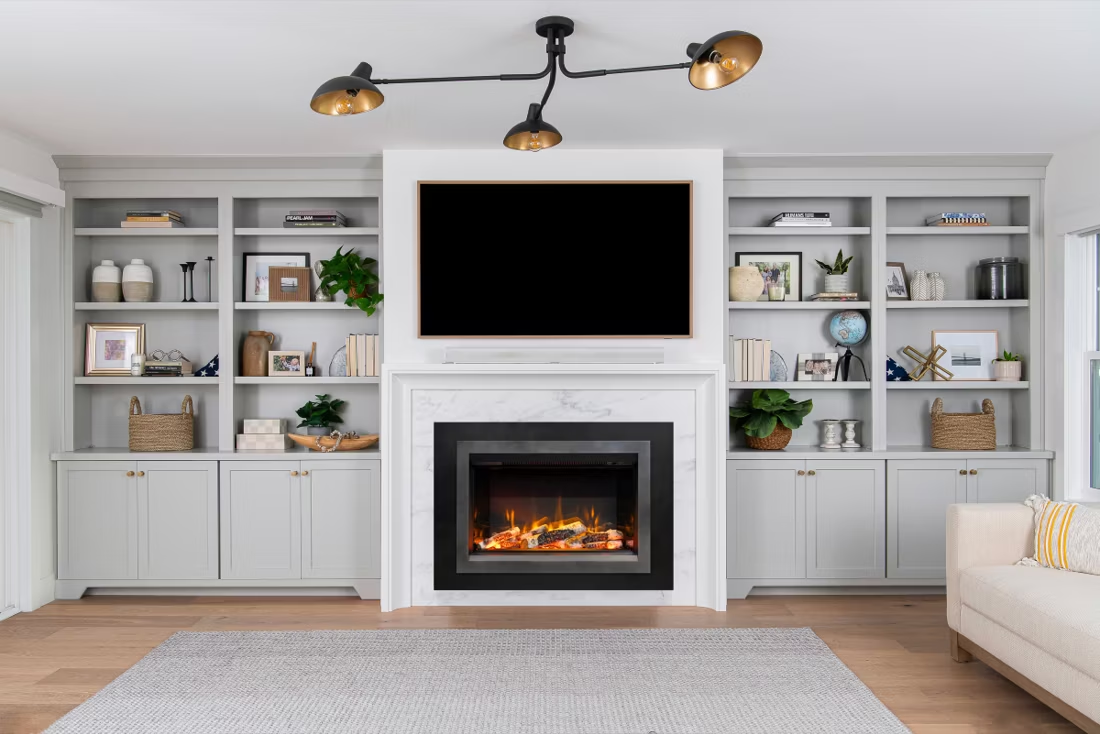
Yes—with an asterisk. Fireplaces are hot and TVs don't like heat. Either put a mantel between them to deflect rising warmth, or choose a fireplace with heat-management technology that creates a cool zone on the wall above—the wall stays around 125 degrees, barely warm, while the room still gets full heat. If you like clean lines and don't want a mantel, heat management is the answer.
Do electric fireplaces actually produce heat?
Yes—most put out around 4,800–5,000 BTUs from a standard outlet, which comfortably warms a bedroom, office, or den as a comfort-zone heater. What they won't do is carry a whole house the way wood, gas, or pellet can. Think of electric as ambiance-first with honest supplemental heat: flames on with no heat in July, flames plus warmth in January.
Can a fireplace actually lower my heating bill?
Yes—by creating a comfort zone. A furnace heats every square foot of the house just to warm the one room you're in; a gas fireplace on low burns roughly a sixth of the gas a typical furnace does. Set the furnace around 55–60 degrees as a baseline, then heat the rooms your family actually uses. Families who heat this way commonly save $20–$60 a month.
How much should I budget for a fireplace?
For an average home—covering the fireplace, the vent pipe, and basic installation—a budget between $3,900 and $5,500 gives you a lot of options across wood, gas, and pellet. By the time you add finish work, gas line, and electrical, the average complete installation lands between $5,000 and $12,000 all-in. In a remodel or new build, a good rule is to put about 2.5% of the total project cost toward the fireplace.
Find your electric fireplace in Wichita County.
Tell me a bit about your home and I'll match you with the right electric fireplace or insert—plus a free Project Guide & Parts List with the exact unit, circuit requirements, and a trusted local dealer to install it.
Find Your Fireplace →