
Warmth that doesn't quit on the High Plains.
Reliable, instant heat for Thomas County's wind-driven winters—natural gas in Colby, propane across the open farm country beyond it. Find the right fireplace, insert, or stove, and connect with a trusted local dealer.
Every Project Starts From One of These Five Situations
Steady heat when the wind never stops.
Thomas County sits on the flat, open High Plains of northwest Kansas, at roughly 3,140 feet of elevation around the county seat of Colby, right off the I-70 corridor. With 5,850 heating degree days and average winter lows near 15°F, the cold itself is manageable—it's the wind that makes it hard. Open prairie with almost nothing to break the gusts means wind chill routinely drives real-feel temperatures well below zero, and ground blizzards—whiteout conditions caused by wind lofting existing snow with no new snowfall at all—can shut down county roads for hours even on a clear day.
Wood heat has never had a real foothold here, and that's a matter of geography, not preference. The oak, hickory, and osage orange found in Thomas County are almost entirely windbreak trees—planted in shelterbelts during the Dust Bowl-era soil conservation push—not forest stands, so there's no local firewood supply the way there is in more wooded parts of the state. Gas fills that gap instead. Kansas Gas Service runs natural gas lines within Colby city limits, while propane—delivered and stored in a tank on the property—is the standard fuel across the unincorporated farmland that makes up most of the county. Either way, a gas fireplace or insert gives you heat at the flip of a switch, a real option to keep a room warm when a winter storm knocks out power to a rural electric cooperative line, and none of the wood-supply problem that wood heat would create out here.
Three steps. No salesperson until you're ready.
Tell us about your project
Your zip code, your situation, and the fuel you're leaning toward—or let the answers point you to one.
See what's actually available
The brands dealers within 100 miles genuinely carry—real options, never a catalog mirage.
Get your dealer & Project Guide
A trusted local dealer, plus the free Project Guide & Parts List that names every component of the job.
Frequently Asked Questions
How much does a gas fireplace installation cost in Thomas County?
A typical gas fireplace or insert installation in Thomas County runs roughly $3,800 to $9,500. The lower end covers a direct-vent gas insert going into an existing masonry fireplace with a gas line already run to that wall—more common in older Colby homes. The higher end applies to new construction or a fireplace going into a room with no existing gas service, where a new propane tank set, buried gas line, and full venting kit are all part of the job. Rural properties well outside Colby sometimes see a modest travel charge added for the installer's drive time, since Thomas County covers a lot of open ground between towns like Brewster, Rexford, and Levant.
Should I go with natural gas or propane for a new fireplace?
If your home is inside Colby city limits and already has a Kansas Gas Service line, natural gas is usually the simpler and cheaper route—no tank to set, no delivery schedule to manage. Outside city limits, which describes most of Thomas County's farmland and the smaller unincorporated communities, propane is the standard choice. You'll either tie into an existing farm tank or have a local propane supplier set a new one. Nearly every gas fireplace and insert sold by local dealers can be configured for either fuel, so the fireplace model itself usually isn't the limiting factor—your address is.
Can I convert an existing wood fireplace to gas?
It's possible, though wood-burning fireplaces are less common in Thomas County to begin with, since the county never had the forest resources to make wood heat practical the way it is in eastern Kansas or the Ozarks. If your farmhouse or older Colby home does have an existing masonry fireplace, a direct-vent gas insert can usually be fitted into it using the existing chimney with a stainless liner, typically running $4,000 to $8,500 depending on whether new gas service needs to be run to that wall. It's a straightforward upgrade that keeps the look of the original fireplace while giving you real, on-demand heat instead of an occasional decorative fire.
Will my gas fireplace still work if the power goes out?
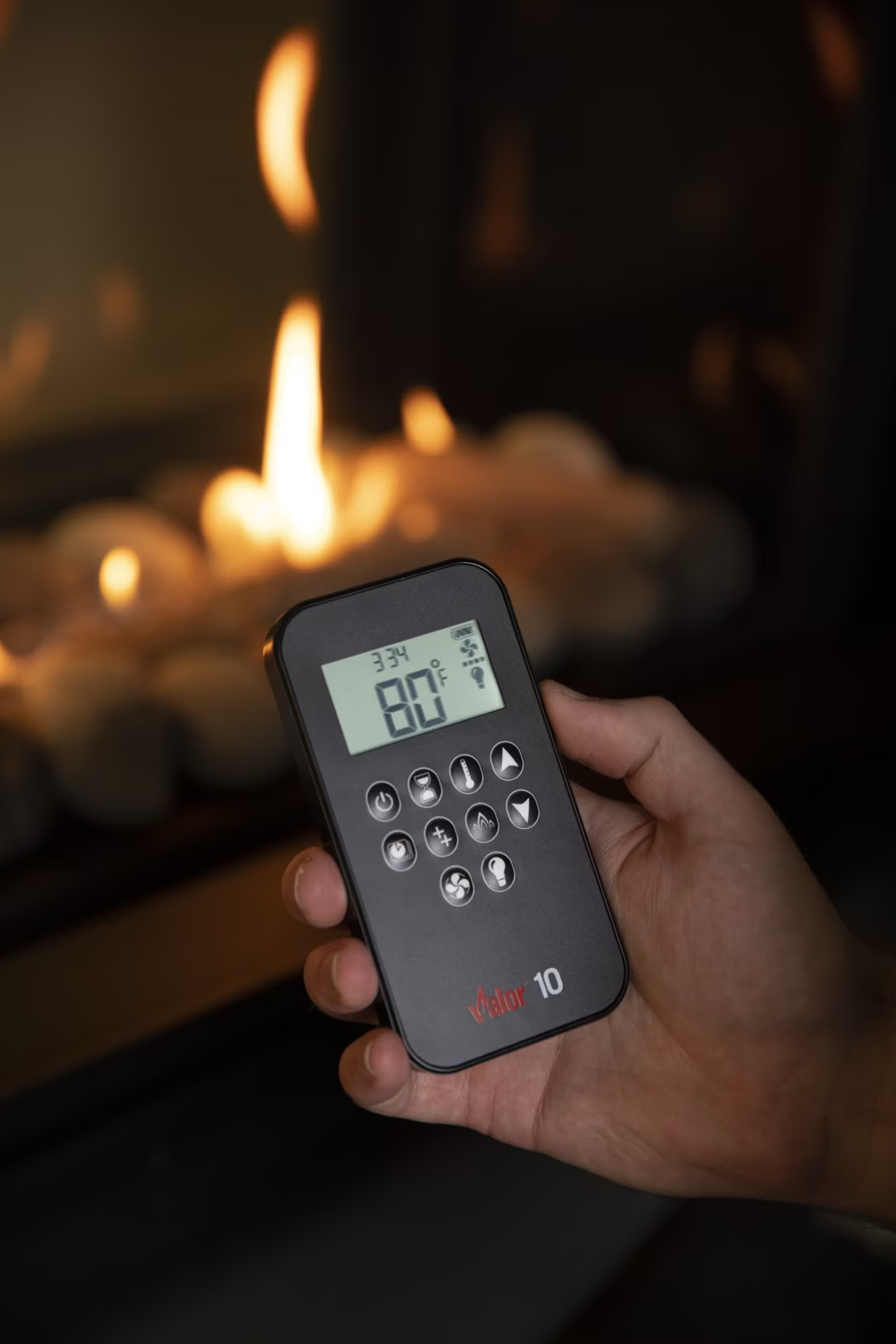
Most modern gas fireplaces will—and in Thomas County that matters, since ice storms and high-wind events can knock rural electric cooperative lines down for hours or longer out on the plains. Units with IPI (intermittent pilot ignition) run on a battery backup that kicks in automatically when power drops, so the fireplace lights and operates normally off the batteries. Valor fireplaces take a different approach: the pilot's thermocouple generates its own electricity, so there's no battery to keep charged at all. If backup heat during a winter power outage is a priority for your household, ask your local dealer which ignition system a given model uses before you decide.
Do I need a permit to install a gas fireplace in Thomas County?
Yes—new gas fireplace installations require a building permit, and the gas line work itself requires a licensed gas-fitter, whether you're on natural gas in Colby or setting a new propane line on a rural property. Permits for work inside Colby city limits are handled through the city; for the rest of the county, they go through the Thomas County building permit office at the courthouse in Colby. Most local hearth dealers coordinate the permitting, gas line work, and inspection as part of the installation, so it's rarely something the homeowner has to manage piece by piece.
Vented or vent-free—which makes sense for a Thomas County home?
Vented (direct-vent) gas fireplaces pull combustion air from outside and exhaust it back outside through a sealed pipe—they're the standard, code-compliant choice almost everywhere, including Kansas. Vent-free units burn fuel directly into the room and are legal here, but they carry stricter room-sizing and ventilation rules since combustion byproducts stay indoors. Many older farmhouses in Thomas County are drafty by nature, thanks to decades of prairie wind finding every gap in the envelope—which actually makes vent-free units easier to use safely in some of these homes than in a newer, tightly sealed build. That said, most local dealers still steer homeowners toward direct-vent units for the cleaner air quality and broader model selection.
How often does a gas fireplace need servicing?
Plan on an annual inspection, ideally before the coldest stretch of winter sets in. A technician checks the burner, pilot assembly, gas connections, and venting, and cleans the glass and firebox interior—a service that typically runs $150 to $250 in this part of Kansas. It's a lighter lift than chimney sweeping for a wood stove, but skipping it is still the main reason gas units develop sooting, pilot outages, or carbon monoxide issues over time.
What size gas fireplace do I need for my home?
Sizing depends on square footage, ceiling height, and how well-sealed the home is—and that last factor matters more in Thomas County than in most places, since older farmhouses on the open plains often have real infiltration losses from decades of wind pressure against the exterior walls. A home that's drafty will need more heat output to hold a room at temperature than the square footage alone would suggest. Local dealers typically size a unit during an in-home consultation, factoring in your home's age, insulation, and whether the fireplace is meant as primary zone heat or supplemental warmth for one room.
Gas vs. electric fireplace—which is the better fit here?
Gas delivers real heat output—enough to meaningfully warm a room on a 15°F January morning—plus the option of battery-backed operation during a power outage, which is a real consideration on Thomas County's rural electric cooperative lines during winter storms. Electric fireplaces are simpler to install (often just a standard outlet), cost less upfront, and work anywhere, but they produce far less heat and do nothing for you if the power itself is out. For a primary living space or a room you actually want warmed on the coldest days, gas is generally the better investment out here; electric tends to fit best as an ambiance unit in a bedroom or basement where serious heat output isn't the goal.
Why is a fireplace insert so efficient?
An insert does two things: it seals the chimney completely, so you stop losing air you already paid to heat, and it radiates warmth into the room through the firebox and glass. Most add a heat-exchange fan that pulls cool room air underneath, wraps it around the hot firebox, and pushes it back out warm. Your home is more efficient before you've even lit the first fire.
Is my gas fireplace wasting gas?
If it was installed more than 15 years ago, probably. Older gas fireplaces keep a standing pilot light burning all the time, and that little flame can cost a couple hundred dollars a year. Newer models use pilot-on-demand ignition—the pilot lights only when you use the fireplace and goes out when you turn it off.
What is an in-home preview and do I need one?
It's a visit where a hearth professional measures your space, confirms the model you picked actually works in your home, and walks the specs—framing, gas line, venting, finish work—before anything is ordered. Some details you just can't know until you see the house. Never make a down payment without one; it's the single most-skipped step that burns buyers.
How much should I budget for a fireplace?
For an average home—covering the fireplace, the vent pipe, and basic installation—a budget between $3,900 and $5,500 gives you a lot of options across wood, gas, and pellet. By the time you add finish work, gas line, and electrical, the average complete installation lands between $5,000 and $12,000 all-in. In a remodel or new build, a good rule is to put about 2.5% of the total project cost toward the fireplace.
Stove and Fireplace Dealers in Thomas County
Find your gas fireplace in Thomas County.
Tell us a bit about your home and we'll put together a free Project Guide & Parts List for your gas fireplace project—the right unit, the exact parts including the vent kit, and a recommended local dealer near Colby who can install it.
Find Your Fireplace →