
Plug-in warmth for Sumner County homes.
From Wellington to Mulvane, Caldwell, and Belle Plaine, electric fireplaces give Sumner County homeowners zone heat and ambiance without a chimney, a gas line, or a permit headache. Find the right unit and connect with a trusted local dealer.
Every Project Starts From One of These Five Situations
Reliable heat without a chimney, a gas line, or a permit fight.
Sumner County sits in the flat wheat country of south-central Kansas along the Oklahoma border, anchored by Wellington and stretching out through Mulvane, Caldwell, Belle Plaine, Argonia, Oxford, and South Haven. At roughly 4,543 heating degree days and a winter low averaging 22 degrees, the county's climate zone 4A winters are nowhere near the brutal, 8,000-plus HDD stretches of Fargo ND or International Falls MN—but the open plains geography means Arctic cold fronts can drop temperatures fast and bring ice storms that stress the power grid and the roads at the same time.
Much of unincorporated Sumner County runs on propane or all-electric heat rather than piped natural gas, and rural electric cooperatives alongside Evergy's regional service keep the lights on across the farmland between towns. That mix is exactly where electric fireplaces earn their place: no venting, no gas line, no masonry chimney required, and installation that in many cases is as simple as an electrician adding a dedicated circuit. It's worth being honest about the tradeoff—unlike a wood stove burning local oak, hickory, or osage orange, an electric fireplace goes dark in a power outage, so it's best treated as a zone-heat and ambiance solution rather than a storm-day backup.
Three steps. No salesperson until you're ready.
Tell us about your project
Your zip code, your situation, and the fuel you're leaning toward—or let the answers point you to one.
See what's actually available
The brands dealers within 100 miles genuinely carry—real options, never a catalog mirage.
Get your dealer & Project Guide
A trusted local dealer, plus the free Project Guide & Parts List that names every component of the job.
Frequently Asked Questions
How much does an electric fireplace installation cost in Sumner County?
Electric fireplace projects in Sumner County generally run from about $400 for a plug-in insert or freestanding unit that drops into an existing opening, up to roughly $2,500-$3,500 for a built-in wall unit that requires framing and a dedicated 120V or 240V circuit run by an electrician. Homes converting an old masonry fireplace built for oak or hickory cordwood usually land in the lower-to-middle range, since an electric insert can slide into the existing opening with minimal modification. Rural properties outside Wellington or Mulvane may see a small travel charge if the installer is coming from a distance, but electric units avoid the venting and chimney costs that drive up wood and gas installs.
What's the best electric fireplace for a rental or mobile home in Sumner County?
Sumner County has a meaningful share of mobile and manufactured homes, especially in the unincorporated areas between towns, and electric fireplaces are one of the few heat-producing appliances that install cleanly in that housing stock without cutting into the roof or wall structure for venting. A plug-in freestanding unit or a low-profile wall-mount model is usually the right call—no permanent alteration, no combustion byproducts to worry about in a tighter building envelope, and it can move with a renter or be swapped out easily if a property changes hands. A local dealer can confirm which models handle Kansas humidity and dust well over the long run.
Do electric fireplaces actually produce real heat, or are they just for looks?
Modern electric fireplaces with a built-in heater can genuinely warm a room—most put out around 4,600 to 5,000 BTU, comparable to a small space heater, which is enough to take the edge off a bedroom, sunroom, or home office on a 22-degree Sumner County morning. They won't replace a furnace or heat pump as whole-home heat, but for zone heating a single room while you keep the thermostat lower elsewhere, they do real work. Units without a heater option exist too, sold purely for the flame effect—worth confirming which type you're buying before installation.
Do I need a permit to install an electric fireplace in Sumner County?
In most cases, no—a plug-in electric fireplace that uses a standard outlet requires no permit at all. If your installation involves adding a new dedicated electrical circuit or a wall-mounted built-in unit tied into your home's wiring, that electrical work typically needs to be pulled by a licensed electrician and may require a permit through your city (Wellington, Mulvane, Caldwell, or Belle Plaine) or through Sumner County if you're outside city limits. This is far simpler than the permitting involved in a wood stove or gas line install, and most local dealers can tell you upfront whether your specific unit triggers a permit.
Electric fireplace vs. space heater—what's the difference?
A standalone space heater is cheaper upfront and fully portable, but it's typically a utilitarian box with no aesthetic value and a safety profile that makes many homeowners nervous about leaving it unattended overnight. An electric fireplace or insert delivers similar or better heat output, built into a unit designed for continuous use with tip-over and overheat protection, and it doubles as a real piece of the room—mantel, media console, or built-in wall feature—rather than something you tuck away when guests come over. For a Sumner County living room or bedroom that gets regular winter use, the fireplace format is usually worth the modest price difference over a basic space heater.
Will my electric fireplace still work if the power goes out?
No—and this is worth planning around in Sumner County, where ice storms and severe weather can knock out power for hours or, occasionally, longer stretches in rural areas served by cooperative lines. Electric fireplaces require grid or generator power to run, so they're best thought of as everyday zone heat and ambiance rather than emergency backup. If reliable heat during outages is a priority for your household, it's worth discussing a wood stove or a propane unit with pilot-light ignition alongside your electric fireplace plans—many local homes end up with electric for daily convenience and a wood or propane appliance for storm-day backup.
Can I put an electric insert into my existing wood-burning fireplace?
Yes, and it's one of the more common projects for older Sumner County farmhouses built with a masonry fireplace originally meant for oak, hickory, or osage orange cordwood. An electric insert slides into the existing firebox opening, uses the outlet or a new dedicated circuit if needed, and requires no chimney work, no liner, and no sweeping. It's a straightforward way to keep the look of the original hearth while eliminating ash cleanup, wood storage, and chimney maintenance—a popular choice for homeowners who want the fireplace's presence in the room without maintaining a fire.
Electric vs. wood—which is right for my Sumner County home?
Wood heat has deep roots in this part of Kansas, where hedgerows of osage orange and stands of oak and hickory have supplied firewood for generations, and a wood stove keeps working when the power doesn't—a real consideration on the open plains where ice storms can take down lines. Electric fireplaces, on the other hand, offer instant on-off convenience, zero ash or creosote, no chimney maintenance, and installation that's dramatically simpler and cheaper in most cases. For a primary living space where daily convenience matters most, electric is often the better fit; for a shop, cabin, or backup-heat scenario on a rural property, wood still makes sense. Several local households run both.
Electric vs. propane fireplace—which makes more sense outside Wellington's gas service area?
Much of unincorporated Sumner County relies on propane rather than piped natural gas, and a propane fireplace can deliver higher heat output and continue running in a power outage if it has a battery-backed ignition system—an advantage over electric during winter storms. But propane requires a tank, fuel deliveries, and venting work, all of which add cost and ongoing maintenance. Electric skips the tank and the fuel bill entirely, installs faster, and costs less upfront, at the tradeoff of needing grid power to run. For homeowners who want simple, low-maintenance supplemental heat and don't need storm-day backup, electric is usually the more practical choice; for those prioritizing outage resilience, propane is worth a closer look alongside it.
Can I put a TV above my fireplace?
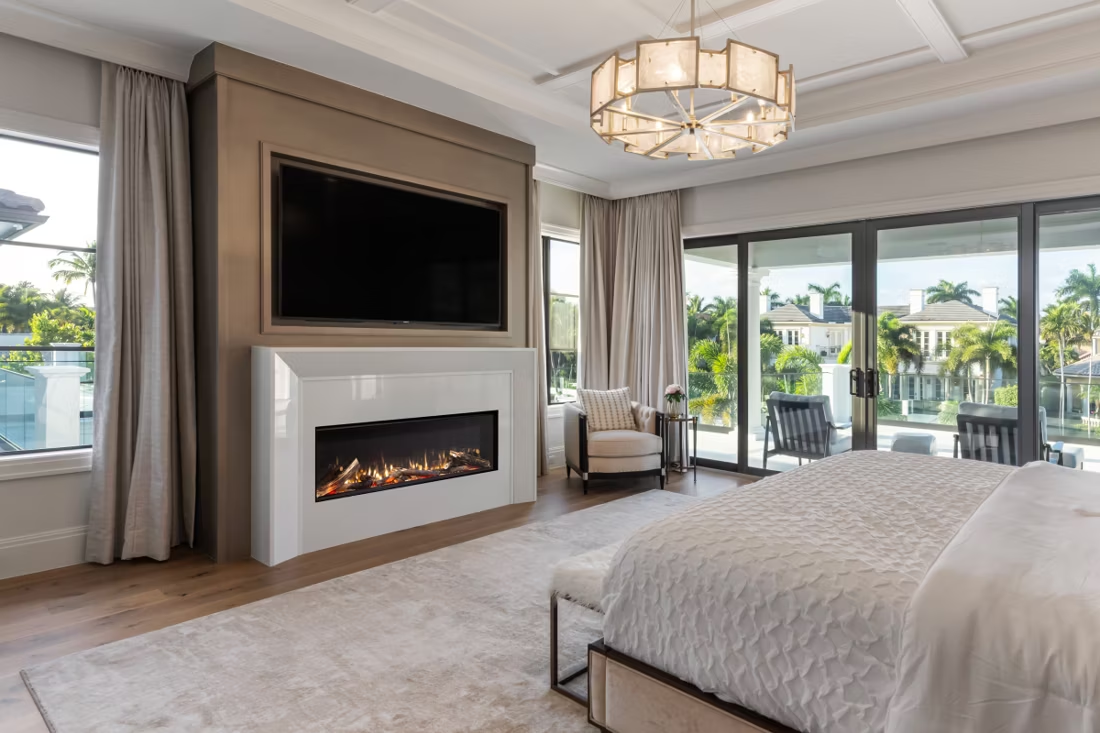
Yes—with an asterisk. Fireplaces are hot and TVs don't like heat. Either put a mantel between them to deflect rising warmth, or choose a fireplace with heat-management technology that creates a cool zone on the wall above—the wall stays around 125 degrees, barely warm, while the room still gets full heat. If you like clean lines and don't want a mantel, heat management is the answer.
Does an electric fireplace need a vent or chimney?
No—that's its superpower. An electric fireplace needs a wall and an outlet, period. No vent pipe, no gas line, no clearances to design around, which is why it works in bedrooms, offices, apartments, and walls where venting a gas or wood unit would be impractical or impossible. Installation is typically the simplest and least expensive of any fireplace type.
What is an in-home preview and do I need one?
It's a visit where a hearth professional measures your space, confirms the model you picked actually works in your home, and walks the specs—framing, gas line, venting, finish work—before anything is ordered. Some details you just can't know until you see the house. Never make a down payment without one; it's the single most-skipped step that burns buyers.
Can I install a fireplace myself?
If you're putting a fire in your house on purpose, it's best to work with an expert. Unless you're genuinely experienced in framing, gas line, vent pipe, and the national code on clearances to combustibles, have a professional do it—and ideally the same company that sells you the fireplace, so warranty, service, and liability all live under one roof.
Stove and Fireplace Dealers in Sumner County
Find your electric fireplace in Sumner County.
Tell us a bit about your home and we'll put together a free Project Guide & Parts List for your electric fireplace project—the right unit, the exact parts, and a trusted local dealer in Sumner County to install it.
Find Your Fireplace →