
Real heat for Stafford County homes, no chimney required.
From farmhouses outside St. John to homes in Stafford itself, electric fireplaces give you flip-a-switch warmth without venting, gas lines, or a wood supply to manage. Find the right unit and connect with a trusted local dealer.
Every Project Starts From One of These Five Situations
Simple heat that works in almost any room.
Stafford County sits in the south-central Kansas prairie, a Zone 4A climate with cold winter stretches but nothing close to the punishing lows of the northern plains. Many of the county's older farmhouses were built with masonry fireboxes originally meant to burn oak, hickory, or osage orange cut from local shelterbelts and river bottoms along the Rattlesnake and Arkansas drainages. Those old wood fireboxes are still standing, but a growing number of homeowners here are converting them—or adding heat to rooms that never had a fireplace at all—with electric inserts and log sets instead of taking on chimney upkeep.
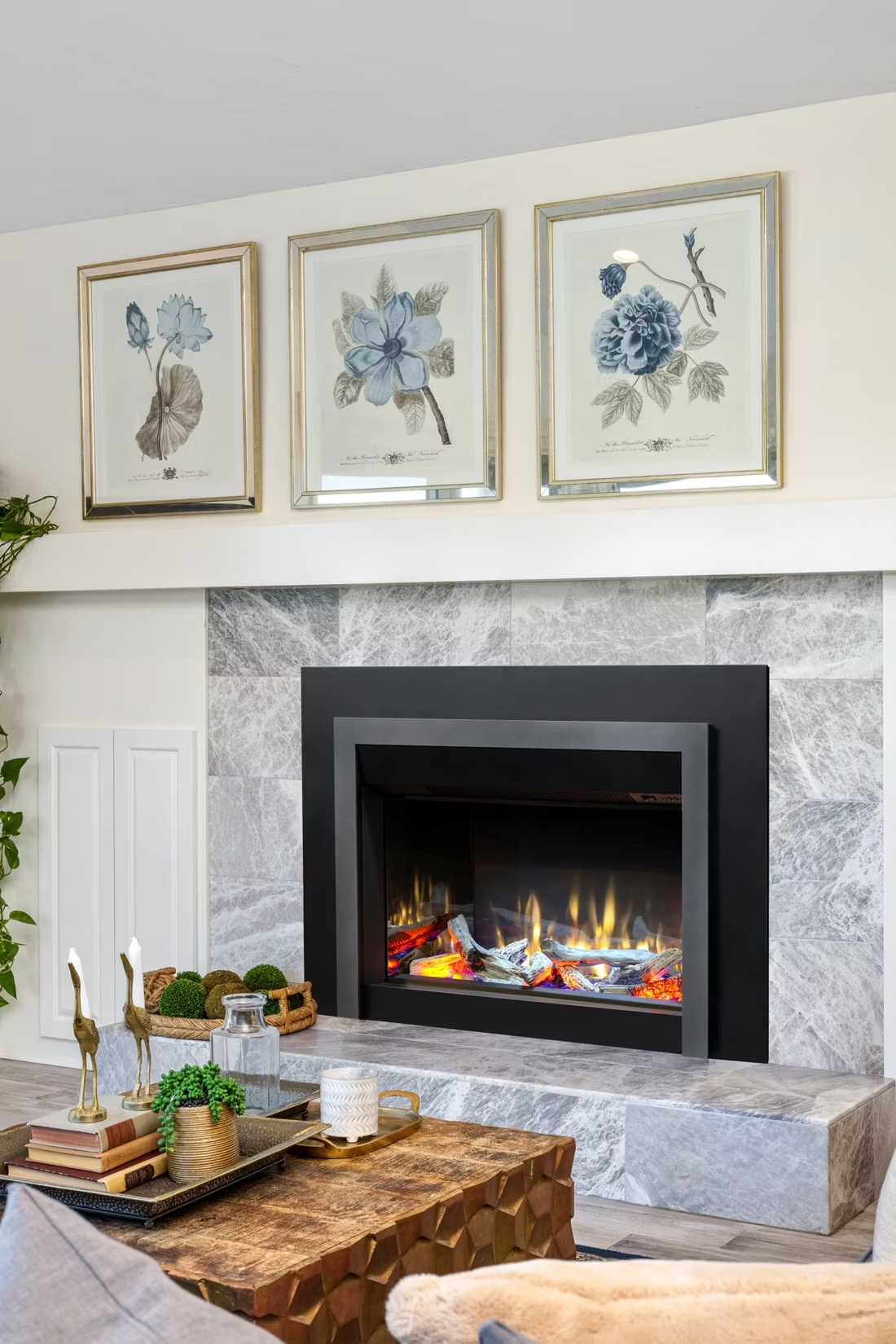
Because Stafford County is lightly populated (roughly 2,700 residents countywide) and rural, natural gas lines don't reach every property, and a lot of homes are served by a rural electric cooperative rather than an investor-owned utility. Electric fireplaces sidestep both issues entirely—no gas line to run, no venting to size, and no combustion byproducts to worry about in a mobile home or manufactured house, which are common in this part of the county. They're not a backup heat source during an outage, but for day-to-day supplemental warmth and ambiance in a den, bedroom, or sunroom, they're about as low-hassle as home heating gets.
Three steps. No salesperson until you're ready.
Tell us about your project
Your zip code, your situation, and the fuel you're leaning toward—or let the answers point you to one.
See what's actually available
The brands dealers within 100 miles genuinely carry—real options, never a catalog mirage.
Get your dealer & Project Guide
A trusted local dealer, plus the free Project Guide & Parts List that names every component of the job.
Frequently Asked Questions
How much does an electric fireplace installation cost in Stafford County?
Electric fireplaces are the least expensive fuel type to install, and that holds true in Stafford County. A plug-in insert or log set that drops into an existing masonry firebox typically runs $300 to $800 including the unit itself, since there's no venting or gas line work involved. A built-in wall unit with custom framing and a dedicated electrical circuit runs higher, often $1,000 to $2,500, mostly for carpentry and electrical labor rather than the appliance. Because Stafford County has a limited number of hearth dealers locally, expect installers to typically also serve Great Bend, Hutchinson, or Pratt and factor a modest trip charge into rural quotes.
Can an electric fireplace actually heat a room, or is it just for looks?
A properly sized electric fireplace can genuinely heat a room. Most units are rated around 1,500 watts and will comfortably supplement heat in a 400- to 600-square-foot space—enough for a living room, bedroom, or converted den in a typical Stafford County farmhouse. They won't replace a furnace on a January cold snap, and they're not meant to heat a whole house, but as zone heat for the room you actually spend time in, they hold up well. If you're trying to heat a larger open floor plan common in older county homes, talk to a local dealer about running two smaller units rather than one oversized one.
Do I need a permit to install an electric fireplace in Stafford County?
A plug-in insert or freestanding log set that uses a standard household outlet typically doesn't require a permit. A built-in wall unit that needs a new dedicated circuit is electrical work, and that generally does require a permit and inspection—check with the City of Stafford or the Stafford County zoning office depending on whether the property is inside city limits. Most licensed installers pull this permit as part of the job, so it's worth asking upfront rather than handling the wiring yourself.
What's the difference between an electric insert, an electric log set, and a built-in wall unit?
An electric insert is built to slide into an existing masonry firebox—a natural fit for the older wood-fireplace homes scattered across Stafford County that were originally built to burn oak or hickory. An electric log set is similar but designed to look more like a traditional wood fire, often with a more basic heat output. A built-in wall unit is a flush-mounted fireplace installed into new framing, used when there's no existing firebox—common in additions, converted porches, or new construction. For most retrofits in this county, an insert into the existing firebox is the simplest and least invasive option.
Will an electric fireplace work if the power goes out?
No—and this is worth being direct about. Electric fireplaces run entirely on grid power, so an ice storm or line outage on the rural electric cooperative system will take yours offline along with everything else in the house. That's the main tradeoff against a wood stove or insert, which keeps producing heat regardless of the grid. If reliable heat during winter outages matters for your property, it's worth pairing an electric fireplace (for everyday convenience) with a wood-burning unit elsewhere in the house as a genuine backup, rather than treating the electric unit as your emergency plan.
What's the best electric fireplace for Stafford County winters?
For genuine supplemental heat rather than pure ambiance, look at units with infrared quartz heating elements and a built-in thermostat rather than basic fan-forced resistance heaters—they tend to hold a room's temperature more evenly and cycle less. A 1,500-watt unit with adjustable heat settings is the practical choice for a Zone 4A climate like this one, where you want real warmth on the coldest weeks but don't need it running at full output most of the season. If the room has drafty single-pane windows common in older county farmhouses, size toward the higher end of what fits the space.
How much does it cost to run an electric fireplace in Stafford County?
A typical 1,500-watt electric fireplace costs somewhere around 15 to 25 cents an hour to run at full heat, depending on your electric cooperative's current rate—cheaper than propane on a per-hour basis in most cases, and far cheaper than running central heat to warm just one room. Most owners run theirs a few hours a day during the coldest months rather than continuously, which keeps the added cost on the electric bill modest. Your local co-op can tell you the exact per-kWh rate to run the math for your specific unit.
Can I convert my old wood fireplace to electric?
Yes, and it's a common project in Stafford County given how many homes still have masonry fireboxes originally built for cordwood—oak, hickory, and osage orange were the traditional local fuels. An electric insert fits into that existing opening without any chimney work, venting, or gas line, which makes it one of the simplest fireplace conversions available. It's a popular choice for older homeowners who no longer want to manage firewood and chimney cleaning, or for anyone who wants the look of the original fireplace without the upkeep.
Electric vs. wood or pellet—which makes more sense for my home?
Wood remains the practical choice for anyone who wants genuine backup heat during a power outage and has access to oak or hickory firewood, which is still common around Stafford County. Pellet stoves—using brands like Lignetics that are readily available in this region—offer a cleaner, more automated burn but still need electricity to run the auger and blower, so they share the same outage limitation as electric units. Electric fireplaces win on install simplicity, upfront cost, and zero maintenance, making them the right call for supplemental heat, ambiance, or rooms without an existing chimney. A lot of homes in the county end up with a mix: wood or pellet for real cold-weather backup, electric for the rooms where convenience matters most.
Does an electric fireplace need a vent or chimney?
No—that's its superpower. An electric fireplace needs a wall and an outlet, period. No vent pipe, no gas line, no clearances to design around, which is why it works in bedrooms, offices, apartments, and walls where venting a gas or wood unit would be impractical or impossible. Installation is typically the simplest and least expensive of any fireplace type.
Can I put a TV above my fireplace?
Yes—with an asterisk. Fireplaces are hot and TVs don't like heat. Either put a mantel between them to deflect rising warmth, or choose a fireplace with heat-management technology that creates a cool zone on the wall above—the wall stays around 125 degrees, barely warm, while the room still gets full heat. If you like clean lines and don't want a mantel, heat management is the answer.
Does a fireplace add value to my home?
On average, a fireplace adds back to the home about the same amount you spent installing it. Add the monthly savings from heating the rooms you actually use instead of the whole house—often hundreds of dollars a year—and the value case is strong before you even count what a fire does for how your family uses the room.
Can a fireplace actually lower my heating bill?
Yes—by creating a comfort zone. A furnace heats every square foot of the house just to warm the one room you're in; a gas fireplace on low burns roughly a sixth of the gas a typical furnace does. Set the furnace around 55–60 degrees as a baseline, then heat the rooms your family actually uses. Families who heat this way commonly save $20–$60 a month.
Find your electric fireplace in Stafford County.
Tell us a bit about your home and we'll put together a free Project Guide & Parts List for your electric fireplace project—then match you with a trusted local dealer who can install it right.
Find Your Fireplace →