
Warm, Instant Heat for Post Rock Country Winters.
From La Crosse to Bison, Otis, McCracken, and the farmsteads between, Rush County winters call for heat that starts at the flip of a switch. Find the right gas fireplace or insert and connect with a trusted local dealer.
Every Project Starts From One of These Five Situations
Clean heat built for rural Kansas life.
Rush County sits in the Smoky Hills of central Kansas, home to just over 2,200 residents spread across La Crosse—the county seat known as the 'Post Rock Capital of Kansas' for its limestone fence posts—and the smaller communities of Bison, Otis, McCracken, and Liebenthal. Winters here fall in climate zone 4A: hard freezes, ice storms, and biting prairie wind that makes the wind chill feel far worse than the thermometer alone. For generations, Rush County households have leaned on oak, hickory, and osage orange cut from local groves and shelterbelts to get through January. Gas heat has earned its place alongside that wood tradition, especially in newer homes, remodeled farmhouses, and living rooms where flipping a switch beats hauling wood in on a fifteen-below morning.
Natural gas service reaches La Crosse and the county's other incorporated towns, typically through Kansas Gas Service, but once you're out past city limits—which is most of Rush County's farm and ranch land—propane is the standard fuel, delivered and stored in tanks by regional suppliers. Either fuel source supports a direct-vent gas fireplace or insert that lights instantly, holds a steady temperature without tending, and in many models keeps running during the ice storms and downed power lines that occasionally hit this stretch of the Smoky Hills. For a county this spread out, that reliability matters as much as the convenience.
Three steps. No salesperson until you're ready.
Tell us about your project
Your zip code, your situation, and the fuel you're leaning toward—or let the answers point you to one.
See what's actually available
The brands dealers within 100 miles genuinely carry—real options, never a catalog mirage.
Get your dealer & Project Guide
A trusted local dealer, plus the free Project Guide & Parts List that names every component of the job.
Frequently Asked Questions
How much does a gas fireplace installation cost in Rush County?
A typical gas fireplace or insert installation in Rush County runs roughly $3,500 to $9,000. A direct-vent insert dropped into an existing masonry fireplace—common in older La Crosse and Bison farmhouses—sits toward the lower end, especially if a gas line or propane tank is already in place. New installations that require running gas line across a larger rural property, adding a propane tank, or framing a new built-in unit in a remodel run toward the higher end. Because homes here are often spread far apart, expect a modest travel charge from installers based out of Great Bend or Hays.
Can I convert my existing wood fireplace to gas?
Yes, and it's a common project for the older masonry fireplaces found in many Rush County farmhouses. A gas insert typically uses the existing chimney as a chase for a stainless liner, so the exterior look of the fireplace stays the same while the heat output and convenience improve dramatically. Homes already burning oak, hickory, or osage orange in an open masonry fireplace are good candidates—the conversion keeps the mantel and surround while eliminating ash cleanup and the need to keep a woodpile stocked through the winter.
Do I need natural gas, or can I run a fireplace on propane?
Either works, and which one you'll use largely depends on where in the county you live. Natural gas service through Kansas Gas Service reaches La Crosse and the other incorporated towns, so homes there can often tie a new fireplace into existing gas service. Outside city limits—the majority of Rush County's land—propane is the standard, supplied by regional bulk delivery companies and stored in a tank on the property. Nearly every gas fireplace model on the market can be configured for either fuel; your installer sets the correct orifice and regulator for whichever you have.
Will my gas fireplace still work if the power goes out?
Most modern gas fireplaces will, which matters in a county where ice storms can knock power out for a day or more. Units with intermittent pilot ignition (IPI) run on a small battery backup that keeps the fireplace lighting on demand even with the electricity off. Some Valor models go a step further, generating their own electricity from the pilot's thermocouple so there's no battery to remember to replace. If backup heat during a winter outage is a priority for your Rush County home, ask your local dealer specifically about the ignition system on any unit you're considering.
What's the difference between a gas fireplace, insert, and stove?
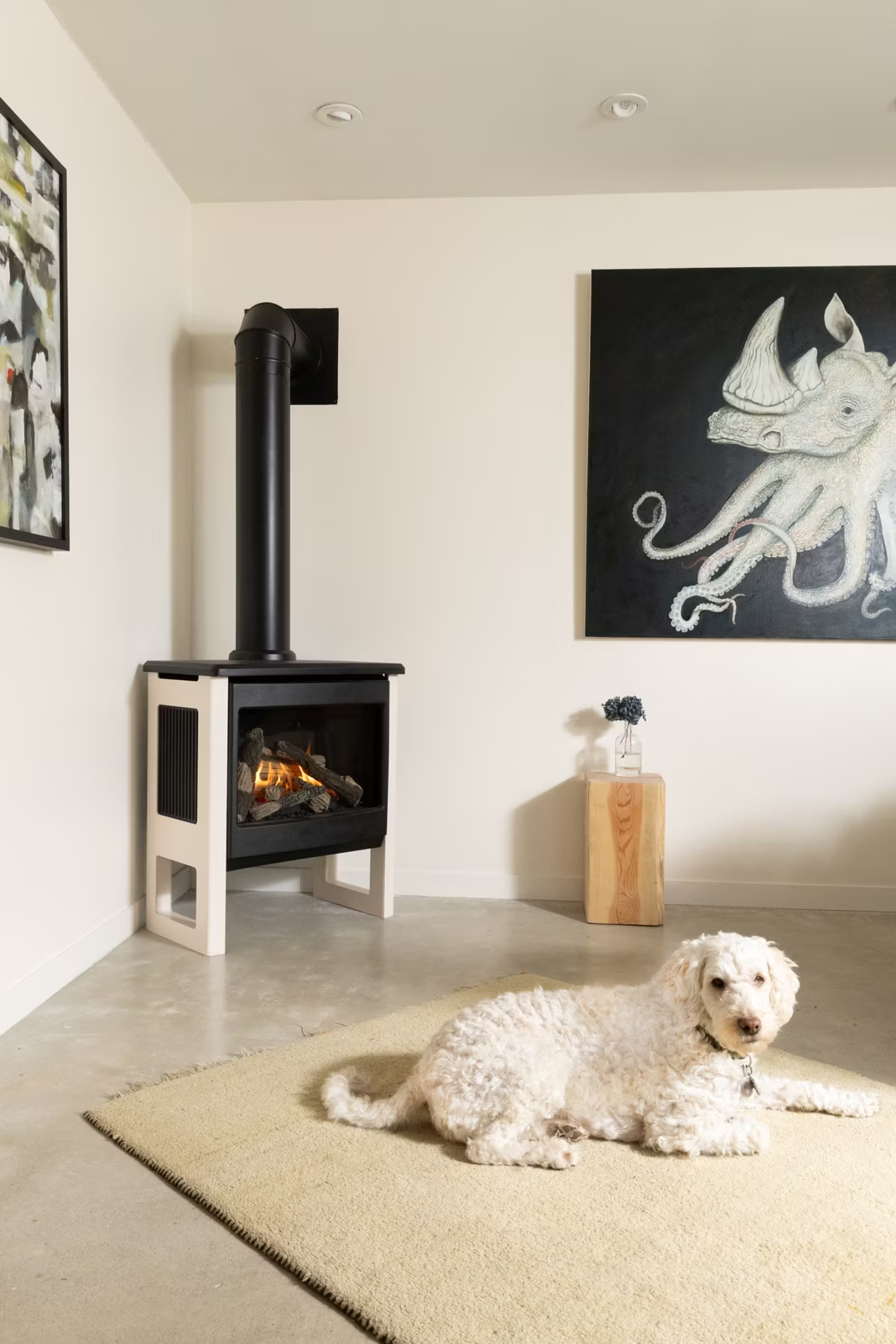
A gas fireplace is a built-in unit framed into a wall, typically chosen for new construction or a full remodel. A gas insert is sized to slide into an existing masonry firebox, which makes it the natural fit for the older brick fireplaces common in Rush County farmhouses. A gas stove is a freestanding cabinet unit, similar in footprint to a wood stove, that can go almost anywhere with proper clearance and venting. Most homeowners here with an existing fireplace choose an insert; those building new or finishing a shop or addition often go with a freestanding stove instead.
Do I need a permit to install a gas fireplace in Rush County?
Yes—new gas fireplace installations require a building permit, and any new gas line or propane line hookup needs to be done by a licensed gas-fitter and inspected accordingly. Permitting in Rush County runs through the county's building department based at the courthouse in La Crosse. Most established hearth dealers handle the permit application and coordinate the gas-fitter and inspection as part of the installation, so you're not left managing multiple trades on your own.
What's the difference between vented and vent-free gas fireplaces?
Vented (direct-vent) gas fireplaces draw combustion air from outside and exhaust it back outside through a sealed pipe, keeping combustion byproducts out of the living space entirely. Vent-free units burn without any outside venting and release some water vapor and trace combustion gases into the room, so Kansas code limits their use to rooms of a minimum size and requires an oxygen depletion sensor. For Rush County homes, direct-vent units are the more common and more broadly recommended choice—they deliver real heat output with no compromise on indoor air quality, which matters in tightly sealed newer farmhouses.
How often should a gas fireplace be serviced?
Plan on an annual inspection, ideally in late summer or early fall before the first cold snap. A technician checks the burner, pilot assembly, venting, and gas connections, and cleans the glass and interior. In a county as spread out as Rush, it's worth asking your dealer whether they can group your service visit with nearby appointments in La Crosse, Bison, or Otis—most technicians travel out from Great Bend or Hays, and a full annual check typically runs $150 to $250.
Gas vs. wood—which makes more sense for a Rush County home?
Wood remains a strong option here, with oak, hickory, and osage orange readily available from local shelterbelts and groves, plus the advantage of heat that doesn't depend on the power grid or a propane delivery truck making it down a gravel road in a snowstorm. Gas offers instant, consistent heat with no ash or wood handling, which is a real draw for daily-use living rooms and for households that don't want to manage a woodpile every winter. Many Rush County homes end up with both: gas for everyday convenience in the main living area, and a wood stove or fireplace elsewhere as backup heat when the lines go down.
Why is a fireplace insert so efficient?
An insert does two things: it seals the chimney completely, so you stop losing air you already paid to heat, and it radiates warmth into the room through the firebox and glass. Most add a heat-exchange fan that pulls cool room air underneath, wraps it around the hot firebox, and pushes it back out warm. Your home is more efficient before you've even lit the first fire.
Why is my open fireplace making my house colder?
Open fireplaces suck—literally. As the fire burns, it consumes air your furnace already paid to heat and pulls it out through the chimney, so the house is actually colder after the fire goes out than before you lit it. An insert fixes this: it seals the chimney, puts fixed glass across the front, and turns that hole in your house into a real heat source.
Can a fireplace actually lower my heating bill?
Yes—by creating a comfort zone. A furnace heats every square foot of the house just to warm the one room you're in; a gas fireplace on low burns roughly a sixth of the gas a typical furnace does. Set the furnace around 55–60 degrees as a baseline, then heat the rooms your family actually uses. Families who heat this way commonly save $20–$60 a month.
Does a fireplace add value to my home?
On average, a fireplace adds back to the home about the same amount you spent installing it. Add the monthly savings from heating the rooms you actually use instead of the whole house—often hundreds of dollars a year—and the value case is strong before you even count what a fire does for how your family uses the room.
Find your gas fireplace in Rush County.
Tell us a bit about your home and we'll match you with the right gas fireplace, insert, or stove—plus a free Project Guide & Parts List—and connect you with a trusted local dealer.
Find Your Fireplace →