
Warmth Without the Chimney Work.
For farmhouses and ranch homes across Pawnee County—from Larned to Rozel, Garfield, and Burdett—an electric fireplace or insert adds real supplemental heat and instant ambiance without a flue, a gas line, or a permit fight. Find the right unit and connect with a trusted local dealer.
Every Project Starts From One of These Five Situations
Electric heat fits the rhythm of rural Pawnee County.
Pawnee County sits on the open wheat-belt prairie of central Kansas, anchored by Larned and the smaller communities of Rozel, Garfield, and Burdett. Winters here are real—average lows near 21°F and roughly 4,860 heating degree days a year, enough cold to matter but nowhere near what places like Minneapolis or Fargo see each winter. Zone 4A means most homes lean on a central furnace for whole-house heat, but the wind across open farmland and the age of the local housing stock—plenty of farmhouses built in the early 1900s—mean drafty rooms, additions, and detached spaces that the furnace never quite reaches.
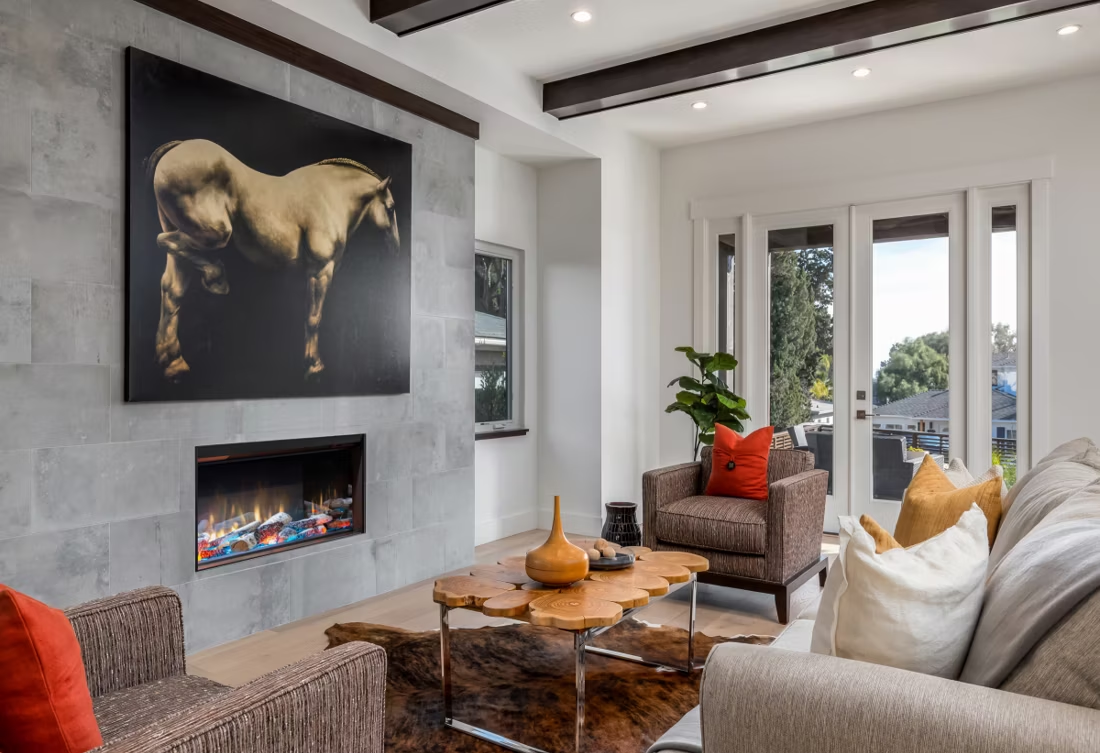
Many of those older Pawnee County homes still have a fireplace opening with no working flue, capped decades ago or never vented at all. An electric fireplace or insert solves that: no chimney, no gas line, no combustion byproducts to vent, just a standard household circuit. It's why electric has become the practical choice for zone heat in a spare bedroom, a farmhouse den, or a garage conversion—plugging into whatever the local rural electric cooperative or the City of Larned's municipal utility already delivers to the house.
Three steps. No salesperson until you're ready.
Tell us about your project
Your zip code, your situation, and the fuel you're leaning toward—or let the answers point you to one.
See what's actually available
The brands dealers within 100 miles genuinely carry—real options, never a catalog mirage.
Get your dealer & Project Guide
A trusted local dealer, plus the free Project Guide & Parts List that names every component of the job.
Frequently Asked Questions
How much does an electric fireplace installation cost in Pawnee County?
Electric fireplaces are the least expensive hearth option to install because there's no chimney, no gas line, and often no structural work involved. A basic plug-in insert or wall-mounted unit typically runs $150 to $600 installed, since it just needs a standard outlet. A built-in electric fireplace set into a wall or an existing masonry firebox—with some framing, trim, and possibly a dedicated 240V circuit—usually falls between $1,500 and $4,000 depending on the model and finish work. Because Pawnee County's older farmhouses often already have a fireplace opening, even without a working flue, converting that opening to hold an electric insert is one of the more common and affordable projects local dealers handle.
Is an electric fireplace better than a space heater?
For most Pawnee County homes, yes, if you want something permanent and safe to leave running. A portable space heater works, but it's a real fire hazard risk with pets, kids, and the older wiring found in a lot of the county's pre-war farmhouses, and it has to be unplugged and moved around. A built-in electric fireplace or insert is hardwired or plugged into a dedicated circuit, has tip-over and overheat safety switches, and doubles as a real design feature in the room—most models put out 4,000 to 5,000 BTU of supplemental heat, similar to a good space heater, but without looking like one.
Can I put an electric insert into my old farmhouse fireplace?
In most cases, yes—and it's one of the more common projects in Pawnee County given how many older homes here have a masonry fireplace opening that was capped or abandoned years ago. An electric insert slides into that existing opening, needs a standard or dedicated outlet nearby, and requires no chimney liner, no venting, and no cleaning of the old flue. It's usually the fastest way to bring a dead fireplace back into use, and it avoids the cost of relining an old chimney that may not meet current code anyway.
Do I need a permit to install an electric fireplace in Pawnee County?
Usually not for the fireplace itself, since there's no venting or gas work involved—but if the installation requires a new dedicated circuit, common for larger built-in units drawing 240V, an electrician will need to pull an electrical permit through the Pawnee County building department. Most local dealers either handle that paperwork directly or can point you to an electrician who does. Simple plug-in inserts that use an existing outlet typically don't require any permit at all.
What's the best electric fireplace for Pawnee County's winters?
Look for a unit with a real heater core rated for the room size you're heating—most electric fireplaces are built to supplement, not replace, a central furnace, which matters given Pawnee County's roughly 4,860 heating degree days and average winter lows near 21°F. For a single bedroom or den, a 1,500-watt insert or wall unit is typically enough. For larger open rooms or additions with more exterior wall exposed to the county's near-constant prairie wind, size up to a wider built-in unit or consider two smaller units rather than one oversized model, since electric heat output doesn't scale with unit size the way a wood or gas appliance's BTU output does.
Electric vs. propane fireplace—which makes more sense in Pawnee County?
Most of rural Pawnee County runs on propane rather than natural gas mains, so a gas fireplace here usually means a propane tank, a gas line run, and periodic propane deliveries or a service contract. That gets you higher heat output and the ability to run without electricity, which matters during an ice storm. An electric fireplace skips all of that—no tank, no gas line, no delivery schedule—but it depends entirely on the grid, and it puts out less heat per unit than a propane appliance of similar size. For a supplemental heat source in a spare room, most Pawnee County homeowners find electric simpler and cheaper to install; for a primary heat source in an addition or shop, propane still tends to win on raw output.
How much does it cost to run an electric fireplace in Pawnee County?
A typical 1,500-watt electric fireplace run on high for eight hours a day costs roughly $1 to $2 a day at typical rural Kansas electric rates, whether your home is served by a local cooperative or the City of Larned's municipal electric utility. That's a manageable add to a winter bill for zone heating a single room, though it's not meant to replace whole-house furnace heat—electric fireplaces are built for supplemental warmth and ambiance, not as the primary heat source for a full farmhouse.
What about wood or pellet stoves—are those an option in Pawnee County?
Technically yes, but new wood-burning fireplace installations are rare across Pawnee County today, even though the county has plenty of oak, hickory, and old osage orange hedgerow wood—the same tough, high-BTU wood that Kansas farmers have used for fence posts for generations and still burn in outdoor pits and old shop stoves. Pellet stoves are similarly uncommon; there's no strong local retail or supply network for bagged pellets the way there is in more wooded parts of the country, though Lignetics and Indeck Energy Services pellets can be special-ordered through some regional suppliers. For indoor supplemental heat in town or on the farm, electric and propane have become the practical default, mainly because they don't require a chimney, a fuel-cutting permit, or a steady woodlot to feed them.
Will my electric fireplace work during a power outage?
No—electric fireplaces need grid power to run, so during an ice storm or a line outage they'll go dark along with everything else in the house. That's worth knowing in a county where winter storms can knock out rural electric service for hours at a stretch. If backup heat during outages matters to you, plan for it separately—a propane heater, a generator sized to run the fireplace and furnace blower, or simply treating the electric fireplace as what it's best at: everyday supplemental warmth and ambiance, not emergency heat.
Do electric fireplaces actually produce heat?
Yes—most put out around 4,800–5,000 BTUs from a standard outlet, which comfortably warms a bedroom, office, or den as a comfort-zone heater. What they won't do is carry a whole house the way wood, gas, or pellet can. Think of electric as ambiance-first with honest supplemental heat: flames on with no heat in July, flames plus warmth in January.
Does an electric fireplace need a vent or chimney?
No—that's its superpower. An electric fireplace needs a wall and an outlet, period. No vent pipe, no gas line, no clearances to design around, which is why it works in bedrooms, offices, apartments, and walls where venting a gas or wood unit would be impractical or impossible. Installation is typically the simplest and least expensive of any fireplace type.
Can a fireplace actually lower my heating bill?
Yes—by creating a comfort zone. A furnace heats every square foot of the house just to warm the one room you're in; a gas fireplace on low burns roughly a sixth of the gas a typical furnace does. Set the furnace around 55–60 degrees as a baseline, then heat the rooms your family actually uses. Families who heat this way commonly save $20–$60 a month.
What is an in-home preview and do I need one?
It's a visit where a hearth professional measures your space, confirms the model you picked actually works in your home, and walks the specs—framing, gas line, venting, finish work—before anything is ordered. Some details you just can't know until you see the house. Never make a down payment without one; it's the single most-skipped step that burns buyers.
Find your electric fireplace in Pawnee County.
Tell us a bit about your home—whether it's a Larned bungalow, a Rozel farmhouse, or a shop with an old fireplace opening—and we'll match you with the right electric fireplace or insert, plus a free Project Guide & Parts List with your recommended local dealer.
Find Your Fireplace →