
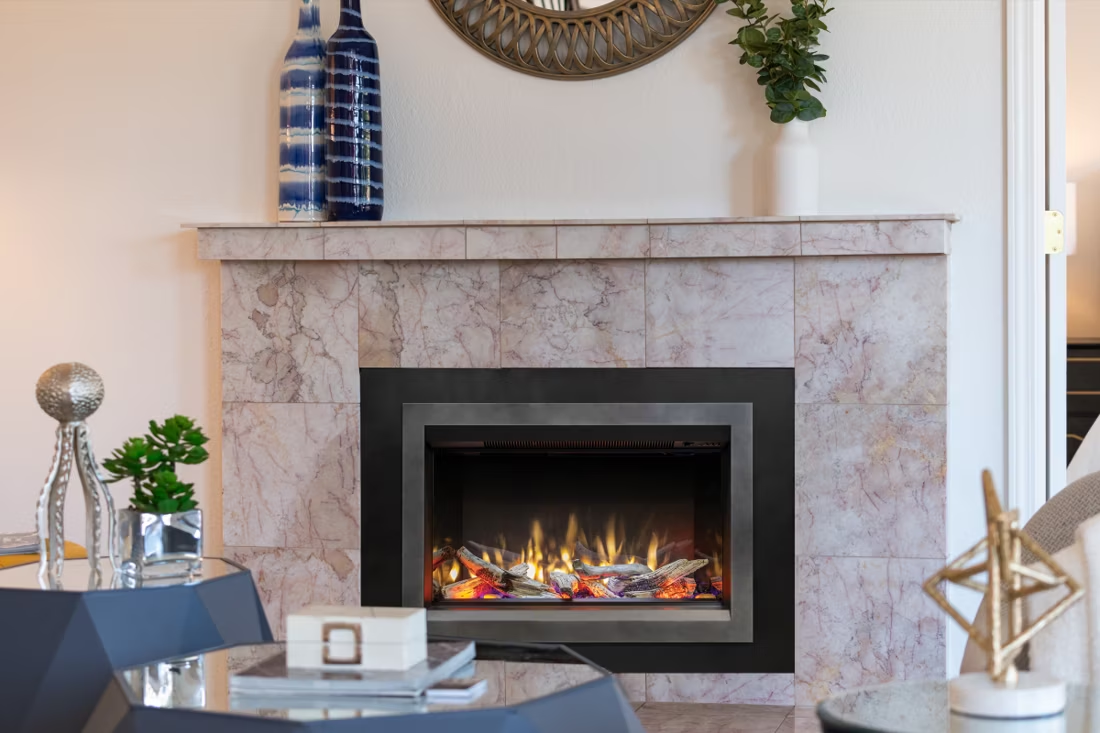
Find the right electric fireplace for your Miami County home.
No venting, no gas line, no chimney—just plug-in or hardwired heat that works in any room from Paola to Osawatomie to Louisburg. We'll match you with a local dealer who installs it right.
Every Project Starts From One of These Five Situations
A practical fit for a moderate-cold climate.
Miami County sits in climate zone 4A with a solid winter heating season and average winter lows around 19°F—a real Kansas winter, but nowhere near the extremes of a place like Fargo or Bismarck. That matters for electric heat: it's not being asked to carry a home through weeks of sub-zero nights, so its limitations show up much less often here than they would further north. For supplemental warmth in a den, a finished basement, or a bedroom addition in Paola, Osawatomie, or Louisburg, an electric fireplace or insert does the job without touching your gas line or chimney.
Miami County has no air quality restrictions on any fuel type, so the choice here comes down to convenience rather than regulation. Wood is still common locally—oak, hickory, and osage orange are the go-to species for county woodstoves—and gas is widely used too. But electric fills a specific gap: renters who can't modify venting, homeowners adding a room without extending gas lines, or anyone who wants fireplace ambiance in a bedroom or office with zero combustion byproducts. It's also the fastest and least invasive install of any fuel type we cover for the county.
Three steps. No salesperson until you're ready.
Tell us about your project
Your zip code, your situation, and the fuel you're leaning toward—or let the answers point you to one.
See what's actually available
The brands dealers within 100 miles genuinely carry—real options, never a catalog mirage.
Get your dealer & Project Guide
A trusted local dealer, plus the free Project Guide & Parts List that names every component of the job.
Frequently Asked Questions
How much does an electric fireplace installation cost in Miami County?
Electric fireplace installs in Miami County typically run $400 to $1,200. A plug-in freestanding unit or a simple insert into an existing space needs no electrical work beyond a standard outlet and sits at the low end. A built-in wall unit that requires a dedicated 240V circuit, new framing, or finish carpentry runs toward the top of that range. Because there's no venting, chimney, or gas line involved, electric is consistently the least expensive fireplace project of any fuel type—a local dealer can usually confirm pricing after a short in-home look at your electrical panel and the space.
Will an electric fireplace actually heat a room in a Miami County winter?
Yes, for the room it's in. Most electric fireplace inserts and stoves are rated around 4,600–5,000 BTUs, enough to comfortably heat a single room of 400 square feet or so—plenty for a den, bedroom, or basement family room even on a 19°F morning. What electric won't do is heat a whole house the way a wood stove or gas furnace does; it's built as supplemental or zone heat, not a whole-home heating strategy. For most Miami County homeowners adding heat to one room without touching the furnace, that's exactly the use case.
Do I need an electrician to install an electric fireplace?
It depends on the unit. Plug-in freestanding electric fireplaces and many electric inserts run on a standard 120V outlet and need no electrician at all—just clearance from combustibles and a nearby outlet. Larger built-in units, especially wall-mounted or linear models over about 1,500 watts, often call for a dedicated circuit, which does require a licensed electrician. Local dealers in Miami County will tell you upfront which category your chosen unit falls into before you buy, so there's no surprise electrical bill after the fact.
Does an electric fireplace work during a power outage?
No—this is the honest tradeoff with electric heat, and it matters in Miami County where ice storms and summer line outages both happen. An electric fireplace has no battery backup and no combustion source; when the power drops, it goes dark and cold along with everything else in the house. If backup heat during outages is a priority, a wood stove burning local oak or hickory, or a gas unit with battery-backed ignition, is a better primary choice—with electric as a convenient supplemental option the rest of the time.
What's the difference between an electric fireplace, insert, and stove?
An electric fireplace is typically a built-in or wall-mounted unit designed to look like a traditional fireplace, often with a mantel surround. An electric insert is sized to slide into an existing masonry fireplace opening, converting an old wood-burning firebox into a heat source without touching the chimney. An electric stove is a freestanding cabinet-style unit that sits on the floor, mimicking a wood stove's look. For Miami County homes with an existing but unused fireplace, an insert is usually the simplest upgrade; for a bare wall or new room, a built-in fireplace or freestanding stove works better.
Do I need a permit for an electric fireplace in Miami County?
Most plug-in electric fireplaces don't require a building permit since there's no venting, gas line, or structural chimney work involved. If your installation requires new electrical wiring or a dedicated circuit, that electrical work may need a permit and inspection depending on the jurisdiction—Paola, Osawatomie, and unincorporated Miami County each handle this through their respective building departments. A local dealer who regularly installs electric units in the county will know exactly what's required for your specific address and unit.
How does the heat quality compare to a real wood or gas flame?
Modern electric fireplaces use LED flame technology that's genuinely convincing from across a room, and the heat itself is comfortable, even, thermostat-controlled warmth—no cold spots, no need to feed a fire. What it doesn't replicate is the radiant heat and crackle of a real wood fire burning local oak or hickory, or the visual depth of an actual gas flame. For homeowners who want ambiance and supplemental warmth without the upkeep, electric is a strong option. For those who want the authentic hearth experience, wood or gas remains the better fit.
Is electric a good choice for a rental property or basement in Miami County?
It's often the best choice for both. Rental properties in Paola and Osawatomie benefit from electric because there's no chimney liability, no gas line to maintain, and most units can be installed or removed without any permanent structural change—a real advantage for landlords. Basements are a similarly good fit because running new gas lines or venting down there gets expensive fast, while an electric insert or freestanding unit just needs an outlet. In both cases, a local dealer can recommend a model sized right for the space.
Electric vs. gas—which is right for my Miami County home?
Gas offers real flame, higher heat output, and—with the right ignition system—the ability to keep running during a power outage, which matters given Miami County's occasional winter ice storms. Electric offers a much simpler, cheaper install with no gas line or venting required, and it works anywhere you have an outlet, including rentals and basements where gas isn't practical. For a primary heat source in a main living area, gas or wood is usually the stronger pick locally. For a quick, low-cost ambiance upgrade in a secondary room, electric is hard to beat.
Does an electric fireplace need a vent or chimney?
No—that's its superpower. An electric fireplace needs a wall and an outlet, period. No vent pipe, no gas line, no clearances to design around, which is why it works in bedrooms, offices, apartments, and walls where venting a gas or wood unit would be impractical or impossible. Installation is typically the simplest and least expensive of any fireplace type.
Do electric fireplaces actually produce heat?
Yes—most put out around 4,800–5,000 BTUs from a standard outlet, which comfortably warms a bedroom, office, or den as a comfort-zone heater. What they won't do is carry a whole house the way wood, gas, or pellet can. Think of electric as ambiance-first with honest supplemental heat: flames on with no heat in July, flames plus warmth in January.
Does a fireplace add value to my home?
On average, a fireplace adds back to the home about the same amount you spent installing it. Add the monthly savings from heating the rooms you actually use instead of the whole house—often hundreds of dollars a year—and the value case is strong before you even count what a fire does for how your family uses the room.
Can a fireplace actually lower my heating bill?
Yes—by creating a comfort zone. A furnace heats every square foot of the house just to warm the one room you're in; a gas fireplace on low burns roughly a sixth of the gas a typical furnace does. Set the furnace around 55–60 degrees as a baseline, then heat the rooms your family actually uses. Families who heat this way commonly save $20–$60 a month.
Get your Miami County electric fireplace Project Guide & Parts List.
Tell us a bit about your home and we'll put together a free Project Guide & Parts List for your electric fireplace project—plus a match with a trusted local Miami County dealer who can install it.
Find Your Fireplace →