
Find the right gas fireplace for your Lyon County home.
Instant, clean heat for the Flint Hills' cold snaps—from Emporia to Americus, Hartford, and Olpe. We match you with a trusted local dealer who knows what actually works here.
Every Project Starts From One of These Five Situations
Reliable warmth for Flint Hills winters, without the wood pile.
Lyon County sits in climate zone 4A with a solid heating season and winter lows averaging 18°F—a season that's real but not brutal, closer to a milder version of what places like Madison, WI deal with. Gas fireplaces have become the default upgrade for a lot of Emporia homeowners because they deliver heat on demand without the ash, splitting, or storage that comes with the oak, hickory, and osage orange that fuel most local wood stoves. When wind off the Flint Hills drops the wind chill hard for a few days, flipping a switch beats hauling wood.
Natural gas service reaches most of Emporia and the incorporated towns along US-50, while homes further out in unincorporated Lyon County more often run on propane with a tank on the property. Either fuel works with the vast majority of direct-vent fireplaces and inserts a local dealer will install—the choice mostly comes down to whether a gas line already runs to your house. Because Lyon County has no air quality non-attainment issues or wildfire smoke concerns, gas here is purely a comfort and convenience decision, not a regulatory one.
Three steps. No salesperson until you're ready.
Tell us about your project
Your zip code, your situation, and the fuel you're leaning toward—or let the answers point you to one.
See what's actually available
The brands dealers within 100 miles genuinely carry—real options, never a catalog mirage.
Get your dealer & Project Guide
A trusted local dealer, plus the free Project Guide & Parts List that names every component of the job.
Frequently Asked Questions
How much does a gas fireplace installation cost in Lyon County?
Most gas fireplace and insert installations in Lyon County run in a broad range depending on whether you're converting an existing masonry fireplace or starting from scratch. A direct-vent insert dropped into an existing fireplace with a gas line already nearby is on the lower end of the spectrum; a new built-in unit in a remodel or an addition—with fresh gas line runs and framing—costs more. If you're on propane and don't have a tank yet, add the cost of a tank installation from a local propane supplier. A local dealer will give you a firm number after seeing the space.
Can I convert my existing wood-burning fireplace to gas?
Yes, and it's a common project for older homes in Emporia's established neighborhoods. A gas insert typically slides into your existing masonry firebox with a stainless liner run up the flue, so you keep the look of your fireplace but get instant, controllable heat. Whether you're on natural gas or propane determines some of the plumbing work involved. This is usually more straightforward and less costly than converting a wood stove, since you're not dealing with cutting permits or firewood species—just the gas line and venting.
Should I use natural gas or propane for my fireplace?
It depends on where in Lyon County you are. Homes in Emporia and along the main natural gas distribution lines can typically tie a fireplace directly into existing service, which simplifies things if you already have a gas water heater or furnace. Homes out toward Americus, Hartford, Olpe, or other rural parts of the county are more likely to run on propane, which means either an existing tank or a new tank installation. Nearly every gas fireplace model on the market can be configured for either fuel—your dealer sets the correct orifice and regulator during install, so the fireplace performs the same either way.
Will a gas fireplace still work if the power goes out?
Most will, with the right ignition system. Units with intermittent pilot ignition (IPI) run on small batteries that kick in automatically when power drops, so the fireplace lights on demand just like normal. Valor units go a step further—the pilot's thermocouple generates its own electricity, so there's no battery to remember at all. For Lyon County's ice storms and high-wind events, when rural power can take a while to restore, that backup capability matters. Ask your dealer which ignition system is on any model you're considering.
What's the difference between a gas fireplace, insert, and stove?
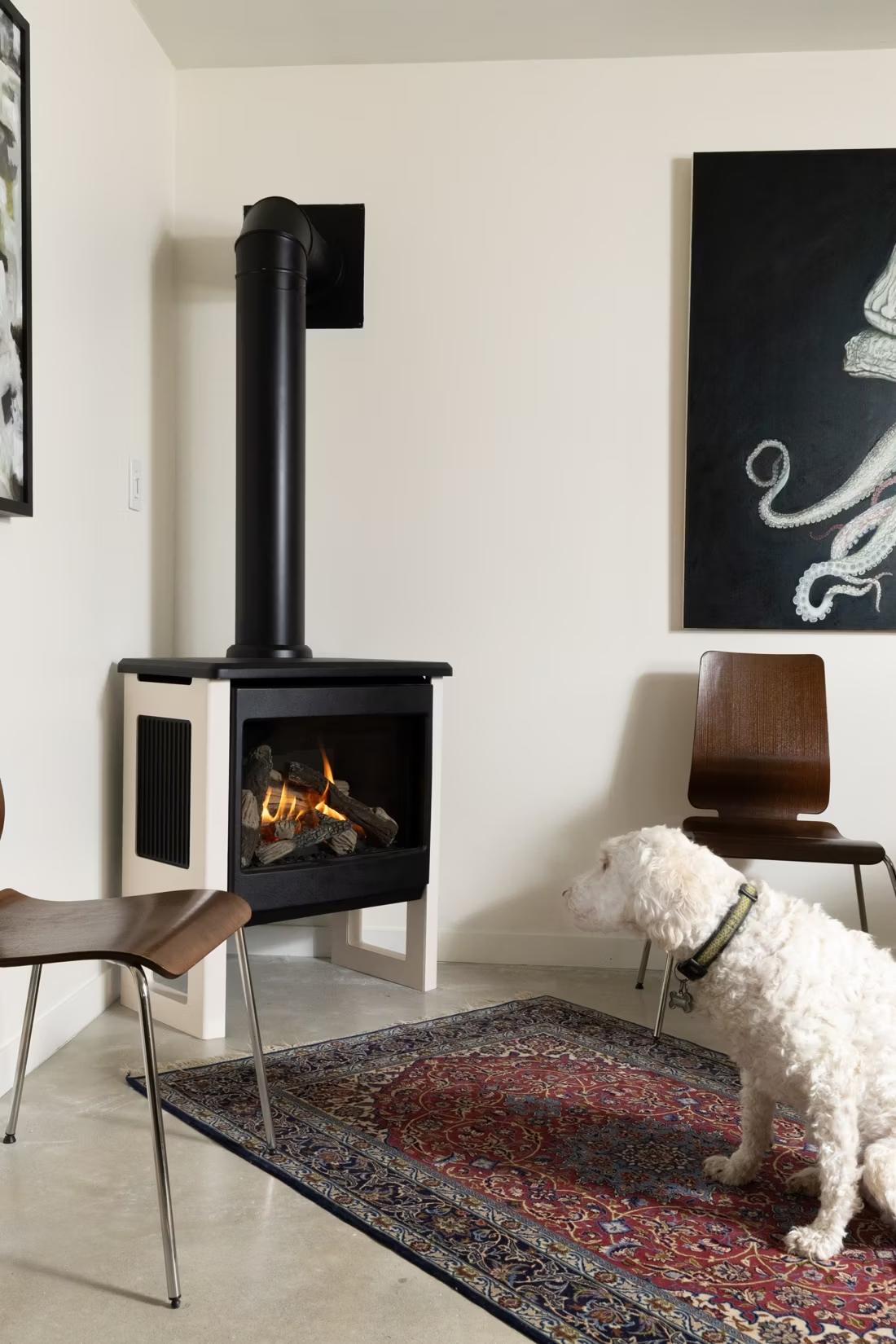
A gas fireplace is a built-in unit framed into a wall—the right call for new construction or a full remodel. A gas insert is built to slide into an existing masonry firebox, using your current chimney as the vent path. A gas stove is freestanding, sitting on the floor like a wood stove but running on gas. For most Lyon County homes with an older fireplace already in place, an insert is the simplest upgrade. If you're building new or don't have an existing firebox, a built-in fireplace or freestanding stove is the better fit.
Do I need a permit to install a gas fireplace in Lyon County?
Generally yes—installations within Emporia city limits require a building permit and gas line work performed by a licensed gas-fitter, and unincorporated parts of Lyon County have their own permitting requirements through the county. A reputable local dealer handles this as part of the installation, coordinating the gas line, venting, and inspection so you're not left managing separate trades yourself. This is one of the reasons to avoid a big-box install—permitting and code compliance get skipped more often than they should.
Vented or vent-free—which should I choose?
Vented (direct-vent) gas fireplaces draw combustion air from outside and exhaust gases outside through a sealed vent, making them the cleaner and more universally code-compliant choice. Vent-free units burn fuel directly into the room air, which is legal in Kansas but comes with strict room-sizing rules and oxygen depletion sensors. For Lyon County homes, direct-vent is by far the more common and recommended choice—it produces real heat output without the indoor air quality tradeoffs of a vent-free unit. Ask your local dealer to walk through both if you're unsure.
How often does a gas fireplace need servicing?
Plan on an annual inspection, ideally before the coldest stretch of winter hits. A technician checks the burner, pilot assembly, venting, and gas connections, and cleans the glass and interior—a much lighter lift than sweeping a wood chimney, but just as important for safe operation. Local gas appliance service providers in the Emporia area typically charge in the range most annual gas fireplace inspections run nationally. Skipping this for a few years is the most common way small issues (a dirty pilot, a failing thermocouple) turn into bigger repairs.
Gas vs. wood—which makes more sense for a Lyon County home?
Wood—burning local oak, hickory, or osage orange—offers lower fuel cost if you're cutting your own, a real fire, and heat that keeps working during a power outage. Gas offers instant on-off convenience, no ash or wood handling, and a more consistent, controllable heat output, which matters if the fireplace is doing daily work in a main living space. Because Lyon County has no wildfire smoke or air-quality non-attainment concerns, the choice here really comes down to lifestyle rather than any local burning restriction. Plenty of homes run both: gas for everyday use, wood as backup or for the ambiance.
Can I put a TV above my fireplace?
Yes—with an asterisk. Fireplaces are hot and TVs don't like heat. Either put a mantel between them to deflect rising warmth, or choose a fireplace with heat-management technology that creates a cool zone on the wall above—the wall stays around 125 degrees, barely warm, while the room still gets full heat. If you like clean lines and don't want a mantel, heat management is the answer.
What's the difference between an insert and a zero-clearance fireplace?
An insert is a fireplace that slides into a pre-existing wood-burning fireplace—if you don't have one, there's nothing to insert it into. A zero-clearance fireplace is built into a framed wall, which makes it the answer for remodels and new construction. Simple test: existing masonry fireplace means insert; blank or framed wall means zero-clearance.
How much should I budget for a fireplace?
For an average home—covering the fireplace, the vent pipe, and basic installation—a budget between $3,900 and $5,500 gives you a lot of options across wood, gas, and pellet. By the time you add finish work, gas line, and electrical, the average complete installation lands between $5,000 and $12,000 all-in. In a remodel or new build, a good rule is to put about 2.5% of the total project cost toward the fireplace.
Does a fireplace add value to my home?
On average, a fireplace adds back to the home about the same amount you spent installing it. Add the monthly savings from heating the rooms you actually use instead of the whole house—often hundreds of dollars a year—and the value case is strong before you even count what a fire does for how your family uses the room.
Stove and Fireplace Dealers in Lyon County
Listings include WhyFire partner dealers, dealers we have verified as authorized for the brands we recommend, and established local businesses that carry hearth products. Every listing shows which one it is. The ones marked Preferred run on WhyFire's software, so they can show you real pricing and book your appointment right here. No manufacturer pays for placement. How we verify dealers →
Modern Air Conditioning, Inc
Services Unlimited
Swims And Sweeps
Black Gold Inc.
Swims And Sweeps
Get matched with a Lyon County gas fireplace dealer.
Tell us about your home and project, and we'll send you a free Project Guide & Parts List—the exact parts, vent kit included, plus our recommended local dealer for your gas fireplace or insert.
Find Your Fireplace →