
Reliable Warmth for Logan County's High Plains Winters.
From Oakley to the ranches near Monument Rocks, Logan County homes face wind-driven cold and a long, demanding heating season each winter. Find the right gas fireplace or insert, and connect with a trusted local dealer who knows propane and natural gas installs in western Kansas.
Every Project Starts From One of These Five Situations
Steady heat that shrugs off the wind.
Logan County sits in the High Plains of western Kansas, a wide-open stretch of chalk bluffs and wheat ground anchored by Oakley and a handful of small communities spread across roughly 1,100 square miles. With only about 2,356 residents countywide, homes here sit far apart, winters run long—climate zone 5A, average winter lows near 16°F, and a long, demanding heating season—and the near-constant High Plains wind makes a drafty farmhouse feel colder than the thermometer suggests. Gas heat has become a go-to choice for exactly that reason: flip a switch and get consistent, even warmth without babysitting a fire through a windy overnight.
Inside Oakley and other incorporated pockets of the county, natural gas service is available through the local utility, which makes gas fireplace installs straightforward if the home is already piped for gas. Out on the ranches and farmsteads that make up most of Logan County's land area, propane is the standard—a tank on the property feeds the fireplace the same way it might feed a furnace or water heater. Either way, the right direct-vent gas fireplace or insert delivers instant heat, works well as a zone-heat supplement to a rural home's furnace, and—with the right ignition system—can keep running even when a High Plains ice storm takes down the power lines.
Three steps. No salesperson until you're ready.
Tell us about your project
Your zip code, your situation, and the fuel you're leaning toward—or let the answers point you to one.
See what's actually available
The brands dealers within 100 miles genuinely carry—real options, never a catalog mirage.
Get your dealer & Project Guide
A trusted local dealer, plus the free Project Guide & Parts List that names every component of the job.
Frequently Asked Questions
How much does a gas fireplace installation cost in Logan County?
Most gas fireplace and insert installations in this part of western Kansas run somewhere between $3,000 and $9,000, depending on the unit, whether you're converting an existing wood-burning fireplace, and how much gas line work is involved. Homes in Oakley that are already piped for natural gas tend to land on the lower end. Rural properties that need a new propane tank set or a longer line run from the tank to the house should budget toward the higher end. Because Logan County is sparsely populated, your matched dealer may be based in a nearby town like Colby or Hays—factor a small travel charge into any quote.
Should I use propane or natural gas for my fireplace?
It depends on where in Logan County you live. Homes inside Oakley's city limits are generally the only ones with access to natural gas through the local utility. Everywhere else—the farmsteads and ranches that make up most of the county—runs on propane, typically from a tank already on the property for the furnace or water heater. Nearly every gas fireplace and insert sold today can be configured for either fuel; your installer just sets the correct orifice and regulator. If you're building new or don't have gas service at all yet, a propane tank installation from a local supplier is usually simpler and faster than extending a gas main.
Will my gas fireplace still work if the power goes out?
Most will, with the right ignition system. Units with IPI (intermittent pilot ignition) run on AA batteries built into the control module, so the fireplace lights on demand even with no power in the house—a real advantage during a High Plains ice storm or a wind-driven outage, which happen more than once most winters out here. Standing-pilot models work too, since the pilot light itself doesn't need household power. What won't work without power is a blower fan for extra circulation—the fire itself keeps running, you just lose the fan-assisted heat push. Ask your local dealer about the ignition system on any model you're considering.
Gas insert, gas stove, or built-in gas fireplace—what's the difference?
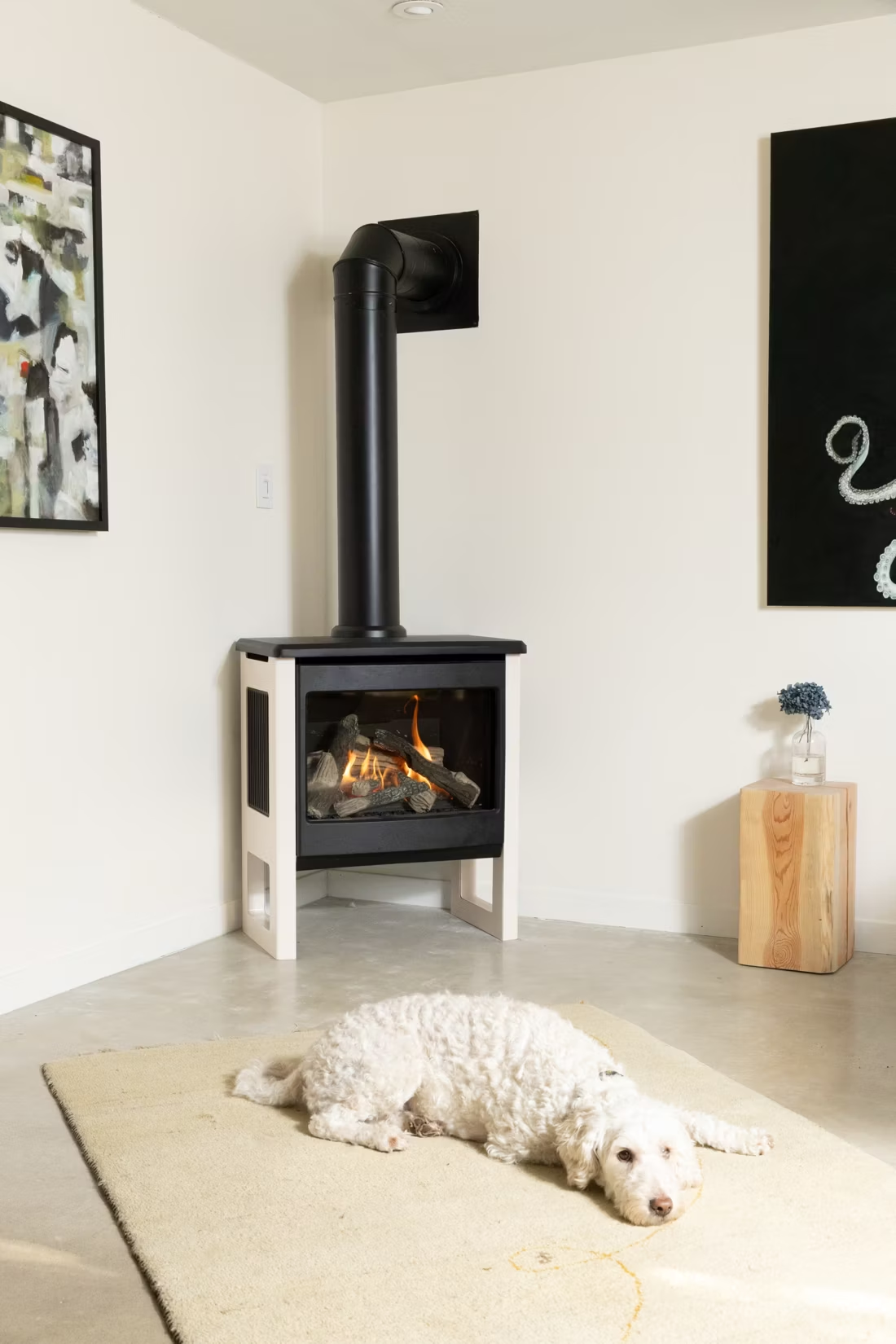
A gas insert slides into an existing masonry fireplace and uses the existing chimney, fitted with a liner, as its vent—a common upgrade for older farmhouses in Logan County that already have a wood-burning fireplace they'd rather not tend every day. A gas stove is a freestanding unit, similar in footprint to a wood stove, that can go almost anywhere with the right clearances—a good option for a shop, addition, or a home without an existing chimney. A built-in gas fireplace is framed into a wall, typically during new construction or a remodel. For most existing homes around Oakley and the rest of the county, an insert into an existing fireplace is the simplest and least invasive project.
Do I need a permit to install a gas fireplace in Logan County?
Generally yes—a building permit and a gas line permit are standard for new gas fireplace or insert installations, whether you're in Oakley or unincorporated Logan County, and the gas line work itself needs to be done by a licensed gas-fitter. Most dealers who sell and install gas fireplaces in this area handle the permitting as part of the job, which is one reason it's worth going through a trusted local installer rather than a big-box purchase with no local install crew behind it.
Are vent-free gas fireplaces a good option for a Logan County home?
Vent-free (unvented) gas fireplaces are legal in Kansas and can work fine for supplemental heat in a specific room, but they burn fuel directly into the living space rather than exhausting it outside, so they come with strict room-sizing rules and typically need an oxygen depletion sensor. Direct-vent units, by contrast, pull combustion air from outside and exhaust it back outside through a sealed pipe—they're the more common choice for whole-room heating and don't raise any indoor air quality questions. For a primary heat source in a farmhouse or ranch home, most local installers steer customers toward direct-vent units; vent-free tends to make more sense for a small, occasionally used space like a den or sunroom.
How often does a gas fireplace need to be serviced?
An annual inspection before the start of the heating season is the standard recommendation—a technician checks the burner, pilot assembly, venting, and gas connections, and cleans the glass and interior. This matters even more in Logan County's rural stretches, where a fireplace might be running as near-daily supplemental heat through a long winter rather than occasional ambiance. Expect to pay somewhere in the $150–$250 range for a standard annual service call from a hearth technician; rural addresses may include a small trip charge.
What size gas fireplace do I need for my home?
With average winter lows around 16°F and a long, demanding heating season, Logan County sits solidly in a climate where undersizing a fireplace leaves you cold on the worst nights. As a rough guide, plan on roughly 20 to 30 BTUs per square foot of the area you want heated, adjusting up for older farmhouses with less insulation and more window area, and adjusting up further if you're hoping the fireplace will meaningfully offset furnace use rather than just add ambiance. A local dealer can size the unit properly based on your home's construction, insulation, and how you plan to use it—worth getting right, since an undersized unit runs constantly and still falls short on the coldest days.
Gas vs. wood—which makes more sense for a Logan County home?
Wood has deep roots out here—oak, hickory, and tough, dense osage orange grown as windbreaks are all common local firewood, and a wood stove keeps running with zero dependence on the power grid or a propane delivery truck. Gas trades that self-sufficiency for convenience: instant on-off operation, no splitting or hauling wood, and steadier heat output across a long, windy winter without tending a fire overnight. For a lot of Logan County homes, the two aren't either/or—a gas fireplace or insert handles daily, low-effort heat in the main living space, while a wood stove in a shop, basement, or secondary space serves as backup if a storm knocks out both the power and the propane delivery schedule.
What's the difference between an insert and a zero-clearance fireplace?
An insert is a fireplace that slides into a pre-existing wood-burning fireplace—if you don't have one, there's nothing to insert it into. A zero-clearance fireplace is built into a framed wall, which makes it the answer for remodels and new construction. Simple test: existing masonry fireplace means insert; blank or framed wall means zero-clearance.
Can I put a TV above my fireplace?
Yes—with an asterisk. Fireplaces are hot and TVs don't like heat. Either put a mantel between them to deflect rising warmth, or choose a fireplace with heat-management technology that creates a cool zone on the wall above—the wall stays around 125 degrees, barely warm, while the room still gets full heat. If you like clean lines and don't want a mantel, heat management is the answer.
Can a fireplace actually lower my heating bill?
Yes—by creating a comfort zone. A furnace heats every square foot of the house just to warm the one room you're in; a gas fireplace on low burns roughly a sixth of the gas a typical furnace does. Set the furnace around 55–60 degrees as a baseline, then heat the rooms your family actually uses. Families who heat this way commonly save $20–$60 a month.
How much should I budget for a fireplace?
For an average home—covering the fireplace, the vent pipe, and basic installation—a budget between $3,900 and $5,500 gives you a lot of options across wood, gas, and pellet. By the time you add finish work, gas line, and electrical, the average complete installation lands between $5,000 and $12,000 all-in. In a remodel or new build, a good rule is to put about 2.5% of the total project cost toward the fireplace.
Find your gas fireplace in Logan County.
Tell us a bit about your home and we'll match you with the right gas fireplace, insert, or stove—plus a free Project Guide & Parts List and a trusted local dealer to install it.
Find Your Fireplace →