
Reliable secondary heat for a four-season Kansas winter.
Leavenworth sees an average winter low around 21°F and a moderate winter heating load overall—real cold, though nowhere near what Fargo or International Falls deal with. An electric fireplace adds instant, no-venting warmth to a den, bedroom, or sunroom without touching your existing furnace setup.
Every Project Starts From One of These Five Situations
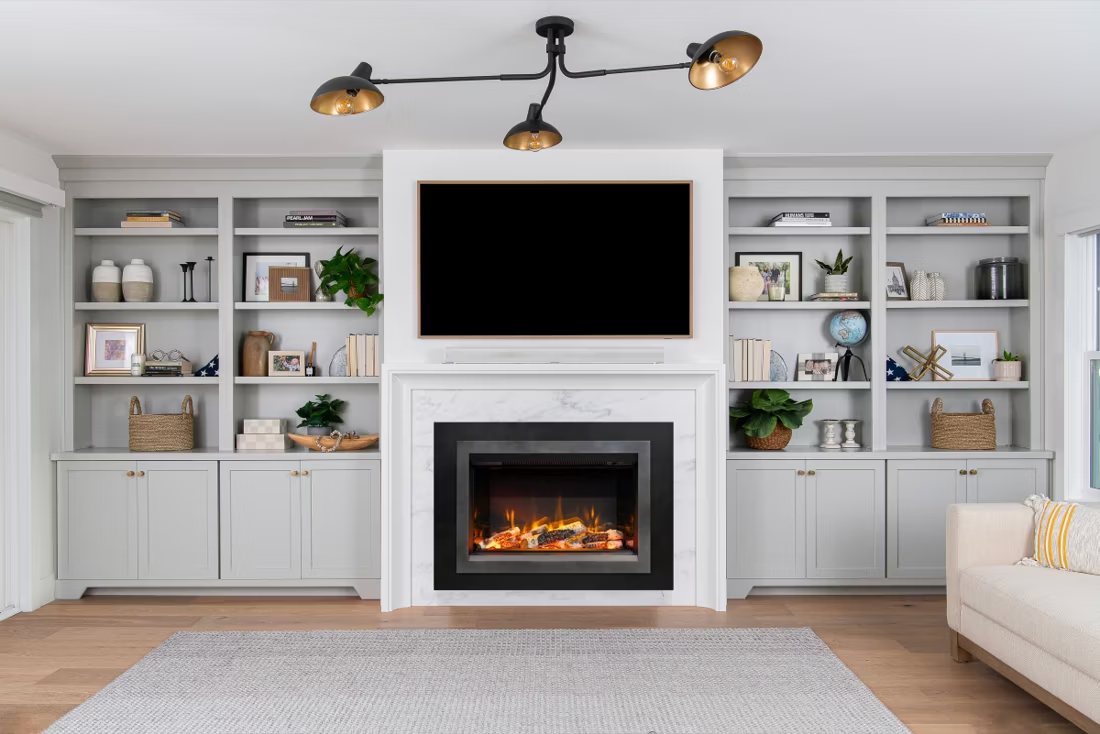
No chimney, no gas line—just an outlet.
Leavenworth sits along the Missouri River bluffs at about 852 feet in climate zone 4A, with winter lows averaging 21°F and a moderate winter heating load overall. That's a legitimate four-season climate, but it's a fraction of what places like Fargo or Duluth log every winter, and most Leavenworth homes—from the historic streets near downtown to the newer subdivisions south of Fort Leavenworth—already heat primarily with a natural gas furnace. That leaves electric fireplaces doing exactly what they're best at here: supplemental warmth and ambiance in a specific room, not a whole-house heating solution.
That's also why an electric unit is such a low-friction addition to a Leavenworth home. There's no flue to build, no gas line to run, and no clearance-to-combustibles calculation for a chimney—which matters if you're in one of the older homes near Fort Leavenworth, the oldest active Army post west of Washington, D.C., where historic-district review can complicate anything involving masonry or exterior venting. A plug-in unit or a built-in insert wired to a dedicated circuit sidesteps all of that, and with Evergy Kansas Central billing residential customers around $0.1429 per kWh, running one for a few hours a night costs about what you'd expect from any other space heater in the house.
Three steps. No salesperson until you're ready.
Tell us about your project
Your zip code, your situation, and the fuel you're leaning toward—or let the answers point you to one.
See what's actually available
The brands dealers within 100 miles genuinely carry—real options, never a catalog mirage.
Get your dealer & Project Guide
A trusted local dealer, plus the free Project Guide & Parts List that names every component of the job.
Frequently Asked Questions
How much does it cost to install an electric fireplace in Leavenworth?
A plug-in electric insert or freestanding unit is the cheapest path—no electrician required, since it runs off a standard 120V outlet, so most of the cost is just the unit itself. A built-in wall unit or a larger insert drawing more than 1,500 watts typically needs its own dedicated 20-amp circuit, which means bringing in a licensed electrician to run new wire from the panel; that labor is usually the biggest line item on the job, more than the fireplace hardware itself. A local dealer can tell you quickly which route your specific model and wall location require.
What size electric fireplace makes sense for a Leavenworth home?
Because most homes here already run a gas furnace for primary heat, sizing an electric unit is less about square footage and more about which single room you want warmed. A standard 1,500-watt insert or wall unit comfortably takes the edge off a bedroom, home office, or sunroom during a cold stretch, while larger built-in models with higher wattage suit an open-concept living area better. Given the mild-to-moderate winter heating load here, oversizing for whole-house backup heat generally isn't necessary the way it might be in a colder climate.
Do I need a permit to install an electric fireplace in Leavenworth?
A simple plug-in unit generally doesn't trigger a permit since nothing structural or electrical changes. If you're installing a built-in that needs a new dedicated circuit, that electrical work typically does require a permit and inspection through the City of Leavenworth Building Department (or Leavenworth County if you're outside city limits), pulled by the electrician doing the wiring. Most hearth dealers who handle built-in installs coordinate this as part of the job.
Can I add an electric fireplace to a historic home near Fort Leavenworth without disturbing the walls or masonry?
Yes—that's one of the main reasons electric fits well in the older housing stock around downtown and near the fort. There's no chimney to cut into, no flue liner to run, and no exterior vent penetration to clear with a historic-district review, which can otherwise be a slow process for homes with protected facades. A recessed built-in still involves opening a section of interior wall for the wiring, but it's a far smaller intervention than adding gas line or masonry venting to a century-old structure.
How much does it cost to run an electric fireplace on Evergy Kansas Central rates?
At Evergy Kansas Central's residential rate of about $0.1429 per kWh, a typical 1,500-watt electric fireplace running on its heater setting costs roughly 21 cents an hour to operate—call it $1.50 to $2 for a few hours of evening use. Most units also run flame effects without heat for a fraction of that draw, which is useful in a mild Leavenworth spring or fall when you want the look without adding warmth to the room.
Electric vs. gas—which makes more sense for a Leavenworth home?
Gas is the more common primary heat source across Leavenworth, and a gas fireplace or insert can genuinely help offset furnace load during a cold snap, especially in a larger living room. Electric doesn't compete with gas on raw heat output or ongoing fuel cost per BTU, but it wins on installation simplicity—no gas line, no venting, no inspection tied to combustion safety—and on flexibility, since a plug-in unit can move from room to room or house to house. Most homeowners choosing electric here are prioritizing an easy install and a specific room over whole-house heating.
What about wood or pellet stoves—are they an option in Leavenworth?
Oak, hickory, and osage orange all grow throughout the river bottomlands around Leavenworth County, and pellet brands like Lignetics and Indeck Energy Services are available regionally, but neither wood nor pellet stoves are a common fireplace project here. With no major air quality restrictions and near-universal access to natural gas, most homeowners simply don't have a strong reason to take on a chimney or hopper system. If you're on rural acreage and already cutting your own firewood for practical reasons, that's a legitimate separate conversation—just know it's not the mainstream path for a Leavenworth hearth upgrade.
Will my electric fireplace still work if the power goes out?
No—and that's the one real tradeoff against gas or wood. An electric fireplace is entirely dependent on Evergy Kansas Central's grid, so during a winter storm outage it goes dark along with everything else in the house. If backup heat during an outage is a priority for you, a battery-backed gas unit or a wood-burning option is worth considering for at least one room, with electric reserved for the rooms where daily convenience matters more than outage resilience.
How much maintenance does an electric fireplace need?
Very little compared to a gas or wood unit—there's no chimney to sweep, no burner to inspect, and no gas connections to check annually. Occasional dusting of the vents and a wipe of the glass or screen is usually all it takes. The main wear item is the heating element or blower fan after years of regular use, and most manufacturers cover those components under a multi-year warranty, so a local dealer can point you to models with the longest coverage if you plan to run it daily through the winter.
Can I put a TV above my fireplace?
Yes—with an asterisk. Fireplaces are hot and TVs don't like heat. Either put a mantel between them to deflect rising warmth, or choose a fireplace with heat-management technology that creates a cool zone on the wall above—the wall stays around 125 degrees, barely warm, while the room still gets full heat. If you like clean lines and don't want a mantel, heat management is the answer.
Does an electric fireplace need a vent or chimney?
No—that's its superpower. An electric fireplace needs a wall and an outlet, period. No vent pipe, no gas line, no clearances to design around, which is why it works in bedrooms, offices, apartments, and walls where venting a gas or wood unit would be impractical or impossible. Installation is typically the simplest and least expensive of any fireplace type.
How much should I budget for a fireplace?
For an average home—covering the fireplace, the vent pipe, and basic installation—a budget between $3,900 and $5,500 gives you a lot of options across wood, gas, and pellet. By the time you add finish work, gas line, and electrical, the average complete installation lands between $5,000 and $12,000 all-in. In a remodel or new build, a good rule is to put about 2.5% of the total project cost toward the fireplace.
What is an in-home preview and do I need one?
It's a visit where a hearth professional measures your space, confirms the model you picked actually works in your home, and walks the specs—framing, gas line, venting, finish work—before anything is ordered. Some details you just can't know until you see the house. Never make a down payment without one; it's the single most-skipped step that burns buyers.
Electric Service in Leavenworth
An electric fireplace's heater draws about 1,500 watts—pennies per hour at local rates.
Evergy Kansas Central, Inc
Get your free Project Guide & Parts List for a Leavenworth electric fireplace.
Tell me about your room, your electrical panel, and whether you're near Fort Leavenworth's historic district, and I'll match you with a trusted local dealer and send a free Project Guide & Parts List—sized for the space and clear on whether you'll need a dedicated circuit.
Find Your Fireplace →