
Instant warmth for Labette County—no venting required.
From Parsons to Oswego, Altamont to Chetopa, electric fireplaces give Labette County homes zone heat and real ambiance without a chimney, a gas line, or a hole in the wall. Find the right unit and get matched with a trusted local dealer.
Every Project Starts From One of These Five Situations
Simple, flexible heat for southeast Kansas homes.
Labette County sits in Climate Zone 4A in southeast Kansas, with roughly 4,555 heating degree days a year and an average winter low near 22°F—cold enough for real heating bills, but nowhere near the extremes of a place like Fargo or International Falls. Housing across the county ranges from older brick homes in Parsons and Oswego to ranch houses in Altamont and manufactured homes scattered through the unincorporated townships, and a lot of that stock was never built with a masonry chimney or a natural gas line in mind, especially outside the incorporated towns.
That's where electric fireplaces fit. An electric insert dropped into an old, unused masonry fireplace turns it back into a working heat source without chimney repairs or annual sweeps. A wall-mounted or built-in electric unit adds supplemental heat to a sunroom, bonus room, or rental unit in Parsons without running new gas piping or cutting a vent through the roof. Labette County has no air quality restrictions on wood burning, so people here aren't choosing electric to dodge smoke rules—they're choosing it for the lower upfront cost, the plug-and-go simplicity, and the fact that it works in spaces where wood or gas venting just isn't practical.
Three steps. No salesperson until you're ready.
Tell us about your project
Your zip code, your situation, and the fuel you're leaning toward—or let the answers point you to one.
See what's actually available
The brands dealers within 100 miles genuinely carry—real options, never a catalog mirage.
Get your dealer & Project Guide
A trusted local dealer, plus the free Project Guide & Parts List that names every component of the job.
Frequently Asked Questions
How much does an electric fireplace installation cost in Labette County?
A plug-in electric insert or freestanding unit typically runs $300 to $1,200 installed, since most just need an existing outlet and a mounting bracket. Built-in linear electric fireplaces set into a wall or new framing run higher, usually $1,500 to $3,500, especially if a dedicated 20-amp circuit needs to be added—common in older Parsons and Oswego homes with outdated electrical panels. Unlike wood or gas, there's no chimney or venting to budget for, which keeps electric the most predictable fuel type to price out in the county.
What size electric fireplace do I need for my Labette County home?
Most electric units are rated to supplement heat for a single room rather than carry a whole house—think 400 to 1,500 square feet depending on the model and your existing insulation. In a drafty older farmhouse outside Chetopa or Edna, an electric fireplace works best as zone heat for the room you actually live in, paired with your existing furnace for the rest of the house. In a smaller, well-sealed home or an addition in Parsons, a single unit can often keep that space comfortable on its own during Labette County's typical 20-something-degree winter nights.
Do I need a permit to install an electric fireplace in Labette County?
In most cases, no combustion or venting permit is required since electric units don't burn fuel or produce exhaust. If your installation requires a new dedicated circuit or panel work, an electrical permit is typically needed—inside Parsons or Oswego that goes through the city's building department, while unincorporated parts of the county fall under Labette County's building permitting process. A licensed electrician handling the circuit work will usually pull that permit as part of the job, so it's worth confirming with your installer up front rather than assuming it's not needed.
What's the difference between an electric fireplace, insert, and stove?
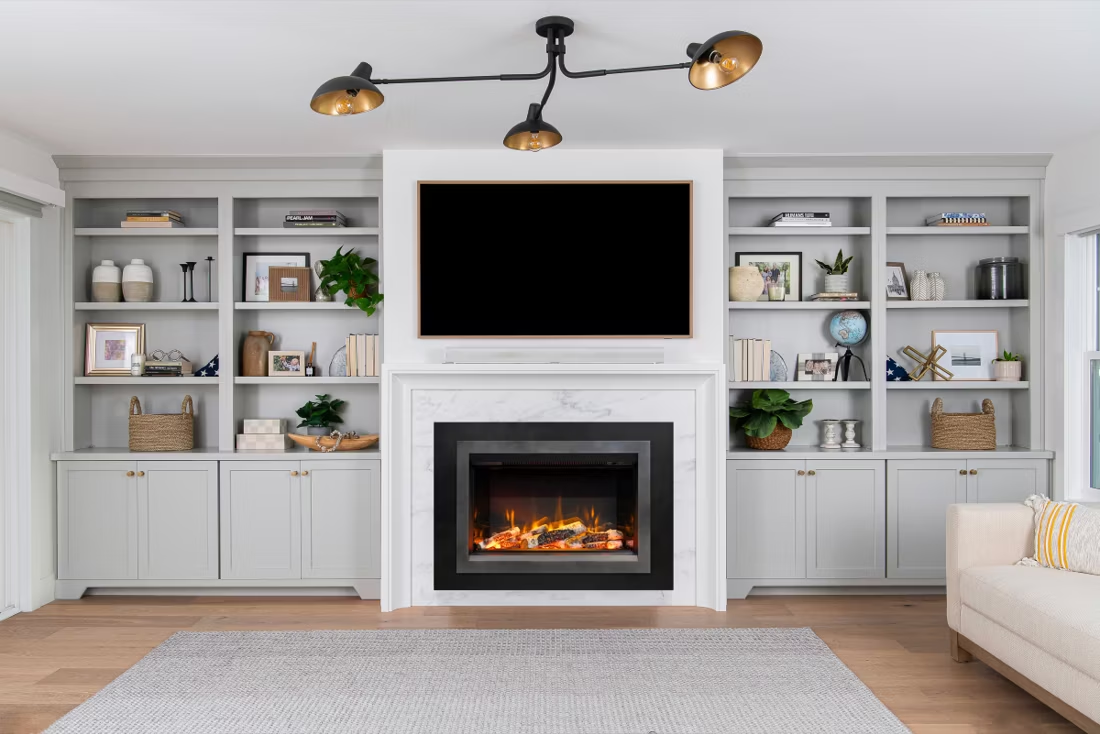
An electric fireplace is usually a built-in or wall-mounted unit designed to look like a framed fireplace, often with a flush or recessed installation. An electric insert is sized to slide into an existing masonry firebox—a common upgrade for older homes in Parsons or Oswego with an unused wood fireplace that's no longer practical to burn in. An electric stove is a freestanding cabinet-style unit that mimics a wood stove's footprint but plugs into a standard outlet. All three produce the same basic electric-resistance or infrared heat; the choice mostly comes down to what opening or space you're working with.
Electric vs. wood—which makes more sense for my Labette County home?
Wood remains a strong option here—oak, hickory, and osage orange are all common local firewood species, and a wood stove keeps working through an ice storm or extended power outage, which does happen in rural southeast Kansas. Electric units, by contrast, go dark the moment the power does, so they're not a backup-heat solution on their own. Where electric wins is convenience and cost of entry: no cutting, stacking, or hauling wood, no chimney to maintain, and a lower installed price. A lot of Labette County homeowners end up with both—wood or a wood insert for reliability during outages, electric for easy everyday supplemental heat in a bedroom or living room.
Is an electric fireplace enough heat for Labette County winters?
For supplemental heat, yes. With around 4,555 heating degree days and average winter lows near 22°F, Labette County's winters are real but not severe—closer to a typical Midwest cold season than the deep-freeze conditions you'd see in Bismarck or Duluth. An electric fireplace paired with a functioning central furnace handles the coldest stretches fine as a zone heater for the room you use most. Relying on electric resistance heat as the sole heat source for an entire drafty farmhouse is a different question—at that point, a local dealer can help you weigh whether a larger built-in unit or a different fuel type makes more sense.
How much does it cost to run an electric fireplace day to day?
Most electric fireplace heaters draw around 1,500 watts on the heat setting, which works out to roughly 10 to 20 cents an hour depending on your electric rate, whether you're served by Evergy in town or a rural electric cooperative outside Parsons and Oswego. Running one for several hours each evening during a cold Labette County stretch typically adds somewhere in the range of $15 to $40 a month to a utility bill—far less predictable than a wood or gas comparison since it scales directly with usage, but with no fuel to buy or store.
Where can I find electric fireplace dealers near me in Labette County?
Big-box stores sell basic plug-in units, but for a built-in installation, a properly sized insert, or anything requiring electrical work, a local hearth or appliance dealer familiar with Labette County's housing stock—older brick homes in Parsons, ranch construction in Altamont, manufactured homes in the unincorporated county—will get you a unit that actually fits your opening and your electrical setup. That's the gap Find My Fireplace fills: we match you with a trusted local dealer rather than sending you to a warehouse aisle to guess.
Electric vs. pellet stove—which is right for my home?
Pellet stoves, using bagged fuel from brands like Lignetics or Indeck Energy Services available regionally, burn hotter and can serve as a primary heat source, but they need venting, a hopper to refill, ash cleanup, and electricity to run the auger and blower—so they're not a power-outage backup either. Electric fireplaces skip the venting and the fuel handling entirely, running on nothing but a standard or dedicated circuit, but they produce less raw heat and cost more per BTU to run over time. For a Labette County homeowner who wants simple supplemental heat with zero maintenance, electric is usually the easier call; for someone wanting to offset a larger share of their heating bill, pellet is worth a look from a local dealer.
Does an electric fireplace need a vent or chimney?
No—that's its superpower. An electric fireplace needs a wall and an outlet, period. No vent pipe, no gas line, no clearances to design around, which is why it works in bedrooms, offices, apartments, and walls where venting a gas or wood unit would be impractical or impossible. Installation is typically the simplest and least expensive of any fireplace type.
Can I put a TV above my fireplace?
Yes—with an asterisk. Fireplaces are hot and TVs don't like heat. Either put a mantel between them to deflect rising warmth, or choose a fireplace with heat-management technology that creates a cool zone on the wall above—the wall stays around 125 degrees, barely warm, while the room still gets full heat. If you like clean lines and don't want a mantel, heat management is the answer.
How much should I budget for a fireplace?
For an average home—covering the fireplace, the vent pipe, and basic installation—a budget between $3,900 and $5,500 gives you a lot of options across wood, gas, and pellet. By the time you add finish work, gas line, and electrical, the average complete installation lands between $5,000 and $12,000 all-in. In a remodel or new build, a good rule is to put about 2.5% of the total project cost toward the fireplace.
Can a fireplace actually lower my heating bill?
Yes—by creating a comfort zone. A furnace heats every square foot of the house just to warm the one room you're in; a gas fireplace on low burns roughly a sixth of the gas a typical furnace does. Set the furnace around 55–60 degrees as a baseline, then heat the rooms your family actually uses. Families who heat this way commonly save $20–$60 a month.
Find your electric fireplace in Labette County.
Tell us a bit about your home and we'll match you with the right electric fireplace, insert, or stove—and hand you a free Project Guide & Parts List with the exact parts and your recommended local Labette County dealer.
Find Your Fireplace →