
No chimney, no wood supply, no problem on the Kansas plains.
La Crosse sits at 2,058 feet on the Rush County plains, with winter lows averaging 20°F and a long, cold heating season that runs from early fall well into spring. There's no commercial timber supply nearby and no city gas main reaching every block, so electric heat fills a real gap here. We'll help you find a trusted local dealer who knows what's actually installable in a town this size.
Every Project Starts From One of These Five Situations
A small town running on rural co-op power, not a gas main.
At 1,209 people, La Crosse is the Rush County seat, and most of the housing stock reflects a small prairie town—older bungalows downtown, mobile and modular homes on the edges, and farmhouses scattered across the surrounding section-line roads. Oak, hickory, and osage orange grow in the shelterbelts and hedgerows that break up the wind out here, but there's no national forest, no commercial timber industry, and no cutting-permit system the way there is in the Rockies or the Ozarks—which is exactly why wood heat never really took hold as a primary fuel. Air quality isn't a local concern either way, but between limited gas main reach outside town and the lack of a wood supply chain, electric fills a genuine niche rather than competing against an established tradition.
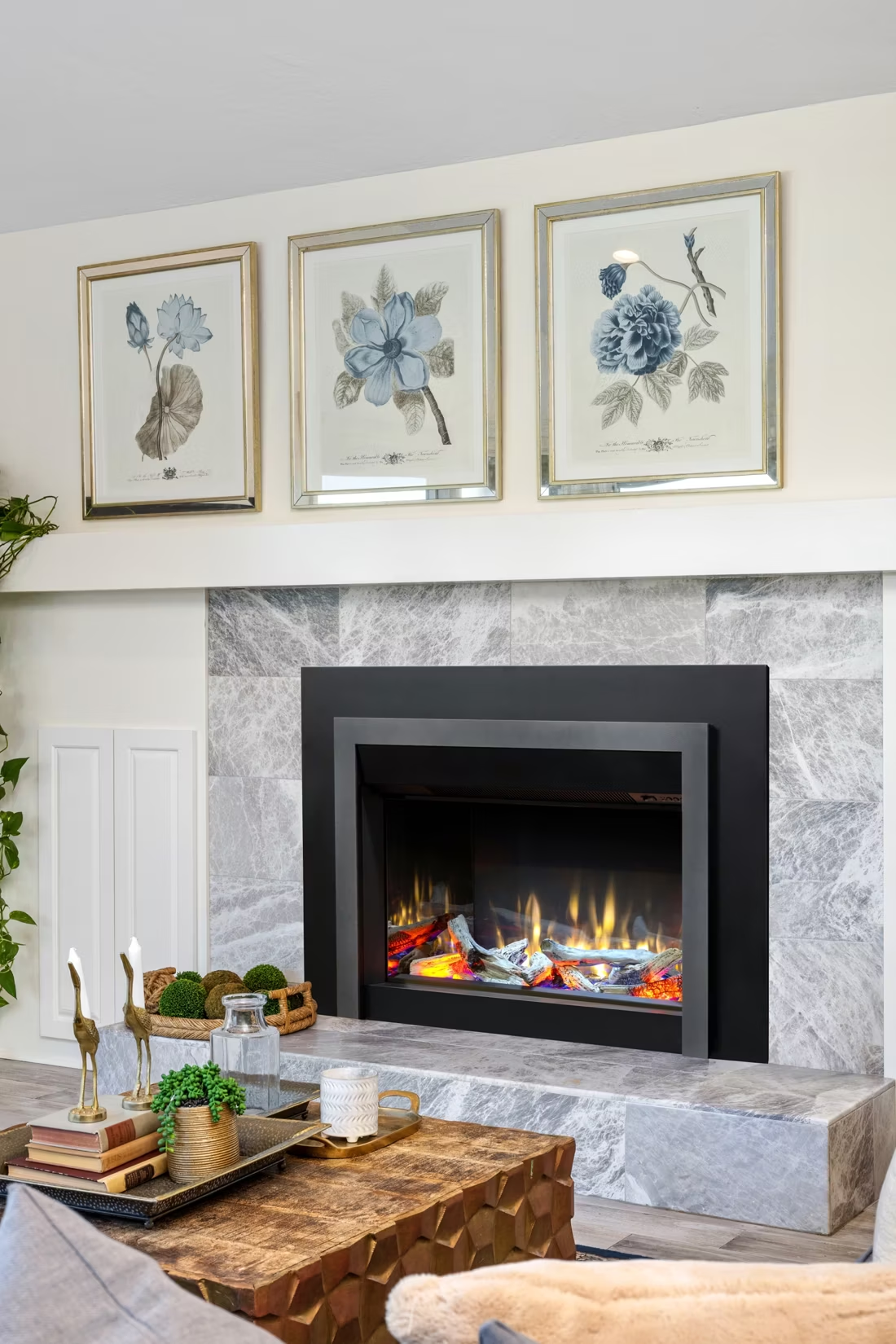
Power here comes through Midwest Energy Inc or Western Co-op Electric Assn Inc depending on which side of the county line you're on, at a residential rate around $0.1417 per kWh—a bit above the national average, which matters if you're weighing an electric fireplace as a daily primary heat source versus an occasional supplemental one. Where electric genuinely shines in La Crosse is in additions, sunrooms, finished basements, and mobile or manufactured homes where running a Class A chimney isn't practical or allowed. No venting, no combustion byproducts, and a plug-in or simple 240V circuit install get you real heat output in a room that otherwise has none.
Three steps. No salesperson until you're ready.
Tell us about your project
Your zip code, your situation, and the fuel you're leaning toward—or let the answers point you to one.
See what's actually available
The brands dealers within 100 miles genuinely carry—real options, never a catalog mirage.
Get your dealer & Project Guide
A trusted local dealer, plus the free Project Guide & Parts List that names every component of the job.
Frequently Asked Questions
How much does an electric fireplace installation cost in La Crosse?
A plug-in electric insert or wall-mount unit that uses an existing outlet typically runs $300 to $800 installed, which covers a lot of the mobile home and rental-property requests we see in a town this size. A built-in unit that needs a dedicated 240V circuit run by a licensed electrician—common when someone's finishing a basement or converting an old wood-burning fireplace opening—lands closer to $1,500 to $3,500 once you include the surround or mantel work. Either way, it's a fraction of what a wood or gas install costs here, which is part of why electric gets picked for secondary rooms.
Can an electric fireplace actually heat a room when it's 20°F outside?
A quality electric insert or stove rated around 5,000 to 5,200 BTU will noticeably warm a single room—a converted sunroom, a finished basement, a bedroom—even on a 20°F La Crosse morning, since most are built to raise a 400 to 1,000 square foot space several degrees. What it won't do is replace a whole-house furnace through a long, cold Rush County winter that stretches from early fall deep into spring; resistance heat at $0.1417 per kWh gets expensive fast if you lean on it as primary heat for the whole house. Most owners here run it as targeted supplemental heat and let the furnace handle the rest.
Will the fireplace still work if Midwest Energy or Western Co-op has an outage?
No—an electric fireplace is entirely dependent on grid power, so during an ice storm outage through Midwest Energy or Western Co-op Electric territory, it goes dark along with everything else. That's the one real tradeoff against wood or gas, and it's worth factoring in if you're in an outlying farmhouse where co-op crews may take longer to restore service than they would in town. Some households here keep a small propane heater or a wood stove as outage backup specifically because the electric unit covers daily comfort but not storm resilience.
Do I need a permit to install an electric fireplace in La Crosse?
A simple plug-in unit on an existing outlet generally doesn't require a permit. If you're having an electrician run a new dedicated circuit for a built-in unit, that electrical work typically needs to be permitted and inspected—in La Crosse, that runs through the city or, since this is the Rush County seat, often gets coordinated with the Rush County Courthouse depending on your address. Most electricians who work in town already know which office to file with, so it's worth asking your installer to confirm rather than guessing.
Is electric or gas the better choice for a La Crosse home?
It depends heavily on what's already at your address. Natural gas mains don't reliably extend much past La Crosse's incorporated edge, so a lot of rural homes around Rush County run on propane tanks rather than piped gas—which means a gas fireplace install there includes tank and line costs an in-town install wouldn't. Electric sidesteps that question entirely since it just needs wiring, which is why it's often the simpler, cheaper answer for a mobile home, a rental, or a property outside the gas main footprint, while gas tends to win in town where the infrastructure's already there and someone wants a higher-output primary hearth.
What's the difference between an electric insert, a stove, and a wall-mount unit?
An electric insert slides into an existing fireplace opening, which is a common retrofit for older La Crosse homes with a masonry firebox that no one wants to keep feeding wood into. A freestanding electric stove sits on the floor like a wood stove but just needs an outlet—a good fit for additions or garages without any existing chimney. A wall-mount unit hangs flush like a flat-screen TV and works well in newer construction or a finished basement where floor space is tight. All three skip venting entirely, which is the main appeal over wood or gas here.
How much maintenance does an electric fireplace need?
Very little, which is part of the draw for a lot of La Crosse households who don't want to deal with chimney sweeps or gas line inspections. Wipe the glass occasionally, vacuum the vents on the heater unit once or twice a season, and replace the LED light strip or heating element only after years of regular use—there's no annual CSIA sweep or technician visit required the way there is with wood or gas. It's a reasonable tradeoff for a lower-maintenance secondary heat source, even if the fuel cost per hour runs higher.
Where does an electric fireplace make the most sense in a town like La Crosse?
The clearest fit is a mobile or manufactured home, where a wood or gas chimney isn't practical or allowed by code, and a plug-in or simple-circuit electric unit solves the no-heat-in-this-room problem without touching the roofline. It also shows up a lot in finished basements and converted porches around town, and in older farmhouses where someone's capping off a drafty, rarely-used wood fireplace and wants ambiance plus a little heat without maintaining a chimney that hasn't been swept in years.
Why isn't wood or pellet heat more common around La Crosse?
The oak, hickory, and osage orange growing in local shelterbelts and farm windbreaks can absolutely be burned, but there's no national forest nearby, no cutting-permit system, and no commercial timber industry feeding a local supply chain the way there is in wooded parts of the country—most of what grows here is scattered hedgerow timber, not stackable cordwood at scale. Pellet brands like Lignetics and Indeck Energy Services do have a regional footprint, but it leans toward agricultural and industrial fuel supply rather than retail pellet stove sales in a town of 1,209. Between that and no real air-quality pressure pushing people toward cleaner-burning appliances, electric and propane have simply filled the gap that wood and pellet fill elsewhere.
Can I put a TV above my fireplace?
Yes—with an asterisk. Fireplaces are hot and TVs don't like heat. Either put a mantel between them to deflect rising warmth, or choose a fireplace with heat-management technology that creates a cool zone on the wall above—the wall stays around 125 degrees, barely warm, while the room still gets full heat. If you like clean lines and don't want a mantel, heat management is the answer.
Do electric fireplaces actually produce heat?
Yes—most put out around 4,800–5,000 BTUs from a standard outlet, which comfortably warms a bedroom, office, or den as a comfort-zone heater. What they won't do is carry a whole house the way wood, gas, or pellet can. Think of electric as ambiance-first with honest supplemental heat: flames on with no heat in July, flames plus warmth in January.
Can I install a fireplace myself?
If you're putting a fire in your house on purpose, it's best to work with an expert. Unless you're genuinely experienced in framing, gas line, vent pipe, and the national code on clearances to combustibles, have a professional do it—and ideally the same company that sells you the fireplace, so warranty, service, and liability all live under one roof.
Does a fireplace add value to my home?
On average, a fireplace adds back to the home about the same amount you spent installing it. Add the monthly savings from heating the rooms you actually use instead of the whole house—often hundreds of dollars a year—and the value case is strong before you even count what a fire does for how your family uses the room.
Nearby Dealers
Hearth shops serving La Crosse and the surrounding area. Every listing shows whether it is a WhyFire partner, a dealer we have verified as authorized for the brands we recommend, or a local business carrying hearth products. No manufacturer pays for placement. How we verify dealers →
We’ve paused dealer listings for this connection today. Enter your zip or postal code above to find dealers near you, or come back tomorrow.
Popular Electric Brands
Where each brand came from, what's inside it today, and every current model. No brand pays to be here. Not every dealer carries every brand, so enter your zip code to see what's sold near La Crosse.
Fireplace Xtrordinair
Fireplace Xtrordinair, now often called FireplaceX, is the fireplace brand of Travis Industries, Inc., of Mukilteo, Washington.
5 electric models →DaVinci
DaVinci Custom Fireplaces is a brand of Travis Industries, Inc., of Mukilteo, Washington, the company behind Lopi and Fireplace Xtrordinair.
5 electric models →Kozy Heat
Kozy Heat was founded in 1976 by Dudley Hussong in Lakefield, Minnesota, and incorporated as Hussong Manufacturing Co., Inc. in 1978.
3 electric models →Forge & Flame
Forge & Flame is the stove brand Hearth & Home Technologies introduced in August 2023 to bring Vermont Castings, Harman, and Quadra-Fire under one name.
1 electric model →Electric Service in La Crosse
An electric fireplace's heater draws about 1,500 watts—pennies per hour at local rates.
Midwest Energy Inc
Western Coop Electric Assn Inc
Get your free Project Guide & Parts List for a La Crosse electric fireplace.
Tell us about your home—mobile, modular, or site-built, and whether you're on Midwest Energy or Western Co-op Electric—and we'll help you find a trusted local dealer and send a free Project Guide & Parts List sized to your room and circuit needs.
Find Your Fireplace →