
Plug-in warmth for Kiowa County's rebuilt homes.
From the LEED-platinum homes of Greensburg to the farmhouses around Haviland and Mullinville, electric heat fits a county that rebuilt itself smart. Find the right unit and connect with a trusted local dealer.
Every Project Starts From One of These Five Situations
Simple, safe heat for a county built new.
Kiowa County is home to just over 1,500 people spread across Greensburg, Haviland, and Mullinville, and its most famous chapter is the 2007 EF5 tornado that leveled Greensburg—after which the town rebuilt as one of the greenest small cities in America, with a cluster of LEED Platinum civic buildings and a high share of new, tightly built, well-insulated homes. In Climate Zone 4A, winters bring cold, windy stretches with overnight lows regularly down in the teens, and that combination of a harsh southern-plains winter and a lot of genuinely new construction is exactly where electric fireplaces earn their place.
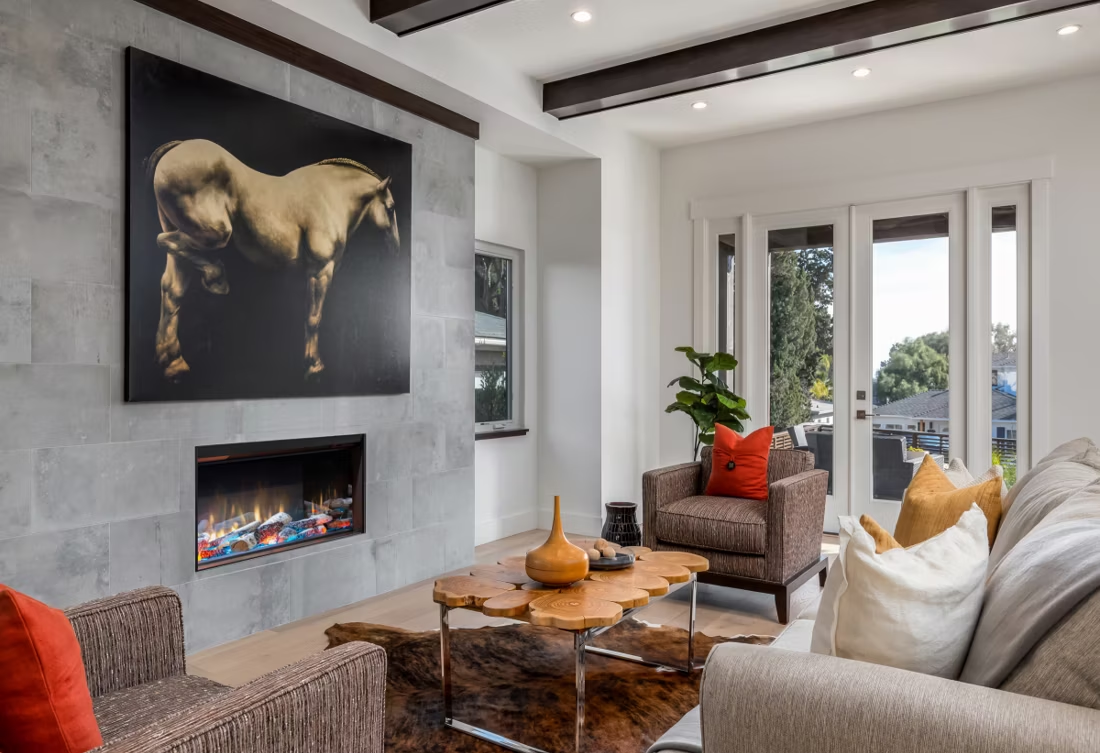
There's no gas line to run and no masonry chimney to maintain—which matters in a county that knows firsthand what wind can do to a rooftop flue. A flush-mount electric insert or a freestanding electric stove plugs into a standard or dedicated 120V/240V circuit served by the local rural electric cooperative, adds zone heat to a bedroom or living room, and drops into a rental in Haviland or a new build in Greensburg without touching the building envelope. It won't replace a furnace on a sub-zero January night, but as supplemental heat and everyday ambiance, it's about as low-friction as home heating gets.
Three steps. No salesperson until you're ready.
Tell us about your project
Your zip code, your situation, and the fuel you're leaning toward—or let the answers point you to one.
See what's actually available
The brands dealers within 100 miles genuinely carry—real options, never a catalog mirage.
Get your dealer & Project Guide
A trusted local dealer, plus the free Project Guide & Parts List that names every component of the job.
Frequently Asked Questions
How much does an electric fireplace installation cost in Kiowa County?
A basic plug-in electric fireplace or freestanding stove runs $300 to $700 installed, since most units need nothing more than an existing outlet. A built-in wall insert or mantel unit that requires a dedicated 240V circuit, minor framing, or drywall work typically runs $800 to $1,500 in Kiowa County. Because there's no venting or gas line involved, electric is consistently the least expensive of the four fireplace fuels to install here—a real advantage for smaller Greensburg rebuild homes or rental properties in Haviland and Mullinville where budgets are tight.
Do I need a permit to install an electric fireplace in Kiowa County?
In most cases, no. A plug-in electric fireplace or insert that uses an existing outlet doesn't require a permit through the county. If your installer needs to add a new dedicated circuit or run new wiring—common with larger built-in units—that electrical work typically does require a permit and a licensed electrician, since it falls under standard code rather than fireplace-specific rules. There's no chimney, flue, or combustion venting to inspect, which is one reason electric installs move faster than wood or gas projects in the county.
What size electric fireplace do I need for my home?
Most electric fireplaces are rated around 1,500 watts, which puts out roughly 5,000 BTUs—enough to noticeably warm a single room of 400 to 600 square feet, less in the drafty older farmhouses scattered around the county and more in the newer, tightly sealed homes built during Greensburg's post-tornado rebuild. For a larger open living area, some homeowners install two smaller units or step up to a higher-output insert with a built-in fan. Electric fireplaces are sized for zone heat, not whole-home heat, so match the unit to the specific room you're trying to warm rather than your total square footage.
Electric vs. wood—which is right for my home in Kiowa County?
Wood heat still has deep roots in this part of Kansas, with local oak, hickory, and osage orange all common as firewood species on rural properties. A wood stove keeps working when the power goes out, which matters during the ice storms and high-wind events that periodically knock out rural electric cooperative service here. Electric wins on convenience and safety—no chimney, no ash, no creosote, and no clearance-to-combustible concerns in a tight, newly built home. For most in-town households in Greensburg or Haviland, electric covers ambiance and supplemental warmth well; for rural acreage with a woodlot and a stronger interest in storm-proof backup heat, wood remains worth considering.
Electric vs. pellet—which makes more sense here?
Pellet stoves burning bags from regional suppliers like Lignetics or Indeck Energy Services put out more heat than a typical electric unit and can serve as a real supplemental heat source through a Kansas winter—but they still need electricity to run the auger and blower, so they offer no advantage over electric during an outage, while adding fuel storage and ash cleanup electric doesn't require. If you want genuine backup heat, pellet or wood is the better bet; if you want low-maintenance zone heat with none of the hopper-filling or venting, electric is simpler and considerably cheaper to install.
Will my electric fireplace work during a power outage?
No—this is the honest tradeoff with electric heat, and it's worth being clear about it. Kiowa County's rural electric cooperative service can go down during ice storms or the high-wind events the southern plains are known for, and an electric fireplace has no battery backup or standby fuel source; when the power's out, it's out. If backup heat during outages matters to your household, pair an electric fireplace with a wood stove, propane heater, or generator rather than relying on electric as your only heat source.
What's the difference between an electric fireplace, insert, and stove?
An electric fireplace is typically a wall-mounted or built-in unit designed to look like a traditional fireplace, often with a mantel surround. An electric insert is sized to slide into an existing masonry fireplace opening, giving an old wood-burning fireplace a clean, maintenance-free replacement. An electric stove is a freestanding cabinet-style unit that sits on the floor like a wood stove but plugs into a standard outlet. In Kiowa County, inserts are the common choice for older homes with an existing fireplace opening that owners no longer want to feed wood into, while stoves and wall units are popular in the newer, open-concept homes built after 2007.
Is an electric fireplace enough heat for a Kiowa County winter?
On its own, no—in Climate Zone 4A, with overnight lows regularly down in the teens, a 1,500-watt electric fireplace is meant to supplement a home's furnace or heat pump, not replace it. It's genuinely useful for taking the edge off a chilly living room without running the whole-house system harder, or for adding heat to a converted garage or sunroom that the main system doesn't reach well. For primary heat during a real Kansas cold snap, you'll still want a properly sized furnace or heat pump doing the bulk of the work.
Are electric fireplaces a good fit for rental properties in Kiowa County?
Yes—this is one of the strongest use cases for electric in the county. A plug-in unit or a simple wall-mount insert adds a fireplace feature to a rental in Haviland or Mullinville without any venting, gas line, or structural changes a landlord would need to permit or maintain. There's no ash, no creosote, and no annual chimney inspection to schedule, which keeps ongoing maintenance close to zero. It's a low-risk upgrade that adds comfort and curb appeal without the liability concerns that come with an open flame.
Can I put a TV above my fireplace?
Yes—with an asterisk. Fireplaces are hot and TVs don't like heat. Either put a mantel between them to deflect rising warmth, or choose a fireplace with heat-management technology that creates a cool zone on the wall above—the wall stays around 125 degrees, barely warm, while the room still gets full heat. If you like clean lines and don't want a mantel, heat management is the answer.
Do electric fireplaces actually produce heat?
Yes—most put out around 4,800–5,000 BTUs from a standard outlet, which comfortably warms a bedroom, office, or den as a comfort-zone heater. What they won't do is carry a whole house the way wood, gas, or pellet can. Think of electric as ambiance-first with honest supplemental heat: flames on with no heat in July, flames plus warmth in January.
Can I install a fireplace myself?
If you're putting a fire in your house on purpose, it's best to work with an expert. Unless you're genuinely experienced in framing, gas line, vent pipe, and the national code on clearances to combustibles, have a professional do it—and ideally the same company that sells you the fireplace, so warranty, service, and liability all live under one roof.
How much should I budget for a fireplace?
For an average home—covering the fireplace, the vent pipe, and basic installation—a budget between $3,900 and $5,500 gives you a lot of options across wood, gas, and pellet. By the time you add finish work, gas line, and electrical, the average complete installation lands between $5,000 and $12,000 all-in. In a remodel or new build, a good rule is to put about 2.5% of the total project cost toward the fireplace.
Find your electric fireplace in Kiowa County.
Tell us a bit about your home in Greensburg, Haviland, Mullinville, or anywhere else in the county, and we'll put together a free Project Guide & Parts List—the exact parts and power hookup your project needs—and match you with a trusted local dealer.
Find Your Fireplace →