
Warmth at the flip of a switch, all across Kearny County.
No chimney, no gas line, no venting—just clean electric heat for homes in Lakin, Deerfield, and the farms and ranches between them. Find the right unit and connect with a trusted local dealer.
Every Project Starts From One of These Five Situations
Simple heat for a wide-open corner of southwest Kansas.
Kearny County is sparsely populated High Plains country—about 2,800 people spread across roughly 900 square miles, most of them in Lakin or Deerfield. Winters here aren't brutal by northern-plains standards (a moderate heating season, average winter lows around 20°F), but the wind off the open fields makes a cold night feel colder, and a lot of the county's housing stock is older farmhouses, manufactured homes, and additions that were never built with a masonry chimney or a gas line in mind.
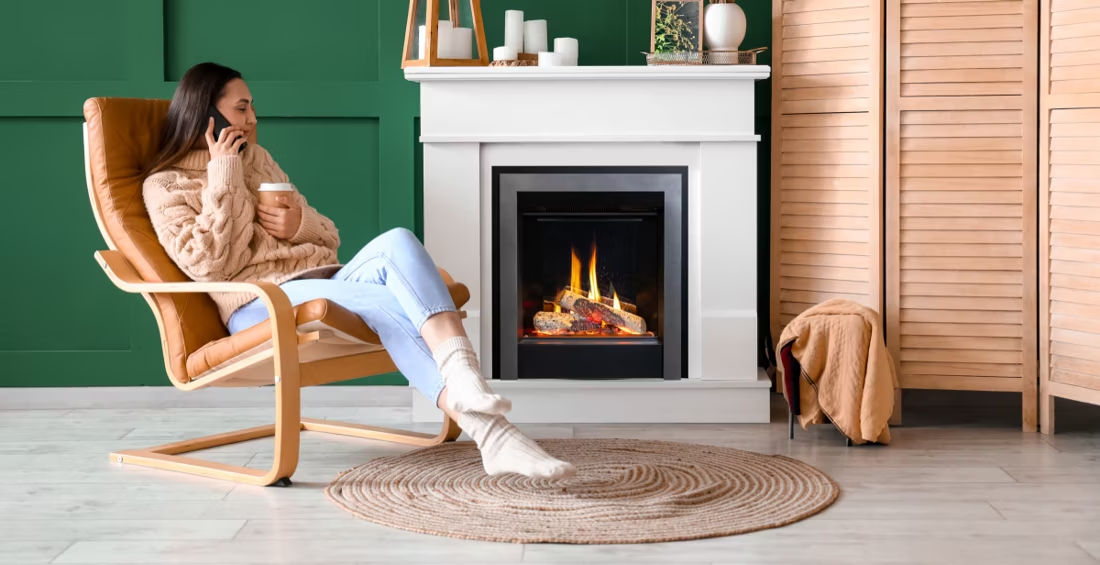
That's where electric fireplaces fit. Wheatland Electric Cooperative serves most of the county, and an electric unit plugs into standard household circuits or gets wired in by an electrician without the trenching, gas permitting, or chimney work a wood or gas project requires. Kearny County has no air quality restrictions on burning, so the appeal of electric here isn't emissions—it's practicality: a zone-heat option for a bedroom addition, a supplemental unit for a drafty farmhouse living room, or simply the look of a fire without maintaining a woodpile of local oak, hickory, or osage orange.
Three steps. No salesperson until you're ready.
Tell us about your project
Your zip code, your situation, and the fuel you're leaning toward—or let the answers point you to one.
See what's actually available
The brands dealers within 100 miles genuinely carry—real options, never a catalog mirage.
Get your dealer & Project Guide
A trusted local dealer, plus the free Project Guide & Parts List that names every component of the job.
Frequently Asked Questions
How much does an electric fireplace installation cost in Kearny County?
A basic plug-in electric fireplace or insert that fits into an existing opening can run as little as a few hundred dollars for the unit itself, with no formal installation needed beyond plugging it in. A built-in electric fireplace that requires a dedicated circuit, wall framing, or recessing into cabinetry typically runs $500 to $2,000 installed, depending on whether an electrician needs to run new wiring. Because Kearny County has a small population and fewer big-box options nearby, most homeowners work with a hearth dealer who serves the wider southwest Kansas area and can coordinate any electrical work needed for a built-in unit.
What's the difference between a plug-in electric fireplace and a built-in electric insert?
A plug-in unit is a self-contained fireplace or stove that runs off a standard 120V outlet—it's the fastest and cheapest way to add electric heat and flame effect to a room, and it's popular in Kearny County rentals and manufactured homes where permanent modifications aren't practical. A built-in electric insert is designed to be recessed into a wall, cabinet, or existing fireplace opening for a more finished, permanent look, and it often needs a dedicated 120V or 240V circuit run by an electrician. For an older Kearny County farmhouse with an unused masonry fireplace, a built-in insert is a common way to get a clean look without touching the chimney.
Will an electric fireplace actually heat my home in Kearny County winters?
Most electric fireplaces are built as supplemental zone heaters, not whole-home furnaces—they're rated to comfortably heat a single room of 400 to 1,000 square feet, which covers most bedrooms, living rooms, and additions. With average winter lows around 20°F and a moderate heating season county-wide, an electric unit works well as backup heat for a specific room or as a way to take the chill off without running a central furnace at full tilt. For whole-home heating during Kearny County's coldest stretches, most homeowners still rely on a furnace or a wood stove as the primary source and use electric for the rooms that need extra warmth.
Do I need a permit for an electric fireplace in Kearny County?
A plug-in electric fireplace generally doesn't require a permit since it's treated like any other appliance you plug into an existing outlet. A built-in electric fireplace that requires new wiring or a dedicated circuit typically does need an electrical permit, since that work has to meet code regardless of the appliance. Kearny County's building department can confirm requirements for your specific project, and most licensed electricians pull the permit as part of the installation so you don't have to handle the paperwork yourself.
What's the best electric fireplace for supplemental heat in a Kearny County farmhouse?
For older farmhouses with drafty rooms and single-pane windows—common throughout the county—look for an electric insert or stove with a true 1,500-watt heater rated for the square footage of the specific room, not the whole house. Units with a thermostat and a fan-forced heater hold a room temperature more evenly than basic radiant models, which matters when the wind is cutting through an older wall. A local dealer can walk through your room dimensions and insulation and steer you toward a unit sized correctly rather than guessing off a big-box shelf tag.
How much does it cost to run an electric fireplace on Wheatland Electric Cooperative rates?
A typical 1,500-watt electric fireplace running on high costs a few cents to run per hour under standard Wheatland Electric Cooperative residential rates—running it for several hours a day through a Kearny County winter adds a noticeable but modest amount to a monthly bill compared to running a furnace continuously. Most owners use the flame-only setting (with the heater off) for ambiance on mild days and reserve the heater for the coldest stretches, which keeps operating costs down. Ask your electric co-op or a local dealer for a rate-specific estimate if you're comparing electric to propane or wood for a specific room.
Electric vs. wood—which is right for my home in Kearny County?
Wood heat has deep roots in this part of Kansas—oak, hickory, and osage orange are all common locally and osage orange in particular burns hot and long, which matters on a windy 20°F night. Wood also keeps working during a power outage, which is a real consideration on the open plains where ice storms can take down lines. Electric fireplaces can't provide backup heat during an outage, but they install in minutes, need no chimney or wood supply, and work in manufactured homes and additions where a wood stove isn't practical. Many Kearny County homeowners end up with both: a wood stove or insert for primary or backup heat, and an electric unit for a bedroom or sunroom that doesn't need full-time heat.
Can I install an electric fireplace in a mobile or manufactured home?
Yes, and it's one of the more common electric fireplace projects in Kearny County given how much of the housing stock outside Lakin and Deerfield is manufactured or mobile housing. Plug-in units are the simplest option since they avoid any wiring changes, but manufactured homes have specific clearance and wall-material requirements that differ from stick-built construction, so it's worth having a local dealer or electrician confirm the unit is rated for that use before you buy. Built-in units in manufactured homes usually need extra care around wall cavity depth and combustible clearances.
Where can I find a local dealer for electric fireplaces near Lakin or Deerfield?
Kearny County's small population means there isn't a hearth showroom in every town, so most homeowners work with a dealer based in a larger southwest Kansas hub who serves Lakin, Deerfield, and the surrounding county. That's a good thing for sizing and selection—a dealer covering the wider region carries a broader range of electric units than a single small-town shop and has seen how they perform in local farmhouses and manufactured homes. Find My Fireplace matches you with a trusted dealer who actually serves Kearny County rather than leaving you to guess from a big-box display.
Can I put a TV above my fireplace?
Yes—with an asterisk. Fireplaces are hot and TVs don't like heat. Either put a mantel between them to deflect rising warmth, or choose a fireplace with heat-management technology that creates a cool zone on the wall above—the wall stays around 125 degrees, barely warm, while the room still gets full heat. If you like clean lines and don't want a mantel, heat management is the answer.
Does an electric fireplace need a vent or chimney?
No—that's its superpower. An electric fireplace needs a wall and an outlet, period. No vent pipe, no gas line, no clearances to design around, which is why it works in bedrooms, offices, apartments, and walls where venting a gas or wood unit would be impractical or impossible. Installation is typically the simplest and least expensive of any fireplace type.
Does a fireplace add value to my home?
On average, a fireplace adds back to the home about the same amount you spent installing it. Add the monthly savings from heating the rooms you actually use instead of the whole house—often hundreds of dollars a year—and the value case is strong before you even count what a fire does for how your family uses the room.
Can I install a fireplace myself?
If you're putting a fire in your house on purpose, it's best to work with an expert. Unless you're genuinely experienced in framing, gas line, vent pipe, and the national code on clearances to combustibles, have a professional do it—and ideally the same company that sells you the fireplace, so warranty, service, and liability all live under one roof.
Find your electric fireplace in Kearny County.
Tell us a bit about your home and we'll match you with the right electric fireplace or insert, plus a free Project Guide & Parts List with the exact parts and a recommended local dealer serving Kearny County.
Find Your Fireplace →