
Gas heat that keeps up with Harvey County's wind chill.
Clean, instant heat for Newton, Hesston, Halstead, and the farmland between them. Find the right gas fireplace, insert, or stove, and connect with a trusted local dealer.
Every Project Starts From One of These Five Situations
Reliable heat without tending a fire.
Harvey County sits in south-central Kansas, part of the flat, wind-scoured prairie just north of Wichita—county seat Newton, plus Hesston, Halstead, Sedgwick, Burrton, North Newton, and the farm ground between them, home to just under 29,000 people. The climate here (zone 4A) brings a long, solid heating season with winter lows averaging 20°F—but the number that actually matters on a January night is the wind chill; open prairie with little windbreak can knock the felt temperature well below the thermometer reading. Ice storms and fast-moving cold fronts roll through with little warning, and older farmhouses and turn-of-the-century homes in Newton and Halstead often have single-pane windows and drafty additions that make consistent heat a real challenge.
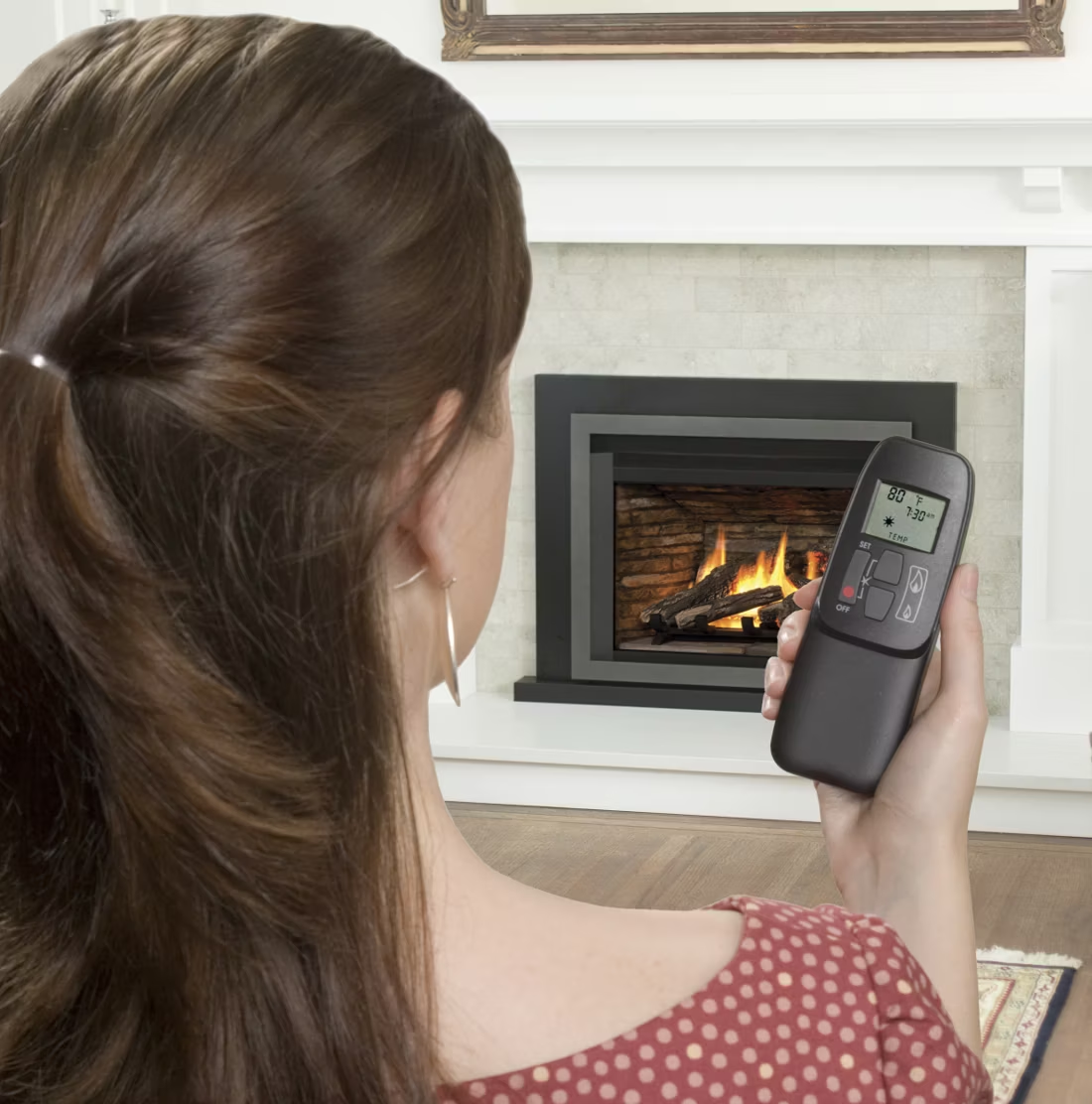
Natural gas service reaches most of the incorporated towns in the county—Kansas Gas Service is the primary provider in Newton, Hesston, and Halstead—while rural Harvey County, including the farmland around Sedgwick, Burrton, and Walton, typically runs on propane from regional suppliers. Harvey County doesn't carry the wood-smoke air quality restrictions you'll find in some non-attainment counties, so the choice between gas and wood here comes down to convenience and lifestyle rather than compliance. For homeowners who want instant, thermostat-controlled heat without hauling in oak or osage orange from the woodpile, a properly vented gas fireplace or insert delivers real warmth at the flip of a switch—and it keeps running through the kind of ice storm that can down power lines and firewood stacks alike.
Three steps. No salesperson until you're ready.
Tell us about your project
Your zip code, your situation, and the fuel you're leaning toward—or let the answers point you to one.
See what's actually available
The brands dealers within 100 miles genuinely carry—real options, never a catalog mirage.
Get your dealer & Project Guide
A trusted local dealer, plus the free Project Guide & Parts List that names every component of the job.
Frequently Asked Questions
How much does a gas fireplace installation cost in Harvey County?
A gas fireplace or insert installation in Harvey County typically runs $3,500 to $9,000, depending on the unit, whether you're converting an existing masonry fireplace or building new, and whether a new gas line or propane tank is part of the job. A direct-vent insert into an existing fireplace in a Newton or Halstead home that already has a nearby gas line sits on the lower end. New construction fireplaces, or rural propane setups needing a new tank and longer gas line runs, land toward the higher end. A local dealer will give you a firm number after seeing the space in person.
Can I convert my existing wood fireplace to gas?
Yes, and it's a common project in older Harvey County homes with an existing wood-burning fireplace originally built for oak or hickory. A gas insert slides into that existing masonry opening, uses a stainless liner run through your current chimney for venting, and typically runs $4,000 to $8,000 depending on whether you're on natural gas through Kansas Gas Service or running off a propane tank. The masonry surround stays the same—you just trade the ash bucket and kindling for a remote control.
Do I need natural gas, or can I use propane?
It depends on where you are in the county. Kansas Gas Service provides natural gas to Newton, Hesston, and Halstead and most of the area immediately around them. Once you're out past the city limits—around Sedgwick, Burrton, Walton, or the farmland between towns—propane from a regional supplier and a home tank is the standard setup. Either fuel works in nearly any gas fireplace or insert on the market; your installer just sets the orifice and regulator for whichever one you have.
Will my gas fireplace work during a power outage?
Most gas fireplaces with intermittent pilot ignition (IPI) include a battery backup that keeps the unit running when the power drops—which matters in Harvey County, where winter ice storms can take down rural power lines for a day or more. Valor fireplaces take a different approach: their pilot generates its own electricity through the thermocouple, so there's no battery to replace or forget. Ask your local dealer which ignition system a given model uses before you buy, especially if you're out in the county where outages tend to run longer than they do in Newton proper.
What's the difference between a gas fireplace, gas insert, and gas stove?
A gas fireplace is a fully built-in unit framed into a wall—the right call for new construction or a remodel. A gas insert drops into an existing masonry fireplace opening and uses the chimney you already have, which is the more common upgrade in Harvey County's older housing stock. A gas stove is a freestanding, cast-iron-style unit that sits out in the room like a wood stove but runs on gas—a good fit if you don't have an existing fireplace and don't want to frame one in.
Do I need a permit to install a gas fireplace in Harvey County?
Yes. New gas fireplace installations require a building permit, and the gas line work itself needs a licensed gas-fitter—inside Newton city limits that goes through the City of Newton's building department, and in unincorporated parts of the county it goes through Harvey County's planning and zoning office. Most hearth dealers handle the permit paperwork and coordinate the gas-fitter as part of the install, so you're not chasing down two separate trades yourself.
What's the difference between vented and vent-free gas fireplaces?
Vented (direct-vent) gas fireplaces pull combustion air from outside and exhaust it back outside through sealed venting—they're the safer, more universally recommended choice and what most Harvey County installers default to. Vent-free units burn without outside venting and release some combustion byproducts into the room; they're legal in Kansas but come with strict room-size and ventilation rules. For a well-sealed newer home in Hesston or a drafty older farmhouse near Burrton, a direct-vent unit is almost always the better call—ask your dealer to walk you through both if you're weighing the options.
How often should my gas fireplace be serviced?
An annual inspection is recommended for any gas fireplace or insert—a technician checks the burner, pilot assembly, venting, and gas connections, and cleans the glass. It's a shorter visit than a wood-stove chimney sweep, usually $150 to $225, but just as important for safety, especially heading into a Harvey County winter where the unit may run daily for months.
Gas vs. wood—which is right for my home?
Harvey County has a strong wood-heat tradition—oak, hickory, and dense, hot-burning osage orange (hedge) are all common on local farm ground and easy to source. Wood keeps working when the power's out, which matters during a prairie ice storm, and it costs less to run if you're cutting or splitting your own. Gas gives up that self-sufficiency but wins on convenience: no hauling, no ash, no creosote, and heat at the flip of a switch or a thermostat call. Plenty of Harvey County homes run both—gas in the main living space for daily comfort, with a wood stove or fireplace kept as backup heat for when the lines go down.
Can I put a TV above my fireplace?
Yes—with an asterisk. Fireplaces are hot and TVs don't like heat. Either put a mantel between them to deflect rising warmth, or choose a fireplace with heat-management technology that creates a cool zone on the wall above—the wall stays around 125 degrees, barely warm, while the room still gets full heat. If you like clean lines and don't want a mantel, heat management is the answer.
Why is a fireplace insert so efficient?
An insert does two things: it seals the chimney completely, so you stop losing air you already paid to heat, and it radiates warmth into the room through the firebox and glass. Most add a heat-exchange fan that pulls cool room air underneath, wraps it around the hot firebox, and pushes it back out warm. Your home is more efficient before you've even lit the first fire.
Can I install a fireplace myself?
If you're putting a fire in your house on purpose, it's best to work with an expert. Unless you're genuinely experienced in framing, gas line, vent pipe, and the national code on clearances to combustibles, have a professional do it—and ideally the same company that sells you the fireplace, so warranty, service, and liability all live under one roof.
Does a fireplace add value to my home?
On average, a fireplace adds back to the home about the same amount you spent installing it. Add the monthly savings from heating the rooms you actually use instead of the whole house—often hundreds of dollars a year—and the value case is strong before you even count what a fire does for how your family uses the room.
Find your gas fireplace in Harvey County.
Tell us about your Harvey County home and we'll match you with a trusted local dealer and send over a free Project Guide & Parts List—the exact parts, vent kit included, for your gas fireplace project.
Find Your Fireplace →