
Reliable Warmth for Finney County's Coldest Nights.
Instant, wind-proof heat for Garden City homes on the high plains—find the right gas fireplace or insert and connect with a trusted local dealer.
Every Project Starts From One of These Five Situations
Gas heat built for high-plains cold and wind.
Garden City sits at nearly 2,830 feet on the high plains of southwest Kansas, where winter lows average 17°F and the wind rarely lets up. With a winter heating load in the same range as a place like Fargo, ND for overall heating demand, the cold here isn't dramatic so much as relentless, and wind chill cuts through drafty older farmhouses and newer subdivisions alike. Gas fireplaces have become the go-to option for a lot of Finney County homeowners who want heat that turns on instantly and doesn't depend on stacking or hauling fuel across an icy yard.
Natural gas service reaches most of the city through Kansas Gas Service, making a direct-vent gas fireplace or insert a straightforward retrofit for in-town homes already piped for a furnace or water heater. Outside city limits, across the farms and feedlots that define rural Finney County, propane is the standard fuel—most rural properties already run a tank for a furnace or grain dryer, so adding a fireplace line is a minor extension. With no local air-quality burn restrictions to navigate, gas installations here are refreshingly uncomplicated compared to parts of the country dealing with wood-smoke regulations.
Three steps. No salesperson until you're ready.
Tell us about your project
Your zip code, your situation, and the fuel you're leaning toward—or let the answers point you to one.
See what's actually available
The brands dealers within 100 miles genuinely carry—real options, never a catalog mirage.
Get your dealer & Project Guide
A trusted local dealer, plus the free Project Guide & Parts List that names every component of the job.
Frequently Asked Questions
How much does a gas fireplace installation cost in Garden City?
Expect to pay somewhere between $3,500 and $8,500 for a typical gas fireplace or insert installation in Garden City, with the final number driven mostly by venting and gas-line work. A direct-vent insert dropped into an existing masonry fireplace with a gas line already nearby is usually the least expensive option. A new built-in unit for a remodel or addition—where a gas line has to be extended and venting run through an exterior wall—lands toward the upper end of that range. Homes running on propane instead of city gas sometimes add a few hundred dollars for regulator and tank hookup work. The City of Garden City Building Department requires a permit for the installation, and most local dealers fold that into the quote.
Can I convert my wood-burning fireplace to gas?
Yes, and it's a common upgrade for older Garden City homes built around a traditional masonry fireplace. A direct-vent gas insert typically runs $3,800 to $7,000 installed, using a stainless liner run through your existing chimney rather than requiring new venting from scratch. If your fireplace has sat unused because splitting and hauling oak or hedge (osage orange) firewood has gotten old, this is usually the fastest path back to a working hearth without touching the masonry or mantel.
Should I go with natural gas or propane?
It depends on where you live. Inside Garden City, Kansas Gas Service reaches most neighborhoods, so if your home already has gas for a furnace or water heater, tying in a fireplace is straightforward. Outside city limits, across the farms and feedlots of Finney County, propane is the default—most rural properties already run a tank for a furnace or grain dryer, and adding a fireplace line is a minor extension. Nearly every gas fireplace on the market can be configured for either fuel; your installer just sets the correct orifice and regulator for whichever you have.
Will a gas fireplace still work if the power goes out?
In most cases, yes. Garden City is served by three separate electric providers—Pioneer Electric Cooperative, Wheatland Electric Cooperative, and the City of Garden City's own municipal utility—and outage patterns can differ depending on which one serves your street. A gas fireplace with intermittent pilot ignition (IPI) uses a small battery backup that kicks in the moment power drops, so the flame still lights on demand. A handful of brands, including Valor, go further and generate their own electricity off the pilot flame's thermocouple, needing no batteries at all. During a plains ice storm or high-wind outage, that's worth asking your dealer about directly.
What's the difference between a gas fireplace, insert, and stove?
A gas fireplace is a built-in unit framed into a wall, typically used in new construction or a remodel. A gas insert is sized to slide into an existing masonry firebox, turning an old wood-burning fireplace into a sealed, high-efficiency gas unit using the same chimney chase. A gas stove is a freestanding cabinet-style unit that sits on the floor, similar in footprint to a wood stove but running on gas. For most Garden City homes with an existing fireplace, an insert is the simplest upgrade. New builds or rooms without a chimney are better suited to a built-in fireplace or a freestanding stove vented straight through an exterior wall.
Do I need a permit to install a gas fireplace in Garden City?
Yes. Inside city limits, the City of Garden City Building Department requires both a building permit and sign-off on the gas line work; outside the city, the Finney County Building Department handles it. Any new or extended gas line has to be run by a licensed gas-fitter, which is one reason it's worth using a hearth dealer who coordinates the gas work, venting, and inspection together rather than piecing it together yourself.
Should I choose a vented or vent-free gas fireplace?
Vented (direct-vent) units draw combustion air from outside and exhaust it back outside through sealed pipe, so nothing but heat enters the room. Vent-free units burn directly into the living space and are legal in Kansas within room-size and ventilation limits, but they release some moisture and combustion byproducts indoors. Garden City homes tend to be built tight to handle the wind and cold, which is exactly the kind of house where a sealed direct-vent unit makes the most sense—you get real heat output without adding humidity or combustion gases to an already well-sealed home. Most local dealers steer first-time buyers toward direct-vent for that reason.
How often does a gas fireplace need to be serviced?
Plan on an annual inspection, ideally before the first cold snap in October or November. A technician checks the burner, pilot assembly, venting, and gas connections, and cleans the glass and interior. It's a shorter visit than a wood chimney sweep, but skipping it is how pilot and igniter problems go unnoticed until the coldest night of the year. Local service providers typically charge in the $125 to $200 range for a standard annual visit.
Gas or wood—which makes more sense for a Garden City home?
Wood has real advantages elsewhere in the country, but Finney County is short-grass prairie, not forest—there's no national forest land nearby to buy a cutting permit for, so firewood here is purchased by the cord rather than self-cut. Local supply leans on oak, hickory, and osage orange (locally called hedge), the same dense windbreak trees planted across western Kansas after the Dust Bowl; hedge burns extremely hot but is brutal to split. Given that, gas tends to be the more practical choice for day-to-day heat in Garden City: no wood to source or stack, no ash, and heat at the flip of a switch during a plains windstorm. Wood still has a place for homeowners who want the ritual of a real fire or a wood stove as an off-grid backup, but for a primary or supplemental heat source in town, gas is usually the easier call.
Can I put a TV above my fireplace?
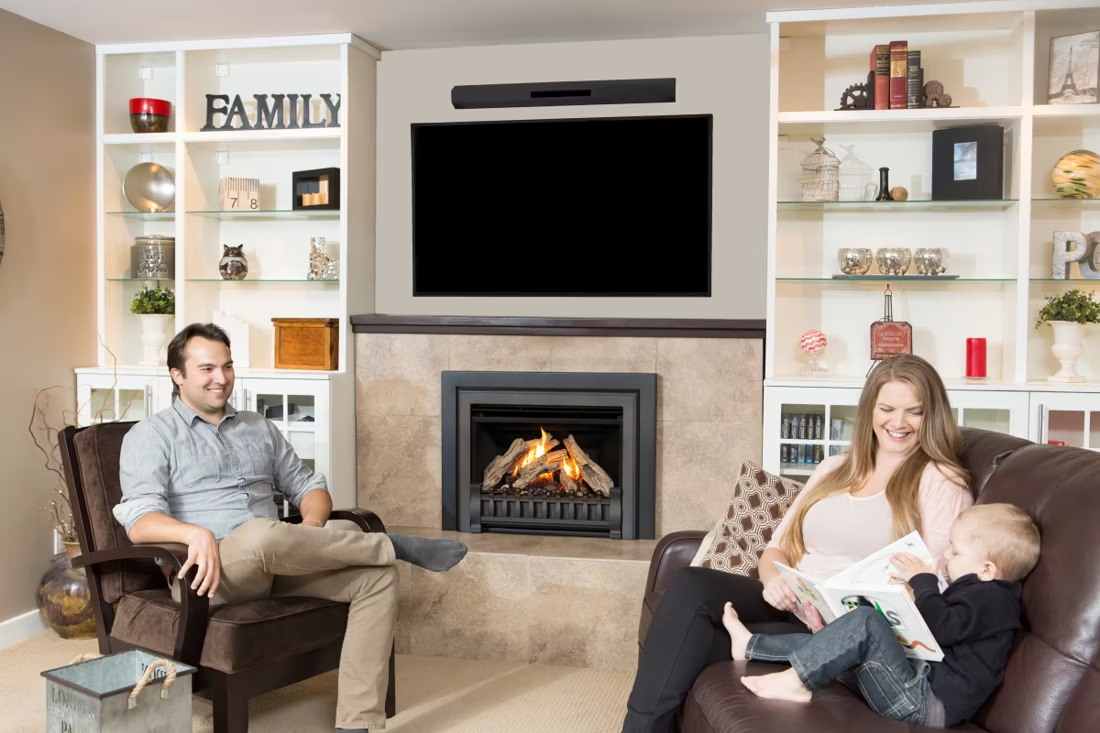
Yes—with an asterisk. Fireplaces are hot and TVs don't like heat. Either put a mantel between them to deflect rising warmth, or choose a fireplace with heat-management technology that creates a cool zone on the wall above—the wall stays around 125 degrees, barely warm, while the room still gets full heat. If you like clean lines and don't want a mantel, heat management is the answer.
Why is a fireplace insert so efficient?
An insert does two things: it seals the chimney completely, so you stop losing air you already paid to heat, and it radiates warmth into the room through the firebox and glass. Most add a heat-exchange fan that pulls cool room air underneath, wraps it around the hot firebox, and pushes it back out warm. Your home is more efficient before you've even lit the first fire.
Does a fireplace add value to my home?
On average, a fireplace adds back to the home about the same amount you spent installing it. Add the monthly savings from heating the rooms you actually use instead of the whole house—often hundreds of dollars a year—and the value case is strong before you even count what a fire does for how your family uses the room.
Can I install a fireplace myself?
If you're putting a fire in your house on purpose, it's best to work with an expert. Unless you're genuinely experienced in framing, gas line, vent pipe, and the national code on clearances to combustibles, have a professional do it—and ideally the same company that sells you the fireplace, so warranty, service, and liability all live under one roof.
Nearby Dealers
Hearth shops serving Garden City and the surrounding area. Every listing shows whether it is a WhyFire partner, a dealer we have verified as authorized for the brands we recommend, or a local business carrying hearth products. No manufacturer pays for placement. How we verify dealers →
Builders FirstSource-Garden City, Ks
Premier Homes
Find your gas fireplace in Garden City.
Tell us about your home and heating goals, and we'll match you with a trusted local dealer plus a free Project Guide & Parts List—the exact parts, vent kit, and installer recommendation for your Garden City gas project.
Find Your Fireplace →