
Find the right electric fireplace for your Ellis County home.
From Hays to Victoria to Schoenchen, electric fireplaces give Ellis County homes clean supplemental warmth without new gas lines or masonry work. Find the right unit and connect with a trusted local dealer.
Every Project Starts From One of These Five Situations
Simple heat that plugs into an existing wall.
Ellis County sits on the High Plains of west-central Kansas, with a heating season comparable to Madison, WI and winter lows that average around 20°F—comparable in severity to what a homeowner in Madison, WI experiences most winters. That's real cold, but it's not the kind of sustained sub-zero stretch that pushes a household toward wood or gas as primary heat. For most Hays and Ellis County homes, electric fireplaces fill a different role: zone heat for a bedroom or den, ambiance in a finished basement, or a fireplace look in a home without an existing chimney or gas line.
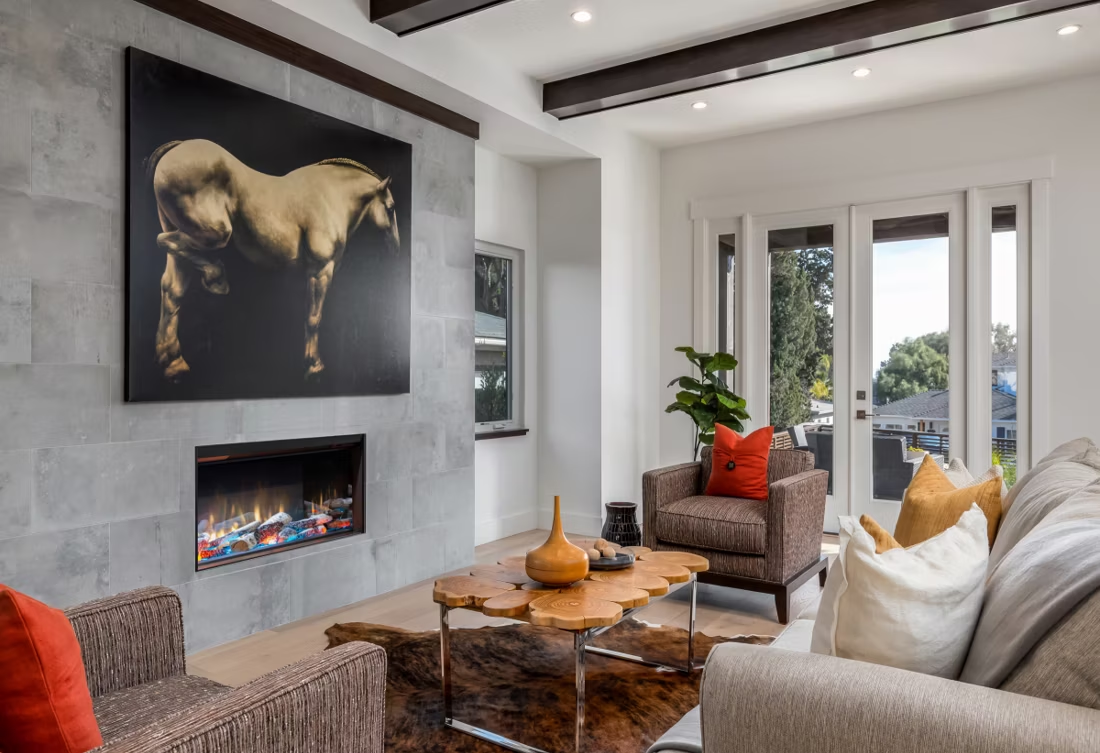
With no natural gas line permit paperwork, no venting to plan, and no wood to season or haul, electric units are typically the fastest and least invasive fireplace project available to Ellis County homeowners. A qualified local electrician or hearth dealer can usually have a unit installed in a single visit, often on a standard 120V circuit for smaller models or a dedicated 240V circuit for larger built-ins. That said, electric heat is supplemental—it won't replace a furnace on a January night when the wind is cutting across the plains, and it's worth being upfront about that with any dealer you talk to.
Three steps. No salesperson until you're ready.
Tell us about your project
Your zip code, your situation, and the fuel you're leaning toward—or let the answers point you to one.
See what's actually available
The brands dealers within 100 miles genuinely carry—real options, never a catalog mirage.
Get your dealer & Project Guide
A trusted local dealer, plus the free Project Guide & Parts List that names every component of the job.
Frequently Asked Questions
How much does an electric fireplace installation cost in Ellis County?
Most electric fireplace and insert installations in Ellis County run between $400 and $1,200, depending on the unit and whether new electrical work is needed. A plug-in freestanding or wall-mount unit on an existing outlet sits at the low end. A built-in electric fireplace or insert that requires a dedicated circuit, new outlet, or minor wall framing runs toward the higher end. Because there's no venting or gas line involved, electric is consistently the least expensive fireplace category to install in the county—a local dealer can usually confirm the exact number after a quick look at your electrical panel and the room.
Do I need an electrician to install an electric fireplace?
For a plug-in unit on an existing standard outlet, no—it's a straightforward DIY or handyman job. For a built-in electric fireplace or insert that needs a dedicated 240V circuit, a licensed electrician should handle the wiring and any new breaker work, both for safety and to keep the installation up to code. Most hearth dealers serving Hays and the surrounding county either employ an electrician directly or coordinate with one as part of the installation, so you're not left managing two separate contractors.
Will an electric fireplace actually heat my Ellis County home?
An electric fireplace will comfortably heat a single room—a bedroom, den, or basement family room—but it's not designed to replace your furnace on the coldest High Plains nights when temperatures drop toward or below 20°F. Think of it as zone heat: most units put out around 5,000 BTU (roughly 1,500 watts), enough to take the chill off a specific space while your central heat handles the rest of the house. If you're hoping for whole-home heating in an Ellis County winter, a wood or gas unit sized for the space is a better fit—a local dealer can walk you through the tradeoffs.
Can an electric fireplace run during a power outage?
No—electric fireplaces require power to operate, so they offer no heat during an outage, unlike a wood stove or a gas unit with battery-backup ignition. For Ellis County homes concerned about winter storm outages on the plains, that's worth factoring into the decision. Some homeowners pair an electric fireplace for everyday convenience and ambiance with a wood stove or gas insert elsewhere in the home as a backup heat source for when the power goes out.
What's the difference between an electric fireplace, insert, and mantel unit?
A freestanding or wall-mount electric fireplace is the simplest option—plug it in and set it against a wall or hang it like a picture frame. An electric insert is built to slide into an existing masonry fireplace opening or a custom cabinet cutout, giving you a built-in look without new construction. A mantel package pairs an insert with a surrounding mantel and frame, often used to convert a defunct wood fireplace into a clean, code-simple electric feature. For Ellis County homes with an old, unused masonry fireplace, an insert or mantel package is usually the most popular upgrade.
Do I need a permit for an electric fireplace in Ellis County?
Typically no permit is needed for a plug-in unit on an existing outlet. If the installation requires new electrical work—a new circuit, a new outlet, or panel modifications—an electrical permit may be required depending on the jurisdiction, whether that's the City of Hays or unincorporated Ellis County. A licensed electrician handling the wiring will usually know whether the scope of work triggers a permit and can pull it if needed.
Are electric fireplaces a good fit for older Ellis County homes?
Often yes, and sometimes better than a wood or gas alternative. Many older homes around Hays and the smaller Ellis County communities have masonry fireplaces that are no longer safe to burn wood in without significant chimney work. An electric insert or mantel package can go into that existing opening without touching the chimney, giving the room a working fireplace feature again without the cost of chimney relining or masonry repair.
How does electric compare to wood or gas heat for Ellis County homes?
Wood—often oak, hickory, or osage orange sourced locally—delivers real heat output and works without electricity, which matters during plains winter storm outages, but it requires hauling, seasoning, and regular chimney maintenance. Gas offers instant, higher-output heat and can run on propane where natural gas isn't available, but it requires venting and gas line work. Electric is the simplest and cheapest to install, produces no smoke or combustion byproducts, and needs no venting—but it depends entirely on grid power and is realistically a supplemental heat source rather than a primary one. Most Ellis County homeowners choose electric for convenience and ambiance in secondary spaces, and pair it with wood or gas where they need serious heat.
Can I use an electric fireplace with pellet heat elsewhere in the house?
Yes, and it's a common pairing. Pellet stoves—using brands like Lignetics or Indeck Energy Services pellets, both available regionally—give Ellis County homes efficient, thermostatically controlled primary or supplemental heat in a main living space, while an electric fireplace elsewhere in the house adds ambiance and zone warmth in a bedroom or den without running a second pellet appliance. The two fuels don't compete for the same job, which is part of why homeowners often install both over time rather than choosing one.
Can I put a TV above my fireplace?
Yes—with an asterisk. Fireplaces are hot and TVs don't like heat. Either put a mantel between them to deflect rising warmth, or choose a fireplace with heat-management technology that creates a cool zone on the wall above—the wall stays around 125 degrees, barely warm, while the room still gets full heat. If you like clean lines and don't want a mantel, heat management is the answer.
Do electric fireplaces actually produce heat?
Yes—most put out around 4,800–5,000 BTUs from a standard outlet, which comfortably warms a bedroom, office, or den as a comfort-zone heater. What they won't do is carry a whole house the way wood, gas, or pellet can. Think of electric as ambiance-first with honest supplemental heat: flames on with no heat in July, flames plus warmth in January.
What is an in-home preview and do I need one?
It's a visit where a hearth professional measures your space, confirms the model you picked actually works in your home, and walks the specs—framing, gas line, venting, finish work—before anything is ordered. Some details you just can't know until you see the house. Never make a down payment without one; it's the single most-skipped step that burns buyers.
How much should I budget for a fireplace?
For an average home—covering the fireplace, the vent pipe, and basic installation—a budget between $3,900 and $5,500 gives you a lot of options across wood, gas, and pellet. By the time you add finish work, gas line, and electrical, the average complete installation lands between $5,000 and $12,000 all-in. In a remodel or new build, a good rule is to put about 2.5% of the total project cost toward the fireplace.
Stove and Fireplace Dealers in Ellis County
Find your electric fireplace in Ellis County.
Tell us a bit about your home and we'll match you with the right electric fireplace or insert, plus a free Project Guide & Parts List with the exact parts and a recommended local Ellis County dealer.
Find Your Fireplace →