
Find the right gas fireplace for your Cherokee County home.
Instant, reliable heat for Cherokee County winters—from Columbus to Baxter Springs to Galena. Get matched with a trusted local dealer who can size, permit, and install it right.
Every Project Starts From One of These Five Situations
Steady heat for a Kansas winter, without the woodpile.
Cherokee County sits in the far southeast corner of Kansas, in climate zone 4A with a moderate but real heating season that runs from November into March, with average winter lows around 23 degrees. That's noticeably milder than northern-plains cold like Fargo or Bismarck, but cold enough that a lot of Cherokee County homeowners want dependable heat in the living room that doesn't depend on tending a fire every few hours. Gas fireplaces fit that need well, especially in newer construction around Columbus and in remodels throughout Baxter Springs and Galena.
Natural gas service reaches much of the county's incorporated areas, while propane fills in for homes further out in the rural townships. Either fuel path works for a modern direct-vent gas fireplace or insert. What matters more than the fuel source is getting the unit sized correctly and vented properly—something a local installer familiar with Cherokee County's older housing stock and rural gas-line realities will handle better than a big-box install crew unfamiliar with the area.
Three steps. No salesperson until you're ready.
Tell us about your project
Your zip code, your situation, and the fuel you're leaning toward—or let the answers point you to one.
See what's actually available
The brands dealers within 100 miles genuinely carry—real options, never a catalog mirage.
Get your dealer & Project Guide
A trusted local dealer, plus the free Project Guide & Parts List that names every component of the job.
Frequently Asked Questions
How much does a gas fireplace installation cost in Cherokee County?
Gas fireplace and insert installations in this part of Kansas typically run $4,000 to $9,000, depending on the unit, whether you're converting an existing wood fireplace, and whether new gas line work is required. A gas insert dropped into an existing masonry fireplace with gas already run nearby tends to land on the lower end. New direct-vent fireplaces in homes without existing gas service—common in some of Cherokee County's older farmhouses—run higher once a gas line extension or propane tank setup is factored in. A local dealer can give you a firm number after seeing your home.
Can I convert my existing wood fireplace to gas?
Yes, and it's a common project in Cherokee County's older homes around Columbus and Galena, many of which still have working masonry fireplaces originally built for wood. A gas insert typically uses your existing chimney with a stainless liner, so the exterior look of your fireplace stays the same while the heat output and convenience improve substantially. Cost depends on whether you're on natural gas or propane and whether a new gas line needs to be run, but most conversions in the area fall in the $4,000 to $8,500 range.
Do I need natural gas, or can I run a gas fireplace on propane?
Either works. Homes inside Columbus, Baxter Springs, and Galena with existing natural gas service can usually add a fireplace with minimal new plumbing. Outside those service areas—which covers a good share of rural Cherokee County—propane is the standard option, either from an existing tank or a new tank installed by a local propane supplier. Most gas fireplace models sold by local dealers can be configured for either fuel with the correct orifice and regulator, so fuel availability shouldn't limit which fireplace you choose.
Will my gas fireplace still work if the power goes out?
Most will, which matters in Cherokee County where ice storms and severe spring weather can knock out power for a stretch. Units with intermittent pilot ignition (IPI) run on a small battery backup that kicks in automatically, so the fireplace lights and operates normally even without electricity. Valor fireplaces go a step further—their pilot assembly generates its own electricity through a thermocouple, so there's no battery to remember or replace. If backup heat during an outage is a priority for your household, ask your local dealer which ignition system a given model uses before you decide.
What's the difference between a gas fireplace, gas insert, and gas stove?
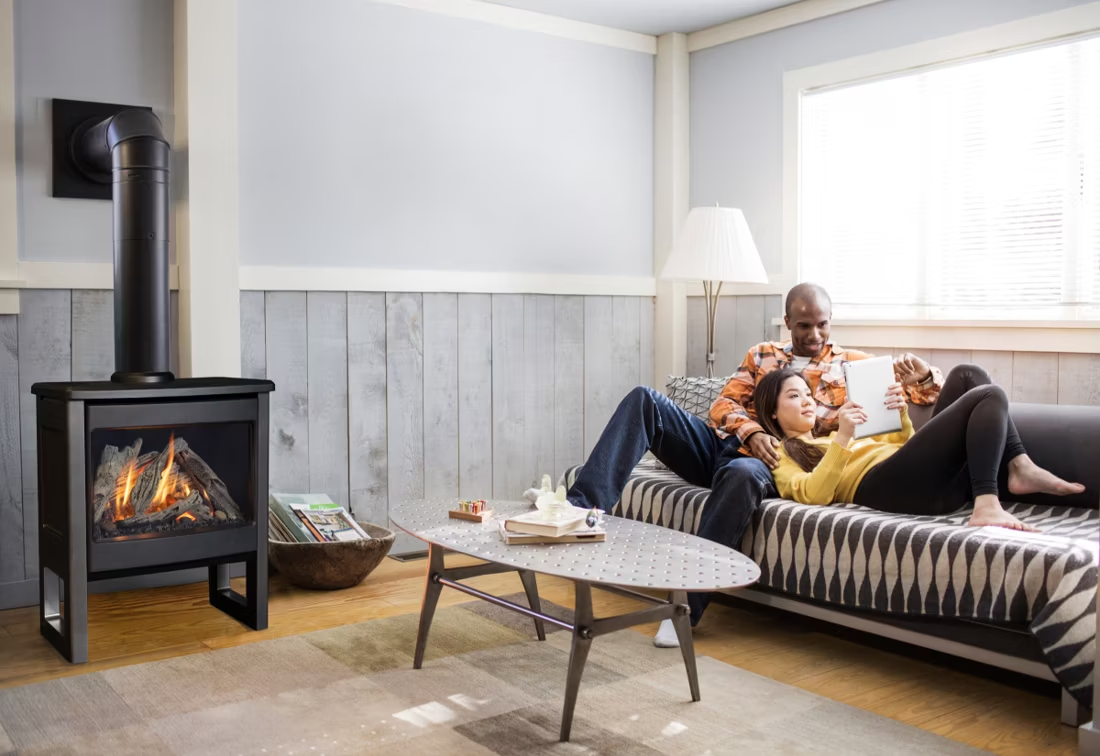
A gas fireplace is a built-in unit framed into a wall, typically chosen for new construction or a full remodel. A gas insert slides into an existing masonry fireplace opening and vents through the existing chimney with a liner—this is the common upgrade path for Cherokee County's older housing stock. A gas stove is a freestanding cabinet-style unit that sits out from the wall like a wood stove but burns gas. Most homeowners in the county with an existing fireplace they want to modernize end up choosing an insert; new-build homes usually go with a built-in fireplace instead.
Do I need a permit to install a gas fireplace in Cherokee County?
Yes, both a building permit and a gas line permit are typically required for a new gas fireplace installation, with the gas work needing a licensed gas-fitter. Requirements can vary slightly depending on whether the home falls inside Columbus, Baxter Springs, or Galena city limits versus unincorporated Cherokee County, so check with the relevant local building office before starting work. Most established local hearth dealers handle this paperwork as part of the installation, coordinating the gas line, venting, and inspection so you aren't juggling separate contractors yourself.
What's the difference between vented and vent-free gas fireplaces?
Vented (direct-vent) gas fireplaces pull combustion air from outside and exhaust the byproducts back outside through a sealed pipe—they're the cleanest and most universally code-compliant option. Vent-free units burn without any exterior venting, releasing some water vapor and trace combustion byproducts directly into the room, which means strict room-sizing and ventilation rules apply. Vent-free units are legal in Kansas but some states restrict them entirely, and for most Cherokee County homes a direct-vent unit is the more straightforward, better-performing choice. A local dealer can walk you through both if you want to weigh the tradeoffs for your specific room.
How often should a gas fireplace be serviced?
Plan on an annual inspection, ideally before the heating season starts each fall. A technician checks the burner, pilot assembly, venting, and gas connections, and cleans the glass and interior—a much smaller job than a wood chimney sweep, but important for safe operation. Local gas appliance service providers typically charge $125 to $225 for a standard annual visit, and staying on schedule keeps most manufacturer warranties intact.
Gas vs. wood—which makes more sense for a Cherokee County home?
Wood is the traditional choice in this part of Kansas, and Cherokee County has plenty of it—oak, hickory, and osage orange are all common locally and burn hot and long. Wood also keeps working during a power outage without any backup system. Gas trades that off for instant, thermostat-like convenience: no ash, no wood stacking, and a consistent flame at the flip of a switch or wall control. For a primary living space where daily convenience matters most, gas is usually the better fit; for households that want a wood-fired backstop or enjoy tending a fire, wood remains a solid option. Some Cherokee County homes end up with both—gas for everyday use, wood as a supplement.
Is my gas fireplace wasting gas?
If it was installed more than 15 years ago, probably. Older gas fireplaces keep a standing pilot light burning all the time, and that little flame can cost a couple hundred dollars a year. Newer models use pilot-on-demand ignition—the pilot lights only when you use the fireplace and goes out when you turn it off.
Can I put a TV above my fireplace?
Yes—with an asterisk. Fireplaces are hot and TVs don't like heat. Either put a mantel between them to deflect rising warmth, or choose a fireplace with heat-management technology that creates a cool zone on the wall above—the wall stays around 125 degrees, barely warm, while the room still gets full heat. If you like clean lines and don't want a mantel, heat management is the answer.
Can I install a fireplace myself?
If you're putting a fire in your house on purpose, it's best to work with an expert. Unless you're genuinely experienced in framing, gas line, vent pipe, and the national code on clearances to combustibles, have a professional do it—and ideally the same company that sells you the fireplace, so warranty, service, and liability all live under one roof.
What is an in-home preview and do I need one?
It's a visit where a hearth professional measures your space, confirms the model you picked actually works in your home, and walks the specs—framing, gas line, venting, finish work—before anything is ordered. Some details you just can't know until you see the house. Never make a down payment without one; it's the single most-skipped step that burns buyers.
Get matched with a Cherokee County gas fireplace dealer.
Tell us about your home and heating goals, and we'll send you a free Project Guide & Parts List for your gas fireplace project—sized right, vented right, and matched with a trusted local dealer in Cherokee County.
Find Your Fireplace →