
Find the right electric fireplace for your Butler County home.
No gas line, no chimney, no wood to split—just plug-in or hardwired warmth for homes from El Dorado to Andover to Augusta. Get matched with a local dealer who installs it right.
Every Project Starts From One of These Five Situations
Zone heat that fits any room, any budget.
Butler County sits in climate zone 4A with a real but moderate heating season and winter lows averaging in the low 20s—noticeably milder than places like Fargo or Bismarck, where a full-house wood or gas system tends to carry the load. That milder profile is exactly why electric fireplaces do so well here: many Butler County homes, from El Dorado's older neighborhoods to newer builds in Andover and Rose Hill, don't need a whole-house combustion appliance so much as targeted warmth in the rooms people actually use.
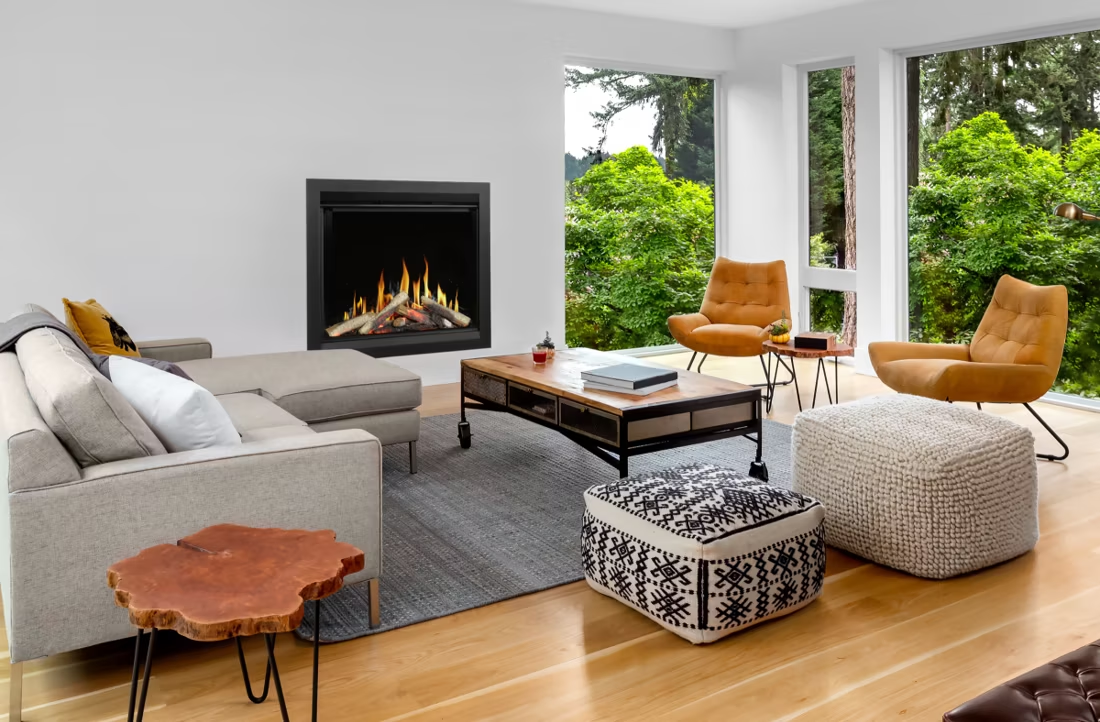
An electric fireplace or insert installs without venting, a chimney, or a gas permit—which matters in a county where a lot of housing stock is ranch-style or split-level and doesn't have an existing masonry flue to work with. It also means no combustion byproducts, no creosote, and no wildfire-smoke concerns (Butler County has no air quality non-attainment issues, but electric still sidesteps the question entirely). Whether it's a supplemental heater for a finished basement in Augusta or a fireplace-look focal wall in a new Andover build, a correctly sized unit from a local dealer will do real work in a 4A climate without the venting hassle of gas or wood.
Three steps. No salesperson until you're ready.
Tell us about your project
Your zip code, your situation, and the fuel you're leaning toward—or let the answers point you to one.
See what's actually available
The brands dealers within 100 miles genuinely carry—real options, never a catalog mirage.
Get your dealer & Project Guide
A trusted local dealer, plus the free Project Guide & Parts List that names every component of the job.
Frequently Asked Questions
How much does an electric fireplace installation cost in Butler County?
Most electric fireplace and insert installations in Butler County run $400 to $1,200. A plug-in freestanding unit or a simple insert into an existing mantel surround sits at the low end—often no electrician needed. Built-in wall units, units requiring a dedicated 20-amp circuit, or custom surrounds with millwork push toward the higher end. Homes in older El Dorado neighborhoods with dated electrical panels sometimes need a panel or circuit upgrade first, which a local dealer will flag during an in-home estimate.
Do I need an electrician to install an electric fireplace?
It depends on the unit. Many electric fireplaces are simple plug-in appliances that run on a standard 120-volt outlet—no electrician required. Larger built-in models, especially those rated for supplemental room heat, often call for a dedicated circuit, which does require a licensed electrician. For Butler County homes outside city limits with older wiring or a fuse-box-era panel, it's worth having a dealer confirm circuit capacity before you buy, rather than finding out mid-install.
Will an electric fireplace actually heat my room, or is it just for looks?
A properly sized electric fireplace will genuinely heat a room—most units are rated for 400 to 1,500 square feet of supplemental heat, which covers a typical living room or finished basement space in a Butler County home. It won't replace your furnace on a sub-zero night, but with winter lows averaging around 23°F here, an electric insert can comfortably carry a den or bonus room on its own for much of the season, letting you turn down the thermostat elsewhere. Units with a purely decorative flame-only mode (no heater) exist too, so it's worth confirming heat output specs before buying if warmth is the goal.
Do I need a permit to install an electric fireplace in Butler County?
Generally no—because electric fireplaces don't involve venting, gas lines, or combustion, most jurisdictions in Butler County don't require a building permit for a straightforward plug-in or insert installation. If a project involves adding a new dedicated electrical circuit or altering a wall for a built-in unit, that electrical work may need to be pulled and inspected separately, typically through whichever building department has jurisdiction—the City of El Dorado, City of Andover, or Butler County itself for unincorporated areas. A local dealer can tell you up front whether your specific installation crosses that line.
What's the difference between an electric insert and a freestanding electric fireplace?
An electric insert is built to slot into an existing fireplace opening—including old masonry wood-burning fireplaces common in older El Dorado and Augusta homes—instantly converting a cold, unused firebox into working supplemental heat without touching the chimney. A freestanding or wall-mounted unit stands on its own or hangs on any wall, which makes it the better fit for newer Andover or Rose Hill homes that never had a fireplace to begin with. Both types plug into standard household power in most cases; the insert route is usually the faster win if you already have an old wood fireplace sitting unused.
How does an electric fireplace compare to wood heat in Butler County?
Wood is genuinely practical here—oak, hickory, and osage orange are all common local species, and osage orange in particular burns hot and long, which matters when temperatures dip toward the low 20s. Wood heat also works during a power outage, which electric cannot. But electric wins on convenience: no splitting, stacking, or ash cleanup, no chimney to sweep, and instant on-off control with a remote or app. For a lot of Butler County homeowners, wood stays in an outbuilding or a rural property for backup heat while electric handles the day-to-day warmth in the main living space.
How does an electric fireplace compare to a gas fireplace here?
Gas delivers more consistent, higher-output heat and can be configured to run during a power outage with a battery-backed ignition system—real advantages in a Kansas winter storm. Electric costs less to install (no gas line or venting to run), has zero emissions, and can go virtually anywhere in the house since it doesn't need a flue. For a supplemental heat source in a bedroom, basement, or bonus room in Butler County, electric is usually the simpler and cheaper install; for a primary living-room heat source in a home already plumbed for gas, a gas fireplace often makes more sense.
Can an electric fireplace be used as a primary heat source?
Not typically, and it's not usually the right goal. Most electric fireplaces are rated for zone or supplemental heating of a single room, not whole-home heating—Butler County's winter heating season means the county still needs a functioning furnace or heat pump as the primary system. Where electric shines is offsetting furnace use in specific rooms: closing the vent to a rarely used guest room and running a small electric insert there instead, for example, or heating a finished basement that the main HVAC struggles to reach evenly.
What size electric fireplace do I need for my Butler County home?
For a typical living room in the 200-400 square foot range, a mid-size insert or wall unit rated for 400-1,000 square feet of heat output is usually plenty, since it only needs to supplement existing HVAC rather than heat the whole house. Larger open-concept spaces in newer Andover or Rose Hill construction may call for a bigger unit or two smaller ones placed strategically. Since electric units don't need to account for elevation, venting length, or draft the way wood and gas installs do, sizing mostly comes down to square footage and how much supplemental warmth you actually want—a local dealer can talk through both during a quick consultation.
Can I put a TV above my fireplace?
Yes—with an asterisk. Fireplaces are hot and TVs don't like heat. Either put a mantel between them to deflect rising warmth, or choose a fireplace with heat-management technology that creates a cool zone on the wall above—the wall stays around 125 degrees, barely warm, while the room still gets full heat. If you like clean lines and don't want a mantel, heat management is the answer.
Do electric fireplaces actually produce heat?
Yes—most put out around 4,800–5,000 BTUs from a standard outlet, which comfortably warms a bedroom, office, or den as a comfort-zone heater. What they won't do is carry a whole house the way wood, gas, or pellet can. Think of electric as ambiance-first with honest supplemental heat: flames on with no heat in July, flames plus warmth in January.
How much should I budget for a fireplace?
For an average home—covering the fireplace, the vent pipe, and basic installation—a budget between $3,900 and $5,500 gives you a lot of options across wood, gas, and pellet. By the time you add finish work, gas line, and electrical, the average complete installation lands between $5,000 and $12,000 all-in. In a remodel or new build, a good rule is to put about 2.5% of the total project cost toward the fireplace.
Does a fireplace add value to my home?
On average, a fireplace adds back to the home about the same amount you spent installing it. Add the monthly savings from heating the rooms you actually use instead of the whole house—often hundreds of dollars a year—and the value case is strong before you even count what a fire does for how your family uses the room.
Find your electric fireplace in Butler County.
Tell us a bit about your home and we'll put together a free Project Guide & Parts List for your electric fireplace project—then match you with a trusted local dealer in Butler County to get it installed right.
Find Your Fireplace →