
Instant heat, zero mess, for Anderson County homes.
No venting, no chimney, no gas line—just clean supplemental heat and real ambiance for farmhouses, additions, and rec rooms across Garnett and rural Anderson County. Find the right unit and connect with a trusted local dealer.
Every Project Starts From One of These Five Situations
Simple heat, no venting required.
Anderson County sits in east-central Kansas along the Neosho River, with Garnett as the county seat and a population under 4,500 spread across farms, small towns, and open acreage. Winters here aren't extreme—average lows near 20°F and roughly 4,935 heating degree days put the county in climate zone 4A—but exposure to open-plains wind and periodic ice storms makes heating reliability a real consideration for rural homeowners. Many older farmhouses in the county were built around wood heat, and oak, hickory, and osage orange from the Neosho bottomlands remain common firewood species today. Electric fireplaces fit into that landscape less as a primary heat source and more as a clean way to add real ambiance and zone heat to a living room, finished basement, or bedroom addition—without cutting into a wall for gas piping or building a masonry chimney.
Electric service in Garnett and the surrounding towns runs primarily through Evergy, with several rural stretches of the county served by Kansas electric cooperatives. Because an electric fireplace draws off a standard or dedicated circuit rather than requiring venting, gas lines, or a chimney, installation is dramatically simpler than a wood or gas project—often just a licensed electrician running a 120V or 240V circuit and a local dealer setting the unit in place. That simplicity is exactly why electric works well in manufactured homes, additions, and finished basements across the county, where retrofitting a vented appliance would be impractical or expensive.
Three steps. No salesperson until you're ready.
Tell us about your project
Your zip code, your situation, and the fuel you're leaning toward—or let the answers point you to one.
See what's actually available
The brands dealers within 100 miles genuinely carry—real options, never a catalog mirage.
Get your dealer & Project Guide
A trusted local dealer, plus the free Project Guide & Parts List that names every component of the job.
Frequently Asked Questions
How much does it cost to install an electric fireplace in Anderson County?
Because electric units don't need venting, chimney work, or gas line runs, installation costs in Anderson County are far lower than wood or gas projects. A basic plug-in electric insert or mantel package can run $300 to $900 installed, while a built-in wall unit or linear electric fireplace requiring a dedicated 240V circuit typically lands between $800 and $1,800, depending on wall access and distance from the panel. Homes with older wiring—common in Anderson County's farmhouse stock—sometimes need a panel or circuit upgrade first, which adds to the bill but is usually a one-time cost.
Will an electric fireplace still work if the power goes out?
No—and that's worth planning around in a county where ice storms and high-wind events periodically knock out rural electric service for hours or days at a time. An electric fireplace is a great supplemental heat and ambiance option for day-to-day use, but it isn't a backup heat source during an outage. Many Anderson County homeowners pair an electric unit for everyday convenience with a wood stove—burning locally abundant oak, hickory, or osage orange—as true off-grid backup for winter storms.
Is an electric fireplace just a glorified space heater?
Functionally, both use resistive heating elements and top out around the same 5,000-BTU output standard for 120V units—enough to comfortably warm a single room, not a whole Anderson County farmhouse. Where an electric fireplace earns its keep is permanence and appearance: a built-in insert or mantel package looks like a real fireplace, runs the flame effect independently of the heater, and doesn't need to be dragged out of a closet every winter. If you're just taking the edge off a chilly room, a space heater is cheaper; if you want a fixture that becomes part of the room, an electric fireplace is the better long-term investment.
What size electric fireplace do I need?
Electric fireplaces heat by the room, not the house, so sizing is about the square footage of the specific space rather than your home's total heating load. A 1,500-watt unit (about 5,000 BTU) comfortably heats a room up to roughly 400 square feet—enough for most living rooms or bedrooms in Anderson County's typical single-story and split-level homes. For open-concept spaces or larger rec rooms, some homeowners install two smaller units or a wider linear model with a higher-wattage heater rather than trying to oversize a single unit, since electric output is capped by the circuit rather than the unit's physical size.
Do I need a permit to install an electric fireplace in Anderson County?
Most plug-in electric fireplace inserts and mantel packages don't require a permit since they simply plug into an existing outlet. If your installation calls for a licensed electrician to run a new dedicated circuit—common for larger built-in or linear units—that electrical work needs to meet National Electrical Code requirements and may require inspection depending on whether the property sits inside or outside Garnett city limits. Your installer or electrician can confirm up front whether your specific unit and wiring plan needs a permit.
Can I add an electric fireplace to an older farmhouse that never had one?
Yes—this is one of the more common projects local dealers handle in Anderson County's older farmhouse stock. Because electric units don't need a flue or chimney, a zero-clearance electric fireplace can be framed into an interior wall almost anywhere there's stud depth and an electrical run, or a freestanding electric stove or mantel package can simply be placed in a room with no construction at all. That makes electric a practical option for homes built without a fireplace or where the original chimney was removed decades ago.
Can I convert my existing wood fireplace to electric?
Yes. An electric insert is sized to slide into an existing masonry firebox opening, much like a gas or wood insert, but without any venting requirement—you're simply plugging it in or having an electrician wire a dedicated circuit behind it. This is a popular option for Anderson County homeowners with an old, rarely-used masonry fireplace who want the look of a fire and some supplemental warmth without cutting firewood or maintaining a chimney. The existing chimney can be capped or left as-is, since the insert doesn't use it.
How much does it cost to run an electric fireplace in Anderson County?
At typical Evergy or rural cooperative residential rates, a standard 1,500-watt electric fireplace running on high costs roughly 15 to 25 cents per hour to operate, depending on your specific rate plan. Most homeowners run the heater intermittently and rely on the flame effect—which uses only a few watts—far more often, so actual monthly cost is usually a fraction of what a space heater running constantly would cost. It's a meaningfully cheaper way to add ambiance and zone heat than pushing a whole-house furnace harder to warm one room.
Are electric fireplaces a good fit for manufactured or mobile homes?
Yes—electric is often the most practical fireplace option for manufactured and mobile homes, which make up a meaningful share of housing in rural Anderson County. Because there's no venting, gas line, or masonry chimney involved, an electric fireplace avoids the structural modifications that wood or gas installations would require in a manufactured home. Wall-mounted or recessed electric units are popular for this reason, and a local dealer can confirm which unit widths and depths fit your home's stud spacing and wall construction.
Do electric fireplaces actually produce heat?
Yes—most put out around 4,800–5,000 BTUs from a standard outlet, which comfortably warms a bedroom, office, or den as a comfort-zone heater. What they won't do is carry a whole house the way wood, gas, or pellet can. Think of electric as ambiance-first with honest supplemental heat: flames on with no heat in July, flames plus warmth in January.
Can I put a TV above my fireplace?
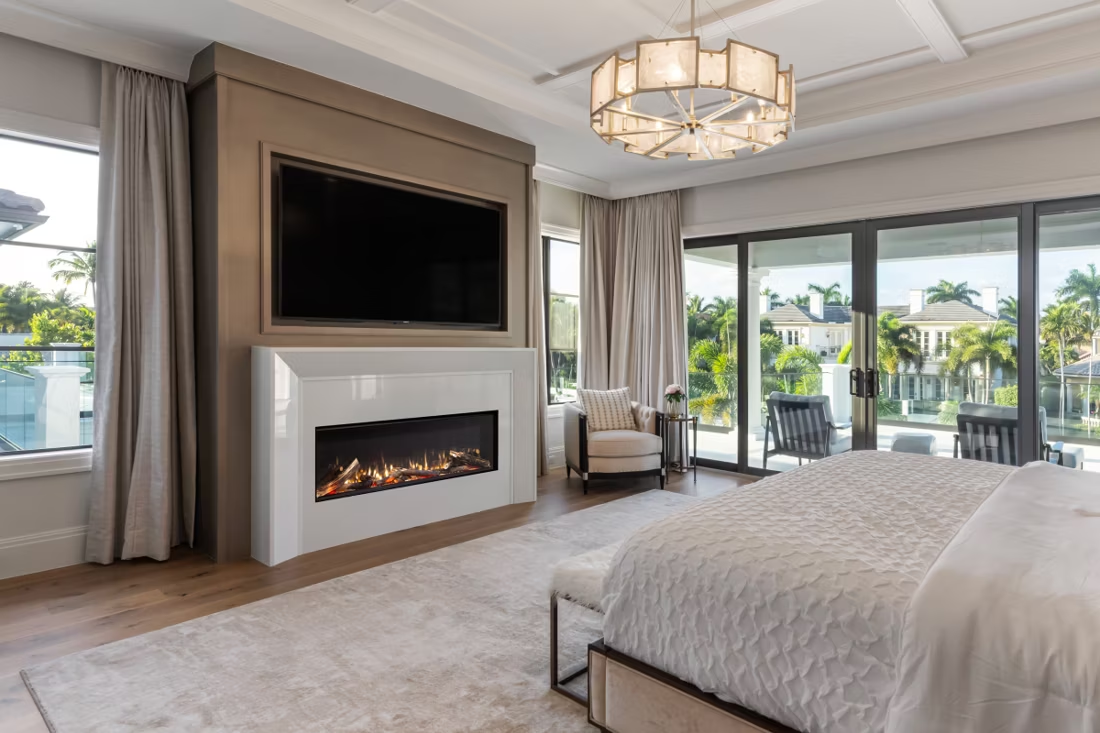
Yes—with an asterisk. Fireplaces are hot and TVs don't like heat. Either put a mantel between them to deflect rising warmth, or choose a fireplace with heat-management technology that creates a cool zone on the wall above—the wall stays around 125 degrees, barely warm, while the room still gets full heat. If you like clean lines and don't want a mantel, heat management is the answer.
How much should I budget for a fireplace?
For an average home—covering the fireplace, the vent pipe, and basic installation—a budget between $3,900 and $5,500 gives you a lot of options across wood, gas, and pellet. By the time you add finish work, gas line, and electrical, the average complete installation lands between $5,000 and $12,000 all-in. In a remodel or new build, a good rule is to put about 2.5% of the total project cost toward the fireplace.
Can a fireplace actually lower my heating bill?
Yes—by creating a comfort zone. A furnace heats every square foot of the house just to warm the one room you're in; a gas fireplace on low burns roughly a sixth of the gas a typical furnace does. Set the furnace around 55–60 degrees as a baseline, then heat the rooms your family actually uses. Families who heat this way commonly save $20–$60 a month.
Find your electric fireplace in Anderson County.
Tell us a bit about your home and we'll match you with the right electric fireplace or insert—plus a free Project Guide & Parts List and a trusted local dealer to handle the install.
Find Your Fireplace →