
Steady heat for Wright County's long, cold winters.
With average winter lows near 6°F and a long, demanding heating season, Wright County homes need heat they can count on. Find the right gas fireplace or insert and get matched with a trusted local dealer.
Every Project Starts From One of These Five Situations
Reliable warmth without a woodlot.
Wright County is corn and soybean country in north-central Iowa—flat, open farmland stretching between Clarion, Belmond, Eagle Grove, Goldfield, and Dows, with few large tracts of forest and no national forest land nearby. Winters here run cold and exposed: a heating season on par with Minneapolis for sustained cold and average lows around 6°F, and open prairie wind makes homes lose heat faster than the temperature alone would suggest.
Because the county is farmland rather than timber country, gas has become the default choice for reliable, hands-off heat. Towns like Clarion, Belmond, and Eagle Grove have natural gas service through providers such as Alliant Energy, while most rural farmsteads outside city limits already run on propane for grain drying, farm equipment, or backup generators—making a propane-fueled gas fireplace a natural fit rather than a new system to maintain. Either way, a gas fireplace delivers instant, even heat during the kind of sustained cold snaps and ground blizzards that are routine here, without stacking wood or hauling fuel.
Three steps. No salesperson until you're ready.
Tell us about your project
Your zip code, your situation, and the fuel you're leaning toward—or let the answers point you to one.
See what's actually available
The brands dealers within 100 miles genuinely carry—real options, never a catalog mirage.
Get your dealer & Project Guide
A trusted local dealer, plus the free Project Guide & Parts List that names every component of the job.
Frequently Asked Questions
How much does a gas fireplace installation cost in Wright County?
Costs depend heavily on your starting point. Converting an existing wood-burning fireplace to a direct-vent gas insert—using the chimney you already have with a liner—is typically the least expensive route. Installing a new built-in fireplace or freestanding stove in a room with no existing gas line or chimney costs more, since it involves running gas piping and installing venting through a wall or roof. For rural Wright County homes already served by a propane tank, tying into existing service is usually simpler and cheaper than a home that needs new natural gas line extension from the street. A local dealer will walk your home and give you a firm number after seeing the venting path and gas access.
Can I convert my existing wood fireplace to gas?
Yes, and it's a common project for older farmhouses in Wright County that were built with a wood-burning masonry fireplace decades ago. A gas insert slides into the existing firebox and uses a stainless liner run up the current chimney, so you keep the look of the fireplace while gaining push-button heat. Whether you run it on natural gas or propane depends on what's already at the house—many rural properties already have a propane tank in place for other uses, which simplifies the hookup considerably.
Do I need natural gas, or can I use propane?
Either works, and which one makes sense usually comes down to where you live. Inside Clarion, Belmond, and Eagle Grove, natural gas service is generally available through the local utility, and if your home already has a gas water heater or furnace, adding a fireplace is a straightforward tie-in. Outside city limits, most Wright County farmsteads run on propane—often with a tank already on the property for grain drying, backup generators, or the home's furnace. Most gas fireplace models can be set up for either fuel; your installer configures the correct orifice and regulator for whichever you have.
Will my gas fireplace still work during a power outage?
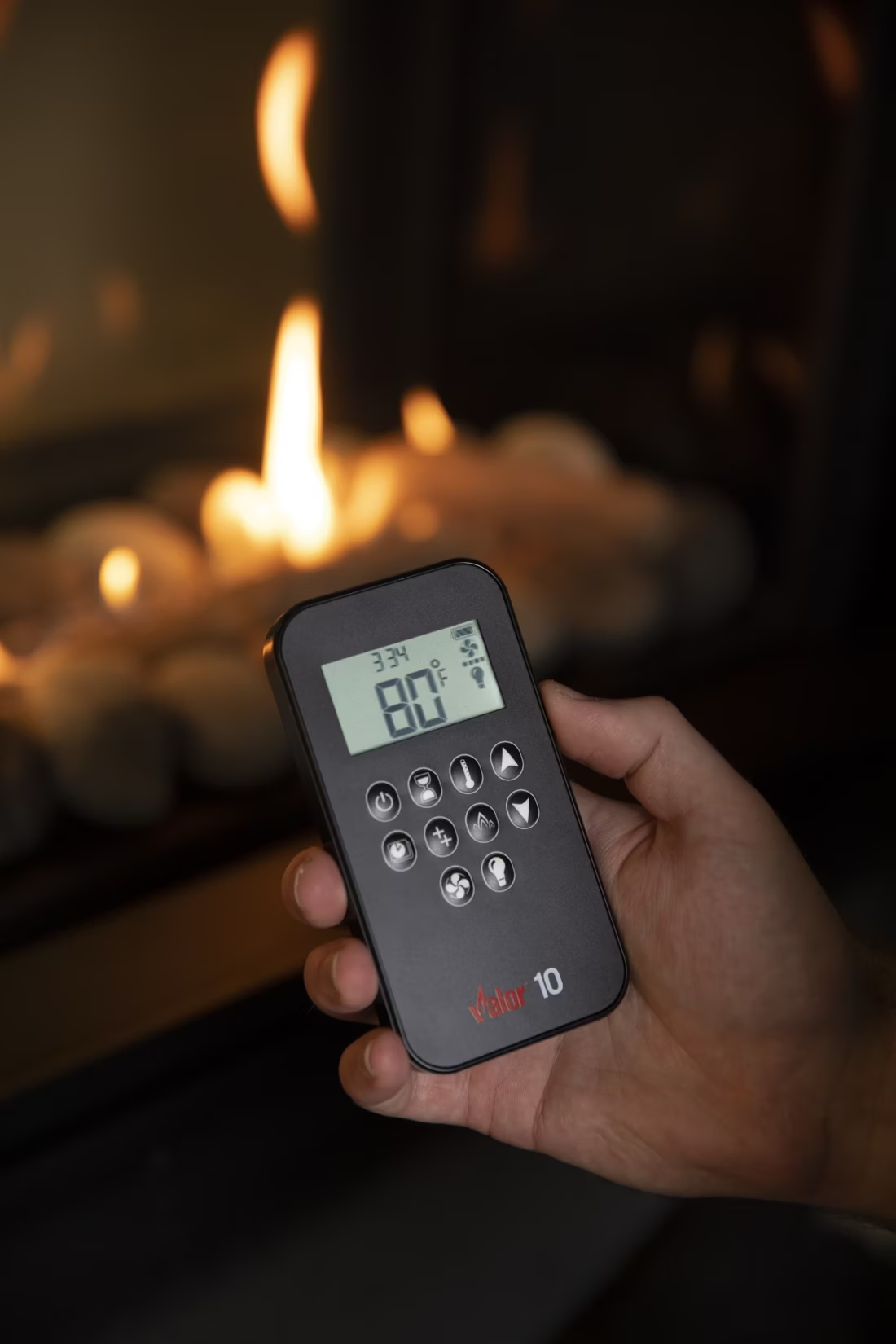
Most will, which matters in a county where winter storms and ground blizzards can knock out power for hours at a time. Fireplaces with intermittent pilot ignition (IPI) typically include a battery backup that keeps the unit lighting on demand when the power drops—just remember to swap the batteries periodically. Some manufacturers, including Valor, build units that generate their own small electrical charge from the pilot flame's thermocouple, so there's no battery to maintain at all. If backup heat during outages is a priority for your farmstead, ask your local dealer about the ignition system before you choose a model.
What's the difference between a gas fireplace, insert, and stove?
A gas fireplace is a fully built-in unit framed into a wall—the right choice for new construction or a room without an existing fireplace. A gas insert is built to slide into an existing masonry fireplace opening, turning an old wood-burning hearth into a sealed, efficient heat source using the same chimney. A gas stove is a freestanding cabinet-style unit that sits on the floor, similar in footprint to a wood stove but running on gas or propane. For Wright County's older farmhouses with an existing fireplace, an insert is usually the simplest upgrade; new builds and additions are better suited to a built-in fireplace or freestanding stove.
Do I need a permit to install a gas fireplace in Wright County?
Yes—gas fireplace installations require a building permit and gas line work performed by a licensed installer, whether you're inside city limits or on a rural property. In-town projects in places like Clarion or Belmond typically go through the city's building department, while rural addresses fall under the Wright County Zoning Administrator's office. A licensed hearth dealer will usually handle the permit application and coordinate the gas-fitting and inspection as part of the install, so you're not stuck coordinating separate trades yourself.
What's the difference between vented and vent-free gas fireplaces?
Vented (direct-vent) gas fireplaces draw combustion air from outside and exhaust it back outside through sealed venting—they're the standard, code-compliant choice almost everywhere, including Wright County. Vent-free units burn gas directly into the room air with no external venting; they're legal in Iowa but come with strict room-size and ventilation requirements, since they release some combustion byproducts indoors. For well-sealed modern farmhouses and newer builds around the county, direct-vent units are generally the safer, more universally recommended option, and they hold up better against the moisture and drafts that come with older Wright County homes.
How often should a gas fireplace be serviced?
Plan on an annual inspection, ideally before the heating season ramps up in the fall. A technician checks the burner, pilot assembly, venting, and gas connections, and cleans the glass and interior. It's a shorter visit than a wood-stove chimney sweep, but it matters just as much for safety and for keeping the unit running efficiently through a Wright County winter that can stretch from October well into April.
Why isn't wood heat more common in Wright County if winters are so cold?
It comes down to geography rather than the cold. Wright County is farmland—corn and soybean fields with scattered woodlots of oak, hickory, walnut, and maple along creeks and river bottoms, but no national forest and no real cutting-permit infrastructure the way you'd find in a timbered region. Without an accessible, affordable wood supply, most homeowners here rely on gas or propane instead, and wood stoves tend to show up only in the handful of properties with their own established woodlot. Gas fills the role wood plays elsewhere: dependable heat that doesn't depend on hauling and stacking fuel.
Can I put a TV above my fireplace?
Yes—with an asterisk. Fireplaces are hot and TVs don't like heat. Either put a mantel between them to deflect rising warmth, or choose a fireplace with heat-management technology that creates a cool zone on the wall above—the wall stays around 125 degrees, barely warm, while the room still gets full heat. If you like clean lines and don't want a mantel, heat management is the answer.
Why is my open fireplace making my house colder?
Open fireplaces suck—literally. As the fire burns, it consumes air your furnace already paid to heat and pulls it out through the chimney, so the house is actually colder after the fire goes out than before you lit it. An insert fixes this: it seals the chimney, puts fixed glass across the front, and turns that hole in your house into a real heat source.
How much should I budget for a fireplace?
For an average home—covering the fireplace, the vent pipe, and basic installation—a budget between $3,900 and $5,500 gives you a lot of options across wood, gas, and pellet. By the time you add finish work, gas line, and electrical, the average complete installation lands between $5,000 and $12,000 all-in. In a remodel or new build, a good rule is to put about 2.5% of the total project cost toward the fireplace.
Should the dealer who sells my fireplace also install it?
Ideally, yes. A fireplace project involves vent pipe, gas line, electrical, and often tile or stone. Hire three or four separate trades and you own the liability and the game of telephone between them. One company selling and installing means one accountable party, start to finish—ask about factory training, on-time completion records, and what happens if an inspection fails.
Find your gas fireplace in Wright County.
Tell us about your home and heating goals, and we'll match you with a trusted local dealer and send over a free Project Guide & Parts List—the exact parts, vent kit, and recommended installer for your Wright County gas fireplace project.
Find Your Fireplace →