
Steady heat for Windsor Heights' long Iowa winters.
With winters on par with Madison, Wisconsin and lows averaging 14°F, this Polk County suburb runs a real heating season. I'll match you with a trusted local dealer who knows the gas line work, the venting, and what's actually available here.
Every Project Starts From One of These Five Situations
Built for a six-month heating season on a small-lot suburb.
Windsor Heights sits at 876 feet inside the Des Moines metro, and its winters are no joke: an average low of 14°F and a long, demanding heating season put it in the same cold-climate bracket as Madison, Wisconsin, not the milder swaths of the Midwest. Unlike some western cities, there's no non-attainment status or winter inversion concern here—Iowa's air quality gives homeowners more flexibility in how they heat without worrying about curtailment days. What Windsor Heights doesn't have is space: it's one of the most densely built small cities in the state, under a square mile with older post-war ranch homes on tight lots, which is part of why wood and pellet appliances see little demand locally despite the cold. Cordwood storage, delivery access, and any nearby public land for cutting permits just aren't part of daily life in a suburb this compact.
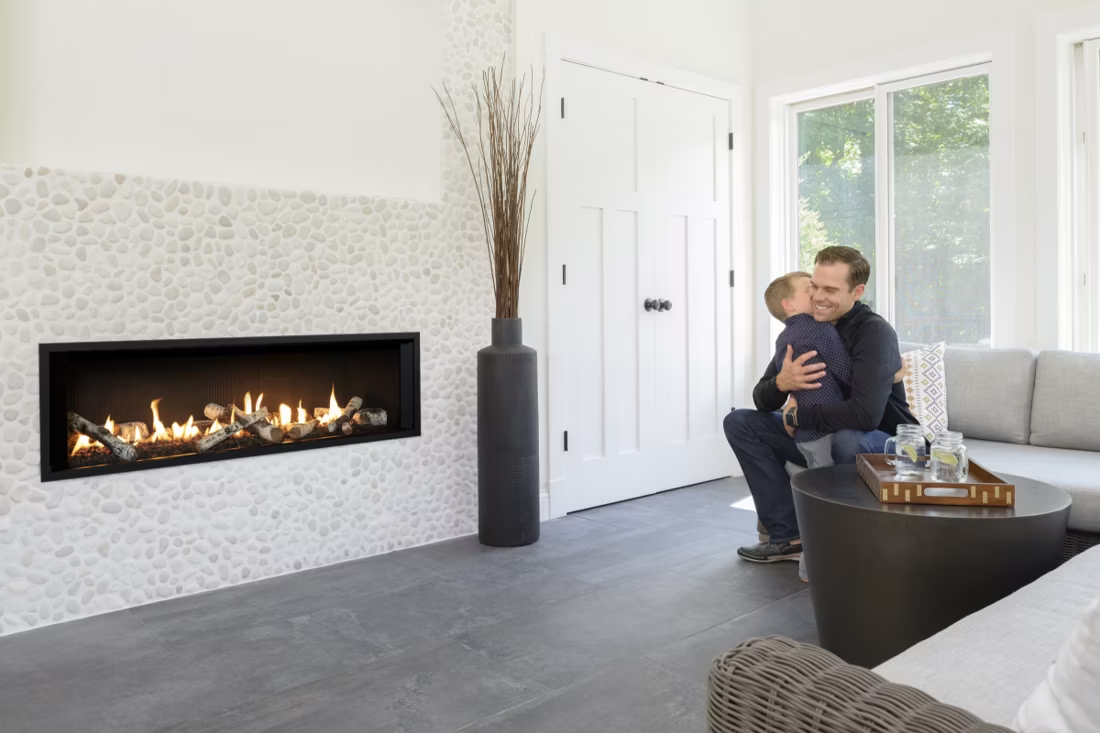
Natural gas service from MidAmerican Energy reaches essentially every address in Windsor Heights, which is the main reason gas has become the default heating and supplemental-heat choice here rather than propane or wood. A direct-vent gas fireplace or insert gives a household real, on-demand heat that doesn't need a woodpile or hopper, works as zone heating alongside a furnace during the coldest stretches of a long, demanding winter, and—with the right ignition system—can keep running through an Iowa ice storm that knocks out power. For a lot of Windsor Heights homeowners in these older ranch-style houses, converting an existing wood-burning masonry fireplace to gas is the single most common project we see.
Three steps. No salesperson until you're ready.
Tell us about your project
Your zip code, your situation, and the fuel you're leaning toward—or let the answers point you to one.
See what's actually available
The brands dealers within 100 miles genuinely carry—real options, never a catalog mirage.
Get your dealer & Project Guide
A trusted local dealer, plus the free Project Guide & Parts List that names every component of the job.
Frequently Asked Questions
How much does a gas fireplace installation cost in Windsor Heights?
Most projects run $3,800 to $9,500. An insert going into an existing masonry firebox—common in Windsor Heights' older ranch homes near 73rd Street and University Avenue—with a gas line already nearby lands toward the lower end. A new direct-vent fireplace for a remodel, requiring fresh gas line work from your MidAmerican Energy service and venting through an exterior wall, runs toward the top of that range. A local dealer will walk your specific house before giving a firm number.
Can I convert my existing wood-burning fireplace to gas?
Yes, and it's the most common gas project in Windsor Heights. Because the city is built out on small lots with little room to store or season cordwood—oak, hickory, maple, and walnut are the species that grow regionally, but few homeowners here actually burn them—a lot of original masonry fireboxes from the city's postwar ranch-home era sit unused. A gas insert with a stainless liner run through the existing chimney typically solves that in a single visit, usually for $3,800 to $8,000 depending on gas line distance from your meter.
Do I need propane, or does natural gas reach my address?
Almost every home in Windsor Heights is on natural gas through MidAmerican Energy, since the city sits fully inside the built-out Des Moines metro rather than out in rural Polk County. That makes this one of the easier markets in Iowa for a gas fireplace: if you already have gas for your furnace or water heater, tapping a line for a fireplace is usually straightforward, and propane tanks are rarely necessary here the way they are in outlying farm areas.
Will my gas fireplace still work if the power goes out?
Most will, which is worth planning for given how Iowa ice storms periodically take out power across Polk County in January and February. Units with IPI (intermittent pilot ignition) run their control board and pilot on AA battery backup that kicks in the moment the power drops. Valor fireplaces skip the battery question entirely—their pilot's thermocouple generates the small amount of electricity the valve needs. Ask your dealer which system is on any model you're considering if backup heat during an outage matters to you.
What's the difference between a gas fireplace, insert, and stove?
A gas fireplace is a built-in unit framed into a wall, typical in newer construction or a remodel. A gas insert fits inside an existing masonry firebox, which describes a large share of Windsor Heights' older homes built when open wood fireplaces were standard. A gas stove is freestanding on a hearth pad, similar in footprint to a wood stove but running off your gas line instead of cordwood. For most Windsor Heights homeowners with an existing chimney, an insert is the simplest and least invasive upgrade.
Do I need a permit to install a gas fireplace in Windsor Heights?
Yes. You'll need a building permit through the City of Windsor Heights, and because gas fireplaces require running or tapping a gas line, a separate mechanical/gas permit pulled by a licensed gas-fitter is standard practice too. Most established hearth dealers serving the Des Moines metro coordinate both permits and the final inspection as part of the installation, so you're not managing two separate trades on your own.
Should I choose a vented or vent-free gas fireplace?
Vented, direct-vent units draw combustion air from outside and exhaust it back outside through sealed pipe—they're the safer option and work in any room size. Vent-free units are legal in Iowa but come with minimum room-volume requirements and aren't recommended for tightly sealed, energy-efficient homes, which describes a good number of Windsor Heights' smaller, well-insulated houses on compact lots. Most local dealers steer homeowners here toward direct-vent for that reason, even though the city has no air-quality restrictions driving the decision.
How often does a gas fireplace need to be serviced?
Plan on an annual inspection, ideally in September or October before the coldest stretch of the season sets in. A technician checks the burner, pilot assembly, gas connections, and venting, and cleans the glass—a lighter lift than a wood chimney sweep. Expect to pay roughly $150 to $250 for a standard visit. Given how many hours a day a fireplace runs through a long, demanding winter here, skipping this is how homeowners end up with an ignition failure on the coldest night of the year.
Gas vs. wood vs. electric—what actually makes sense in Windsor Heights?
Wood heat is genuinely uncommon here—Windsor Heights' small lots, dense post-war housing stock, and lack of any nearby public land for cutting permits mean almost nobody burns oak or hickory for daily heat, even with a cold 14°F average winter low. Electric fireplaces from Interstate Power and Light or MidAmerican Energy territory are popular for supplemental, zone-style ambiance in a bedroom or basement, but at typical residential rates they're not sized to carry real heating load through a six-month season. Gas is the practical middle ground: on-demand, sized to genuinely heat a room, and served by MidAmerican Energy's gas network across nearly the entire city.
Why is a fireplace insert so efficient?
An insert does two things: it seals the chimney completely, so you stop losing air you already paid to heat, and it radiates warmth into the room through the firebox and glass. Most add a heat-exchange fan that pulls cool room air underneath, wraps it around the hot firebox, and pushes it back out warm. Your home is more efficient before you've even lit the first fire.
Why is my open fireplace making my house colder?
Open fireplaces suck—literally. As the fire burns, it consumes air your furnace already paid to heat and pulls it out through the chimney, so the house is actually colder after the fire goes out than before you lit it. An insert fixes this: it seals the chimney, puts fixed glass across the front, and turns that hole in your house into a real heat source.
Can I install a fireplace myself?
If you're putting a fire in your house on purpose, it's best to work with an expert. Unless you're genuinely experienced in framing, gas line, vent pipe, and the national code on clearances to combustibles, have a professional do it—and ideally the same company that sells you the fireplace, so warranty, service, and liability all live under one roof.
Does a fireplace add value to my home?
On average, a fireplace adds back to the home about the same amount you spent installing it. Add the monthly savings from heating the rooms you actually use instead of the whole house—often hundreds of dollars a year—and the value case is strong before you even count what a fire does for how your family uses the room.
Nearby Dealers
Hearth shops serving Windsor Heights and the surrounding area. Every listing shows whether it is a WhyFire partner, a dealer we have verified as authorized for the brands we recommend, or a local business carrying hearth products. No manufacturer pays for placement. How we verify dealers →
Fireplace Superstore
Kohles And Bach
Fireplace Stone & Patio - Waukee
Metro Heating & Cooling
Get your free Project Guide & Parts List for a gas fireplace in Windsor Heights.
Tell me about your home and your gas service, and I'll match you with a trusted local dealer and send a free Project Guide & Parts List with the exact vent kit and parts your Windsor Heights project needs.
Find Your Fireplace →