
Instant Warmth for Waukee's Coldest Nights.
Gas heat built for Dallas County's sub-zero winters. Find the right fireplace, insert, or stove and get matched with a trusted local dealer near Waukee.
Every Project Starts From One of These Five Situations
Built new, wired for gas from day one.
Waukee sits in Dallas County's flat, open farmland just west of Des Moines, in climate zone 5A with a heating season comparable to Madison, Wisconsin, and average winter lows around 13°F—cold in the same range as Madison, Wisconsin. But unlike a lot of Midwest towns with old timber stands and a wood-heat tradition, Waukee is one of the fastest-growing communities in the Des Moines metro, and its housing stock reflects that: block after block of homes built in the last two decades, almost all of them pre-plumbed for natural gas rather than built around a masonry chimney.
That's why gas is the standard hearth fuel here. MidAmerican Energy runs natural gas service throughout most of Waukee, and builders routinely install direct-vent gas fireplaces as a standard feature in new construction. For electric-heat comparisons, it's worth knowing that Waukee's two electric providers charge very different residential rates—MidAmerican customers pay around 11 cents per kWh, while Interstate Power and Light (Alliant Energy) customers pay closer to 18 cents—a gap that matters when you're weighing a gas unit against an electric fireplace for supplemental heat. Either way, a properly sized gas fireplace gives you real, instant heat at the flip of a switch, with no wood to split, haul, or stack in a county with almost no public timberland to cut it from.
Three steps. No salesperson until you're ready.
Tell us about your project
Your zip code, your situation, and the fuel you're leaning toward—or let the answers point you to one.
See what's actually available
The brands dealers within 100 miles genuinely carry—real options, never a catalog mirage.
Get your dealer & Project Guide
A trusted local dealer, plus the free Project Guide & Parts List that names every component of the job.
Frequently Asked Questions
How much does a gas fireplace installation cost in Waukee?
Most Waukee installations run somewhere between $3,500 and $9,000. On the low end, that's a direct-vent gas insert or a builder-grade fireplace being swapped for a nicer unit where a gas line already exists—common in newer subdivisions where the house was framed with gas in mind. On the higher end, you're looking at a full built-in unit for a remodel or an addition, where new gas line runs, framing, and venting through an exterior wall all have to happen from scratch. A local dealer will walk your home and give you a firm number rather than a phone-quote guess.
Can I convert my existing wood fireplace to gas in Waukee?
If your home has an older masonry fireplace—more common in Waukee's original downtown core than in the newer subdivisions ringing the city—yes, a gas insert is a straightforward conversion. The installer runs a liner up your existing chimney and sets a sealed gas insert into the firebox. Because so much of Waukee's housing is newer construction with prefab direct-vent boxes rather than true masonry chimneys, this project is less common here than in older Iowa river towns, but it's still routine work for a certified local dealer when the fireplace is there to convert.
Is my home on natural gas, or will I need propane?
The large majority of homes inside Waukee city limits are served by natural gas through MidAmerican Energy, so if your furnace or water heater already runs on gas, adding a fireplace is a simple tie-in. Some newer developments on the edge of town or rural pockets of Dallas County outside the utility's service area rely on propane instead, with a tank supplied by a local propane company. Either fuel works in most gas fireplace models—your installer just sets the correct orifice and regulator for whichever you have.
Will a gas fireplace still work if the power goes out?
Most direct-vent gas fireplaces with intermittent pilot ignition (IPI) include a battery backup that keeps the unit lighting normally when the grid drops—worth having given how ice storms and high winds can knock out power in this part of Iowa. Just keep fresh batteries in the unit; it's the one thing people forget until they need it. A few brands, notably Valor, take it further and generate their own small electrical charge off the pilot's thermocouple, so the fireplace never depends on batteries at all. Ask your local dealer which ignition system is in the model you're considering.
Fireplace, insert, or stove—which fits a Waukee home?
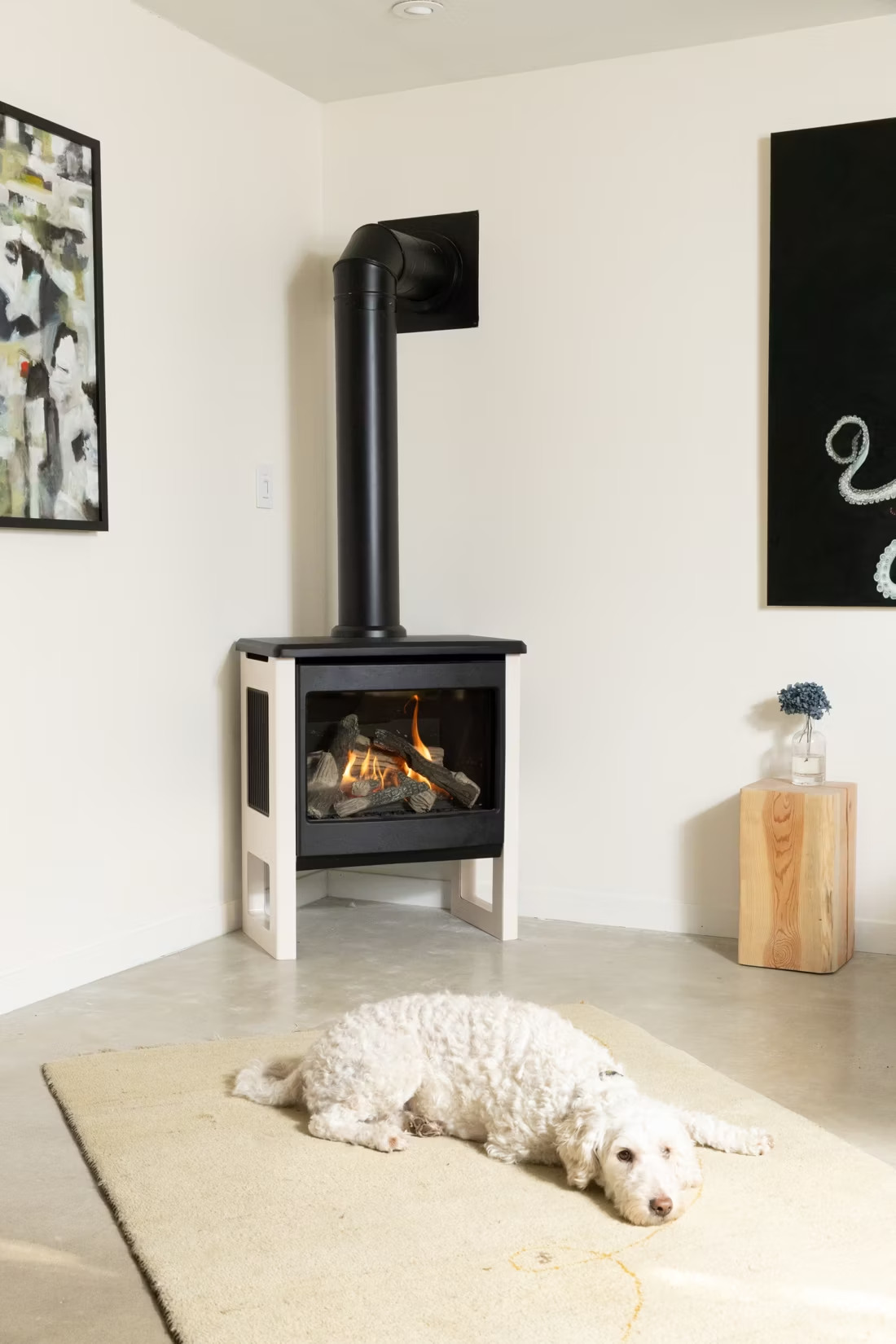
A built-in gas fireplace is the default in Waukee's newer subdivisions, since most homes were framed with a fireplace chase already in place—this is what a builder installs and what most owners upgrade. A gas insert only makes sense if you have an existing masonry fireplace to fit it into, which is more common in Waukee's older pockets near downtown. A freestanding gas stove is the least common of the three here, usually chosen for a room addition or a basement finish where there's no existing chase or chimney. A local retailer can look at your framing and tell you which option actually fits.
Do I need a permit to install a gas fireplace in Waukee?
Yes. The City of Waukee Building Department requires a permit for new gas fireplace installations, and any new or modified gas line needs a licensed gas-fitter, which typically means a separate mechanical permit as well. Most established hearth dealers in the Des Moines metro handle both permits as part of the installation quote, so you're not left coordinating the gas line and the building inspection yourself.
Vented vs. vent-free gas fireplaces—what should I choose?
Vented (direct-vent) gas fireplaces pull combustion air from outside and exhaust it back outside through sealed pipe—they're the standard, code-friendly choice and what nearly every builder installs in Waukee's new construction. Vent-free units burn without any exterior venting and are legal in Iowa within room-size and ventilation limits, but they release some combustion byproducts into the living space. Since Waukee has no air quality non-attainment concerns and gas infrastructure is already built into most homes here, direct-vent units are the far more common and generally recommended path—vent-free tends to get reserved for spaces where running a vent line just isn't possible.
How often does a gas fireplace need to be serviced?
Plan on an annual inspection, ideally in early fall before regular use starts. A technician checks the burner, pilot assembly, venting, and gas connections, and cleans the glass and interior—a much lighter job than chimney sweeping, but just as important for safe operation. Expect to pay somewhere in the $150–$250 range for a standard annual service call from a local hearth or HVAC company that handles gas appliances.
Why isn't wood heat more common in Waukee?
It comes down to geography and housing stock, not preference. Dallas County is flat, farmed-out prairie with almost no public timberland nearby, so there's no cutting-permit system or firewood culture the way there is in forested parts of the country—even though oak, hickory, maple, and walnut do grow in Iowa's river-bottom timber. On top of that, most Waukee homes were built in the last two decades with gas already run to a prefab fireplace box, so there's rarely an existing masonry chimney to retrofit a wood stove into. A handful of owners with older homes near downtown Waukee do still burn wood, but for the vast majority of the city, gas is the practical default and electric fireplaces are the next most common alternative for supplemental rooms.
Why is a fireplace insert so efficient?
An insert does two things: it seals the chimney completely, so you stop losing air you already paid to heat, and it radiates warmth into the room through the firebox and glass. Most add a heat-exchange fan that pulls cool room air underneath, wraps it around the hot firebox, and pushes it back out warm. Your home is more efficient before you've even lit the first fire.
Why is my open fireplace making my house colder?
Open fireplaces suck—literally. As the fire burns, it consumes air your furnace already paid to heat and pulls it out through the chimney, so the house is actually colder after the fire goes out than before you lit it. An insert fixes this: it seals the chimney, puts fixed glass across the front, and turns that hole in your house into a real heat source.
Can a fireplace actually lower my heating bill?
Yes—by creating a comfort zone. A furnace heats every square foot of the house just to warm the one room you're in; a gas fireplace on low burns roughly a sixth of the gas a typical furnace does. Set the furnace around 55–60 degrees as a baseline, then heat the rooms your family actually uses. Families who heat this way commonly save $20–$60 a month.
Can I install a fireplace myself?
If you're putting a fire in your house on purpose, it's best to work with an expert. Unless you're genuinely experienced in framing, gas line, vent pipe, and the national code on clearances to combustibles, have a professional do it—and ideally the same company that sells you the fireplace, so warranty, service, and liability all live under one roof.
Nearby Dealers
Hearth shops serving Waukee and the surrounding area.
Get matched with a gas dealer in Waukee.
Tell us about your Waukee home and we'll match you with a trusted local dealer who can size the unit, pull the City of Waukee permits, and hand you a free Project Guide & Parts List—a plan for your gas fireplace project with the exact parts, including the vent kit, and our recommended local installer.
Find Your Fireplace →