
Find the right electric fireplace for your Union County home.
No venting, no gas line, no chimney—just plug-in warmth and ambiance for Creston, Afton, and every corner of Union County. Get matched with a trusted local dealer.
Every Project Starts From One of These Five Situations
Simple heat for a county that already leans on wood and gas.
Union County sits in Iowa's climate zone 5A, with a long, cold winter season and average winter lows around 11°F—a cold season on par with Madison, WI, that runs deep into the calendar. Wood heat has long history here thanks to abundant oak, hickory, maple, and walnut across the county's farmland and timber stands, and gas remains the standard choice for whole-room heating in Creston and the smaller towns. Electric fireplaces don't try to compete with either as a primary heat source—they fill a different need entirely.
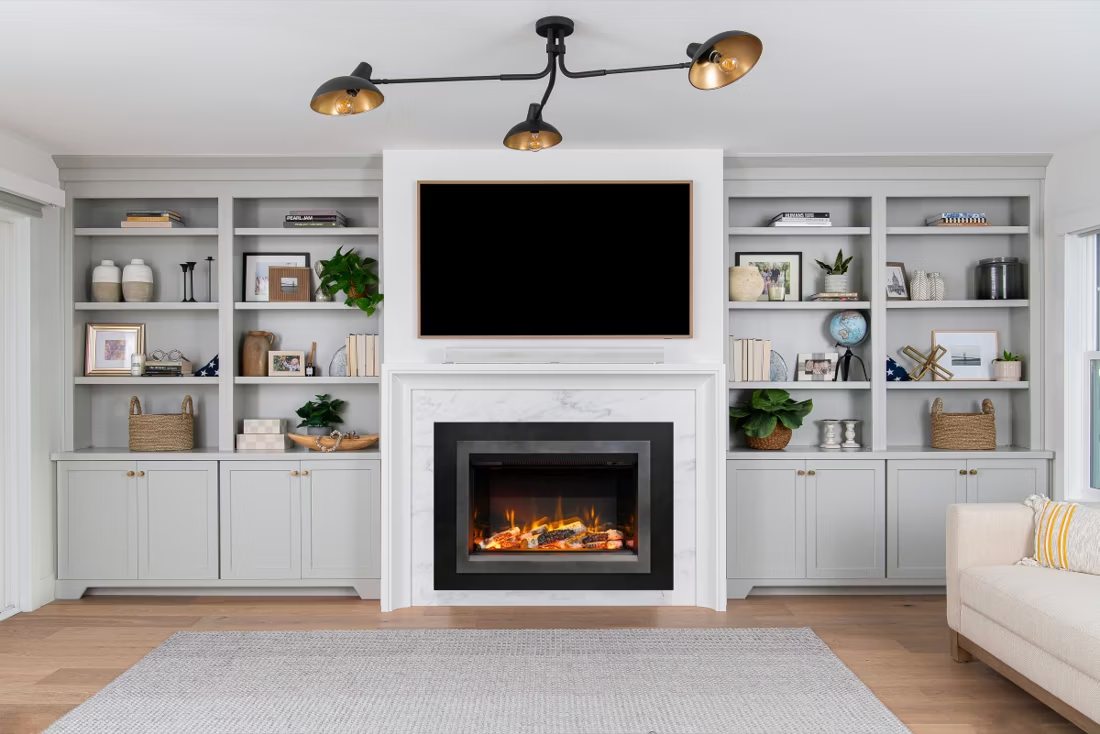
For Union County homeowners, an electric fireplace or insert is the fastest, least disruptive way to add a real-looking fire feature to a bedroom, basement, apartment, or rental where running a gas line or chimney isn't practical or allowed. There's no permit hassle, no venting to plan around, and no combustion byproducts to worry about—just a unit that plugs into a standard outlet and adds supplemental warmth to a single room while central heat (wood, gas, or forced air) handles the rest of the house through Union County's long, cold winters.
Three steps. No salesperson until you're ready.
Tell us about your project
Your zip code, your situation, and the fuel you're leaning toward—or let the answers point you to one.
See what's actually available
The brands dealers within 100 miles genuinely carry—real options, never a catalog mirage.
Get your dealer & Project Guide
A trusted local dealer, plus the free Project Guide & Parts List that names every component of the job.
Frequently Asked Questions
How much does an electric fireplace installation cost in Union County?
Most electric fireplace installations in Union County run between $400 and $1,200, and that range covers nearly everything from a plug-in freestanding unit to a built-in wall insert with basic trim carpentry. A simple insert that drops into an existing mantel surround or media console sits at the low end. Recessed wall units that require an electrician to add a dedicated outlet, or custom framing and finish work around the unit, land toward the higher end. Because there's no gas line, venting, or chimney work involved, electric installations in Union County are consistently the fastest and least expensive of the four fuel types.
Do I need a permit to install an electric fireplace in Union County?
In most cases, no. A plug-in electric fireplace that uses an existing standard outlet doesn't typically require a building permit in Union County. If your installer needs to add a new dedicated circuit or outlet—common with larger built-in wall units—that electrical work should be done by a licensed electrician and may require an electrical permit through the county. Ask your local dealer whether your specific installation calls for new wiring; if it doesn't, you're usually looking at a same-day install with no inspection wait.
Can an electric fireplace actually heat a room in Union County's winters?
An electric fireplace can meaningfully warm a single room—most units are rated for 400 to 1,500 square feet on their built-in heater—but with average winter lows around 11°F and a long, cold winter season, it isn't a substitute for whole-home heat in Union County. Think of it as supplemental warmth for a bedroom, home office, or finished basement, while your furnace, wood stove, or gas system carries the load on the coldest nights. Homeowners here typically pair an electric unit with existing central heat rather than relying on it alone.
What's the difference between an electric fireplace, insert, and stove?
An electric fireplace is usually a built-in or wall-mounted unit designed to look like a traditional fireplace, often set into a mantel surround. An electric insert is sized to slide into an existing masonry or wood-burning firebox, letting a Union County homeowner convert an old, unused fireplace into a clean, no-maintenance feature without touching the chimney. An electric stove is a freestanding cabinet-style unit that mimics a wood or pellet stove's look and can sit against nearly any wall. All three plug into standard household power, and the right choice usually comes down to whether you're filling an existing opening or starting from scratch.
How does an electric fireplace compare to wood heat in Union County?
Wood remains a serious primary or supplemental heat source in Union County, where oak, hickory, maple, and walnut are all locally available and a well-run wood stove can outlast a power outage with zero electricity. Electric fireplaces can't do that—no power means no fire, no heat, and no flame effect. What electric offers instead is zero maintenance, no ash or creosote, no chimney to sweep, and instant on-off convenience for spaces where a wood stove isn't practical, like a bedroom, condo, or rental. Most Union County homes with wood heat in the main living area still add an electric unit elsewhere in the house for supplemental ambiance and warmth.
How does an electric fireplace compare to gas in Union County?
Gas fireplaces in Union County deliver real heat output and can often run during a power outage with battery backup ignition, making them a legitimate supplemental or even primary heat source for a cold-climate county like this one. Electric fireplaces trade that heat capacity for simplicity—no gas line, no venting, no annual gas appliance service, and a flame effect that runs even when the heater itself is switched off in summer. For a Union County homeowner adding warmth to a secondary space, electric is usually the lower-cost, lower-hassle choice; for a primary heating zone, gas typically wins on raw output.
Will an electric fireplace work during a power outage?
No—electric fireplaces require household power to run, so they go dark along with the rest of your electronics during an outage. For Union County homes where winter storms can knock out power for a stretch, that's worth factoring in if you're relying on the unit for anything beyond ambiance. Homeowners who want backup heat during outages typically pair an electric fireplace with a wood stove or a gas unit with battery-backup ignition elsewhere in the house.
What size electric fireplace do I need for my Union County home?
Sizing depends mostly on the room, not the county's climate, since electric units are supplemental rather than whole-home heat. A 26- to 33-inch insert or wall unit suits a bedroom or small den, a 40- to 50-inch unit fits a standard living room wall, and larger linear units work for open-concept spaces in newer Creston-area builds. Because heat output tops out around 1,500 square feet on most models regardless of size, bigger units are usually chosen for visual scale rather than added warmth. A local dealer can walk through your room dimensions and mantel or wall opening to recommend the right fit.
Where can I buy an electric fireplace near me in Union County?
Local hearth and appliance dealers serving Union County carry a range of electric fireplaces, inserts, and stoves, and can advise on trim kits, mantel compatibility, and any electrical work needed for larger built-in units. Big-box stores sell electric fireplaces too, but a local dealer will actually measure your space, confirm the unit fits your existing opening or wall, and stand behind the install—something that matters more than it seems until a unit shows up the wrong size. Find My Fireplace matches Union County homeowners with a trusted local dealer rather than sending you to guess at dimensions online.
Do electric fireplaces actually produce heat?
Yes—most put out around 4,800–5,000 BTUs from a standard outlet, which comfortably warms a bedroom, office, or den as a comfort-zone heater. What they won't do is carry a whole house the way wood, gas, or pellet can. Think of electric as ambiance-first with honest supplemental heat: flames on with no heat in July, flames plus warmth in January.
Does an electric fireplace need a vent or chimney?
No—that's its superpower. An electric fireplace needs a wall and an outlet, period. No vent pipe, no gas line, no clearances to design around, which is why it works in bedrooms, offices, apartments, and walls where venting a gas or wood unit would be impractical or impossible. Installation is typically the simplest and least expensive of any fireplace type.
Does a fireplace add value to my home?
On average, a fireplace adds back to the home about the same amount you spent installing it. Add the monthly savings from heating the rooms you actually use instead of the whole house—often hundreds of dollars a year—and the value case is strong before you even count what a fire does for how your family uses the room.
How much should I budget for a fireplace?
For an average home—covering the fireplace, the vent pipe, and basic installation—a budget between $3,900 and $5,500 gives you a lot of options across wood, gas, and pellet. By the time you add finish work, gas line, and electrical, the average complete installation lands between $5,000 and $12,000 all-in. In a remodel or new build, a good rule is to put about 2.5% of the total project cost toward the fireplace.
Stove and Fireplace Dealers in Union County
Get your Union County electric fireplace Project Guide.
Tell us about your room and we'll match you with a trusted local Union County dealer and send over a free Project Guide & Parts List—sized right, with no guesswork.
Find Your Fireplace →