
Electric warmth for the coldest nights in Pocahontas County.
Zone heat for farmhouses, additions, and basements across Pocahontas, Laurens, Rolfe, Fonda, and the rest of the county—no venting, no gas line, no chimney. Find the right unit and connect with a trusted local dealer.
Every Project Starts From One of These Five Situations
Simple, safe heat for every room in the county.
Pocahontas County sits on the flat glacial plain of northwest Iowa's Des Moines Lobe, where open farmland offers little windbreak and winter temperatures average an 8-degree low. With a cold-climate heating load similar to Minneapolis, homes here work hard to stay warm from October through April. Many farmhouses around Pocahontas, Laurens, Rolfe, Fonda, and Palmer are older structures with additions, finished basements, or converted porches that the main furnace never quite reaches evenly.
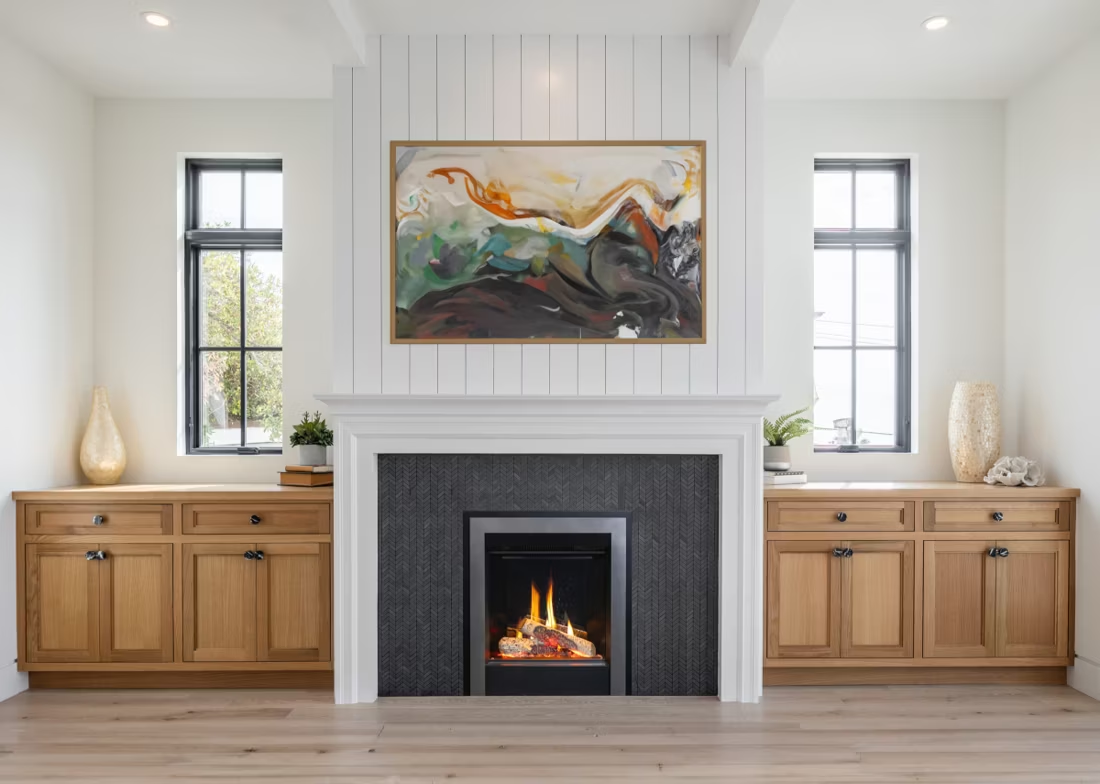
That's where electric fireplaces earn their place. There's no chimney to build, no gas line to run, and no combustion byproducts to vent—just a unit that plugs into a standard outlet or ties into a dedicated circuit for larger built-ins. For a county still largely served by rural electric cooperatives and propane delivery rather than natural gas mains, that simplicity matters. An electric fireplace insert or wall unit adds real, adjustable heat to a bedroom, sunroom, or basement rec room without touching your existing heating system—and without the maintenance that a wood stove or pellet appliance would require in a county where neither has much of a foothold anymore.
Three steps. No salesperson until you're ready.
Tell us about your project
Your zip code, your situation, and the fuel you're leaning toward—or let the answers point you to one.
See what's actually available
The brands dealers within 100 miles genuinely carry—real options, never a catalog mirage.
Get your dealer & Project Guide
A trusted local dealer, plus the free Project Guide & Parts List that names every component of the job.
Frequently Asked Questions
How much does an electric fireplace installation cost in Pocahontas County?
Most electric fireplace inserts and wall units run $300 to $1,500 for the unit itself. A basic plug-in insert that drops into an existing mantel opening is the cheapest route—no electrician needed if it's on a standard 15-amp circuit. Larger built-in units, especially ones wired to a dedicated 20-amp circuit or installed inside new framing, typically add $200 to $600 in electrician labor. Full mantel-and-surround packages installed by a local dealer can run $1,500 to $4,000 total. Because Pocahontas County homes are spread across rural farmland, expect a modest trip charge from installers based outside Pocahontas or Laurens.
Can an electric fireplace actually heat a room, or is it just for looks?
A quality electric fireplace with a built-in heater puts out roughly 4,600 to 5,100 BTU on the 1,500-watt setting—enough to noticeably warm a single room, especially a bedroom, sunroom, or finished basement that the furnace doesn't reach well. It won't replace a furnace given Pocahontas County's cold-climate heating load similar to Minneapolis and single-digit average lows, but as zone heat for one problem room, it performs. Look for a model with a thermostat and a fan-forced heater rather than a decorative-only insert if heat output matters to you.
Do I need a permit to install an electric fireplace in Pocahontas County?
In most cases, no. A plug-in insert or freestanding electric stove that runs on a standard household outlet doesn't require a permit. If you're having an electrician run a new dedicated circuit for a larger built-in unit, that electrical work typically does require a permit and inspection—check with the Pocahontas County building office before work begins. Most licensed electricians serving the county handle that paperwork as part of the job.
Will my electric fireplace work if the power goes out?
No—and this is worth planning around in a county where winter ice storms and high wind on the open plains occasionally take out power for hours or longer. Unlike a wood stove, an electric fireplace goes dark the moment the grid does. Many Pocahontas County farms already run a backup generator for well pumps and livestock equipment; if outage backup heat matters to you, factor a generator-compatible circuit into your electrical planning, or keep a propane heater as a fallback.
What's the difference between an electric insert, a wall-mount unit, and an electric stove?
An electric insert is built to slide into an existing fireplace opening or mantel surround, and it's the most common retrofit for older Pocahontas County homes with a wood-burning fireplace that's no longer used. A wall-mount unit hangs flat against a wall like a large-screen TV and works well in newer construction or additions where there's no existing fireplace. A freestanding electric stove sits on the floor and mimics the look of a wood stove without any venting requirements—a popular choice for basements and detached spaces like a finished garage or shop office.
Is electric or propane better for supplemental heat in a Pocahontas County home?
Propane heaters and fireplaces put out more heat per hour and can double as backup heat during a power outage if the unit has a standing pilot, which matters given how much of the county relies on propane delivery rather than natural gas mains. Electric fireplaces are simpler to install, cost less upfront, and require zero venting or fuel storage—but they depend entirely on grid power and cost more to run for equivalent heat output at typical Iowa electric rates. For a room you use daily and want warm without hassle, electric usually wins. For a workshop or space where you might lose power in a January storm, propane holds an edge.
What happened to wood stoves and pellet stoves in Pocahontas County?
They haven't disappeared entirely—plenty of farms still split oak, hickory, and walnut for an old stove used as backup heat—but new wood and pellet stove installations have become uncommon here. Without the timber-permit culture or wildfire concerns that keep wood heat mainstream in other parts of the country, most Pocahontas County homeowners upgrading their heating today choose propane, natural gas where it's available, or electric. If you're weighing options for a specific room, an electric fireplace is usually the simpler and more available path locally.
How long does an electric fireplace last, and what maintenance does it need?
A well-built electric fireplace typically lasts 10 to 15 years with essentially no maintenance beyond an occasional dusting of the heater vents and replacing an LED light strip eventually. There's no chimney to sweep, no gas line to inspect, and no ash to clean out—one more reason they've become a common add-on for Pocahontas County additions, basements, and bedrooms where a family wants heat and ambiance without ongoing upkeep.
Where can I see electric fireplaces in person before buying in Pocahontas County?
Because Pocahontas County's population is small—around 4,550 spread across towns like Pocahontas, Laurens, Rolfe, Fonda, and Palmer—dedicated hearth showrooms are limited locally, and most residents shop through dealers based in nearby regional hubs like Fort Dodge or Storm Lake, or order through a local electrician who installs the unit. A trusted local dealer can walk you through insert, wall-mount, and stove options and make sure the unit you choose fits your electrical setup before you buy.
Can I put a TV above my fireplace?
Yes—with an asterisk. Fireplaces are hot and TVs don't like heat. Either put a mantel between them to deflect rising warmth, or choose a fireplace with heat-management technology that creates a cool zone on the wall above—the wall stays around 125 degrees, barely warm, while the room still gets full heat. If you like clean lines and don't want a mantel, heat management is the answer.
Do electric fireplaces actually produce heat?
Yes—most put out around 4,800–5,000 BTUs from a standard outlet, which comfortably warms a bedroom, office, or den as a comfort-zone heater. What they won't do is carry a whole house the way wood, gas, or pellet can. Think of electric as ambiance-first with honest supplemental heat: flames on with no heat in July, flames plus warmth in January.
Can I install a fireplace myself?
If you're putting a fire in your house on purpose, it's best to work with an expert. Unless you're genuinely experienced in framing, gas line, vent pipe, and the national code on clearances to combustibles, have a professional do it—and ideally the same company that sells you the fireplace, so warranty, service, and liability all live under one roof.
Can a fireplace actually lower my heating bill?
Yes—by creating a comfort zone. A furnace heats every square foot of the house just to warm the one room you're in; a gas fireplace on low burns roughly a sixth of the gas a typical furnace does. Set the furnace around 55–60 degrees as a baseline, then heat the rooms your family actually uses. Families who heat this way commonly save $20–$60 a month.
Stove and Fireplace Dealers in Pocahontas County
Find your electric fireplace in Pocahontas County.
Tell us a bit about your home and we'll match you with the right electric fireplace, insert, or stove—plus a free Project Guide & Parts List with the exact parts and your recommended local dealer for your Pocahontas County project.
Find Your Fireplace →