
Real ambiance, zero venting, for Plymouth County homes.
From Le Mars to Hinton, Akron, Kingsley, and Remsen, electric fireplaces bring instant warmth to finished basements, additions, and living rooms without a flue, a gas line, or a permit headache. Find the right unit and connect with a trusted local dealer.
Every Project Starts From One of These Five Situations
Supplemental warmth for a genuinely cold county.
Plymouth County sits in the far northwest corner of Iowa along the Big Sioux River, anchored by Le Mars—the self-declared Ice Cream Capital of the World—and smaller communities like Hinton, Akron, Kingsley, Merrill, and Remsen. With 7,312 heating degree days and an average winter low of 7°F, the county's winters run closer to Minneapolis than to most of the rest of Iowa. Farmhouses and newer subdivisions alike deal with long stretches of sustained cold, and homeowners here have plenty of experience layering heat sources—a furnace for the whole house, and something else for the room that never quite feels warm enough.
That's where electric fireplaces earn their place. They don't replace a furnace in a 7,300-HDD climate—resistance heat alone is expensive to run as a primary source when it's 7 degrees outside—but as a zone heater and a focal point, they're hard to beat. No chimney, no gas line, no combustion byproducts to vent, which makes them the simplest option for a finished basement in Le Mars, a bedroom addition outside Kingsley, or a rental property in Hinton where running new gas or masonry just isn't practical. Plug-in units need nothing more than a standard outlet; built-in wall units typically call for a dedicated circuit, which is a quick job for a local electrician.
Three steps. No salesperson until you're ready.
Tell us about your project
Your zip code, your situation, and the fuel you're leaning toward—or let the answers point you to one.
See what's actually available
The brands dealers within 100 miles genuinely carry—real options, never a catalog mirage.
Get your dealer & Project Guide
A trusted local dealer, plus the free Project Guide & Parts List that names every component of the job.
Frequently Asked Questions
How much does an electric fireplace installation cost in Plymouth County?
Plug-in freestanding or mantel-style electric fireplaces generally run $300 to $1,200 including the unit, with no installation labor beyond plugging it in. Built-in wall or insert-style units cost more—typically $1,000 to $2,500 once you include the unit, wall framing or fireplace conversion, and an electrician running a dedicated 20-amp circuit if the unit draws close to 1,500 watts. Recessed units set into an existing masonry fireplace opening tend to land in the middle of that range since they reuse the existing framing. Local dealers in the Le Mars area can walk you through which tier fits your room and budget.
Do I need a permit to install an electric fireplace in Plymouth County?
A plug-in, freestanding electric fireplace generally doesn't require any permit—it's treated like any other appliance you plug into an outlet. A built-in wall unit that requires new wiring or a dedicated circuit typically does require an electrical permit, whether you're inside Le Mars city limits or in unincorporated Plymouth County. The permitting jurisdiction depends on whether you're in an incorporated town (Le Mars, Hinton, Akron, Kingsley, Merrill, Remsen) or the county itself, so it's worth confirming with your electrician before work starts—most local installers pull the permit as part of the job.
What size electric fireplace do I need for my room?
Most electric fireplace heaters are rated to comfortably supplement heat in 400 to 1,000 square feet, which covers a typical living room, finished basement, or bedroom addition common in Plymouth County homes. Larger open-concept spaces or drafty older farmhouses near Akron or Merrill may need two zones rather than relying on one unit to cover the whole area. Keep in mind that with 7,312 heating degree days, even a well-sized electric unit is meant to take the edge off a room—not replace your furnace on the coldest January nights.
Can an electric fireplace heat my whole house?
Not economically, and not in this climate. At Plymouth County's average winter low of 7°F, electric resistance heat is one of the more expensive ways to heat a whole home compared to a furnace running on natural gas or propane. Electric fireplaces are best used the way most local homeowners already use them—as a supplemental heat source for a specific room, or purely for ambiance with the heater turned off when the furnace is doing the real work. If you're trying to solve for whole-home backup heat during outages, a wood or gas appliance is a better fit since electric units stop working the moment the power does.
Will my electric fireplace work if the power goes out?
No—unlike a wood stove or a battery-backed gas fireplace, an electric fireplace has no function without grid power. Rural stretches of Plymouth County can lose power during winter storms and ice events, so if you're relying on your fireplace for backup heat rather than ambiance, electric isn't the right choice. Homeowners who want both the low-maintenance convenience of electric day-to-day and a real backup plan for outages often pair an electric unit in the main living space with a wood stove or gas appliance elsewhere in the house.
What's the difference between an electric insert, a wall-mount unit, and a mantel package?
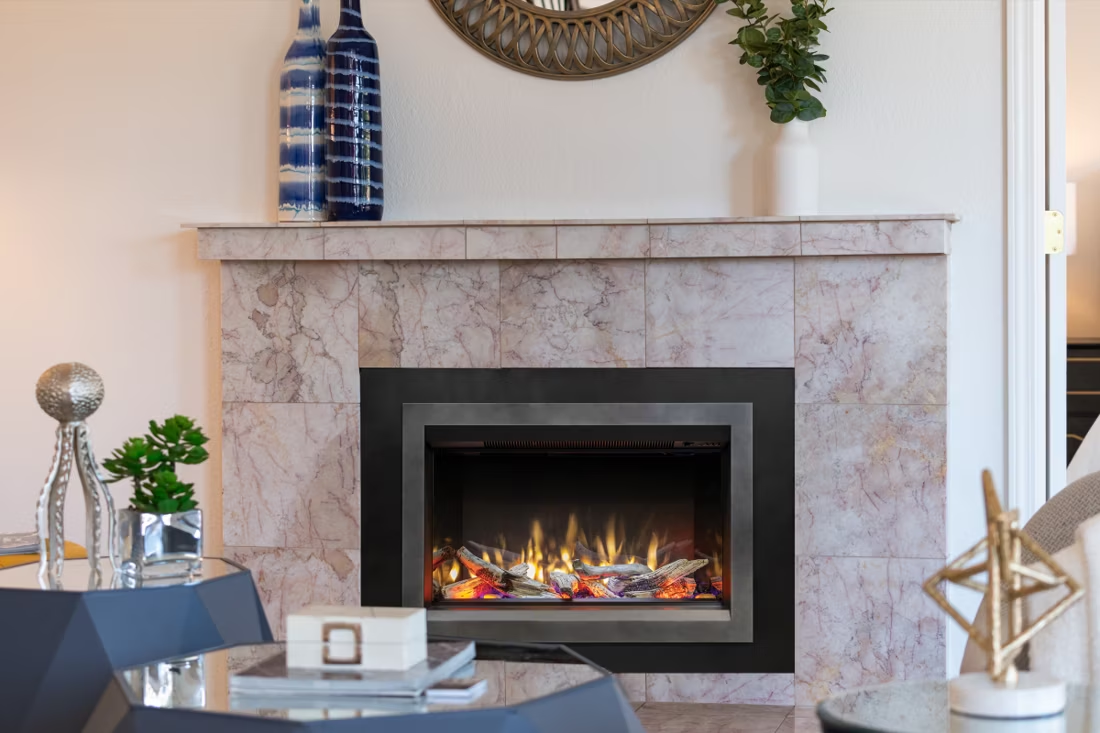
An electric insert is built to drop into an existing fireplace opening, converting a wood-burning or unused masonry fireplace into a clean, flip-of-a-switch heat source—a common project for older homes around Le Mars with existing hearths. A wall-mount unit is a slim, flat panel mounted directly on a wall like a piece of art, popular in newer construction and additions where there's no existing fireplace to work with. A mantel package pairs a freestanding or recessed electric unit with a surrounding mantel and hearth, giving you a traditional fireplace look without any masonry work. All three are available from local dealers, and which one makes sense depends mostly on whether you're converting an existing opening or starting from a bare wall.
What's the best electric fireplace for a cold Iowa winter?
Look for units with a true infrared or ceramic heating element rather than the cheapest fan-forced coil heaters—infrared and ceramic elements distribute heat more evenly across a room, which matters when you're supplementing a furnace on a sub-zero night. Most quality electric fireplaces in the 1,400 to 1,500 watt range will noticeably warm a 400 to 600 square foot room within 20 minutes. Since Plymouth County winters run cold enough that supplemental heat gets real use rather than sitting idle for decoration, it's worth spending a bit more for a unit with a stronger heating element and a thermostat that actually holds a set temperature rather than one that just cycles on high.
Do I need an electrician to install an electric fireplace?
For a plug-in freestanding or mantel unit, no—you plug it into a standard outlet and you're done. For a built-in wall unit or insert, yes: most models draw close to 1,500 watts, which is enough to warrant a dedicated 15- or 20-amp circuit rather than sharing an existing outlet with other household loads. A local electrician can run that circuit and, if needed, install a GFCI-protected outlet behind the unit—a straightforward job, but not one to skip, especially in older Plymouth County homes with dated wiring.
Electric vs. pellet—which is right for my home?
Pellet stoves, using bagged fuel from brands like Lignetics or Indeck Energy Services, burn real fire and can serve as genuine supplemental or even primary heat, but they need a vent, a hopper to refill, and electricity to run the auger and blower—so they still go down in a power outage. Electric fireplaces skip the venting and the fuel handling entirely, install almost anywhere, and cost less upfront, but they're purely a zone-heat or ambiance play in a climate with 7,312 heating degree days. For a Plymouth County homeowner who wants low-maintenance warmth in one room, electric is simpler. For someone who wants a real secondary heat source that can carry more of the load on the coldest days, pellet is worth a look from a local dealer.
Can I put a TV above my fireplace?
Yes—with an asterisk. Fireplaces are hot and TVs don't like heat. Either put a mantel between them to deflect rising warmth, or choose a fireplace with heat-management technology that creates a cool zone on the wall above—the wall stays around 125 degrees, barely warm, while the room still gets full heat. If you like clean lines and don't want a mantel, heat management is the answer.
Does an electric fireplace need a vent or chimney?
No—that's its superpower. An electric fireplace needs a wall and an outlet, period. No vent pipe, no gas line, no clearances to design around, which is why it works in bedrooms, offices, apartments, and walls where venting a gas or wood unit would be impractical or impossible. Installation is typically the simplest and least expensive of any fireplace type.
What is an in-home preview and do I need one?
It's a visit where a hearth professional measures your space, confirms the model you picked actually works in your home, and walks the specs—framing, gas line, venting, finish work—before anything is ordered. Some details you just can't know until you see the house. Never make a down payment without one; it's the single most-skipped step that burns buyers.
Does a fireplace add value to my home?
On average, a fireplace adds back to the home about the same amount you spent installing it. Add the monthly savings from heating the rooms you actually use instead of the whole house—often hundreds of dollars a year—and the value case is strong before you even count what a fire does for how your family uses the room.
Find your electric fireplace in Plymouth County.
Tell us about your room and we'll match you with the right electric fireplace or insert, plus a free Project Guide & Parts List and a trusted local dealer to install it.“}
Find Your Fireplace →