
Plug-in warmth for Marshalltown's long winters.
With winters on par with Fargo, ND and winter lows averaging 9°F, Marshalltown homes need real supplemental heat. An electric fireplace delivers it without a chimney, a gas line, or a permit headache—find the right unit and connect with a trusted local dealer.
Every Project Starts From One of These Five Situations
A genuinely cold climate that doesn't require a flue.
Marshalltown sits in climate zone 5A at just under 900 feet, and its winters are no joke—a heating season on par with Fargo, ND, with average winter lows around 9°F. Central Iowa homes typically rely on a forced-air furnace as primary heat, which leaves plenty of room for an electric fireplace to do what it does best: add focused, instant warmth to a living room, bedroom, or finished basement without touching the home's combustion or venting systems.
Marshalltown is served by Interstate Power and Light Co (Alliant Energy) and Consumers Energy, with a residential rate around $0.179 per kWh—somewhat above the national average, which matters when you're budgeting for a unit that will run for hours on cold evenings. The upside is installation simplicity: no chimney, no gas line, no combustion air requirements, and in most cases no building permit at all unless an electrician is adding a dedicated circuit. That makes electric a practical fit for older Marshalltown homes with plaster walls, rental properties, condos, and anywhere a wood or gas retrofit would be impractical or overkill.
Three steps. No salesperson until you're ready.
Tell us about your project
Your zip code, your situation, and the fuel you're leaning toward—or let the answers point you to one.
See what's actually available
The brands dealers within 100 miles genuinely carry—real options, never a catalog mirage.
Get your dealer & Project Guide
A trusted local dealer, plus the free Project Guide & Parts List that names every component of the job.
Frequently Asked Questions
How much does it cost to install an electric fireplace in Marshalltown?
Costs vary widely by unit type. A basic plug-in insert or mantel package that plugs into an existing outlet can be installed for the price of the unit itself, often $300 to $1,200 with no additional labor. A built-in wall unit or a linear electric fireplace that requires a dedicated 120V or 240V circuit typically runs $1,200 to $3,000 once you include a licensed electrician's time to run new wiring—figure $150 to $400 of that for the electrical work alone. Framing or custom surround work for a built-in look adds more on top. A local dealer can give you a firm number after seeing your wall and panel setup.
Do I need a permit to install an electric fireplace in Marshalltown?
In most cases, no. A plug-in electric fireplace or insert that uses an existing standard outlet doesn't trigger a building permit because there's no venting, gas line, or structural change involved. If you're having an electrician add a dedicated circuit or hardwire a built-in unit, that electrical work typically needs to meet code and your electrician will pull any required permit through the city. This is one of the simplest fireplace projects to get approved in Marshall County precisely because there's no combustion appliance to inspect.
How much does it cost to actually run an electric fireplace at Marshalltown's electric rates?
At the local residential rate of roughly $0.179 per kWh from Interstate Power and Light or Consumers Energy, a typical 1,500-watt electric fireplace on its highest heat setting costs about 27 cents an hour to run. Used for a few hours most winter evenings—say 3 hours a night—that's roughly $16 to $18 a month. Most owners run the flame effect without heat much of the time, which draws only 30 to 100 watts and costs pennies, saving the heater setting for genuinely cold nights.
Electric fireplace vs. gas fireplace—which is right for Marshalltown?
Gas is the stronger primary or near-primary heat source for a climate this cold—a direct-vent gas insert or fireplace can put out real BTUs and keep running during a power outage with the right ignition system. Electric can't match that heat output or outage resilience, since it needs the grid to run. But electric wins on simplicity and cost of entry: no gas line, no venting, no annual combustion inspection, and it can go almost anywhere in the house. For a Marshalltown living room that already gets furnace heat and just needs ambiance plus a boost on cold nights, electric is often the easier, cheaper answer. For a room you actually want to heat independently of the furnace, gas is worth the extra investment.
Will an electric fireplace keep my house warm if the power goes out during a Marshalltown winter storm?
No—and this is the main tradeoff to understand before buying. Electric fireplaces need grid power to run both the heater and the flame effect, so during an outage they go dark along with everything else. Given Marshalltown's cold snaps and average winter lows near 9°F, homeowners who want backup heat for outages typically pair an electric fireplace for everyday ambiance with a gas fireplace, gas insert, or generator-backed furnace for actual emergency heat. If outage resilience is a top priority for your household, a gas unit with battery-backup ignition is worth discussing with a local dealer instead.
What's the difference between an electric insert, a wall-mount unit, and an electric log set?
An electric insert is built to slide into an existing masonry fireplace opening, giving you flame effect and heat without removing your current mantel or surround—a popular option for older Marshalltown homes with an unused wood-burning fireplace. A wall-mount or linear electric fireplace is a slim unit installed directly into or on a wall, often used in new construction or remodels for a modern, built-in look. An electric log set is the simplest option—decorative logs with a flame effect placed in an existing firebox, usually with little to no heat output, mainly for ambiance. Which one fits depends on whether you're starting with an existing fireplace opening or building from scratch.
How much heat can I really expect from an electric fireplace in Marshalltown's climate?
Most electric fireplaces top out around 1,500 watts, which translates to roughly 5,000 to 5,200 BTU of heat—enough to noticeably warm a single room of 300 to 400 square feet, but not enough to offset a whole-home heating load during a stretch of single-digit temperatures. Think of it as zone heat for the room you're actually sitting in, letting you turn the furnace thermostat down a degree or two elsewhere in the house, rather than a replacement for central heat.
Do electric fireplaces need any maintenance?
Very little compared to wood or gas. There's no chimney to sweep and no annual combustion safety inspection required. Basic upkeep is limited to dusting the vents and heating element, occasionally cleaning the glass front, and replacing LED flame bulbs if the unit uses them (many newer models don't need bulb replacement for years). Have an electrician check the circuit and connections if the unit is more than 10 years old or if you notice tripped breakers, but otherwise these units are close to maintenance-free.
Marshalltown has plenty of oak, hickory, maple, and walnut—why isn't wood a bigger option here?
The hardwood is real; central Iowa's timber is genuinely good burning wood. But inside Marshalltown city limits, new wood-burning fireplace and stove installations are uncommon in practice—lot sizes, insurance considerations, and the convenience of existing gas and electric service mean most in-town homeowners skip solid-fuel installs even when firewood itself is easy to come by locally. If you're on a larger rural property outside city limits and specifically want a wood stove, that's a different conversation worth having with a local dealer. For most Marshalltown homes, gas and electric are the fireplace fuels that actually get installed.
Can I put a TV above my fireplace?
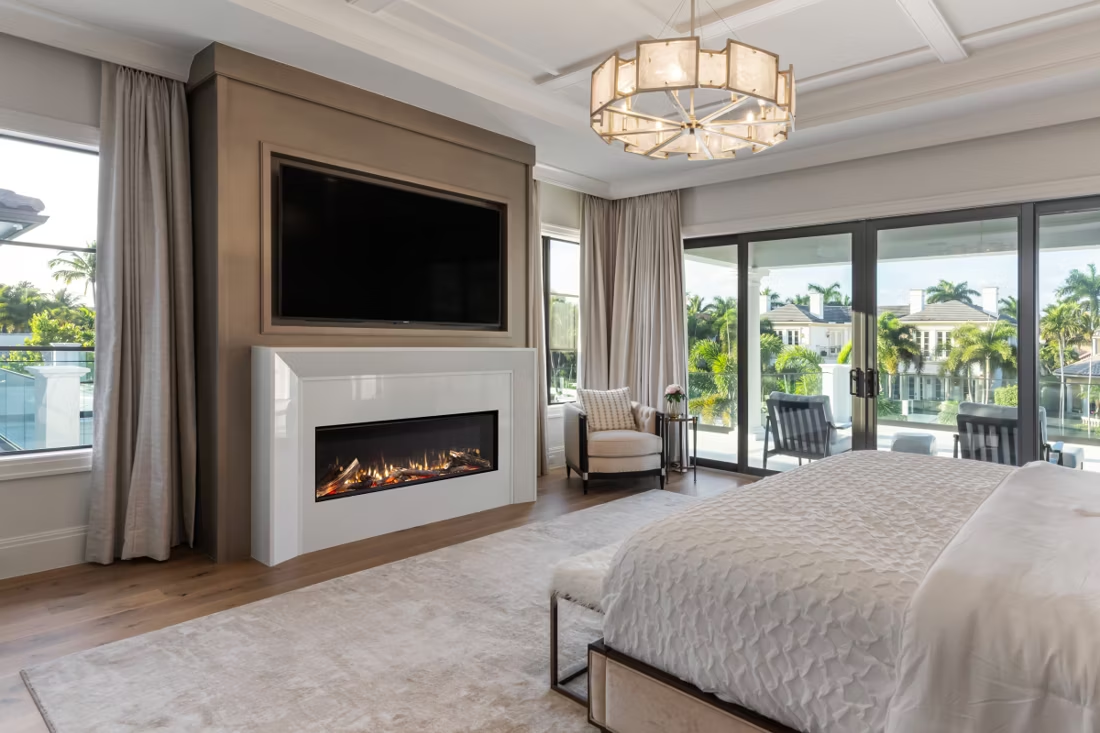
Yes—with an asterisk. Fireplaces are hot and TVs don't like heat. Either put a mantel between them to deflect rising warmth, or choose a fireplace with heat-management technology that creates a cool zone on the wall above—the wall stays around 125 degrees, barely warm, while the room still gets full heat. If you like clean lines and don't want a mantel, heat management is the answer.
Do electric fireplaces actually produce heat?
Yes—most put out around 4,800–5,000 BTUs from a standard outlet, which comfortably warms a bedroom, office, or den as a comfort-zone heater. What they won't do is carry a whole house the way wood, gas, or pellet can. Think of electric as ambiance-first with honest supplemental heat: flames on with no heat in July, flames plus warmth in January.
What is an in-home preview and do I need one?
It's a visit where a hearth professional measures your space, confirms the model you picked actually works in your home, and walks the specs—framing, gas line, venting, finish work—before anything is ordered. Some details you just can't know until you see the house. Never make a down payment without one; it's the single most-skipped step that burns buyers.
Does a fireplace add value to my home?
On average, a fireplace adds back to the home about the same amount you spent installing it. Add the monthly savings from heating the rooms you actually use instead of the whole house—often hundreds of dollars a year—and the value case is strong before you even count what a fire does for how your family uses the room.
Nearby Dealers
Hearth shops serving Marshalltown and the surrounding area.
Electric Service in Marshalltown
An electric fireplace's heater draws about 1,500 watts—pennies per hour at local rates.
Interstate Power And Light Co
Find your electric fireplace in Marshalltown.
Tell us about your room and your panel setup, and we'll match you with a trusted local dealer and send over a free Project Guide & Parts List—the exact unit, mounting or insert kit, and electrical needs for your Marshalltown home.
Find Your Fireplace →