
Electric fireplace heat, without the chimney or the gas line.
From basement remodels in Knoxville to new construction near Pella, electric fireplaces give Marion County homeowners real ambiance and zone heat without venting, gas lines, or firewood. Find the right unit and get matched with a trusted local dealer.
Every Project Starts From One of These Five Situations
The easiest fireplace upgrade in Marion County.
Marion County sits in climate zone 5A, with an average winter low around 12°F and a winter on par with Madison, Wisconsin, and cold enough that most homes here still lean on a furnace, wood stove, or propane system for primary heat. Electric fireplaces don't compete with that; they fill a different job. In older farmhouses scattered through the county, in split-level ranches in Knoxville, and in the newer builds going up around Pella as Vermeer and Pella Corporation keep the local economy growing, electric units solve the same problem: a room that never quite feels finished without a fireplace, but doesn't have a chimney and isn't worth running new gas line to.
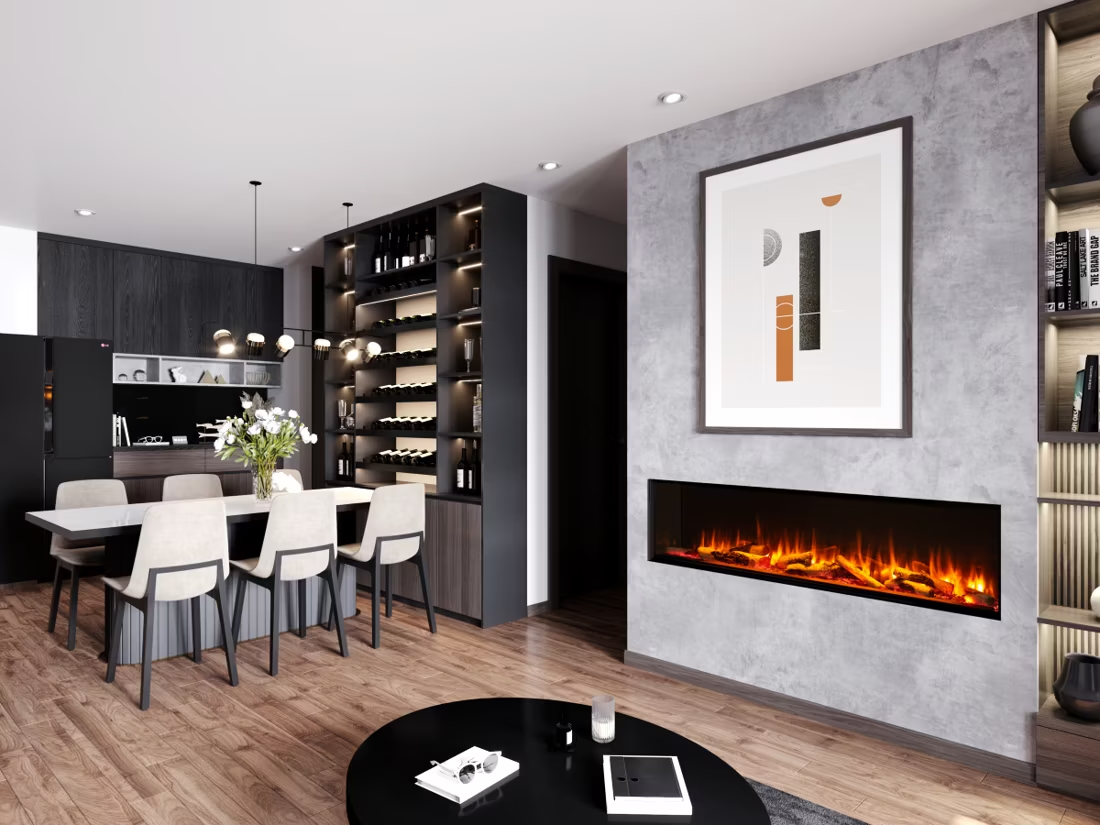
Because electric fireplaces plug into a standard outlet or run off a dedicated circuit, there's no masonry work, no Class A pipe, and no venting to plan around. A finished basement in Pleasantville, a converted den in Bussey, or a fourth wall in a Pella addition can go from bare drywall to a working fireplace in a day. The tradeoff is honest: electric resistance heat is more expensive per BTU than the propane and wood many Marion County homes already burn, so these units are best understood as supplemental zone heat and a focal point—not a replacement for the furnace on a 12-degree January morning.
Three steps. No salesperson until you're ready.
Tell us about your project
Your zip code, your situation, and the fuel you're leaning toward—or let the answers point you to one.
See what's actually available
The brands dealers within 100 miles genuinely carry—real options, never a catalog mirage.
Get your dealer & Project Guide
A trusted local dealer, plus the free Project Guide & Parts List that names every component of the job.
Frequently Asked Questions
How much does an electric fireplace installation cost in Marion County?
A plug-in electric insert or wall-mounted unit that uses an existing outlet typically runs $300 to $1,500 installed, including trim and mounting. A built-in electric fireplace that requires a new dedicated 120V or 240V circuit—common when a homeowner wants it centered in a new wall rather than near an existing outlet—usually runs $1,500 to $3,500 once an electrician is involved. Costs move toward the higher end for custom surrounds, recessed wall installations, or larger units sized for open-concept living rooms common in newer Pella construction.
Do I need a permit to install an electric fireplace in Marion County?
In most cases, no—a plug-in electric fireplace or insert that uses an existing standard outlet doesn't require a permit because no new wiring is involved. If your installation calls for a new dedicated circuit, a recessed electrical box, or any panel work, that portion of the job needs an electrical permit, typically pulled through the city (Knoxville, Pella, or Pleasantville building department) or through Marion County's building office if the property is unincorporated. A licensed electrician handling the circuit work will usually pull the permit as part of the job.
Will an electric fireplace heat my whole house?
No—and any dealer being straight with you will say the same. At Marion County's average winter low of 12°F and a winter on par with Madison, Wisconsin, electric resistance heat simply costs more per BTU than the propane, natural gas, or wood most homes here rely on for primary heat. Electric fireplaces are best used as zone heat for a single room—say, keeping a finished basement or sunroom comfortable without running the furnace harder—plus the visual effect of a real fire. If you're hoping to offset a whole floor's heating bill, a wood insert or gas unit will do more work per dollar.
Electric vs. wood vs. gas—which fits my Marion County home?
Wood remains a strong fit here—oak, hickory, maple, and walnut are all common locally, and a wood stove or insert works even when the power's out, which matters during the ice storms that occasionally roll through central Iowa. Gas, running on propane in most of the rural county or natural gas within Knoxville and Pella city limits, gives instant heat without wood handling. Electric is the fit when venting isn't practical or wanted at all—a condo, an apartment, a rental, or a room where running a chimney or gas line isn't worth the cost. The real tradeoff: electric needs power to run, so unlike a wood stove it won't help during an outage.
What's the difference between an electric insert, electric stove, and electric mantel package?
An electric insert is built to slide into an existing fireplace opening—a common choice if you're converting an old masonry fireplace that's rarely used into something with a flip-of-a-switch flame. An electric stove is a freestanding cabinet-style unit that sits on the floor, mimicking the look of a wood stove without any of the venting. A mantel package pairs an electric insert or firebox with a surrounding mantel and is the most common choice for a from-scratch installation in a new wall—the setup you'll see most often in newer Pella-area homes.
Are electric fireplaces a good fit for older Marion County farmhouses?
They can be, with the right expectations. A lot of the older farmhouses scattered around Marion County's townships were built long before central heating reached every room, and they still run cold in a back bedroom or converted porch even with a modern furnace. An electric fireplace or wall unit in that specific room adds real, felt warmth without the cost of running new ductwork or a gas line to a part of the house that's only used occasionally. It won't fix a drafty envelope on its own, but paired with basic weatherstripping it's an efficient way to make one problem room livable through an Iowa winter.
Are electric fireplaces expensive to run?
A typical electric fireplace draws around 1,500 watts on the heat setting, which works out to roughly 15 cents an hour at typical Iowa electric rates—a few dollars for an evening's use. Running the flame effect alone, with the heater off, costs only a fraction of that. Compared to raising the thermostat on a whole-house furnace, running an electric fireplace in one room you're actually sitting in is usually the cheaper way to stay comfortable on a cool Marion County evening—just don't expect it to lower your total heating bill the way a wood or gas system would.
What brands of electric fireplaces do local dealers carry?
Dimplex, Napoleon, and Amantii are the brands most commonly stocked by hearth dealers serving central Iowa, spanning everything from compact plug-in inserts to large linear units built for a great-room wall. A trusted local dealer will know which models have a strong track record for the trim size of your existing opening and can show you the difference in flame realism in person—something that's hard to judge from a photo online.
Electric fireplace vs. pellet stove—which makes more sense for my home?
Pellet stoves, using pellets from regional suppliers like Lignetics or Indeck Energy Services, burn a real fuel and put out genuine heat—often enough to serve as a home's primary or near-primary heat source through a Marion County winter. But they still need electricity to run the auger and blower, so they're not a backup during a power outage any more than an electric fireplace is. If you want actual heating capacity and don't mind loading a hopper and managing a fuel supply, pellet is the stronger choice. If you want ambiance and light supplemental warmth in a specific room with zero fuel handling, electric is simpler and installs faster.
Can I put a TV above my fireplace?
Yes—with an asterisk. Fireplaces are hot and TVs don't like heat. Either put a mantel between them to deflect rising warmth, or choose a fireplace with heat-management technology that creates a cool zone on the wall above—the wall stays around 125 degrees, barely warm, while the room still gets full heat. If you like clean lines and don't want a mantel, heat management is the answer.
Do electric fireplaces actually produce heat?
Yes—most put out around 4,800–5,000 BTUs from a standard outlet, which comfortably warms a bedroom, office, or den as a comfort-zone heater. What they won't do is carry a whole house the way wood, gas, or pellet can. Think of electric as ambiance-first with honest supplemental heat: flames on with no heat in July, flames plus warmth in January.
How much should I budget for a fireplace?
For an average home—covering the fireplace, the vent pipe, and basic installation—a budget between $3,900 and $5,500 gives you a lot of options across wood, gas, and pellet. By the time you add finish work, gas line, and electrical, the average complete installation lands between $5,000 and $12,000 all-in. In a remodel or new build, a good rule is to put about 2.5% of the total project cost toward the fireplace.
Can I install a fireplace myself?
If you're putting a fire in your house on purpose, it's best to work with an expert. Unless you're genuinely experienced in framing, gas line, vent pipe, and the national code on clearances to combustibles, have a professional do it—and ideally the same company that sells you the fireplace, so warranty, service, and liability all live under one roof.
Find your electric fireplace in Marion County.
Tell us a bit about your room and how you want to use it, and we'll match you with a trusted local dealer and a free Project Guide & Parts List—the exact unit, circuit requirements, and trim you'll need for your Marion County home.
Find Your Fireplace →