
Add fireplace heat to any room in Mahaska County, no chimney required.
With average winter lows around 12°F and a long, demanding heating season, Mahaska County homes need heat options that work in rooms a furnace duct never reaches. Find the right electric unit and get matched with a trusted local dealer.
Every Project Starts From One of These Five Situations
Instant, safe heat for southeast Iowa winters—no venting, no combustion.
Mahaska County sits in climate zone 5A, with a long, cold winter season and winter lows that average around 12°F—cold enough that a single central furnace often leaves finished basements, sunrooms, and bonus rooms noticeably chilly. Oskaloosa, the county seat and home to William Penn University, has a mix of older farmhouses, mid-century ranch homes, and newer construction, and in nearly all of them there's at least one room that runs cold in January no matter what the thermostat says.
Oak, hickory, maple, and walnut are all common locally and plenty of county residents still burn wood for primary or backup heat—but wood and gas aren't options everywhere. Rental units, condos, historic homes without a usable flue, and finished basements without a masonry chimney are all better candidates for electric. An electric fireplace or insert plugs into a standard or dedicated circuit, adds real supplemental warmth (most units put out 4,600 to 5,000 BTU on the heat setting), and does it without a permit for combustion venting, without an annual chimney sweep, and without any of Iowa's non-attainment air quality concerns that Mahaska County thankfully doesn't have to worry about.
Three steps. No salesperson until you're ready.
Tell us about your project
Your zip code, your situation, and the fuel you're leaning toward—or let the answers point you to one.
See what's actually available
The brands dealers within 100 miles genuinely carry—real options, never a catalog mirage.
Get your dealer & Project Guide
A trusted local dealer, plus the free Project Guide & Parts List that names every component of the job.
Frequently Asked Questions
How much does an electric fireplace installation cost in Mahaska County?
Costs vary a lot by unit type. A plug-in electric insert that drops into an existing fireplace opening typically runs $400 to $1,200 installed. A wall-mounted or built-in electric fireplace that requires a dedicated 15- or 20-amp circuit run by a licensed electrician usually lands between $1,000 and $2,500, depending on how far the circuit has to travel and whether the wall is finished drywall or requires opening up. A full mantel package with a built-in unit can run $1,500 to $4,500. Because electric units don't need chimney work, venting, or gas line runs, they're consistently the least expensive fireplace option available to Mahaska County homeowners.
What size electric fireplace do I need for my room?
Most standard electric fireplaces and inserts use a 1,500-watt heater, which is rated to comfortably heat 400 to 500 square feet under normal conditions. In an older, less-insulated Mahaska County farmhouse where winter lows regularly hit 12°F, plan on the lower end of that range or look at a unit with a stronger fan-forced heater. Electric units are best treated as zone heat for a specific room—a finished basement, a bedroom, a sunroom—rather than as a whole-home heating source. If you're trying to heat more than one open area, talk to a local dealer about a larger built-in unit or a second smaller unit rather than oversizing a single fireplace.
Do I need a licensed electrician to install an electric fireplace?
A plug-in insert or freestanding electric stove just needs a standard outlet and no electrician is required. But most built-in and wall-mounted electric fireplaces draw enough current that manufacturers require a dedicated circuit, which means pulling new wire back to the panel—that's electrician work, not a DIY job. Local hearth retailers serving Mahaska County typically either employ a licensed electrician as part of the installation crew or coordinate directly with one, which keeps the whole project under one warranty and one point of contact rather than leaving you to schedule two separate trades.
What's the difference between an electric insert, an electric stove, and a wall-mounted unit?
An electric insert is sized to slide into an existing fireplace opening—masonry or a defunct wood-burning box—and typically just needs a nearby outlet. An electric stove is a freestanding cabinet-style unit that looks like a traditional wood stove but plugs in, useful for rooms with no fireplace opening at all. A wall-mounted or built-in unit is installed flush into a wall, often as part of a media wall or custom mantel surround, and usually needs a dedicated circuit. For most Mahaska County homes with an old, unused fireplace, an insert is the simplest upgrade. For a room with no existing masonry, a wall unit or freestanding stove is the more common route.
Do I need a permit to install an electric fireplace in Mahaska County?
A plug-in insert or freestanding stove generally doesn't require any permit—it's treated like any other appliance you plug into the wall. If your project involves running new electrical wiring for a dedicated circuit, that work typically does require an electrical permit through the local building jurisdiction, whether that's the City of Oskaloosa or Mahaska County for unincorporated areas. Most licensed electricians pull this permit as a routine part of the job, so it's rarely something the homeowner has to handle directly.
What's the best electric fireplace for a cold Iowa winter?
If you actually want the unit to contribute meaningful heat during a Mahaska County cold snap—not just ambiance—look for a model with a 4,600 to 5,000 BTU fan-forced heater and a built-in thermostat rather than a fixed high/low switch, so it cycles on and off instead of running full blast constantly. Units with realistic LED flame effects that can run independently of the heater are worth it too, since you'll likely want the visual without the heat output well into a Mahaska County summer. For basements and bonus rooms that run cold relative to the rest of the house, this is the difference between a decorative accent and an actual second heat source on a January night.
How much maintenance does an electric fireplace need?
Very little compared to wood or gas. There's no chimney to sweep, no gas line to inspect, and no combustion byproducts to worry about. Basic upkeep is dusting the unit, occasionally cleaning the glass front, and replacing the LED flame bulbs if the unit uses them (most modern units are LED and rated for years of use before needing replacement). If a built-in unit stops heating but the flame effect still runs, the first thing to check is the breaker for that dedicated circuit before calling for service.
How much does it cost to run an electric fireplace in Mahaska County?
A standard 1,500-watt electric fireplace on the heat setting draws 1.5 kilowatt-hours per hour of use. At typical Mahaska County Rural Electric Cooperative residential rates, that works out to roughly 15 to 25 cents per hour of heater use, with the flame-only effect (no heat) costing only a fraction of a cent per hour since it draws just a small amount of power for the LED display. For occasional evening use in one room, that's a modest add to the electric bill—considerably cheaper than running a whole-home furnace harder to compensate for a cold room.
Electric vs. wood—which is right for my Mahaska County home?
Electric fireplaces win on convenience and safety: no venting, no ash, no creosote, instant on/off, and no combustion byproducts in the room. They're the right call for condos, rentals, basements without a chimney, and anyone who wants supplemental warmth without the upkeep. The tradeoff is that electric units depend entirely on the power grid—during an ice storm or extended outage, which does happen in Iowa winters, an electric fireplace goes dark along with everything else. Wood, by contrast, works with zero electricity and pairs naturally with the oak, hickory, maple, and walnut that are common firewood species around Mahaska County. Plenty of local homeowners run both: electric for daily convenience in a bedroom or basement, wood as the backup plan for when the power's out and it's 12°F outside.
Can I put a TV above my fireplace?
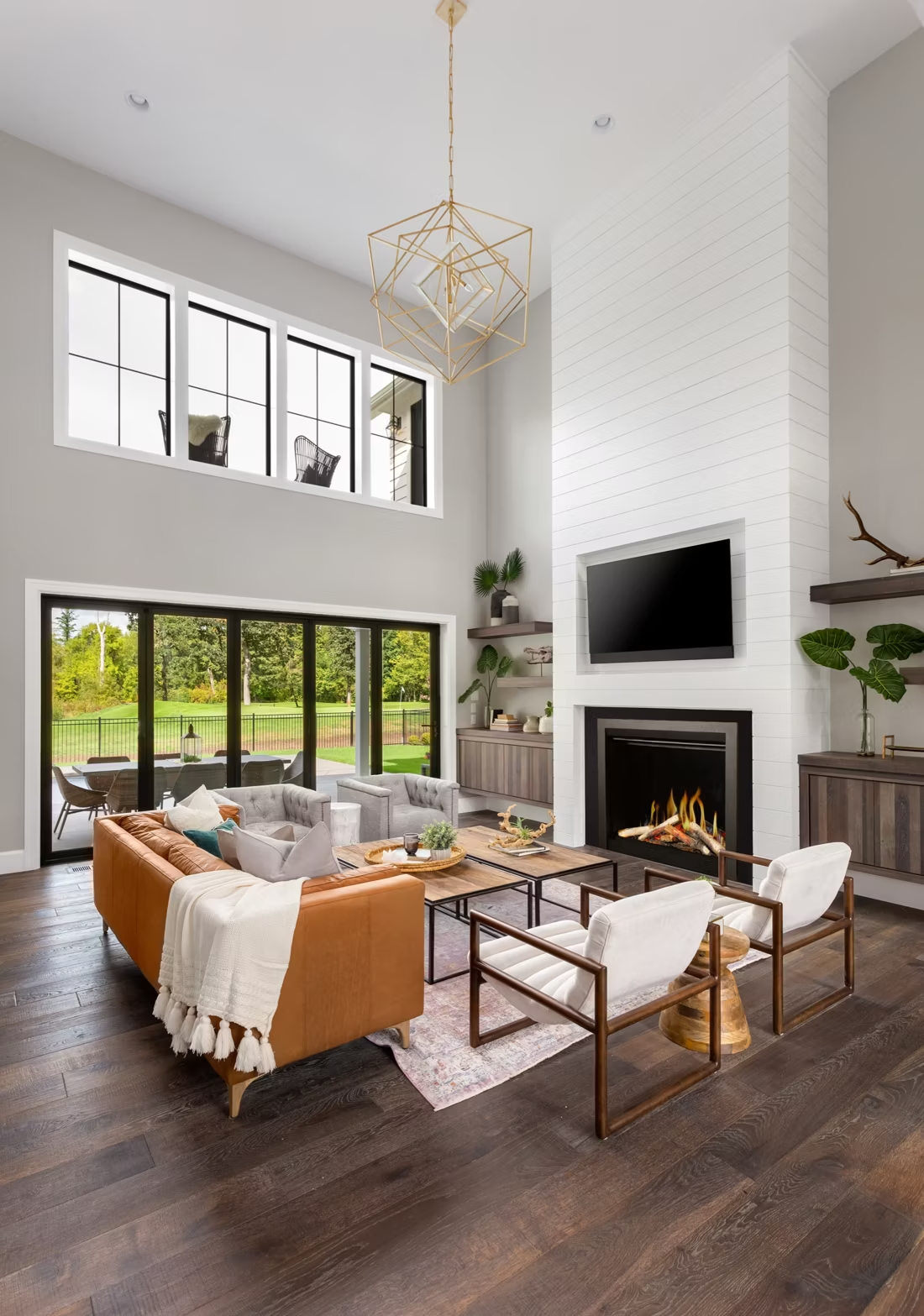
Yes—with an asterisk. Fireplaces are hot and TVs don't like heat. Either put a mantel between them to deflect rising warmth, or choose a fireplace with heat-management technology that creates a cool zone on the wall above—the wall stays around 125 degrees, barely warm, while the room still gets full heat. If you like clean lines and don't want a mantel, heat management is the answer.
Do electric fireplaces actually produce heat?
Yes—most put out around 4,800–5,000 BTUs from a standard outlet, which comfortably warms a bedroom, office, or den as a comfort-zone heater. What they won't do is carry a whole house the way wood, gas, or pellet can. Think of electric as ambiance-first with honest supplemental heat: flames on with no heat in July, flames plus warmth in January.
What is an in-home preview and do I need one?
It's a visit where a hearth professional measures your space, confirms the model you picked actually works in your home, and walks the specs—framing, gas line, venting, finish work—before anything is ordered. Some details you just can't know until you see the house. Never make a down payment without one; it's the single most-skipped step that burns buyers.
Can I install a fireplace myself?
If you're putting a fire in your house on purpose, it's best to work with an expert. Unless you're genuinely experienced in framing, gas line, vent pipe, and the national code on clearances to combustibles, have a professional do it—and ideally the same company that sells you the fireplace, so warranty, service, and liability all live under one roof.
Find your electric fireplace in Mahaska County.
Tell us about your room and your home, and we'll match you with a trusted local dealer and send over a free Project Guide & Parts List—the exact parts and a clear plan for your electric fireplace project in Mahaska County.
Find Your Fireplace →