
Warm up a room without opening a wall.
Zone heat for the coldest stretches of a Lyon County winter—no venting, no chimney, no gas line. Find the right unit for your space and connect with a trusted local dealer.
Every Project Starts From One of These Five Situations
Simple heat where running new lines isn't worth it.
Lyon County sits in the far northwest corner of Iowa, a flat stretch of prairie split among Rock Rapids, George, Doon, Larchwood, Lester, and Inwood. With 7,624 heating degree days and average winter lows around 6°F, the county's climate runs closer to Fargo, ND than to most of the rest of the state. Most homes here lean on propane or LP furnaces for primary heat—natural gas mains don't reach most of the rural county, and plenty of older farmhouses still run on fuel oil. That's exactly the gap electric fireplaces fill: they're not meant to replace the furnace, but they're a straightforward way to add heat and ambiance to a finished basement, a three-season porch, a bonus room over the garage, or any space where running new propane line or ductwork just isn't practical.
Electric service across most of Lyon County comes through Lyon County Rural Electric Cooperative, headquartered in George—a detail that matters because a plug-in electric fireplace draws off the same standard household circuits the co-op already delivers, while a larger built-in unit may need a dedicated 240V circuit run by a licensed electrician. Either way, there's no chimney to build, no combustion byproducts to vent, and none of the annual sweep-and-inspect maintenance that wood or gas units require. That makes electric a common choice for rental properties, allergy-sensitive households, and additions in older Lyon County farmhouses where a masonry chimney was never part of the plan.
Three steps. No salesperson until you're ready.
Tell us about your project
Your zip code, your situation, and the fuel you're leaning toward—or let the answers point you to one.
See what's actually available
The brands dealers within 100 miles genuinely carry—real options, never a catalog mirage.
Get your dealer & Project Guide
A trusted local dealer, plus the free Project Guide & Parts List that names every component of the job.
Frequently Asked Questions
How much does an electric fireplace installation cost in Lyon County?
A basic plug-in electric fireplace or insert that uses an existing 120V outlet typically runs $300 to $900 installed, including the unit and any minor framing or trim work. Larger built-in units, or any model that needs a dedicated 240V circuit run from the panel, push the total closer to $1,200 to $2,500 once electrician labor is factored in—more if the panel is older or the run is long, which is common in Lyon County's older farmhouses. Unlike wood or gas installs, there's no venting or masonry work to budget for, which is why electric is often the lower-cost option for adding heat to a single room.
What size electric fireplace do I need for my Lyon County home?
Most electric fireplace heaters top out around 1,500 watts, which translates to roughly 5,000 to 9,000 BTU—enough to noticeably warm a single room in the 250 to 400 square foot range, not a whole house. For a finished basement rec room or a converted porch in Lyon County, that's usually plenty as supplemental heat alongside your existing propane or oil furnace. For anything larger, or for a room you want to hold steady through a stretch of single-digit nights, plan on either a higher-output unit or accepting that the electric fireplace is there for the ambiance and the assist, not the whole job. A local dealer can walk your space and tell you honestly whether one unit covers it.
Do I need an electrician to install an electric fireplace?
It depends on the unit. Many freestanding and mantel-style electric fireplaces simply plug into an existing 120V outlet—no electrician required, just standard placement and clearance from combustibles. Built-in wall units and larger inserts often call for a dedicated 20-amp circuit, which does require a licensed electrician, especially in older Lyon County homes where the panel may already be near capacity. Lyon County Rural Electric Cooperative can tell you what your service can handle, and any reputable local dealer will flag upfront whether your chosen unit needs new wiring before you buy it.
Do I need a permit to install an electric fireplace in Lyon County?
A simple plug-in unit generally doesn't require a permit—it's treated like any other appliance you'd plug into a wall outlet. If your installation involves a new dedicated circuit or panel work, that electrical work typically does need a permit and inspection through the county, and any licensed electrician doing the work will pull that permit as a standard part of the job. This is one of the simpler permitting paths compared to wood or gas installs in Lyon County, which involve building permits and, for wood, EPA compliance checks.
Will an electric fireplace actually keep a room warm during a Lyon County cold snap?
It will help, but it's not designed to be your primary defense against a real Lyon County cold snap. Most units max out around 1,500 watts of heat output, which is enough to take the edge off a single room but won't keep up if outdoor temperatures drop well below the county's 6°F average winter low. Think of it as zone heat that lets you turn down the thermostat in the rest of the house while keeping the room you're actually using comfortable—not a substitute for a working propane or oil furnace on the coldest nights of the year.
Will my electric fireplace work if the power goes out?
No—and this is worth planning around in Lyon County, where ice storms and high prairie winds occasionally knock out rural electric service for hours at a time. An electric fireplace is entirely dependent on grid power; when it's out, the unit is dark along with everything else in the house. If backup heat during outages matters to you, many Lyon County households pair an electric fireplace for everyday convenience with a wood stove or fireplace elsewhere in the home for the nights the co-op's lines actually go down.
What's the best type of electric fireplace for Lyon County homes?
For most Lyon County living rooms and basements, a built-in wall unit or insert with a realistic LED flame effect and a separately controlled 1,500-watt heater gives you the most flexibility—you can run the flame for ambiance in the shoulder seasons without running the heater, then use both once the LP furnace is doing the heavy lifting on colder days. For farmhouse additions or porches with limited framing depth, a slimmer mantel-style unit is usually easier to fit. A local dealer can match the trim style and heat output to the specific room rather than guessing from a catalog.
Is an electric fireplace cheaper to run than propane heat in Lyon County?
For heating a single room, yes—running a 1,500-watt electric heater through Lyon County Rural Electric Cooperative typically costs less per hour than pushing your central propane furnace to cover the same small space, especially with LP prices what they've been in recent winters. But electric heat doesn't scale the same way for whole-house heating, which is why most Lyon County homes keep propane or oil as the primary system and use the electric fireplace to offset the furnace in the rooms people actually spend time in—a finished basement, a home office, a bedroom.
Electric fireplace vs. pellet stove—which makes more sense for my Lyon County home?
A pellet stove, running on bags sourced from regional suppliers like Lignetics or Indeck Energy Services, can put out real heat—often enough to serve as a primary or near-primary heat source for a room or small home, but it requires a hopper to load, ash to clean out, and electricity to run its auger and blower. An electric fireplace requires none of that upkeep and installs in a fraction of the time, but tops out at a fraction of the heat output. If you want low-maintenance ambiance and light supplemental warmth in a specific room, electric is the simpler answer. If you want a real dent in your LP furnace's winter workload, a pellet stove is worth a look instead.
Can I put a TV above my fireplace?
Yes—with an asterisk. Fireplaces are hot and TVs don't like heat. Either put a mantel between them to deflect rising warmth, or choose a fireplace with heat-management technology that creates a cool zone on the wall above—the wall stays around 125 degrees, barely warm, while the room still gets full heat. If you like clean lines and don't want a mantel, heat management is the answer.
Does an electric fireplace need a vent or chimney?
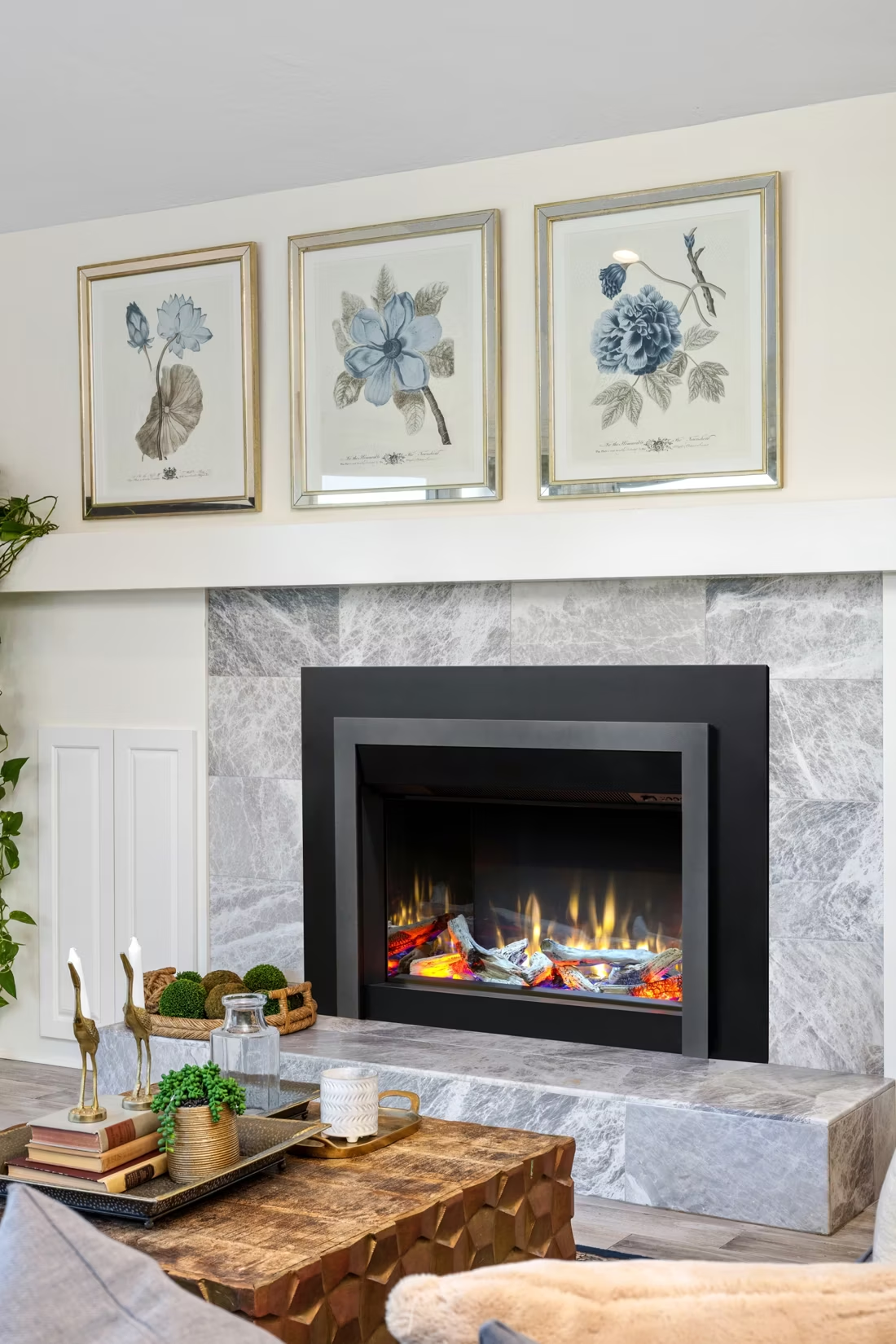
No—that's its superpower. An electric fireplace needs a wall and an outlet, period. No vent pipe, no gas line, no clearances to design around, which is why it works in bedrooms, offices, apartments, and walls where venting a gas or wood unit would be impractical or impossible. Installation is typically the simplest and least expensive of any fireplace type.
Can a fireplace actually lower my heating bill?
Yes—by creating a comfort zone. A furnace heats every square foot of the house just to warm the one room you're in; a gas fireplace on low burns roughly a sixth of the gas a typical furnace does. Set the furnace around 55–60 degrees as a baseline, then heat the rooms your family actually uses. Families who heat this way commonly save $20–$60 a month.
Can I install a fireplace myself?
If you're putting a fire in your house on purpose, it's best to work with an expert. Unless you're genuinely experienced in framing, gas line, vent pipe, and the national code on clearances to combustibles, have a professional do it—and ideally the same company that sells you the fireplace, so warranty, service, and liability all live under one roof.
Find your electric fireplace in Lyon County.
Tell us about your room and we'll put together a free Project Guide & Parts List—the right unit, the electrical requirements, and a trusted local Lyon County dealer to install it.
Find Your Fireplace →