
Instant, safe heat for Lucas County's long winters.
No chimney, no gas line, no venting—just a switch. Find the right electric fireplace or insert for your Chariton-area home and connect with a trusted local dealer.
Every Project Starts From One of These Five Situations
Clean, flip-a-switch heat for a county built on wood and propane.
Lucas County is a quiet stretch of southern Iowa—about 5,091 people spread across Chariton and small communities like Derby, Russell, Lucas, and Williamson, with a lot of open farmland in between. At climate zone 5A with 6,801 heating degree days and winter lows averaging 11°F, this county sees the kind of sustained cold that Fargo, North Dakota residents would recognize. That matters for electric fireplaces specifically: in a county this cold, an electric unit is almost never the home's primary heat source. It's zone heat and ambiance—the kind of thing that takes the edge off a finished basement or makes a living room feel warmer without running the furnace harder.
Chariton households are typically served by Alliant Energy, while much of unincorporated Lucas County runs on rural electric cooperative service—worth knowing since a built-in electric fireplace on a dedicated circuit is a different install than a plug-in unit on a standard outlet. Either way, electric fireplaces produce no smoke, no combustion byproducts, and no draw on a chimney or flue, which is a real advantage in a county where air quality isn't a driving concern but simplicity and low install cost often are. For a rural county with a lot of older farmhouses and additions, an electric insert or mantel unit is often the fastest, least invasive way to add warmth and a fire's glow to a room that doesn't have—and doesn't need—a masonry hearth.
Three steps. No salesperson until you're ready.
Tell us about your project
Your zip code, your situation, and the fuel you're leaning toward—or let the answers point you to one.
See what's actually available
The brands dealers within 100 miles genuinely carry—real options, never a catalog mirage.
Get your dealer & Project Guide
A trusted local dealer, plus the free Project Guide & Parts List that names every component of the job.
Frequently Asked Questions
How much does an electric fireplace installation cost in Lucas County?
Plug-in electric fireplace inserts and freestanding stoves are the least expensive option, often running under $500 for the unit itself with no installation cost beyond plugging it into an existing outlet. Built-in electric fireplaces or wall-mounted units that need a dedicated 15- or 20-amp circuit run higher—typically $1,500 to $4,000 installed once you factor in an electrician's time, any wall framing or mantel carpentry, and the unit itself. Costs run toward the higher end for full mantel surrounds or recessed installations in older Lucas County farmhouses where wiring may need updating to support a new circuit.
What's the difference between a plug-in electric fireplace and a built-in unit?
A plug-in electric fireplace insert or freestanding stove works out of the box on a standard household outlet—no electrician required, and it can be moved if you rearrange a room or move to a different house. A built-in (wall-mount, recessed, or mantel-surround) unit is wired into a dedicated circuit and installed more like a piece of the room's architecture. For Lucas County renters or anyone in a home with older wiring who wants heat without an electrical project, a plug-in insert is the simpler path. For a permanent focal point in a living room or finished basement, a built-in unit installed by a local electrician gives a cleaner look.
Do I need a permit to install an electric fireplace in Lucas County?
A plug-in electric fireplace that uses an existing outlet generally doesn't require a permit anywhere in Lucas County. If you're having a built-in unit wired to a new dedicated circuit, that's electrical work, and most jurisdictions—Lucas County included—require an electrical permit for new circuit installations. A licensed local electrician pulling the permit as part of the job is the norm, so you typically don't have to coordinate it yourself.
How much space can an electric fireplace actually heat?
Most electric fireplaces are rated around 4,600 to 5,000 BTU (roughly 1,500 watts), which comfortably takes the chill off a 400- to 1,000-square-foot room under normal conditions. In Lucas County's climate—average winter lows around 11°F and 6,801 heating degree days over the season—that output isn't enough to carry a whole room through a hard cold snap on its own. Electric fireplaces here work best as supplemental zone heat alongside your furnace, not as a stand-in for it, and they're most useful in smaller rooms, additions, or finished basements where running ductwork or a chimney isn't practical.
Electric vs. wood—which is right for my Lucas County home?
Wood offers real heat output, works with no electricity at all—a genuine advantage during a rural power outage—and pairs with the oak, hickory, and walnut that's common firewood across southern Iowa. Electric offers instant on-off convenience, zero maintenance, no chimney or flue to inspect, and safe operation with no open flame or embers, which matters if you have young kids or pets. For a primary heat source during winter storms, wood or a backup generator plan wins. For ambiance and supplemental warmth in a room without an existing fireplace, electric is usually the simpler, lower-cost choice—and many Lucas County homes end up with both: wood or a wood/propane furnace for real heat, electric for the rooms that just need a little extra warmth and glow.
Electric vs. pellet stove—which should I choose?
Pellet stoves burn compressed wood pellets—regional brands like Lignetics and Indeck Energy Services supply the Midwest market—and put out real heat, often enough to serve as a home's primary or near-primary heat source in a cold county like Lucas. But pellet stoves still require electricity to run the auger and combustion blower, so they're not a power-outage backup any more than a furnace is. Electric fireplaces use less energy, need no fuel storage or hopper loading, and install with far less work, but they can't match a pellet stove's heat output for whole-room or whole-home heating. If you need real heat for a drafty space, look at pellet. If you want ambiance and light supplemental warmth with the least hassle, electric is the easier answer.
How much does it cost to run an electric fireplace?
A typical electric fireplace on its heater setting draws around 1,500 watts. At a rough Iowa residential electricity rate near 13 to 14 cents per kilowatt-hour, running the heater continuously costs on the order of 20 to 21 cents an hour—a few dollars for a full evening of use. Running the unit with just the flame effect and no heater draws a fraction of that, often under 100 watts, so many Lucas County homeowners run the ambiance year-round and only switch on the heater during the coldest stretches of the season.
Are electric fireplaces safe for kids and pets?
Electric fireplaces are generally the safest fireplace option for households with young kids or pets. There's no real flame, no combustion, no hot glass in most models (many use LED-lit water vapor or LED flame effects that stay cool to the touch), and no risk of carbon monoxide since there's no gas or wood being burned. Some units do have a heating element that gets warm, so it's still worth choosing a model with a cool-touch exterior if that's a priority for your household, and a local dealer can point you toward the right models.
What's the best electric fireplace for a cold Lucas County winter?
Look for a unit with a higher-wattage heater (close to the 1,500-watt maximum most codes allow on a standard circuit), a built-in thermostat so it cycles rather than running flat-out, and a realistic flame effect if ambiance matters as much as heat to you. Brands like Dimplex, Napoleon, and Touchstone make well-regarded built-in and insert models that hold up to regular winter use. Given Lucas County's 6,801 heating degree days and regular sub-freezing nights, plan on the electric unit supplementing your main heat source rather than replacing it—a local dealer can help match wattage and room size correctly so you're not disappointed on the coldest nights.
Can I put a TV above my fireplace?
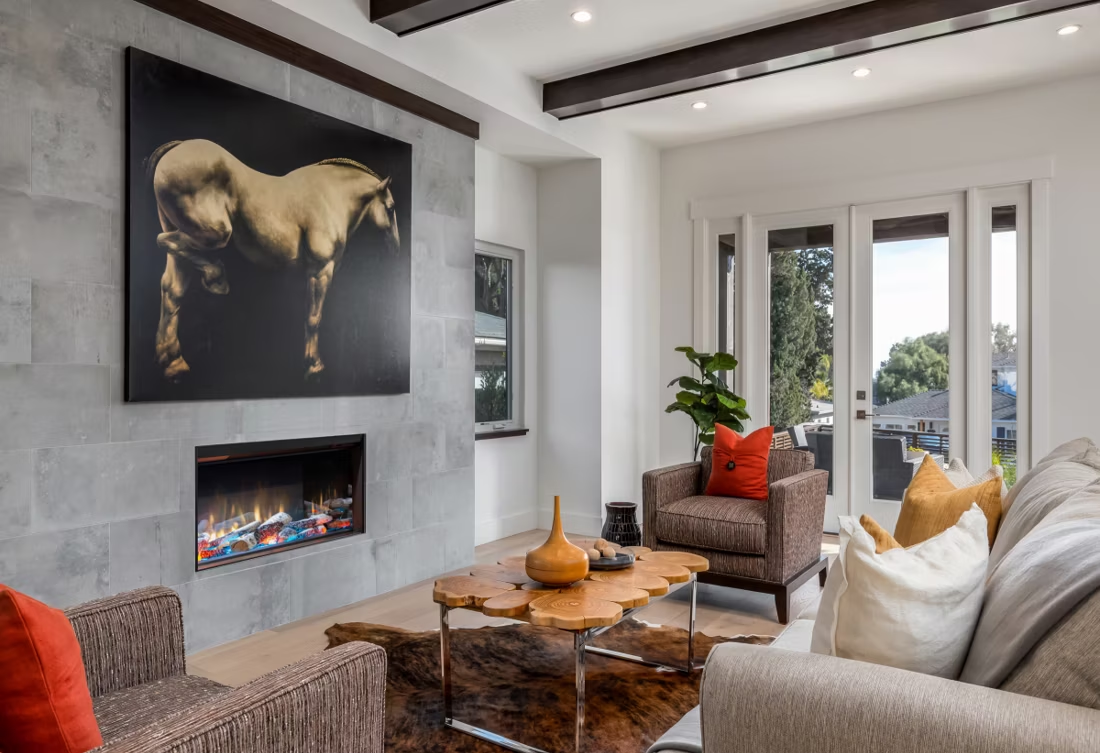
Yes—with an asterisk. Fireplaces are hot and TVs don't like heat. Either put a mantel between them to deflect rising warmth, or choose a fireplace with heat-management technology that creates a cool zone on the wall above—the wall stays around 125 degrees, barely warm, while the room still gets full heat. If you like clean lines and don't want a mantel, heat management is the answer.
How much does an electric fireplace cost to run?
With the heater on, a typical unit draws about 1,500 watts—at average electric rates that's roughly 20 cents an hour. Run the flame effect alone and it costs pennies; the flames are LED-driven and use about as much power as a light bulb. There's no pilot light, no fuel delivery, and essentially no maintenance.
Does a fireplace add value to my home?
On average, a fireplace adds back to the home about the same amount you spent installing it. Add the monthly savings from heating the rooms you actually use instead of the whole house—often hundreds of dollars a year—and the value case is strong before you even count what a fire does for how your family uses the room.
How much should I budget for a fireplace?
For an average home—covering the fireplace, the vent pipe, and basic installation—a budget between $3,900 and $5,500 gives you a lot of options across wood, gas, and pellet. By the time you add finish work, gas line, and electrical, the average complete installation lands between $5,000 and $12,000 all-in. In a remodel or new build, a good rule is to put about 2.5% of the total project cost toward the fireplace.
Find your electric fireplace in Lucas County.
Tell us a bit about your home and we'll put together a free Project Guide & Parts List—the right electric fireplace or insert for your space, the parts you'll need, and a trusted local Lucas County dealer to install it.
Find Your Fireplace →