
Reliable gas heat built for a Cedar Valley winter that runs six months long.
With a heating season on par with the coldest parts of the Upper Midwest and an average winter low of 11°F, Hudson sits in the same cold-climate tier as Madison, Wisconsin or Fargo, North Dakota. I'll match you with a trusted local dealer who knows the venting, the gas line work, and what's actually available in this part of Black Hawk County.
Every Project Starts From One of These Five Situations
A furnace town that still wants a warm room to sit in.
Hudson is a small town of about 2,500 people wedged between Waterloo and Cedar Falls, and its winters are no joke—Climate Zone 6A, an average low of 11°F, and a heating season on par with the coldest parts of the Upper Midwest put it well past the point where a fireplace is just for ambiance. Central forced-air furnaces handle the bulk of the heating load here, and a gas fireplace or insert works alongside that system as reliable zone heat for the living room or basement rec room during the long stretch, typically November through March, when the furnace runs nearly nonstop.
Because Hudson has no air quality restrictions or burn advisories to work around, the choice between a wood-burning setup and gas usually comes down to convenience rather than regulation—and for most homeowners here, gas wins on that front. In-town lots are more likely to have natural gas service running down the street, while outlying farmsteads and acreages elsewhere in Black Hawk County commonly run on propane tanks instead. Either fuel works with the same fireplace hardware; a local installer will tell you which applies to your address. Electric service splits between Interstate Power and Light and MidAmerican Energy depending on where you sit, with residential rates ranging from about 11 to 18 cents per kWh—a gap wide enough that it's worth factoring into any gas-versus-electric comparison for supplemental heat.
Three steps. No salesperson until you're ready.
Tell us about your project
Your zip code, your situation, and the fuel you're leaning toward—or let the answers point you to one.
See what's actually available
The brands dealers within 100 miles genuinely carry—real options, never a catalog mirage.
Get your dealer & Project Guide
A trusted local dealer, plus the free Project Guide & Parts List that names every component of the job.
Frequently Asked Questions
How much does a gas fireplace installation cost in Hudson?
Most gas fireplace and insert installations in this part of Iowa run roughly $4,000 to $10,000, with the low end covering a direct-vent insert going into an existing masonry firebox that already has gas nearby, and the high end covering a new built-in unit for a remodel or addition that needs fresh gas line and venting run through an exterior wall. If your property is on propane rather than natural gas—common outside Hudson's town core—tack on tank setup or a line run as part of the quote. A local dealer will price it after seeing the space and confirming what fuel line reaches your house.
Can I convert an old wood-burning fireplace to gas?
Yes, and it's a common project in this area. Plenty of older Hudson and Black Hawk County farmhouses were built with masonry fireplaces meant for oak, hickory, or walnut, and many owners now prefer a gas insert that drops into that same firebox using a stainless liner through the existing chimney. Since Hudson has no air quality curtailments to work around, the decision usually comes down to wanting heat on demand without splitting or hauling wood. Expect the conversion to land in a similar $4,000-$9,000 range depending on whether you're tying into natural gas or setting up propane.
Is my house on natural gas or propane in Hudson?
It depends on where you're located. Homes within Hudson's town limits are more likely to have a natural gas main running to the street, while properties out on acreages or farmland elsewhere in Black Hawk County typically rely on a propane tank instead, since gas mains don't reach that far. Both fuels run the same fireplace models with a minor orifice adjustment, so it won't limit your choice of unit—it just affects your ongoing fuel cost and whether you need tank installation as part of the project. A local installer can confirm what's available at your specific address.
Will a gas fireplace still work if the power goes out?
Most will, which matters here given how often ice storms and heavy winter snow knock out power across rural Black Hawk County. Fireplaces with IPI (intermittent pilot ignition) run their control board off AA battery backup that kicks in the moment utility power drops. Some models, including several from Valor, use a self-powered thermocouple system that generates its own electricity from the pilot flame, so there's no battery to check at all. If you want the fireplace to double as emergency heat during a multi-day outage—a real possibility during a Cedar Valley ice storm—ask your dealer specifically about the ignition system before you buy.
What's the difference between a gas fireplace, insert, and stove?
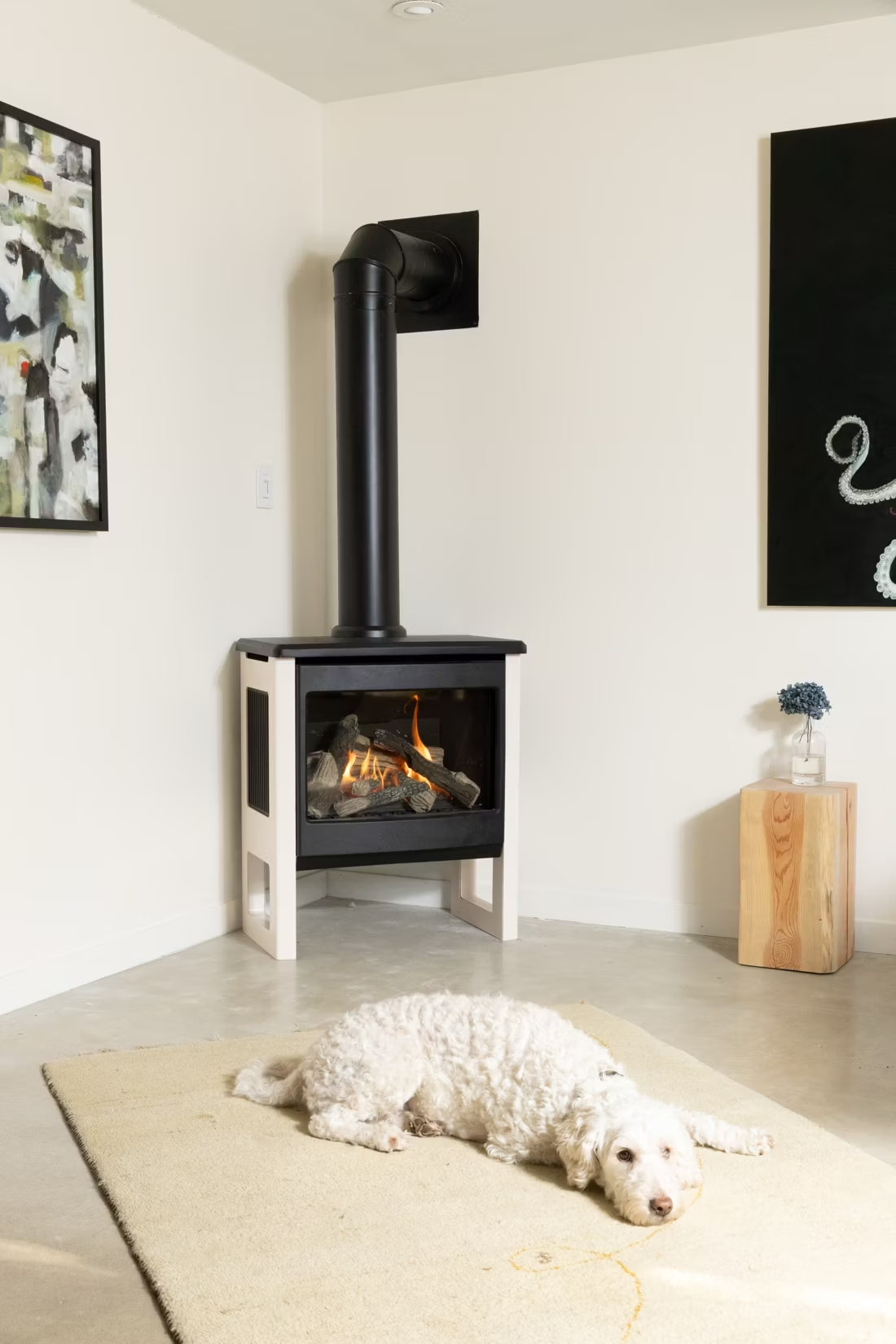
A gas fireplace is a built-in unit framed into a wall, which fits naturally into new construction or a full remodel. A gas insert slides into an existing masonry firebox, which is the more common route in Hudson's older housing stock that started out with a traditional wood-burning fireplace. A gas stove is freestanding on a hearth pad, running on a gas line or propane rather than cordwood—a good option if you want supplemental heat in a room, like a basement or converted porch, that never had a fireplace to begin with.
Do I need a permit to install a gas fireplace in Hudson?
Yes. Depending on whether you're inside city limits or out in unincorporated Black Hawk County, you'll pull a building permit locally along with a separate gas line permit, since running or tapping a gas line requires a licensed gas-fitter. Most established hearth dealers who work this area handle the permit and inspection process as part of the installation, so you're not coordinating multiple trades and inspectors yourself.
Should I get a vented or vent-free gas fireplace?
Direct-vent units draw combustion air from outside and exhaust it back outside through sealed pipe, which is the safer, code-compliant choice everywhere including Iowa. Vent-free units burn into the room and are legal here too, but they come with strict room-size and ventilation requirements. Given how long and tightly sealed a Hudson winter really is—homes here are built to hold heat against 11°F average lows—most local dealers steer homeowners toward direct-vent so you're not adding combustion byproducts to a house that's already buttoned up against the cold for months at a time.
How often does a gas fireplace need servicing?
Plan on an annual check, ideally in late summer or early fall before the Cedar Valley heating season kicks in around November. A technician tests the burner, pilot assembly, and gas connections, checks the venting, and cleans the glass—a quick visit, usually $150-$250, but worth doing before a unit that's about to run daily through a six-month winter has any chance to fail on you at 10 below.
Gas vs. electric—which makes more sense for a Hudson home?
Gas wins on raw heat output and is the better choice if you want the fireplace to meaningfully offset your furnace during Hudson's long, cold season. Electric fireplaces cost far less to install—often $400-$1,200 versus several thousand for gas—and they're simple where no gas line reaches, but they're mainly ambiance with modest supplemental heat, not a real heating appliance. Running cost matters too: Interstate Power and Light customers pay closer to 18 cents per kWh, while MidAmerican Energy customers pay closer to 11 cents, so electric heat cost varies a lot depending on which utility serves your address. Most homeowners here choose gas for the living room and consider electric only for a secondary space like a bedroom or den.
Why is my open fireplace making my house colder?
Open fireplaces suck—literally. As the fire burns, it consumes air your furnace already paid to heat and pulls it out through the chimney, so the house is actually colder after the fire goes out than before you lit it. An insert fixes this: it seals the chimney, puts fixed glass across the front, and turns that hole in your house into a real heat source.
What does it take to replace an existing fireplace?
Fireplaces are like icebergs—bigger behind the wall than in front of it. Replacement means removing the surrounding tile or stone (the finish material laps onto the fireplace face), pulling the old unit, setting the new one in the same enclosure, and re-finishing the wall. A hearth professional can determine what's behind your wall without demolition during an in-home preview.
Can I install a fireplace myself?
If you're putting a fire in your house on purpose, it's best to work with an expert. Unless you're genuinely experienced in framing, gas line, vent pipe, and the national code on clearances to combustibles, have a professional do it—and ideally the same company that sells you the fireplace, so warranty, service, and liability all live under one roof.
What is an in-home preview and do I need one?
It's a visit where a hearth professional measures your space, confirms the model you picked actually works in your home, and walks the specs—framing, gas line, venting, finish work—before anything is ordered. Some details you just can't know until you see the house. Never make a down payment without one; it's the single most-skipped step that burns buyers.
Nearby Dealers
Hearth shops serving Hudson and the surrounding area. Every listing shows whether it is a WhyFire partner, a dealer we have verified as authorized for the brands we recommend, or a local business carrying hearth products. No manufacturer pays for placement. How we verify dealers →
Johnson Plumbing Heating & Cooling
Hargrave Construction LLC
Kapaun & Brown, Inc
Get your free Project Guide & Parts List for a gas fireplace in Hudson.
Tell me about your home and whether you're on natural gas or propane, and I'll match you with a trusted local dealer and send a free Project Guide & Parts List—sized for a six-month Cedar Valley winter, with the exact vent kit and parts your project needs.
Find Your Fireplace →