
Add real fireplace warmth to a Henry County room—no chimney required.
From Mount Pleasant to New London, Winfield, and Salem, electric fireplaces bring instant ambiance and zone heat to any room in Henry County—no venting, no gas line, and often no permit. Find the right unit and connect with a trusted local dealer.
Every Project Starts From One of These Five Situations
The simplest fireplace to add to an existing room.
Henry County sits in southeast Iowa's rolling farmland along the Skunk River corridor, with Mount Pleasant as the county seat and smaller communities like New London, Winfield, Salem, and Wayland spread across the countryside. Winters here are genuinely cold—Climate Zone 5A, an average winter low around 12°F, and a long, demanding heating season on par with a hard Midwest winter. Most Henry County homes still lean on a furnace, wood stove, or propane as their primary heat source, and that's the honest starting point for electric fireplaces here: they're not built to replace the furnace on a January night, but they're an excellent way to add supplemental warmth and real flicker-and-glow ambiance to a specific room.
That's exactly why electric units have become a popular add-on across the county—a finished basement rec room, a primary bedroom, a sunroom addition, or a living room that never quite feels warm enough even with the furnace running. Because electric fireplaces don't need a chimney, a gas line, or combustion venting, they install almost anywhere with an outlet or a simple 240-volt circuit, and most jurisdictions in Henry County only require a basic electrical permit for hardwired units—nothing like the venting inspections that come with wood or gas. Whether you're on Alliant Energy or a local municipal utility, a local dealer can size the right unit and confirm what your circuit can support.
Three steps. No salesperson until you're ready.
Tell us about your project
Your zip code, your situation, and the fuel you're leaning toward—or let the answers point you to one.
See what's actually available
The brands dealers within 100 miles genuinely carry—real options, never a catalog mirage.
Get your dealer & Project Guide
A trusted local dealer, plus the free Project Guide & Parts List that names every component of the job.
Frequently Asked Questions
How much does an electric fireplace installation cost in Henry County?
Electric fireplaces are the least expensive hearth product to install because there's no chimney, gas line, or venting involved. A plug-in insert or freestanding unit that simply plugs into a standard 120-volt outlet typically runs $300 to $1,200 installed, including a wall mount or insert kit. A built-in linear electric fireplace or one requiring a dedicated 240-volt circuit runs higher—usually $1,500 to $4,000—once an electrician runs new wiring and any surrounding millwork or framing is added. Because Henry County has no gas line or chimney work involved, most electric installs are faster and cheaper than wood or gas projects in the same home.
Can an electric fireplace actually heat a room in Henry County's winters?
It can heat a single room, but it shouldn't be your only source of heat on the coldest nights. With a long, demanding heating season and winter lows averaging 12°F, Henry County sees the kind of sustained cold where a 1,500-watt electric fireplace (the max output for most models under standard household code) will comfortably supplement a well-insulated bedroom, den, or basement room—but it won't replace your furnace on a sub-zero night. Most Henry County homeowners install electric units as zone heat: turn it on in the room you're using, let the furnace idle back, and let the fireplace carry that one space.
Do I need a permit to install an electric fireplace in Henry County?
Plug-in electric fireplaces that use a standard outlet generally don't require a permit—they're treated like any other appliance. If you're installing a built-in unit that needs a new dedicated circuit or a 240-volt hookup, most Henry County jurisdictions require a standard electrical permit, which a licensed electrician typically pulls as part of the job. There's no building permit for venting or clearances the way there is with wood or gas, since electric units don't produce combustion byproducts—that's one of the biggest reasons homeowners in the county choose them for additions and basements.
Electric vs. wood—which makes more sense for my Henry County home?
It depends on what you're trying to solve. Henry County has a strong wood-heating tradition, with local oak, hickory, maple, and walnut widely available for those running a wood stove or fireplace as a serious heat source—and wood keeps working during a power outage, which electric cannot. Electric fireplaces, on the other hand, install in minutes, need no chimney or clearances, produce zero ash or creosote, and work anywhere you have power—including apartments, rentals, and rooms where a wood or gas unit simply isn't feasible. For a primary heat source or backup during outages, wood wins. For an easy ambiance-plus-supplemental-heat upgrade to an existing room, electric is usually the better fit.
What's the difference between an electric insert, a wall-mount unit, and a freestanding electric stove?
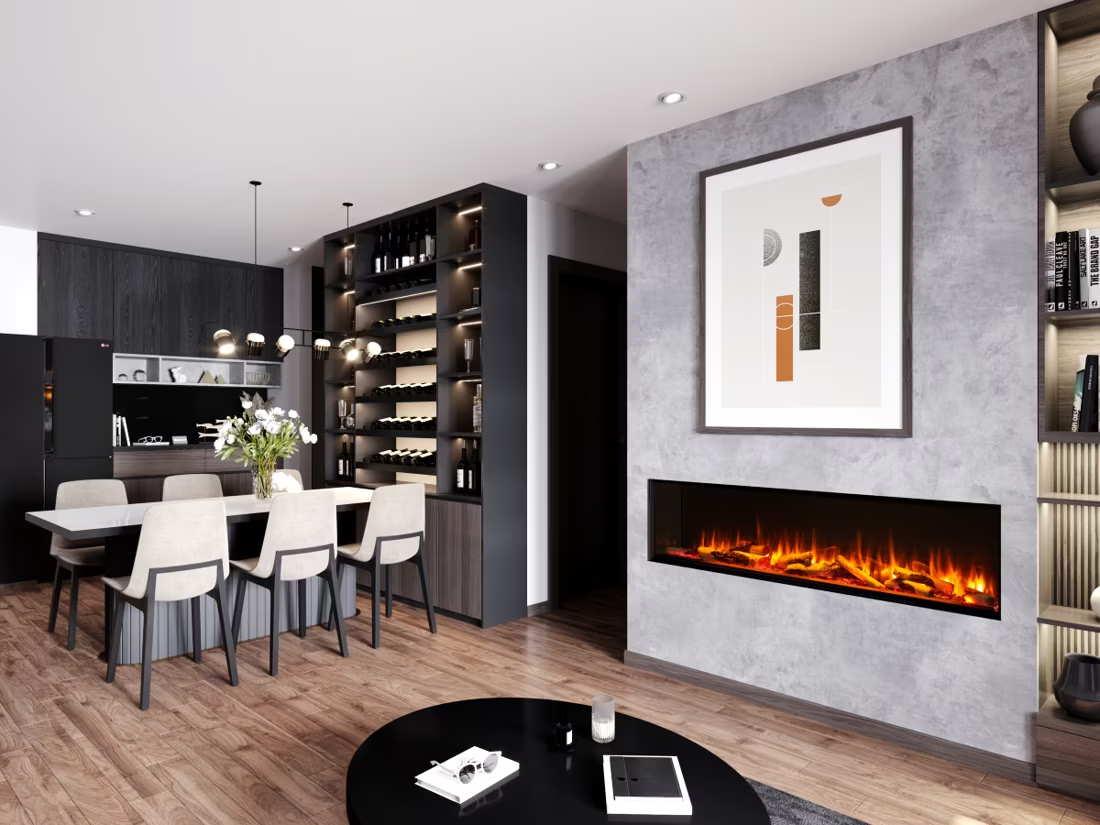
An electric insert is built to slide into an existing masonry fireplace opening, instantly converting a cold, unused fireplace into a working heat source without touching the chimney. A wall-mount or built-in linear unit is designed for new construction or a remodel, framed into a wall like a flat-screen TV. A freestanding electric stove sits on the floor and mimics the look of a wood stove, which is a popular option for basements and additions across Henry County where there's no existing fireplace opening to work with. All three plug in or hardwire the same way—the difference is really about what your room and your existing structure allow for.
What happens to my electric fireplace during a power outage?
It shuts off completely—electric fireplaces have no battery backup or standalone ignition, so if Alliant Energy or your local municipal utility loses power, so does your fireplace. This is worth factoring into your decision if you're in a rural part of Henry County prone to longer outage recovery times. Homeowners who want fireplace heat that survives an outage typically pair an electric unit for daily convenience with a wood stove or propane appliance as backup, rather than relying on electric alone for emergency heat.
How much does it cost to run an electric fireplace in Henry County?
Most electric fireplaces draw around 1,500 watts on the heat setting, which costs roughly 15 to 25 cents an hour to run depending on your utility rate—whether that's Alliant Energy or a local municipal provider. Running one for a few hours a night in a single room typically adds $10 to $25 a month to your bill, considerably less than running a whole-house furnace longer than necessary. On flame-only mode (no heat), the draw is minimal—often under 100 watts—which is why many homeowners leave the ambiance running even when they don't need the extra warmth.
Electric vs. pellet—which is right for my Henry County home?
Pellet stoves, using bagged fuel from regional suppliers like Lignetics or Indeck Energy Services, put out significantly more heat than an electric unit and can genuinely serve as a primary or near-primary heat source through a Henry County winter—but they need electricity to run the auger and blower, so they go down in an outage just like electric units do, and they require venting through an exterior wall or roof. Electric fireplaces need no venting at all and install in far less time, but top out around 1,500 watts of supplemental heat. If you want serious BTU output for a cold room, pellet is the stronger choice. If you want the fastest, simplest install with zero maintenance, electric wins.
Will an electric fireplace work in my finished basement?
Yes—basements are one of the most common places Henry County homeowners install electric fireplaces, precisely because there's no chimney or venting to route through a finished ceiling or exterior wall. A recessed wall unit or a freestanding electric stove both work well in a basement rec room, and since electric units produce no combustion byproducts, there's no concern about carbon monoxide or make-up air in a tighter, below-grade space. The main thing to check is whether your basement circuit can support the unit's draw—a licensed electrician can confirm that in a few minutes.
Do electric fireplaces actually produce heat?
Yes—most put out around 4,800–5,000 BTUs from a standard outlet, which comfortably warms a bedroom, office, or den as a comfort-zone heater. What they won't do is carry a whole house the way wood, gas, or pellet can. Think of electric as ambiance-first with honest supplemental heat: flames on with no heat in July, flames plus warmth in January.
Does an electric fireplace need a vent or chimney?
No—that's its superpower. An electric fireplace needs a wall and an outlet, period. No vent pipe, no gas line, no clearances to design around, which is why it works in bedrooms, offices, apartments, and walls where venting a gas or wood unit would be impractical or impossible. Installation is typically the simplest and least expensive of any fireplace type.
How much should I budget for a fireplace?
For an average home—covering the fireplace, the vent pipe, and basic installation—a budget between $3,900 and $5,500 gives you a lot of options across wood, gas, and pellet. By the time you add finish work, gas line, and electrical, the average complete installation lands between $5,000 and $12,000 all-in. In a remodel or new build, a good rule is to put about 2.5% of the total project cost toward the fireplace.
Can I install a fireplace myself?
If you're putting a fire in your house on purpose, it's best to work with an expert. Unless you're genuinely experienced in framing, gas line, vent pipe, and the national code on clearances to combustibles, have a professional do it—and ideally the same company that sells you the fireplace, so warranty, service, and liability all live under one roof.
Stove and Fireplace Dealers in Henry County
Find your electric fireplace in Henry County.
Tell us about your room and we'll match you with the right electric fireplace, insert, or stove—and send you a free Project Guide & Parts List with the exact parts and your recommended local Henry County dealer.
Find Your Fireplace →