
Trade the drafty hearth for instant gas heat in Dubuque.
With a long, cold winter heating season and lows near 10°F, Dubuque homes need heat that works the moment you flip a switch. Find the right gas fireplace or insert and connect with a trusted local dealer.
Every Project Starts From One of These Five Situations
Reliable warmth for a river city that gets seriously cold.
Dubuque sits along the bluffs of the Mississippi River at just over 800 feet elevation, in a Zone 5A climate with a long, cold winter heating season—not far off from what homeowners in Madison, Wisconsin deal with. Average winter lows hover around 10°F, and the river valley's damp cold makes consistent, on-demand heat more valuable than a fire you have to tend.
Interstate Power and Light (Alliant Energy) provides both electric and natural gas service through much of Dubuque, which makes gas an easy, practical choice for the city's many historic Victorian and bluff-top homes—plenty of which still have an old masonry firebox that never quite heated the room. Outside city limits in rural Dubuque County, propane fills the gap where natural gas lines don't reach. Either way, a gas fireplace or insert delivers real heat at the push of a button, with none of the wood-hauling that older homes here were originally built around.
Three steps. No salesperson until you're ready.
Tell us about your project
Your zip code, your situation, and the fuel you're leaning toward—or let the answers point you to one.
See what's actually available
The brands dealers within 100 miles genuinely carry—real options, never a catalog mirage.
Get your dealer & Project Guide
A trusted local dealer, plus the free Project Guide & Parts List that names every component of the job.
Frequently Asked Questions
How much does a gas fireplace installation cost in Dubuque?
Most gas fireplace and insert installations in Dubuque run somewhere between $4,000 and $10,000, with the spread coming down to the unit itself, the venting path, and whether new gas line work is required. A direct-vent insert going into an existing masonry firebox with gas already run to the room sits toward the lower end. New construction, a fresh gas line from the meter, or venting through multiple floors in one of Dubuque's older two-and-a-half-story homes pushes the number up. A local dealer will give you a firm number after seeing the space in person.
Can I convert my old masonry fireplace to gas?
Yes, and it's one of the most common projects in Dubuque's older neighborhoods, where Victorian-era and early-1900s homes were built with open masonry fireboxes that lose most of their heat up the chimney. A gas insert with a stainless liner run through the existing flue typically costs $4,000 to $8,500 depending on the model and whether the home already has a gas line nearby. The conversion keeps the original mantel and surround while turning a decorative feature into a real heat source.
Should I install natural gas or propane?
If your home is within Interstate Power and Light's (Alliant Energy) natural gas service area in Dubuque, natural gas is almost always the simpler and cheaper route since you're tapping into existing infrastructure. Homes in outlying parts of Dubuque County, where gas mains don't reach, typically run on propane from a local supplier, either from an existing tank or a new one set for the fireplace. Most gas fireplace models can be configured for either fuel—your installer sets the correct orifice and regulator for whichever you have.
Will a gas fireplace still work if the power goes out?
Most will. Units with intermittent pilot ignition (IPI) run on a small battery backup that kicks in automatically during an outage, so the fireplace lights and operates normally off battery power until the electricity is back—worth remembering given how ice and windstorms along the Mississippi can knock out power for a day or more. Valor fireplaces take a different approach: their pilot assembly generates its own electricity through the thermocouple, so there's no battery to remember at all. Ask your local dealer about the ignition system on any unit you're considering if backup heat matters to you.
What's the difference between a gas fireplace, insert, and stove?
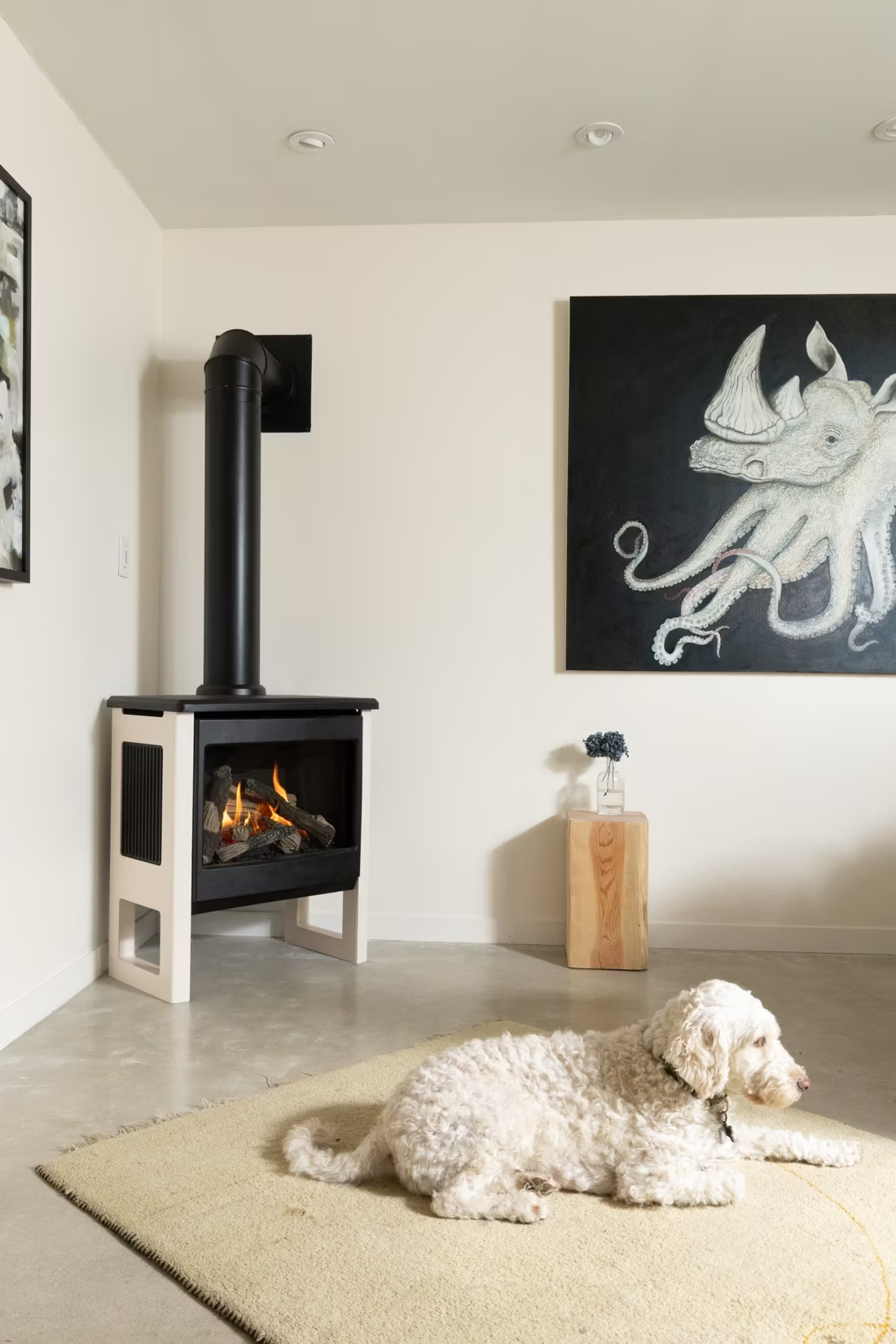
A gas fireplace is a fully built-in unit framed into a wall, typically chosen for new construction or a remodel. A gas insert is sized to slide into an existing masonry firebox—the more common choice in Dubuque's older housing stock, since it reuses the chimney you already have. A gas stove is a freestanding cabinet unit that sits out in the room like a wood stove but runs on gas, a good option for homes without an existing fireplace at all. For most Dubuque homeowners working with an old brick firebox, an insert is the straightforward answer.
Do I need a permit to install a gas fireplace in Dubuque?
Yes. Installations within city limits go through the City of Dubuque Building Services Department, and both a building permit and a licensed gas-fitter for the line work are required. Homes outside city limits fall under Dubuque County's building department instead. Most established local hearth dealers handle the permitting and inspection scheduling as part of the job, which is one of the real advantages of working with a certified installer rather than a handyman.
Should I get a vented or vent-free gas fireplace?
Vented, direct-vent units pull combustion air from outside and exhaust it back outside through sealed pipe—they're the standard, code-compliant choice everywhere including Iowa. Vent-free units burn directly into the room and are legal here with the right room-size and ventilation rules followed, but they release some moisture and combustion byproducts indoors. Given Dubuque's long, cold heating season and the number of hours a fireplace here actually gets used, most local dealers steer homeowners toward direct-vent models—they deliver more consistent heat without any indoor air quality tradeoffs.
How often does a gas fireplace need to be serviced?
Plan on an annual inspection, ideally in early fall before the heating season ramps up. A technician checks the burner, pilot or ignition system, venting, and gas connections, and cleans the glass and interior. It's a lighter lift than chimney sweeping for a wood system, but skipping it is how pilot and ignition problems go unnoticed until the coldest night of the year. Local service techs in the Dubuque area typically charge $150 to $250 for this visit.
Why does gas make more sense than wood for most Dubuque homes?
Wood-burning fireplaces and stoves are genuinely uncommon in Dubuque proper—air quality here is good, natural gas service reaches most of the city through Alliant Energy, and the older homes with masonry fireboxes are far more often converted to gas than kept burning wood. Oak, hickory, maple, and walnut are all around the region and some rural households outside city limits still burn wood for cost reasons, but inside Dubuque, gas is the practical default: no wood to source, split, or store, no ash cleanup, and heat that comes on the instant you want it on a 10°F morning.
Is my gas fireplace wasting gas?
If it was installed more than 15 years ago, probably. Older gas fireplaces keep a standing pilot light burning all the time, and that little flame can cost a couple hundred dollars a year. Newer models use pilot-on-demand ignition—the pilot lights only when you use the fireplace and goes out when you turn it off.
Are new gas fireplaces really better than old ones?
Two ways, and they're both big. Looks: modern gas fireplaces are realistic enough that it's hard to believe they aren't burning wood. Cost: old units burn a standing pilot year-round (roughly $200 a year), while new ones use pilot-on-demand ignition and modern burners. Add remote controls and thermostat operation, and the day-to-day experience isn't close.
Does a fireplace add value to my home?
On average, a fireplace adds back to the home about the same amount you spent installing it. Add the monthly savings from heating the rooms you actually use instead of the whole house—often hundreds of dollars a year—and the value case is strong before you even count what a fire does for how your family uses the room.
Can a fireplace actually lower my heating bill?
Yes—by creating a comfort zone. A furnace heats every square foot of the house just to warm the one room you're in; a gas fireplace on low burns roughly a sixth of the gas a typical furnace does. Set the furnace around 55–60 degrees as a baseline, then heat the rooms your family actually uses. Families who heat this way commonly save $20–$60 a month.
Nearby Dealers
Hearth shops serving Dubuque and the surrounding area.
Find your gas fireplace in Dubuque.
Tell us about your home and your existing setup, and we'll match you with a trusted local Dubuque dealer plus a free Project Guide & Parts List—the exact parts, vent kit, and installer recommendation for your gas fireplace project.
Find Your Fireplace →