
Add fireplace warmth to any room in Des Moines County—no venting required.
From Burlington's older river-town homes to newer builds out toward Mediapolis and Danville, electric fireplaces bring flame-look ambiance and real zone heat without a chimney, a gas line, or a permit headache. Find the right unit and connect with a trusted local dealer.
Every Project Starts From One of These Five Situations
The easiest heat upgrade in Des Moines County.
Des Moines County sits along the Mississippi River in southeastern Iowa, anchored by Burlington and spread out through West Burlington, Danville, Mediapolis, and New London. It's a 5A climate zone with a long, cold heating season and winter lows averaging 16°F—a continental Midwest winter in the same range as Madison, Wisconsin, with cold snaps that can hold for weeks. Plenty of homes here still lean on wood—oak, hickory, maple, and walnut are all common locally and split well for a woodstove—but not every home has a flue, and not every room needs a full heating appliance.
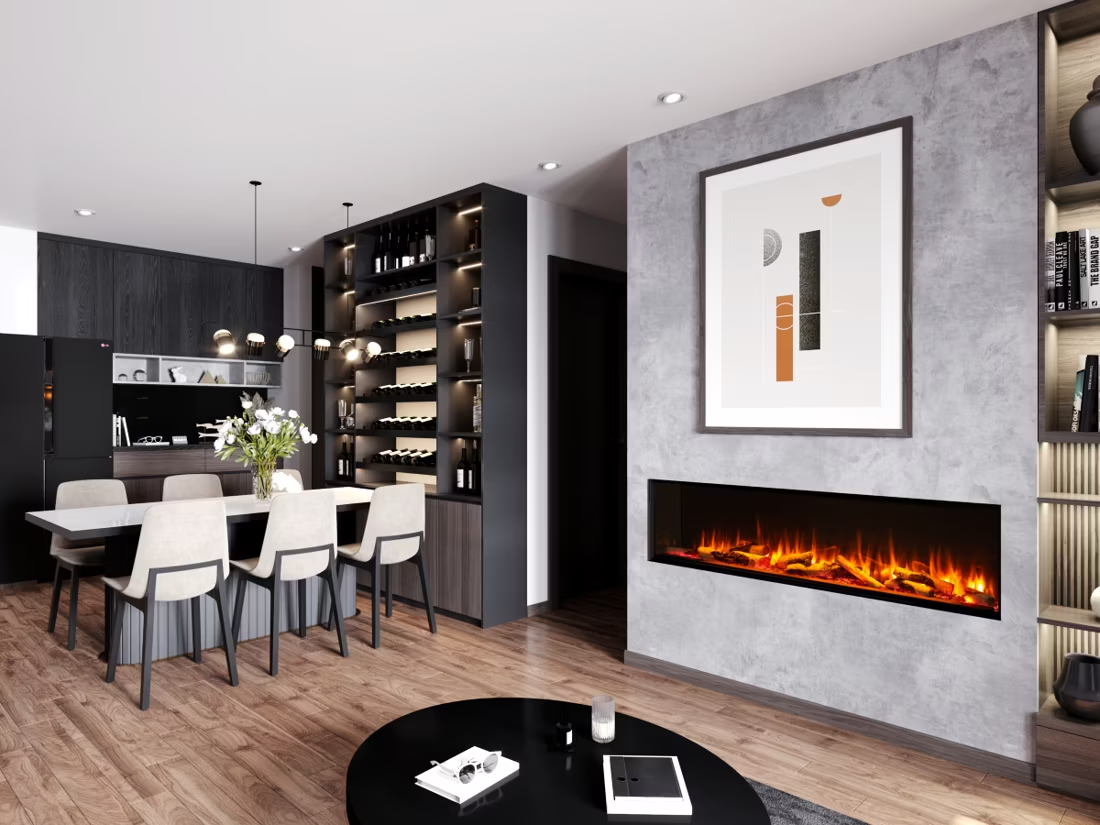
That's where electric fireplaces earn their place. A plug-in or built-in unit installed into a bedroom, finished basement, sunroom, or an upstairs addition in a Burlington bungalow gives you real supplemental warmth and the look of a fire with zero combustion, zero chimney, and none of the ash or gas-line coordination. Because there's no venting to size and usually no dedicated permit for a standard plug-in unit, it's often the fastest fireplace project in the county to get from decision to install—while a built-in model wired to its own circuit still benefits from a licensed electrician and, in some cases, a quick sign-off from the City of Burlington or Des Moines County building department.
Three steps. No salesperson until you're ready.
Tell us about your project
Your zip code, your situation, and the fuel you're leaning toward—or let the answers point you to one.
See what's actually available
The brands dealers within 100 miles genuinely carry—real options, never a catalog mirage.
Get your dealer & Project Guide
A trusted local dealer, plus the free Project Guide & Parts List that names every component of the job.
Frequently Asked Questions
How much does an electric fireplace installation cost in Des Moines County?
Plug-in electric fireplaces and stoves—the kind you can set on a hearth or against a wall and plug into a standard 120V outlet—typically run $300 to $1,200 installed, since there's no venting and often no wiring work involved. Built-in wall units or linear electric fireplaces that require a recessed frame, a dedicated 120V or 240V circuit, and finish carpentry usually land between $1,200 and $2,500 once an electrician and installer are both involved. Costs run a bit higher for homes in the older Burlington housing stock where knob-and-tube wiring or a full panel upgrade complicates a dedicated circuit run.
Do I need a permit to install an electric fireplace in Des Moines County?
Most plug-in electric fireplace units don't require any permit—they're treated like any other appliance you plug into an existing outlet. If you're installing a built-in electric fireplace that needs a new dedicated circuit, an electrical permit is typically required, and within Burlington that goes through the city's building department; in unincorporated parts of Des Moines County it runs through the county building office. A licensed electrician pulling the permit as part of the install is the norm, so you generally don't have to manage the paperwork yourself.
Will an electric fireplace actually heat a room in a Des Moines County winter?
Most electric fireplace inserts and stoves put out 5,000 to 9,000 BTU on their heat setting—enough to noticeably warm a single room, but not enough to serve as a home's primary heat source when winter lows average 16°F and the heating season runs long, as it does across Des Moines County. Think of it as effective zone heat: it can take the edge off a chilly bedroom, basement, or sunroom and let you turn down the thermostat in that space, but it's not a replacement for a furnace or a wood/gas appliance sized for whole-home heating.
What's the difference between an electric fireplace, insert, and wall-mount unit?
An electric insert is built to slide into an existing masonry firebox or a factory-built fireplace opening, which makes it a popular option for Burlington homes with an old wood-burning fireplace that's rarely used—you keep the mantel and surround, lose the chimney draft and cold-air infiltration. A freestanding electric stove sits on the floor like a small appliance and can go almost anywhere there's an outlet. A wall-mount or linear electric fireplace is recessed into or mounted flush against a wall, often used in newer construction or remodels for a modern, minimal look. All three run on the same basic heating technology; the choice comes down to what opening you're working with.
Electric vs. gas fireplace—which makes more sense for my Des Moines County home?
Gas delivers real heat output—enough to serve as supplemental or even primary zone heat through a Des Moines County winter—and it keeps working during a power outage if it's a standing-pilot model, which matters when an Iowa ice storm takes down lines. Electric costs far less to install, requires no gas line or venting, and works in rooms where running gas simply isn't practical, like an upstairs bonus room or a rental unit. If the room already has a masonry fireplace and gas service is nearby, gas is usually the stronger heat investment. If you want ambiance and modest supplemental warmth in a space with no existing venting, electric is the simpler and cheaper path.
How much does it cost to run an electric fireplace in Des Moines County?
Most electric fireplaces draw around 1,500 watts on the heat setting. At Alliant Energy's typical residential rates, running one for several hours a day in the evening adds a modest amount to a monthly bill—usually in the range of $15 to $40 a month depending on how many hours it runs and the specific rate plan. Running the unit on flame-only mode without the heater draws a small fraction of that, since it's just powering the LED light effect, which is common for people who want the ambiance without adding heat during Iowa's shoulder-season months.
Can I put an electric insert into my existing wood-burning fireplace?
Yes, and it's one of the more common projects for older Burlington and Des Moines County homes with a masonry fireplace that's fallen out of use. An electric insert slides into the existing firebox opening, plugs into a nearby outlet (or a new dedicated circuit if the unit calls for it), and typically gets paired with a decorative surround or existing mantel. Many homeowners also close off or seal the flue at this point, since the insert doesn't need it and an open, unused chimney is a source of cold-air drafts through the winter.
What's the best electric fireplace for a finished basement in Des Moines County?
Linear wall-mount or built-in electric fireplaces tend to work well in finished basements throughout the county, since basements along the Mississippi River corridor can run cool and slightly damp, and a plug-in electric unit adds welcome warmth without introducing any combustion byproducts or humidity concerns. Look for a model with a strong heater rating (closer to 5,000+ BTU) rather than a decorative-only unit if the goal is real supplemental heat, and confirm the outlet or circuit can handle the draw before finish work goes up around it.
Why choose an electric fireplace over a space heater?
A portable space heater and a built-in or insert-style electric fireplace put out similar heat, but the fireplace is a permanent fixture that adds real value and ambiance to a room—a flame-effect display, a mantel or surround, and a look that a plug-in box on the floor can't match. Electric fireplaces are also generally safer for continuous use, since most shut off automatically if tipped or overheated, which matters if you're running supplemental heat for hours at a time in a Des Moines County home through a long Iowa winter.
Can I put a TV above my fireplace?
Yes—with an asterisk. Fireplaces are hot and TVs don't like heat. Either put a mantel between them to deflect rising warmth, or choose a fireplace with heat-management technology that creates a cool zone on the wall above—the wall stays around 125 degrees, barely warm, while the room still gets full heat. If you like clean lines and don't want a mantel, heat management is the answer.
Do electric fireplaces actually produce heat?
Yes—most put out around 4,800–5,000 BTUs from a standard outlet, which comfortably warms a bedroom, office, or den as a comfort-zone heater. What they won't do is carry a whole house the way wood, gas, or pellet can. Think of electric as ambiance-first with honest supplemental heat: flames on with no heat in July, flames plus warmth in January.
Can a fireplace actually lower my heating bill?
Yes—by creating a comfort zone. A furnace heats every square foot of the house just to warm the one room you're in; a gas fireplace on low burns roughly a sixth of the gas a typical furnace does. Set the furnace around 55–60 degrees as a baseline, then heat the rooms your family actually uses. Families who heat this way commonly save $20–$60 a month.
How much should I budget for a fireplace?
For an average home—covering the fireplace, the vent pipe, and basic installation—a budget between $3,900 and $5,500 gives you a lot of options across wood, gas, and pellet. By the time you add finish work, gas line, and electrical, the average complete installation lands between $5,000 and $12,000 all-in. In a remodel or new build, a good rule is to put about 2.5% of the total project cost toward the fireplace.
Stove and Fireplace Dealers in Des Moines County
Listings include WhyFire partner dealers, dealers we have verified as authorized for the brands we recommend, and established local businesses that carry hearth products. Every listing shows which one it is. The ones marked Preferred run on WhyFire's software, so they can show you real pricing and book your appointment right here. No manufacturer pays for placement. How we verify dealers →
Keystone Products Company
Find your electric fireplace in Des Moines County.
Tell us a bit about your room and we'll match you with the right electric fireplace, insert, or wall unit—plus a free Project Guide & Parts List with the exact parts for your installation and a trusted local dealer to install it.
Find Your Fireplace →