
Zone heat for a town with winters as long and cold as Madison, Wisconsin.
Denver sits at 975 feet in Bremer County with winter lows averaging 11°F. No gas line, no chimney, no venting—just a unit that plugs in or wires into a dedicated circuit. We'll help you find a trusted local dealer who knows which utility serves your address and sizes the install right.
Every Project Starts From One of These Five Situations
Heat the room you're in, not the whole farmhouse.
Denver is a small Bremer County town of under 2,000 people, and its climate zone 6A rating isn't gentle—winters as long and cold as Madison, Wisconsin, and an average winter low of 11°F means single digits and below are routine from December through February. Most homes here run a furnace as primary heat and look for something practical to warm a specific room—a finished basement, a sunporch addition, a bedroom over an unheated garage—without opening a wall for venting or running a new gas line.
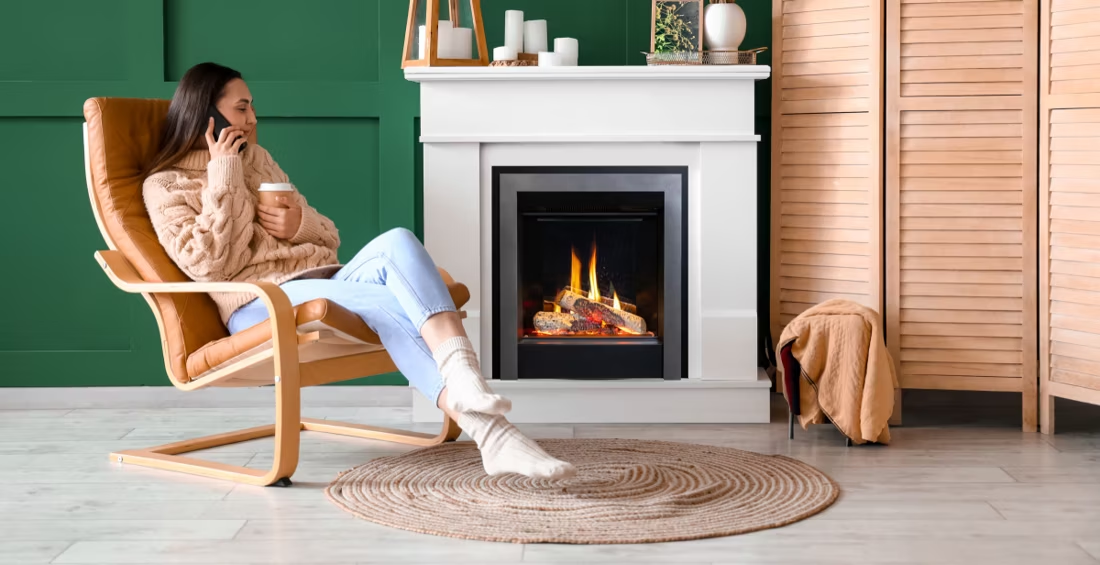
That's the electric fireplace's job in a town like Denver. Wood and pellet appliances are essentially absent from the local install market here, so gas and electric are the two real options homeowners weigh, and electric wins whenever the goal is simplicity: no chimney, no fuel storage, no combustion byproducts to vent. Electric service in the area splits between Interstate Power and Light, MidAmerican Energy, and Butler County Rural Electric Cooperative, and their residential rates aren't close—roughly 11 cents, 15.4 cents, and nearly 18 cents per kWh depending on which one serves your meter. That gap matters more for an electric fireplace than most appliances, since it's one of the few heat sources in the house you might run for hours at a stretch on a cold evening.
Three steps. No salesperson until you're ready.
Tell us about your project
Your zip code, your situation, and the fuel you're leaning toward—or let the answers point you to one.
See what's actually available
The brands dealers within 100 miles genuinely carry—real options, never a catalog mirage.
Get your dealer & Project Guide
A trusted local dealer, plus the free Project Guide & Parts List that names every component of the job.
Frequently Asked Questions
How much does an electric fireplace installation cost in Denver?
A plug-in insert or freestanding electric stove is the cheapest route—often $300 to $1,200 including the unit, since it just needs a standard outlet and a spot on the wall. A built-in electric fireplace or a mantel package wired into a dedicated 120V or 240V circuit runs higher, typically $1,500 to $4,000, because it involves an electrician running new wire, sometimes a new breaker, and finish carpentry around the unit. Neither route needs a chimney or venting, which is the main reason electric installs in Denver cost less overall than gas or wood projects.
Can an electric fireplace actually heat a Denver home through the winter?
Not as your only heat source—with winters as long and cold as Madison, Wisconsin and winter lows averaging 11°F, Denver homes need a real furnace behind them. Most electric inserts and stoves top out around 1,500 watts, roughly 5,200 BTUs, which comfortably heats a single room of 300 to 400 square feet but won't carry a whole house through a January cold snap. Where electric earns its keep here is zone heating: taking the load off the furnace in one room, or covering a finished basement or addition the ductwork doesn't reach well.
Do I need a permit to install an electric fireplace in Denver?
A plug-in unit generally doesn't require a permit since there's no venting or gas work involved—it's no different than plugging in a space heater. A built-in unit wired to a new dedicated circuit is electrical work, though, and that typically needs an electrical permit through Bremer County or the City of Denver depending on your address, plus inspection of the new circuit. Most local electricians and hearth dealers who do this work regularly can pull that permit as part of the job.
Does it matter which electric utility serves my house?
It changes your running cost more than almost any other factor. Denver-area homes are served by a mix of Interstate Power and Light, MidAmerican Energy, and Butler County Rural Electric Cooperative, and their residential rates range from about 11 cents per kWh on the low end to nearly 18 cents on the high end. Run a 1,500-watt insert for six hours a night on a MidAmerican account and you're paying noticeably less than the same unit on an Interstate Power and Light account—worth knowing before you decide how much you'll actually use it as a daily supplement versus occasional ambiance.
Electric vs. gas—which makes more sense for a Denver home?
Gas fireplaces put out more heat and can run through a power outage if they have battery or standing-pilot backup, which is a real consideration in a rural Bremer County winter storm. But gas installs require a gas line and venting and generally cost several thousand dollars more to put in. Electric skips both of those requirements entirely, installs in an afternoon, and carries zero combustion or carbon monoxide risk—a common choice for a bedroom, basement, or rental property where simplicity and safety outweigh raw heat output.
What size electric fireplace do I need for my room?
Most electric inserts and stoves are built around the same roughly 1,500-watt heating element regardless of price point, so sizing is really about the room, not the unit. That output comfortably handles 300 to 400 square feet with typical Iowa-home insulation and ceiling height. A larger open-concept living room will feel the ambiance from a bigger unit but shouldn't be counted on to noticeably raise the room's temperature—for those spaces, electric is best framed as accent heat alongside the furnace, not a replacement for it.
How much maintenance does an electric fireplace need?
Very little, which is part of the appeal for a lot of Denver households already managing a furnace and, in some cases, a wood-burning setup at a cabin or hunting property elsewhere. There's no chimney to sweep and no annual gas-line inspection—just occasional dusting of the heating element and vents, and eventually swapping LED light strips or a blower fan after years of use. That low-maintenance profile is one reason electric units are common in rental units and second bedrooms around town.
Are there rebates for installing an electric fireplace in Denver?
Electric fireplaces themselves aren't typically rebate-eligible the way heat pumps or high-efficiency furnaces are, but it's worth checking with whichever utility serves your address—Interstate Power and Light, MidAmerican Energy, or Butler County Rural Electric Cooperative all run seasonal efficiency programs, and Butler County REC in particular offers member rebates on certain electric equipment from time to time. A local dealer who installs regularly in Bremer County will usually know what's currently active.
Why don't more Denver homes use wood or pellet stoves instead?
Wood and pellet heat just aren't a significant part of the local install market here the way they are farther north or in more forested parts of the Midwest—most Denver homes are set up around a furnace plus a gas or electric fireplace for supplemental warmth, not a wood-burning setup. If you're set on wood heat, oak, hickory, maple, and walnut are the species commonly available from area farms and woodlots, but you'll be working outside the typical local supply chain rather than through a dedicated hearth dealer the way you would for gas or electric.
Does an electric fireplace need a vent or chimney?
No—that's its superpower. An electric fireplace needs a wall and an outlet, period. No vent pipe, no gas line, no clearances to design around, which is why it works in bedrooms, offices, apartments, and walls where venting a gas or wood unit would be impractical or impossible. Installation is typically the simplest and least expensive of any fireplace type.
Do electric fireplaces actually produce heat?
Yes—most put out around 4,800–5,000 BTUs from a standard outlet, which comfortably warms a bedroom, office, or den as a comfort-zone heater. What they won't do is carry a whole house the way wood, gas, or pellet can. Think of electric as ambiance-first with honest supplemental heat: flames on with no heat in July, flames plus warmth in January.
Can I install a fireplace myself?
If you're putting a fire in your house on purpose, it's best to work with an expert. Unless you're genuinely experienced in framing, gas line, vent pipe, and the national code on clearances to combustibles, have a professional do it—and ideally the same company that sells you the fireplace, so warranty, service, and liability all live under one roof.
Can a fireplace actually lower my heating bill?
Yes—by creating a comfort zone. A furnace heats every square foot of the house just to warm the one room you're in; a gas fireplace on low burns roughly a sixth of the gas a typical furnace does. Set the furnace around 55–60 degrees as a baseline, then heat the rooms your family actually uses. Families who heat this way commonly save $20–$60 a month.
Nearby Dealers
Hearth shops serving Denver and the surrounding area. Every listing shows whether it is a WhyFire partner, a dealer we have verified as authorized for the brands we recommend, or a local business carrying hearth products. No manufacturer pays for placement. How we verify dealers →
We’ve paused dealer listings for this connection today. Enter your zip or postal code above to find dealers near you, or come back tomorrow.
Popular Electric Brands
Where each brand came from, what's inside it today, and every current model. No brand pays to be here. Not every dealer carries every brand, so enter your zip code to see what's sold near Denver.
Fireplace Xtrordinair
Fireplace Xtrordinair, now often called FireplaceX, is the fireplace brand of Travis Industries, Inc., of Mukilteo, Washington.
5 electric models →DaVinci
DaVinci Custom Fireplaces is a brand of Travis Industries, Inc., of Mukilteo, Washington, the company behind Lopi and Fireplace Xtrordinair.
5 electric models →Kozy Heat
Kozy Heat was founded in 1976 by Dudley Hussong in Lakefield, Minnesota, and incorporated as Hussong Manufacturing Co., Inc. in 1978.
3 electric models →Forge & Flame
Forge & Flame is the stove brand Hearth & Home Technologies introduced in August 2023 to bring Vermont Castings, Harman, and Quadra-Fire under one name.
1 electric model →Electric Service in Denver
An electric fireplace's heater draws about 1,500 watts—pennies per hour at local rates.
Interstate Power And Light Co
Midamerican Energy Co
Butler County Rural Elec Coop - (Ia)
Get your free Project Guide & Parts List for a Denver electric fireplace.
Tell us about your home, the room you're heating, and which utility serves your address, and we'll help you find a trusted local dealer and send a free Project Guide & Parts List sized to your space and circuit.
Find Your Fireplace →